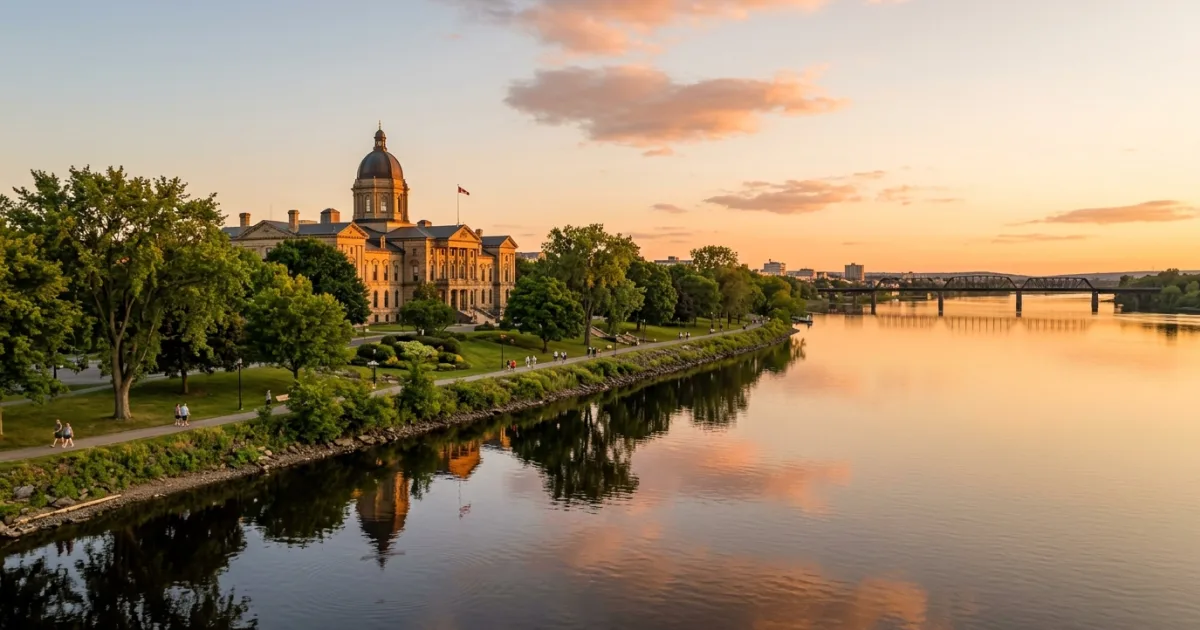
Fredericton operates as the cultural soul of New Brunswick, marrying a storied provincial legacy with a dynamic, youthful collegiate atmosphere. First settled by the Wolastoqiyik Indigenous people and later organized as a Loyalist enclave in 1785, the city retains preserved heritage architecture throughout its tree-shaded downtown grid. The heart of civic life rests in the Historic Garrison District, where 18th-century stone barracks, artisan studios, and ceremonial guard grounds run parallel to the gentle sweep of the Saint John River.
Today, Fredericton has built an international reputation for high cultural density. The Beaverbrook Art Gallery anchors the arts scene with an exceptional permanent collection of British, Canadian, and Indigenous fine art. Outdoors, the urban landscape embraces active recreation with the repurposing of historic railway corridors into an interconnected multi-use trail system, catering to cyclists, joggers, and winter cross-country skiers year-round.
Reasons to Visit
- Explore the Historic Garrison District and witness living history performances.
- Discover legendary masterpieces at the world-renowned Beaverbrook Art Gallery.
- Cycle along 120+ kilometers of paved, car-free multi-use nature trails.
- Experience one of Eastern Canada's finest culinary institutions at the Boyce Farmers Market.
- Sample regional beers along the celebrated Fredericton Taproom Trail.
Things to Avoid
- Avoid relying on city buses on Sundays, as Fredericton Transit operates limited or no Sunday schedules.
- Avoid skipping bug repellent during mid-summer walks along unpaved riverbank trails.
- Avoid leaving dining reservations to the last minute on Friday and Saturday evenings downtown.
- Avoid rushing through the Boyce Farmers Market; arrive before 10:00 AM on Saturday for the best selections.
Local Transportation Tips
Fredericton is accessible via Fredericton International Airport (YFC), situated roughly 15 minutes east of downtown. Fredericton Transit operates scheduled public bus routes connecting major shopping centers, university campuses, and residential sectors from Monday through Saturday. The city is exceptionally bicycle-friendly, with flat multi-use pathways, designated bike lanes, and the Bill Thorpe Walking Bridge connecting both sides of the river.
Travel Etiquette
- Politeness is standard; holding doors open and greeting shopkeepers is customary.
- Tipping 15% to 20% on restaurant bills, bar tabs, and taxi fares is expected standard practice.
- Stay to the right side on multi-use trails and alert pedestrians with a bicycle bell or voice before passing.
Recommended Age Group
Fredericton accommodates travelers across multiple age brackets due to its calm urban pace, barrier-free outdoor paths, and rich cultural assets.
- Babies (0-2 years): Neutral. Riverfront paths are stroller-friendly, though winter conditions and heritage buildings with stairs can create slight friction.
- Kids (3-12 years): Recommended. Interactive discovery at Science East, open green space in Wilmot Park, and splash zones provide exceptional family engagement.
- Teens (13-19 years): Recommended. Cycling, river kayaking, paddleboarding, and cozy riverside cafes offer appealing outdoor freedom.
- Adults (20-64 years): Recommended. A vibrant craft brewing trail, exceptional farm-to-table cuisine, art galleries, and historic districts deliver a rich weekend itinerary.
- Seniors (65+ years): Recommended. Flat riverfront terrain, accessible transit corridors, relaxed pacing, and deep cultural heritage make the city very senior-friendly.
Accessibility Level: Medium
- The downtown core features flat topography with dropped curbs at road intersections.
- The Bill Thorpe Walking Bridge and Saint John River trail corridors are paved and wheelchair accessible.
- Public municipal facilities and the Beaverbrook Art Gallery offer barrier-free entry, automatic doors, and modern elevator access.
- Fredericton Transit provides paratransit mobility bus services for passengers with functional accessibility requirements.
Did You Know?
Fredericton's Bill Thorpe Walking Bridge was originally a railway bridge constructed in 1888. Today, it spans 581 meters across the Saint John River, representing one of the longest dedicated pedestrian bridges in North America.
Cool Statistics
- Over 120 kilometers of multi-use trails weave through the municipal boundary.
- Houses over 10 distinct craft breweries and cideries within a compact city radius.
- Home to Canada's oldest official English-language university building, Sir Howard Douglas Hall.







Buy a compatible power adapter for your trip