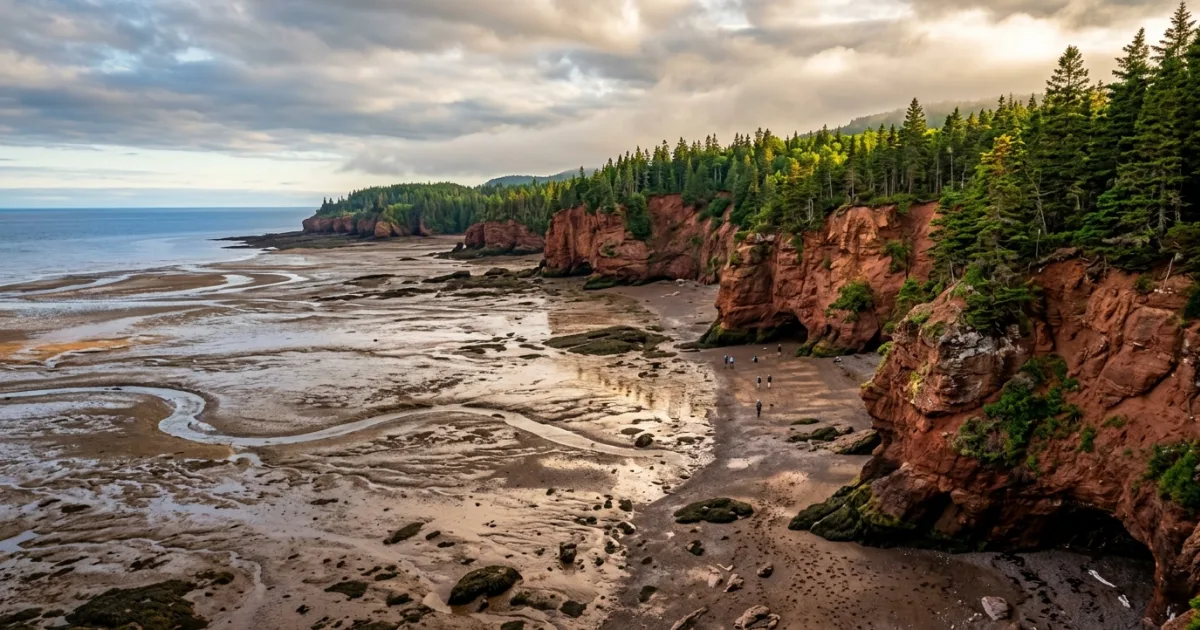
Fundy National Park represents one of eastern Canada's premier ecological sanctuaries, guarding where the ancient Acadian highland forest plunges into the Bay of Fundy. The park was established in 1948 as New Brunswick's first national park, safeguarding a critical watershed of clear rivers, peat bogs, and coastal salt marshes. Over a billion tons of seawater funnel in and out of the bay twice daily, a natural force that drives a unique intertidal ecosystem inhabited by burrowing amphipods, periwinkles, and shorebirds.
Beyond its dramatic coastline, the park protects significant wilderness corridors essential for moose, black bears, and the rare endangered Inner Bay of Fundy Atlantic salmon. Hikers navigate wooden boardwalks through spongy moss bogs or scale steep river valleys carved by waterways like the Upper Salmon River and Point Wolfe River. Whether crossing the iconic red Point Wolfe Covered Bridge, swimming in the heated saltwater pool, or viewing the Milky Way across designated Dark Sky preserves, the park delivers classic Canadian Maritime wilderness with superb accessibility.
Reasons to Visit
- Witness the highest marine tides in the world, dramatically changing coastal scenery every six hours.
- Hike Dickson Falls trail, a picturesque moss-covered boardwalk ravine surrounding the park's most photographed cascade.
- Stargaze under pristine conditions inside a Royal Astronomical Society of Canada designated Dark Sky Preserve.
- Drive across and photograph the historic Point Wolfe Covered Bridge surrounded by coastal spruce forest.
- Experience coastal glamping in Parks Canada oTENTiks, Yurts, or modern tear-drop Oasis pods overlooking the sea.
Things to Avoid
- Do not walk out onto the intertidal mudflats without checking tide schedules, as incoming tidal waters move faster than walking speed.
- Avoid approaching black bears or leaving food supplies unattended at picnic tables or backcountry campsites.
- Do not wear slick fashion sneakers or open-toed sandals on rocky coastal paths and waterfall boardwalks.
- Avoid driving too fast along Route 114 at dusk and dawn when moose and deer frequently cross the highway.
- Do not arrive in July or August without pre-booked campsite or lodge reservations, as local accommodations sell out completely.
Local Transportation Tips
Public transit does not serve Fundy National Park directly, making a personal vehicle or rental car necessary to explore the area. The park is accessed via New Brunswick Route 114, approximately an hour's drive from Moncton and 90 minutes from Saint John. Inside the park boundaries, paved and well-maintained gravel roads connect all major campgrounds, trailheads, and lookouts. Bicycles and e-bikes are permitted on select multipurpose trails, while walking is the primary method of movement once parked at trailheads.
Travel Etiquette
- Follow Leave No Trace principles strictly; pack out all personal trash and food remnants from wilderness trails.
- Keep pets securely leashed at all times to avoid distressing nesting shorebirds and local woodland wildlife.
- Respect quiet hours in front-country campgrounds, which run strictly from 11:00 PM to 7:00 AM.
- Refrain from taking stones, shells, drift lumber, or plant specimens from the shoreline or forest floor.
Recommended Age Group
Fundy National Park provides exceptional outdoor infrastructure, making it adaptable for almost all visitor generations.
- Babies (0-2 years): Neutral. Many trails feature rugged rocks and steep stairs ill-suited for strollers, requiring ergonomic baby carriers for trail exploration.
- Kids (3-12 years): Recommended. Children thrive with hands-on intertidal pool explorations, the junior Xplorers ranger program, and the heated saltwater swimming pool.
- Teens (13-19 years): Recommended. Excellent opportunities for backcountry trekking, mountain biking trails, sea kayaking, and outdoor adventure sports.
- Adults (20-64 years): Recommended. Perfect balance of challenging backcountry hiking, coastal glamping, scenic photography, and craft seafood dining in Alma.
- Seniors (65+ years): Recommended. Accessible boardwalks at Dickson Falls and paved viewpoints at Cape Enrage provide comfortable sightseeing options.
Accessibility Level: Medium
- Visitor reception centers in Alma and Broad River feature step-free access, automated entry doors, and accessible washroom facilities.
- Select front-country camping sites and custom oTENTik shelters feature wheelchair ramps, wide doorways, and barrier-free picnic spots.
- The park's outdoor saltwater swimming pool offers zero-depth entry and accessibility lift equipment for swimmers with mobility limits.
- The Cannontown day-use area and scenic viewpoints along Point Wolfe Road offer designated accessible parking spots and paved lookout paths.
Did You Know?
The Bay of Fundy pushes approximately 160 billion tonnes of seawater during every 12-hour tidal cycle—a volume of water exceeding the combined total 24-hour flow of all the freshwater rivers on Earth combined.
Cool Statistics
- 12 meters (39 feet): Maximum vertical tidal fluctuation observed within the park's coastal boundaries.
- 100+ kilometers: Total length of interconnected hiking and cycling trails within the park network.
- 206 square kilometers: Total protected wilderness land area under federal stewardship.
- 1948: Year Fundy National Park was officially founded as New Brunswick's inaugural national park.






Buy a compatible power adapter for your trip