Saskatchewan is often stereotyped as entirely flat, but this province offers surprising geographical diversity. The southern region is characterized by the sweeping Great Plains, dramatic badlands, and the Cypress Hills, which boast the highest elevation between the Rocky Mountains and Labrador. Moving north, the landscape transforms into the boreal forest and the Canadian Shield, a rugged terrain dotted with an estimated 100,000 pristine lakes and winding river systems perfect for world-class freshwater fishing and paddling. The province's two major cities, Saskatoon and Regina, serve as cultural hubs, offering excellent farm-to-table dining, vibrant arts scenes, and deep dives into the region's history, including the legacy of the Royal Canadian Mounted Police (RCMP) and the rich traditions of the First Nations and Métis peoples.
Reasons to Visit
- Experience the unparalleled stargazing in Grasslands National Park, one of the darkest Dark Sky Preserves in the world.
- Explore the rich Indigenous history and culture at Wanuskewin Heritage Park near Saskatoon.
- Enjoy world-class freshwater fishing for walleye and northern pike in the northern lakes.
- Drive the scenic routes through the Qu'Appelle Valley or the Cypress Hills Interprovincial Park.
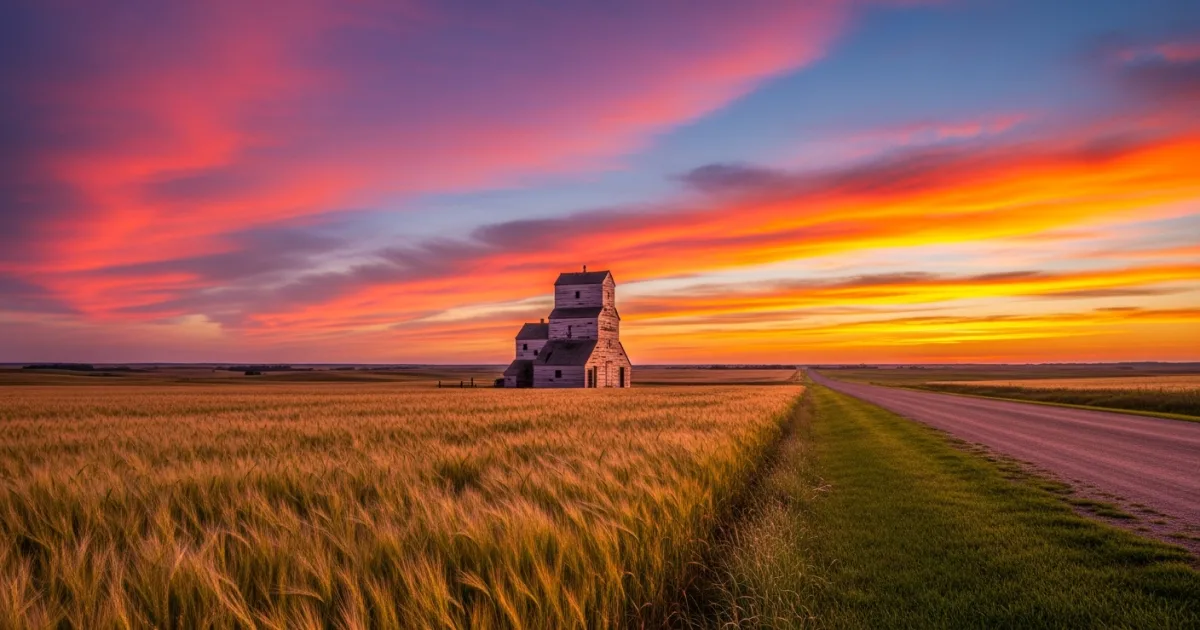
- Witness the breathtaking "Living Skies," featuring spectacular sunsets, dramatic storm clouds, and frequent Northern Lights displays.
Things to Avoid
- Avoid driving on rural highways at dusk or dawn without extreme caution due to high wildlife activity.
- Do not underestimate the winter weather; avoid traveling outside urban centers during blizzards or extreme cold warnings without proper survival gear.
- Avoid trespassing on private farmland; always stick to marked roads and public lands.
- Do not forget insect repellent in the summer, especially in the northern forested areas where mosquitoes and black flies are prevalent.
Local Transportation Tips
Public transportation within Saskatchewan is primarily limited to municipal bus systems in Saskatoon and Regina. For intercity travel, there are limited private bus services and regional flights, but renting a vehicle is by far the most practical and popular way to explore the province. The road network is extensive, featuring well-maintained major highways and a vast grid of unpaved gravel roads (locally known as "grid roads") that connect rural communities and farms.
Travel Etiquette
- Canadians are known for their politeness; saying "please," "thank you," and "sorry" is customary in everyday interactions.
- Tipping 15-20% at restaurants, bars, and for personal services is standard practice.
- When driving on rural grid roads, it is common to give a friendly wave or nod to passing drivers.
- Respect Indigenous lands and cultural sites by following all posted guidelines and refraining from removing any natural or historical artifacts.
Recommended Age Group
Saskatchewan offers a wide range of activities suitable for various age groups, though its vast distances require some planning.
- Babies (0-2 years): Neutral. While cities offer great amenities, the long driving distances between major attractions can be challenging for infants.
- Kids (3-12 years): Recommended. Children will love the interactive exhibits at the Saskatchewan Science Centre, the RCMP Heritage Centre, and the numerous sandy beaches at provincial parks.
- Teens (13-19 years): Recommended. Teens can enjoy active adventures like canoeing, zip-lining in Cypress Hills, and exploring the sand dunes.
- Adults (20-64 years): Recommended. Perfect for road trips, backcountry camping, fishing expeditions, and exploring the local craft brewery scene in Saskatoon and Regina.
- Seniors (65+ years): Recommended. The province offers excellent accessible nature experiences, scenic drives, and rich historical sites that are easy to navigate.
Accessibility Level: Medium
- Major attractions in Saskatoon and Regina, such as the Remai Modern and the Royal Saskatchewan Museum, are fully wheelchair accessible.
- Many provincial parks offer accessible campsites, washrooms, and paved or hard-packed trails suitable for mobility devices.
- Paratransit services are available in larger cities, though they often require pre-registration for visitors.
- Rural and remote areas, particularly in the northern Canadian Shield, have limited accessibility due to rugged terrain and unpaved paths.
Did You Know?
Saskatchewan is the only Canadian province with entirely artificial boundaries, forming a near-perfect trapezoid. It is also home to the Athabasca Sand Dunes, the most northerly active sand dunes in the world, stretching for about 100 kilometers along the southern shore of Lake Athabasca.
Cool Statistics
- Saskatchewan has over 100,000 lakes, covering nearly 10% of the province's total surface area.
- The province receives more hours of sunshine than any other Canadian province, averaging over 2,000 hours annually.
- Cypress Hills Interprovincial Park reaches an elevation of 1,392 meters, making it the highest point in Canada between the Rockies and Labrador.
- Saskatchewan produces over a third of the world's exported durum wheat and is the world's largest exporter of lentils and dry peas.







Buy a compatible power adapter for your trip