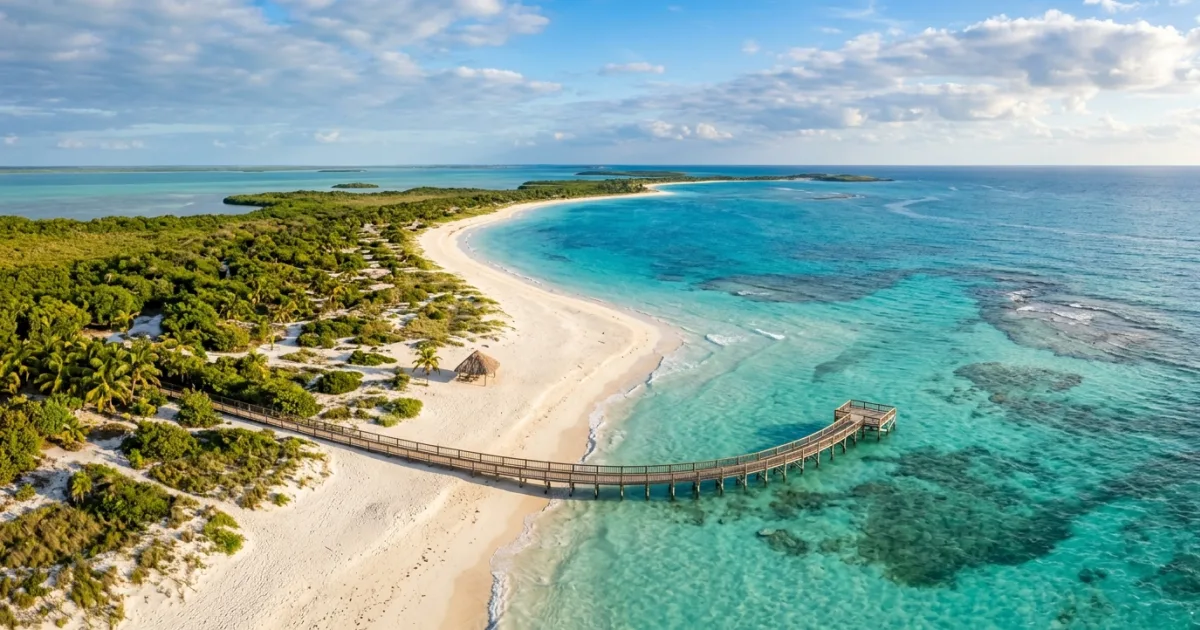
The Cuban Cayos (Los Cayos de Cuba) are a chain of low-lying limestone islands bordering the Atlantic shore and the Caribbean Sea. Dominated by Jardines del Rey (including Cayo Coco and Cayo Guillermo), the western cluster of Cayo Santa María, and the southern jewel Cayo Largo del Sur, these keys feature powdery sands composed of crushed coral and shells that remain cool under the midday sun. Unlike the energetic urban hubs of Havana or Santiago, the Cayos were purposefully planned as serene natural sanctuaries and resort enclaves.
Surrounded by barrier coral reefs and sheltered shallow bays, the waters remain tranquil and exceptionally transparent, providing sanctuary to manatees, sea turtles, and over 200 species of coastal birds. Travel between the northern cays and mainland Cuba is conducted over world-famous pedraplenes—massive engineering feats consisting of crushed-rock highways built directly through the sea with tidal openings to protect natural marine currents. This blend of undisturbed island ecosystems and peaceful oceanfront infrastructure makes the Cuban Cayos one of the Caribbean's premier tropical sanctuaries.
Reasons to Visit
- Playa Pilar on Cayo Guillermo, widely considered one of the top beaches in the world, with giant sand dunes and crystal-clear calm water.
- Unspoiled scuba diving and snorkeling over the Great Mesoamerican-adjacent Caribbean barrier reef system.
- Spectacular wild American pink flamingo sightings feeding in the salt marshes and shallow coastal flats.
- Seamless access over engineering marvels like the 48-kilometer Cayo Santa María pedraplén causeway.
- Quiet, crowd-free white sand shorelines perfect for uninterrupted romantic getaways and relaxation.
Things to Avoid
- Avoid forgetting essential toiletries and medications, as resort mini-marts carry strictly limited supplies.
- Do not attempt to walk across the shallow sandbars without water shoes, as buried sea urchins and stingrays rest on the seabed.
- Avoid touching or collecting live coral, starfish, or conch shells, which is strictly prohibited under Cuban conservation laws.
- Do not rely entirely on credit cards from American banking institutions, which remain unusable due to international sanctions.
Local Transportation Tips
Within individual keys, open-top double-decker hop-on hop-off tourist buses (such as the Jardines del Rey Bus Tour) run frequent routes connecting hotels, shopping plazas, and public beaches for a modest daily ticket. Taxis operate out of resort lobbies at regulated rates. Scooter and car rentals are available at designated rental centers, providing the freedom to drive along the causeways, though booking in advance is essential due to fleet constraints.
Travel Etiquette
- Tipping is deeply appreciated and forms a crucial component of local resort workers' livelihoods; tip housekeeping, bartenders, and baggage handlers generously.
- Dress casually for the beach, but observe resort dress codes requiring shirts, footwear, and dry clothing in buffet halls and à la carte dining rooms.
- Ask permission before photographing security personnel or checkpoint officials along the causeway gates.
- Keep plastic waste and cigarette butts off the beaches to preserve the fragile marine ecosystem.
Recommended Age Group
The Cuban Cayos cater to a broad spectrum of vacationers seeking sun and sea, though their remote resort infrastructure favors specific visitor profiles.
- Babies (0-2 years): Neutral. Calm waters and gentle sands are welcoming, but long causeway transfers and limited access to specialized baby foods or pediatric medical care require careful preparation.
- Kids (3-12 years): Recommended. Shallow, warm tidal pools and resort mini-clubs provide safe, entertaining aquatic environments for young swimmers.
- Teens (13-19 years): Recommended. Water sports, catamaran excursions, and deep-sea snorkeling deliver active, memorable tropical adventures.
- Adults (20-64 years): Recommended. Superb scuba diving, wellness lounges, and tranquil beaches offer an ideal restorative escape for solo travelers, groups, and couples.
- Seniors (65+ years): Recommended. Flat terrain, gentle ocean entry, and dedicated all-inclusive resort amenities ensure comfortable, accessible leisure with minimal physical strain.
Accessibility Level: Medium
- Most modern all-inclusive resorts feature flat ground-level access, paved garden walkways, and step-free access to main pools and restaurants.
- Many hotels provide wooden boardwalks extending toward the sand, though beach wheelchairs with balloon tires are rare across the keys.
- Transport across the causeways relies largely on standard motor coaches and minivans with steep steps; pre-booking specialized private transport is strongly recommended for wheelchair users.
Did You Know?
Playa Pilar on Cayo Guillermo was named after Ernest Hemingway's beloved wooden fishing cabin cruiser, Pilar, and served as the scenic setting for climactic sea passages in his posthumously published novel, Islands in the Stream.
Cool Statistics
- The pedraplén causeway linking Caibarién to Cayo Santa María extends 48 kilometers across open sea and features 46 bridges designed to preserve tidal flow.
- Cayo Coco is home to one of the world's largest colonies of wild pink flamingos, numbering over 30,000 birds during nesting periods.
- The coastal waters surrounding the keys encompass over 400 species of reef fish and multiple varieties of staghorn and brain corals.






Buy a compatible power adapter for your trip