Disclosure: This site contains affiliate links. We may earn a commission if you make a purchase, at no extra cost to you.

>
>
>
>
Western Cuba

Western Cuba

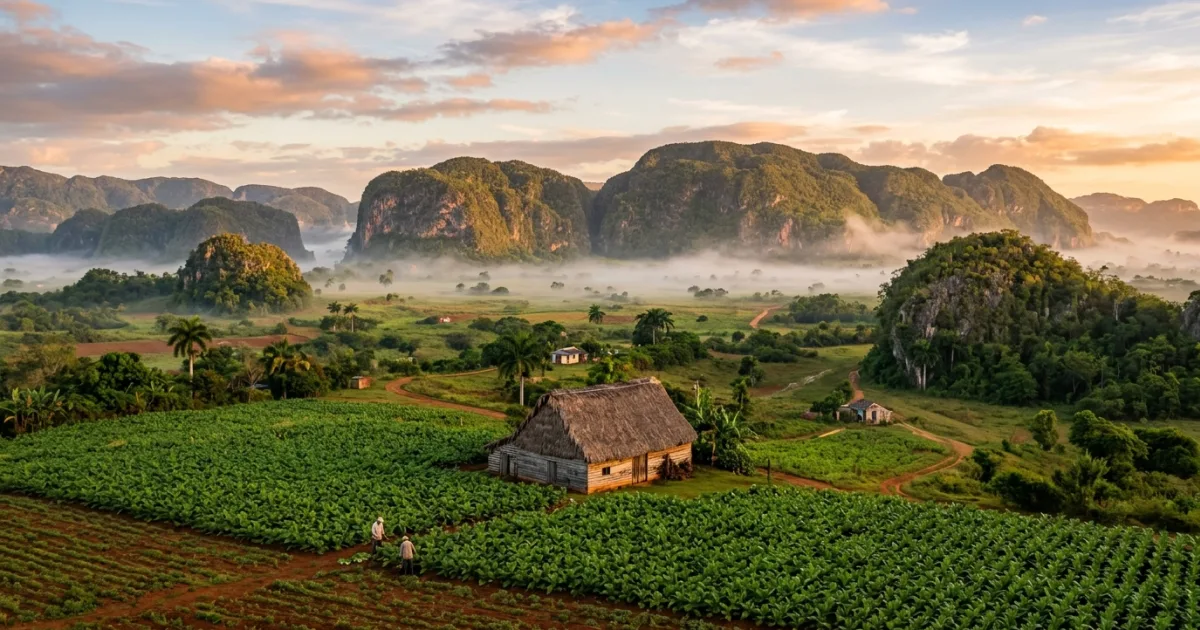
Panoramic view of the Viñales Valley with limestone mogotes and a traditional tobacco drying barn in Western Cuba.

Western Cuba Overview & Key Highlights

Western Cuba encompasses the country's most dramatic geological landscapes, anchored by the iconic karst limestone mogotes of the Viñales Valley and the lush biosphere reserves of the Sierra del Rosario. This verdant region spans the provinces of Pinar del Río and Artemisa, renowned globally as the agricultural heartland where the world's finest wrapper tobacco is cultivated using centuries-old traditional methods. Beyond farming, the territory boasts complex subterranean cave systems, biodiverse community nature reserves like Las Terrazas, and peaceful coastal keys. Travelers navigate a landscape characterized by red-clay footpaths, colonial-style homestays (casas particulares), and horse trails cutting through tranquil rural expanses. While infrastructure requires adaptability due to periodic power fluctuations and cash-reliant services, the payoff is unparalleled authenticity. Whether exploring subterranean rivers at Cueva del Indio, hiking through coffee plantation ruins in Soroa, or learning traditional rolling techniques straight from vegueros (tobacco farmers), Western Cuba offers an immersive counterweight to urban Havana.

Western Cuba Travel Guide: Logistics & In-Depth Tips

Western Cuba represents the agricultural and ecological soul of the island, contrasting sharply with the energetic urban density of nearby Havana. Defined by the Sierra de los Órganos and the Sierra del Rosario mountain chains, this sector includes the globally celebrated Viñales Valley—a UNESCO World Heritage cultural landscape recognized for its dramatic limestone mogotes rising sheer from flat valley floors. These ancient karst domes date back to the Jurassic period, sheltering intricate cave systems such as the massive Gran Caverna de Santo Tomás, the second-largest cavern system in the Americas.

Culturally, the province of Pinar del Río functions as the epicenter of premium tobacco cultivation. Here, fertile microclimates and iron-rich soils allow generational farmers to cultivate exquisite Habano wrapper leaves utilizing time-tested oxen-plowed techniques and natural cedar drying barns (casas de tabaco). Further east along the highway toward the capital sits Las Terrazas, an innovative pioneering reforestation community and UNESCO Biosphere Reserve established in 1968, showcasing sustainable forest management, ziplining, and community art studios alongside the cascading waterfalls of Soroa.

Reasons to Visit

  • Viñales Valley UNESCO Landscape: Witness breathtaking panoramic sunrises over verdant fields bordered by dramatic limestone mogotes.
  • World-Class Tobacco Culture: Tour working vega farms, observe traditional leaf curing, and purchase authentic handmade cigars straight from master growers.
  • Caving and Underground Expeditions: Traverse subterranean chambers and underground rivers within Cueva del Indio and Santo Tomás.
  • Eco-Tourism in Las Terrazas: Explore a pioneering sustainable forest settlement featuring canopy zip-lines, lake swimming, and artist workshops.
  • Authentic Casa Particular Stays: Connect deeply with local families by lodging in pastel-painted colonial residences with rooftop mountain views.

Things to Avoid

  • Avoid buying unboxed cigars offered by street touts in Viñales; these are counterfeit and rolled with low-quality scraps.
  • Do not rely on international bank debit or credit cards for daily purchases, as virtually all rural commerce is cash-only.
  • Avoid booking hikes during the peak midday heat; schedule trail rides and plantation walks early in the morning.
  • Do not drink unboiled tap water or consume unpeeled raw produce from informal street carts.
  • Avoid driving rental cars across rural roads after nightfall due to unlit livestock, horse carts, and deep road ruts.

Local Transportation Tips

Local transportation throughout Western Cuba relies predominantly on privately operated vintage vehicles and collective shared taxis known as colectivos. Between major tourist points like Havana and Viñales, guesthouse owners can easily arrange a seat in a classic American car or modern minivan for a fixed per-person cash fare. For local exploring within the Viñales Valley, an open-top hop-on hop-off tourist bus connects the town center to attractions like Cueva del Indio and the Mural de la Prehistoria. Guided horseback rides and bicycle rentals are popular for navigating rural farming tracks where motorized vehicles cannot pass.

Travel Etiquette

  • Greet locals warmly with 'Buenos días' or 'Buenas tardes' before asking for directions or ordering food.
  • Always ask permission before photographing tobacco farmers or rural residents on their private property.
  • Leave cash tips in foreign currency or Cuban pesos for casa staff, hiking guides, and musicians, as service tips form a critical part of their livelihood.
  • Dress modestly when visiting small rural villages, keeping swimwear confined to river swimming holes and beaches.

Recommended Age Group

Western Cuba offers enriching outdoor and cultural experiences, though rough terrain and limited medical infrastructure dictate distinct recommendations across traveler age categories.

  • Babies (0-2 years): Not Recommended. High tropical humidity, uneven unpaved surfaces unsuitable for strollers, and national shortages of baby formulas and disposable diapers present significant hurdles.
  • Kids (3-12 years): Neutral. Children enjoy gentle horse trail rides, exploring lighted caves like Cueva del Indio, and boat rides, though patience is required for long rural taxi transfers.
  • Teens (13-19 years): Recommended. Active teenagers thrive on canopy zip-lining at Las Terrazas, rugged cave exploring, hiking through limestone valleys, and cycling through scenic backroads.
  • Adults (20-64 years): Recommended. Perfect demographic for savoring world-renowned cigar traditions, cultural homestays, rum tastings, geological photography, and authentic culinary experiences.
  • Seniors (65+ years): Neutral. While relaxing rocking chairs on casa verandas and classic car tours are delightful, rocky trails, high step entrances, and uneven cobblestones require sound mobility.

Accessibility Level: Medium

  • Town centers like Viñales feature uneven sidewalks, high curbs, and cracked pavement lacking curb cuts.
  • Most traditional casas particulares possess narrow doorways and stepped entrances without ramp access.
  • Cave excursions and valley trails involve unpaved red clay pathways, steep stairs, and wet limestone rocks that are inaccessible to wheelchair users.
  • Accessible public transit is nonexistent; private vans must be coordinated in advance for travelers requiring flat transfers.

Did You Know?

The dramatic limestone mogotes of Viñales are rare karst formations that exist in only a handful of places on Earth, such as southern China and parts of Vietnam. Underneath the valley floor lies an intricate underground network spanning hundreds of miles of mapped limestone caverns.

Cool Statistics

  • 28,000+ meters: Total surveyed length of the Gran Caverna de Santo Tomás, making it one of the largest cave systems in the Caribbean basin.
  • 1999: The year the Viñales Valley was inscribed as a UNESCO World Heritage site for its traditional agricultural practices and landscape.
  • 6 million: Number of trees planted during the historic reforestation project that created the Las Terrazas eco-community starting in 1968.


Address:

Western Cuba, Cuba

Find Nearby Accommodations

Basic Info

address icon

COUNTRY & Region

Cuba,
Caribbean

ACCESSIBILITY LEVEL​

Medium
Currency icon

LOCAL CURRENCY​

Cuban Peso (CUP)
Price level icon
Medium
Safety Level icon

SAFETY LEVEL

Duration icon

Recommended Duration

• 1-7 days
• More than a week

Electricity

electricity icon

Electricity

110-120V, 
60Hz
Plug Socket icon

Plug Type

• Type A (Flat blade)
• Type B (Flat blade with grounding pin)
• Type C (Round pin)
Plug types
Click To View Plug Types
Western Cuba is part of our
Conscious Travel collection

Activities To Do In Western Cuba

Best Time To Visit Western Cuba

Western Cuba experiences a tropical savannah climate divided into a distinct dry winter season and a warm, humid summer season accompanied by an Atlantic hurricane risk.

  • November to April (Dry Season): The optimal window to visit, offering pleasant temperatures averaging 24°C to 28°C (75°F–82°F), minimal rainfall, and crisp visibility across the mogote valleys.
  • May to October (Wet Season): Characterized by high humidity, afternoon downpours, and temperatures frequently surpassing 32°C (90°F). July and August bring peak domestic tourism.
  • September to October (Hurricane Peak): Statistically the wettest months with the highest risk of tropical depressions affecting Pinar del Río and surrounding rural roads.

Average Temperatures Per Month

Remember to check the weather forecast a few days before the trip and before heading to the airport.

Safety Level icon

Safety Level

Violent crime is exceedingly rare in Western Cuba, making rural towns and nature reserves safe for daytime and nighttime walking. The primary hazards involve infrastructure deficiencies, including unlit rural roads, potholes, and slick limestone trails inside caves. Avoid unlicensed cigar touts ('jineteros') on the main streets of Viñales who promise cheap Cohibas that are often low-grade banana-leaf counterfeits; purchase cigars exclusively from licensed farms or official Habanos stores. Drink bottled or boiled water exclusively to avoid waterborne illness.

The rating is based on multi-year peace, crime, and security indices. Before you go, always verify current conditions through official government travel advisories.

Emergency Numbers

Police: 106
Ambulance: 104

No internet needed • Includes local translations • Free for TravelingWiz readers

Spoken Languages

Spanish is the official language. English is understood to varying degrees by casa particular hosts, national park guides, and paladar waitstaff, but basic conversational Spanish is essential for navigating local transport and conversing with tobacco farmers.

Learn The Language

  • Hola: Hello
  • Por favor: Please
  • Gracias: Thank you
  • ¿Cuánto cuesta esto?: How much does this cost?
  • ¿Dónde está la cueva?: Where is the cave?
  • La cuenta, por favor: The bill, please
  • ¿Tiene agua embotellada?: Do you have bottled water?
  • Buenos días: Good morning
Travel Booking Partner - TravelingWiz

Trip Cost & Budgeting for Western Cuba, 2026

Everything you need to know about money while traveling
Is Western Cuba expensive for tourists in 2026? Western Cuba offers reasonable value for mid-range travelers who navigate its unique dual economy carefully. Based on Human Verified prices, you can expect to pay around 500 CUP for a coffee, 700 CUP for a domestic beer, and 4,000 CUP for a main meal at a private paladar restaurant. Use the data table below to calculate your specific daily budget based on your travel style.
Currency icon

LOCAL CURRENCY​:

Cuban Peso (CUP)
Price level icon
Medium
Cash is essential across Western Cuba as credit cards are rarely accepted and ATMs are unreliable.

Per person, per day – pocket cash for small purchases.

Local: 2550
Cuban Peso (CUP)
≈ 106 USD

Full daily spend estimation (accommodation, food, transportation, attractions).

Travel Style
Cuban Peso (CUP)
≈ USD ($)
Budget
14050
585
Mid-range
25500
1063
Comfort
56100
2338

The Prices, Daily costs, and calculator results are estimates for planning purposes only. Actual costs may vary based on season, booking timing, personal spending habits, and currency fluctuations. TravelingWiz cannot be held responsible for discrepancies between these estimates and your final trip expenses.

  • • Bring crisp, undamaged US Dollars or Euros in cash to exchange locally or pay directly at casas and private restaurants.
  • • Dine at private paladares rather than state-run restaurants for far better food quality and generous portions.
  • • Use shared colectivo taxis or Viazul buses instead of private taxis to travel between Havana, Viñales, and Varadero.
  • • Always confirm prices in Cuban Pesos before ordering food or taking a ride to avoid currency exchange confusion.

Pre-Order Tickets

Avoid disappointment when tickets sell out — and skip the long lines by booking online in advance. You’ll often save up to 20% too.
Save up to 20%

Travel Discounts & Coupons

Save on hotels, attractions, transport, and gear — find verified discounts for smarter travel spending.
Verified Coupons

What To Pack

  • Cash in Euros or US Dollars in crisp, unmarked bills for daily expenses and informal exchange.
  • Sturdy, water-resistant hiking shoes with deep traction for slick red clay trails in Viñales.
  • High-capacity portable power bank to bridge local power outages and rolling blackouts.
  • Comprehensive personal first-aid kit including anti-diarrheal medication, rehydration salts, and prescription drugs.
  • High-strength insect repellent containing DEET or Picaridin for rural trekking and cave excursions.
  • Universal plug adapter compatible with Types A, B, and C outlets.
  • Compact, fast-drying travel umbrella and lightweight breathable rain poncho for tropical downpours.
  • Broad-spectrum reef-safe sunscreen and a wide-brimmed sun hat for valley exploration.
We couldn't find tips for Western Cuba.
If you got any, please share

Recommended Itineraries for Traveling to Western Cuba

We couldn't find itineraries for Western Cuba.
you can contact us for custom trip plan

Food & Drink Highlights

Local Food Overview

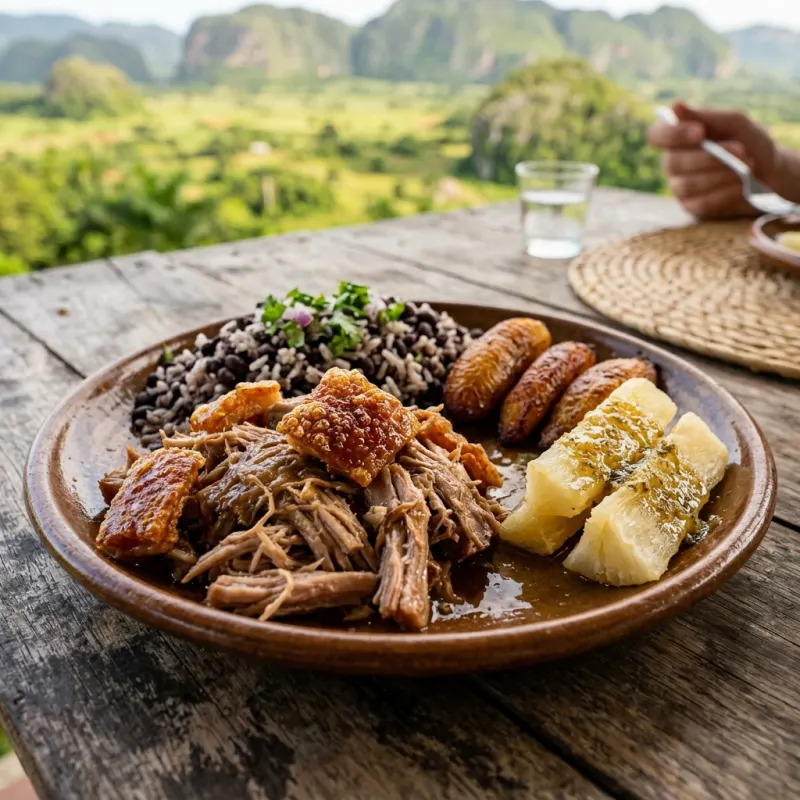
Cuisine in Western Cuba is rooted in traditional Cuban criollo cooking, shaped by the bounty of local smallholders and fertile agricultural valleys. Staple meals revolve around slow-roasted pork (lechón asado), black beans simmered with cumin and bell peppers served over white rice (moros y cristianos), and boiled or fried root vegetables like yucca and plantains drenched in garlic-citrus mojo. The region is especially famous for pioneering eco-gastronomy, with farm-to-table paladares in Viñales serving vegetables harvested directly from organic terraced gardens alongside honey-sweetened canchánchara cocktails.
Authentic Cuban Lechón Asado with moros y cristianos and fried plantains

Must Try Dish

Lechón Asado Campesino - Tender, slow-roasted pork marinated in bitter orange, garlic, and wild oregano, traditionally roasted whole over charcoal. It is served with black beans, rice, and boiled yucca smothered in savory garlic mojo sauce.
Food Experiences Title Icon

Food
Experiences

Discover cooking classes, tastings and local food tours

No food experience found
Maya, the human travel expert at TravelingWiz, offering curated, non-AI expertise

Maya’s Final Checklist for Western Cuba

Logistics shouldn’t be the focus of your trip—the experience should. I’ve hand-vetted these essential partners to ensure your arrival, stay, and exploration are as smooth as an Athenian breeze.

Where to Stay

From boutique hotels to local apartments—compare thousands of options and find the perfect stay in the best neighborhood.

Air Travel

Getting there should be seamless. Compare the best routes and prices across top airlines to start your journey on the right note.

Local Guides

Connect with experts who know the destination best. Get personalized advice and insider tips to help you plan your perfect trip.

Travel Protection

The “Engineer’s” rule: always have a backup. Secure your trip with a plan that covers every “what if” and unexpected change.

Car Rentals

Explore at your own pace with total freedom. Compare reliable rental options and find the right vehicle for your adventure.

Visa Services

Don’t let paperwork slow you down. Get expert assistance with your application to ensure all your entry documents are in order.

FAQs

While organized day excursions to Viñales from Havana run regularly (taking roughly 2.5 to 3 hours each way), staying at least two to three nights allows you to explore caves, horseback trails, and tobacco plantations without the midday heat and tourist crowds.
The most efficient way to travel between Havana, Soroa, Las Terrazas, and Viñales is by shared colectivo taxis or private classic cars booked through your accommodation hosts. Long-distance Viazul tourist buses operate on limited schedules along major corridors.
Internet connectivity is functional but can be inconsistent. Travelers access Wi-Fi using ETECSA prepaid cards in designated town squares, hotel lobbies, and equipped casas particulares, though outages during electricity cutoffs are common.

Your Insights Matter

TravelingWiz grows through the stories of our community. If you’ve recently explored ,Western Cuba share your tips and stories to help us perfect our guides for the next traveler.

Related Articles

Check out our related articles and blog posts to learn even more about the destination.

No related articles found

Don’t Travel Alone

Share with your friends and family

Where should we send your offline card?

We hate spam just as much as you do

newsletter_consent *