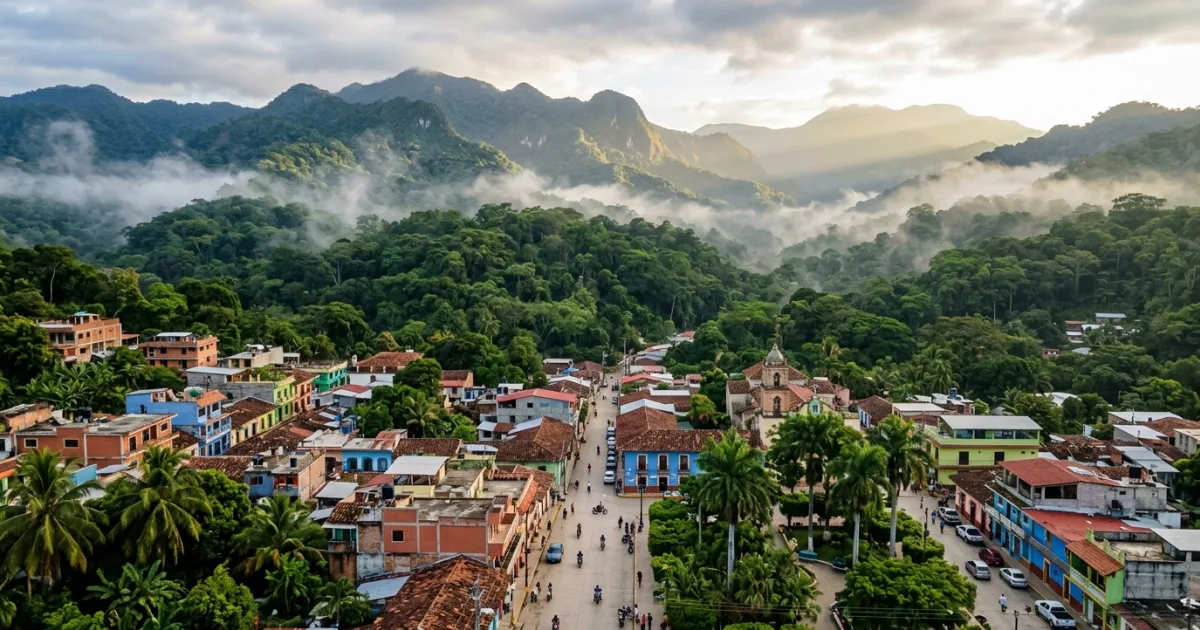
Palenque Town serves as the principal urban hub of northern Chiapas, established in the sixteenth century near the borders of the ancient Mayan lowlands. Today, the town presents two distinct personalities: the lively, practical downtown grid centered on the zócalo (Parque Central), and La Cañada, a quiet, verdant hotel and dining strip buffered by towering trees that merge directly into the jungle edge.
While travelers primarily pass through Palenque to marvel at the classic Maya kingdom ruled by King Pakal the Great, spending dedicated time in the town unlocks regional indigenous markets, authentic comedores, and direct transit arteries to breathtaking cascades like Cascadas de Roberto Barrios, Misol-Ha, and Agua Azul. Its strategic position offers visitors an unpretentious glimpse into authentic southern Mexican daily life away from mass-resort enclaves.
Reasons to Visit
- Gateway to the UNESCO World Heritage Palenque Archaeological Zone, set dramatically against lush rainforest.
- Convenient departure point for swimming in the multi-tiered turquoise limestone pools of Roberto Barrios.
- Authentic southern Mexican market culture with rich Chiapas coffee, raw chocolate, and handmade crafts.
- Atmospheric dining in the shaded, jungle-fringed neighborhood of La Cañada.
- Affordable base for budget travelers, backpackers, and culture enthusiasts exploring Chiapas.
Things to Avoid
- Avoid taking rural secondary roads or traveling between towns after nightfall due to poorly lit highways and infrequent regional highway disputes.
- Do not drink unboiled or unfiltered tap water; stick exclusively to bottled or purified water.
- Avoid visiting the Mayan ruins during the peak midday heat (12:00 PM to 2:30 PM) when humidity and sun exposure are most punishing.
- Do not touch or disturb jungle wildlife, including howling monkeys and reptiles, found along forest paths.
Local Transportation Tips
Getting around Palenque Town and its surrounding attractions is straightforward and inexpensive. For travel within town, standard white taxis operate on fixed neighborhood rates, typically charging 40 to 60 MXN for short rides between El Centro and La Cañada. Shared public vans known as colectivos operate continuously along the main highway; passenger vans labeled 'Ruinas' depart regularly from near the town hall to the archaeological zone entrance for about 25 MXN per passenger.
For regional excursions to Roberto Barrios or Agua Azul, colectivos depart from specialized transport depots located a few blocks from the central market, offering cost-effective transit compared to booking private chauffeured vehicles.
Travel Etiquette
- Greet shopkeepers and restaurant staff politely with 'Buenos días' or 'Buenas tardes' upon entering.
- Always ask permission before taking close-up portraits of indigenous Maya vendors or residents.
- Dress respectfully when leaving the swimming areas; avoid walking around town centers in swimwear without a shirt or cover-up.
- Tipping 10% to 15% is standard practice in sit-down cafes and restaurants.
Recommended Age Group
Palenque Town is best experienced by independent adults and active youth comfortable with tropical weather and variable terrain.
- Babies (0-2 years): Not Recommended. Intense tropical heat, high humidity, insect presence, and rough cobblestones or jungle paths make navigating with strollers virtually impossible.
- Kids (3-12 years): Neutral. Children fascinated by wildlife and climbing may enjoy the ruins and waterfall pools, though heat fatigue and steep drop-offs require constant supervision.
- Teens (13-19 years): Recommended. Ideal for adventurous teenagers interested in ancient history, river swimming, and lush jungle trekking.
- Adults (20-64 years): Recommended. Perfect for hikers, history enthusiasts, backpackers, and cultural explorers seeking immersive archaeological and nature experiences.
- Seniors (65+ years): Neutral. Seniors in good physical condition will appreciate the historic majesty, though high humidity, slippery stone paths, and limited elevator infrastructure can present challenges.
Accessibility Level: Medium
- Palenque Town sidewalks often have uneven pavement, high curbs, and occasional obstacles, making self-propelled wheelchair navigation challenging.
- The Palenque Archaeological site features a paved lower path to view the main museum and certain central plazas, but access to elevated temples requires ascending steep stone staircases without handrails.
- Standard local colectivo vans are not wheelchair-accessible; travelers with mobility restrictions should arrange private accessible vans in advance through regional tour agencies.
Did You Know?
The Mayan name for the ancient city surrounding Palenque was 'Lakamha', which translates to 'Big Water', named for the numerous natural springs, rivers, and subterranean aqueducts engineered by the Maya that still flow beneath the rainforest floor.
Cool Statistics
- Over 1,400 ancient Mayan structures remain mapped within the national park, yet less than 10% have been fully excavated from the jungle.
- Average annual rainfall in the surrounding Chiapas lowlands exceeds 2,800 millimeters (110 inches).
- The ancient city of Palenque flourished between 500 and 700 CE under the reign of King K'inich Janaab Pakal I.






Buy a compatible power adapter for your trip