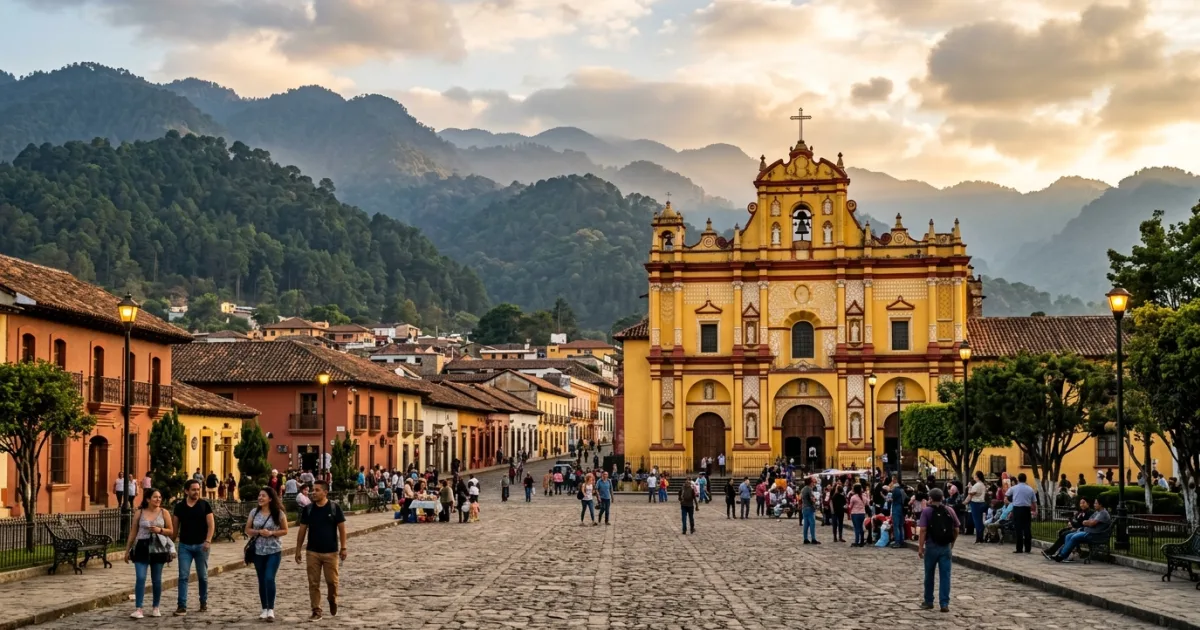
San Cristóbal de las Casas is a vibrant colonial gem tucked deep into the cool, mountainous highlands of Chiapas. Founded in 1528, the town boasts an atmospheric urban grid dotted with baroque churches, multi-tiered tile roofs, and pastel-painted walls draped in bougainvillea. At an elevation exceeding 2,200 meters, it provides a dramatic sensory departure from Mexico's humid coastal zones, greeting travelers with crisp mountain air, morning fog, and cozy wood-burning hearths in local cafes.
The town's identity is shaped profoundly by the indigenous Maya communities that trade, worship, and preserve their languages throughout the region. Pedestrian thoroughfares such as Real de Guadalupe and Andador Eclesiástico serve as lively corridors of activity, lined with artisanal amber boutiques, contemporary art galleries, indie bookstores, and specialty coffee houses. San Cristóbal balances historic colonial charm with a distinct counter-cultural and eco-conscious vibe, attracting remote workers, writers, and cultural explorers from around the globe.
Reasons to Visit
- Exquisite Spanish colonial and baroque religious architecture, led by the facade of Santo Domingo and the San Cristóbal Cathedral.
- Authentic indigenous cultural exchange through traditional markets, textile cooperatives, and neighboring villages.
- World-renowned coffee and cacao traditions supported by organic, shade-grown mountain farms.
- Ideal springboard for regional outdoor wonders, including Sumidero Canyon, El Chifón waterfalls, and Montebello Lakes.
- Budget-friendly living with top-notch co-working spaces and high-speed fiber-optic internet for digital nomads.
Things to Avoid
- Avoid photographing local indigenous people, especially children and shamans, without explicit permission.
- Never take photos or videos inside the church of San Juan Chamula under any circumstances.
- Do not drink tap water; use purified bottled water even for brushing teeth if you have a sensitive stomach.
- Avoid driving rural highway routes after dusk; keep long-distance transit scheduled during bright daylight hours.
- Do not wear lightweight summer beachwear; the high altitude brings cold temperatures that require proper outerwear.
Local Transportation Tips
Navigating the historic core of San Cristóbal de las Casas is best accomplished on foot, as pedestrian walkways (andadores) connect major plazas, churches, and dining avenues. Local white taxis are readily hailed on street corners and operate on fixed, affordable flat rates across central zones. For journeys to outlying communities like Chamula, Zinacantán, or nearby nature parks, white passenger vans known as colectivos depart regularly from the terminal zone behind the Santo Domingo market, offering reliable and inexpensive transport.
Travel Etiquette
- Greet shopkeepers and restaurant hosts with a polite 'Buenos días' or 'Buenas tardes' upon entering.
- Support local artisans by negotiating respectfully; excessive haggling diminishes the livelihood of indigenous weavers.
- Dress modestly when visiting active religious temples, ensuring shoulders and knees remain covered.
- Always request permission before photographing indigenous market stalls or artisan workshops.
Recommended Age Group
San Cristóbal de las Casas suits curious travelers, but high altitude and cobblestone paths influence traveler comfort across different age brackets.
- Babies (0-2 years): Neutral. Cobblestone walkways and narrow sidewalks can make baby strollers difficult to maneuver, requiring baby carriers.
- Kids (3-12 years): Recommended. Children enjoy colorful artisan markets, interactive amber workshops, and boat safaris in nearby Sumidero Canyon.
- Teens (13-19 years): Recommended. Mountain biking, cave exploration at Rancho Nuevo, and lively bohemian cafes provide engaging experiences for teenagers.
- Adults (20-64 years): Recommended. Perfect demographic for enjoying colonial architecture, specialty culinary tours, coffee tasting, and surrounding nature trips.
- Seniors (65+ years): Neutral. While culturally enriching, the high altitude and uneven stone pavements require steady footing and pacing.
Accessibility Level: Medium
- Uneven cobblestones, high curb stones, and missing curb ramps create mobility challenges for standard wheelchair users in older quarters.
- Main pedestrian corridors (Andador Real de Guadalupe and Andador Eclesiástico) offer flatter terrain, though surface stones remain irregular.
- Many historic hotels and colonial restaurants lack modern elevators and ramp access due to preservation restrictions.
- Accessible private van transport can be organized in advance through specialized travel operators based in Tuxtla Gutiérrez.
Did You Know?
The church floor inside nearby San Juan Chamula is completely cleared of pews and covered in fresh green pine needles. Worshippers sit directly on the ground, burning colored candles and chanting in Tsotsil while drinking carbonated soda or pox to burp out negative spirits, creating a unique syncretic blend of ancient Maya ritual and Catholic veneration found nowhere else on earth.
Cool Statistics
- 2,200 meters: The elevation of San Cristóbal de las Casas above sea level.
- 1528: The year the town was founded by Spanish conquistador Diego de Mazariegos.
- 70+: Number of distinct indigenous communities trading their crafts across the central markets weekly.
- 100%: Regionally sourced Chiapas coffee available at dozens of micro-roasteries throughout the center.






Buy a compatible power adapter for your trip