The State of Mexico (Estado de Mexico) is a sprawling, geographically diverse region that completely surrounds Mexico City on three sides. It is the most populous state in the country and serves as a microcosm of Mexico itself, blending rapid industrialization with deeply rooted indigenous traditions and pristine natural reserves. The state's topography ranges from the fertile valleys of Toluca to the towering, snow-capped peaks of the Trans-Mexican Volcanic Belt.
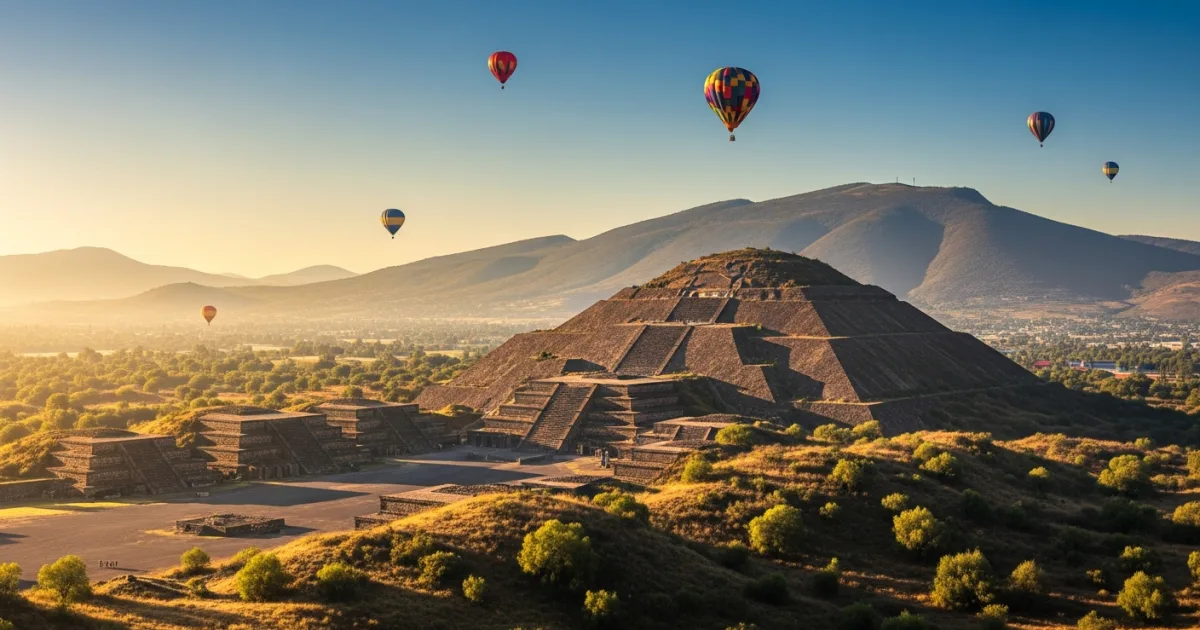
Historically, this region was the heartland of several powerful pre-Columbian civilizations, most notably the builders of Teotihuacan, the 'City of the Gods'. Today, visitors can trace the timeline of Mexican history by exploring these ancient ruins, wandering through the cobblestone streets of colonial-era Pueblos Mágicos (Magical Towns) like Tepotzotlán and El Oro, and experiencing the vibrant, modern culture that thrives in its bustling markets and lively town squares.
Reasons to Visit
- Teotihuacan: Walk the Avenue of the Dead and marvel at the colossal Pyramids of the Sun and Moon.
- Monarch Butterfly Biosphere Reserve: Witness millions of butterflies wintering in the oyamel fir forests.
- Pueblos Mágicos: Discover the charm of towns like Valle de Bravo, known for its lake and paragliding, and Malinalco, famous for its monolithic Aztec temple.
- Nevado de Toluca: Hike into the crater of this dormant volcano to see its stunning twin alpine lakes.
- Cosmovitral Botanical Garden: Admire the breathtaking stained-glass murals housing a lush botanical garden in Toluca.
Things to Avoid
- Avoid drinking tap water; always opt for bottled or purified water.
- Do not hail taxis directly from the street in urban areas; use official 'sitios' or ride-sharing apps like Uber.
- Avoid walking alone at night in non-tourist urban peripheries.
- Do not underestimate the altitude; take time to acclimatize before attempting strenuous hikes.
- Avoid visiting major archaeological sites on Sundays if you want to escape the crowds, as entry is free for Mexican nationals and residents.
Local Transportation Tips
Getting around the State of Mexico requires a mix of transportation modes. For intercity travel, first-class buses (like ETN or Primera Plus) are comfortable, safe, and reliable. For shorter distances between towns, 'colectivos' (shared minivans) are cheap and frequent, though they can be crowded. Renting a car is an excellent option for exploring rural areas, Pueblos Mágicos, and natural reserves at your own pace, but be prepared for toll roads (cuotas) which are safer and faster than free roads (libres).
Travel Etiquette
- Greet people with a polite 'Buenos días' or 'Buenas tardes' when entering shops or restaurants.
- A handshake is common for first meetings, while a single cheek kiss is standard among friends and acquaintances.
- Tipping 10% to 15% is customary in restaurants and cafes.
- Always ask for permission before taking photographs of indigenous people or their specific ceremonies.
- Dress modestly when visiting churches or religious sites; avoid beachwear in towns and cities.
Recommended Age Group
The State of Mexico offers diverse attractions that cater to various age groups, though some natural sites require physical stamina.
- Babies (0-2 years): Neutral. While towns are welcoming, high altitudes, uneven cobblestones, and rugged terrain at ruins and volcanoes can be challenging for strollers and infants.
- Kids (3-12 years): Recommended. Children will love the open spaces of Teotihuacan, the magical boat rides in Valle de Bravo, and the enchanting butterfly reserves.
- Teens (13-19 years): Recommended. Excellent opportunities for adventure sports like paragliding, mountain biking, and exploring ancient pyramids.
- Adults (20-64 years): Recommended. Perfect for those seeking a mix of deep historical exploration, rich culinary experiences, and outdoor adventures.
- Seniors (65+ years): Recommended. The colonial towns and flat areas of archaeological sites are highly accessible, though caution is advised regarding high altitudes and steep pyramid steps.
Accessibility Level: Medium
- Wheelchair accessibility is generally limited in historical colonial towns due to narrow sidewalks and cobblestone streets.
- Major archaeological sites like Teotihuacan have some flat, dirt paths that are manageable, but climbing the pyramids is not possible for mobility-impaired visitors.
- Modern museums in Toluca, such as the Cosmovitral, offer better accessibility features including ramps and flat surfaces.
- Public transportation is largely not wheelchair friendly; hiring a private driver or specialized tour operator is recommended for accessible travel.
Did You Know?
Did you know that the State of Mexico is home to the only monolithic pre-Hispanic structure in Mexico? The Cuauhtinchán temple in Malinalco was carved entirely out of the side of a mountain by Aztec warriors, a feat of engineering comparable to the rock-hewn churches of Lalibela or the temples of Petra.
Cool Statistics
- The State of Mexico has a population of over 16 million people, making it the most populous state in the country.
- It boasts 10 designated 'Pueblos Mágicos' (Magical Towns), recognized for their cultural, historical, and architectural significance.
- The Nevado de Toluca volcano reaches an elevation of 4,680 meters (15,354 feet) above sea level.
- Teotihuacan was once the largest city in the pre-Columbian Americas, with an estimated population of 125,000 or more in the 1st millennium AD.






Buy a compatible power adapter for your trip