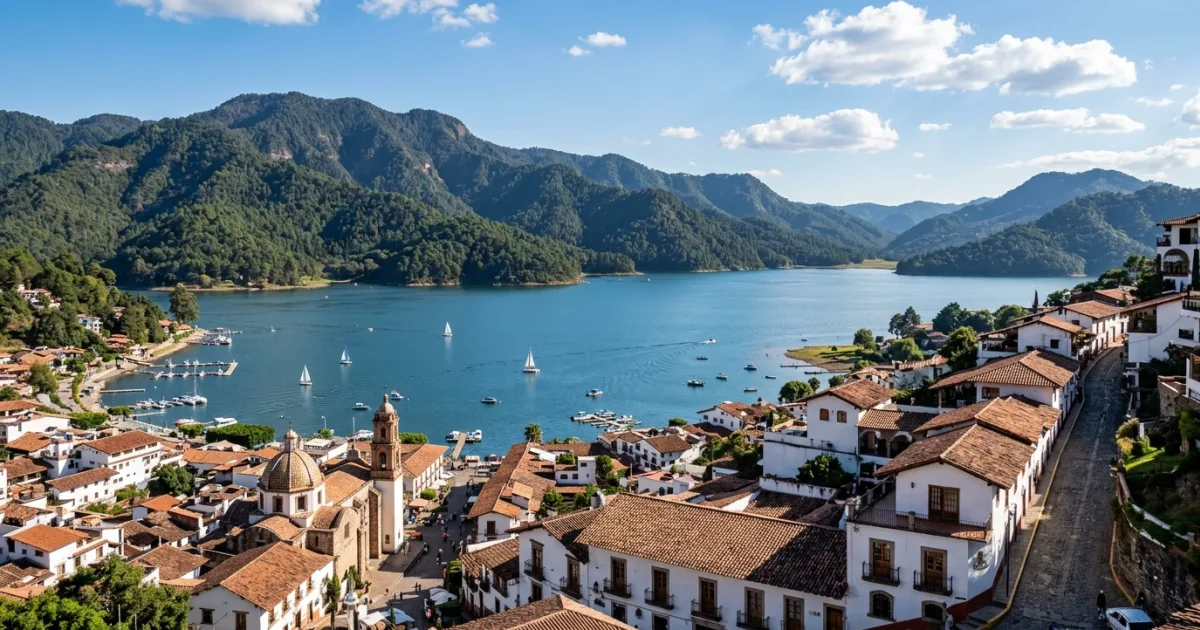
Valle de Bravo sits tucked into the mountainous terrain of the State of Mexico, situated along the tranquil shores of Lake Avándaro. With its origin dating back to the Franciscan settlement of San Francisco del Valle de Temascaltepec in 1530, the town preserves a timeless visual harmony defined by cobblestone avenues, red clay barrel tiles, and clean white stucco walls. These historical streetscapes have earned Valle de Bravo official designation as a Mexican Pueblo Mágico, serving as an aesthetic sanctuary just a short drive from the nation's capital.
Beyond its colonial center, the surrounding natural basin provides a dramatic amphitheater for premier adventure activities. Towering cliffs at the Monte Alto State Reserve generate consistent thermal air currents that make Valle de Bravo an internationally recognized capital for hang gliding and paragliding. Below, the sprawling artificial lake invites water-skiers, paddleboarders, and kayakers, while the nearby pine-oak forests shelter roaring waterfalls like Velo de Novia and create a microclimate favored by the migrating monarch butterflies each winter.
Reasons to Visit
- World-renowned paragliding conditions offering tandem flights over Lake Avándaro and surrounding pine forests.
- Proximity to the Piedra Herrada Sanctuary, hosting millions of overwintering monarch butterflies from November to March.
- Picturesque colonial architecture, vibrant craft markets, and peaceful waterfront strolls along the municipal pier.
- Extensive mountain biking, trail running, and hiking routes through the Monte Alto and Velo de Novia protected reserves.
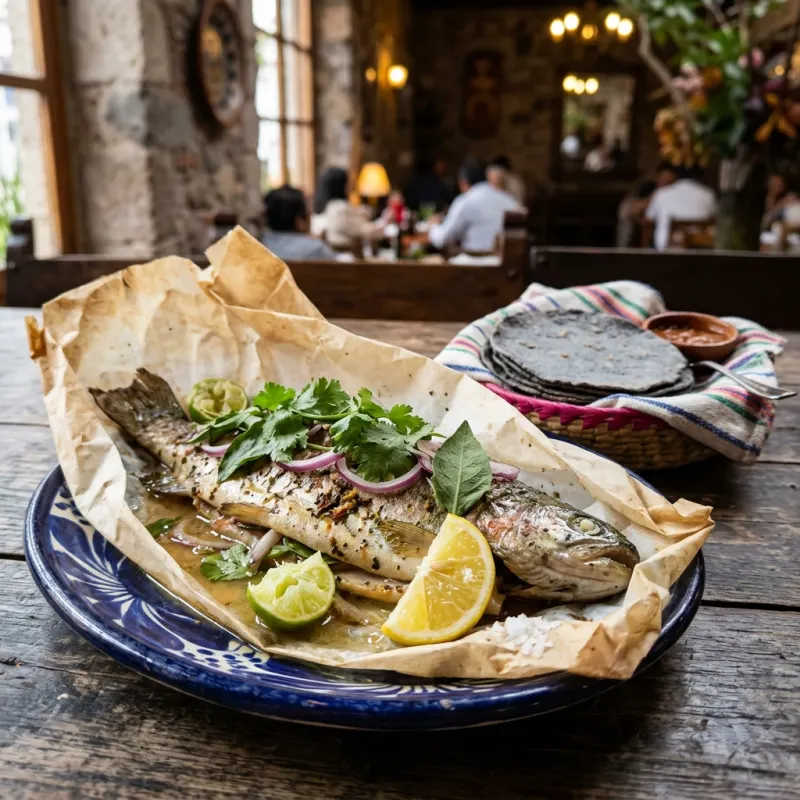
- Thriving culinary scene offering fresh river trout, rustic bakeries, and upscale lakeside terrace dining.
Things to Avoid
- Avoid driving into the historic center on Saturday afternoons without a pre-booked hotel parking spot, as narrow colonial streets quickly gridlock.
- Do not swim in unmonitored or motorized zones of Lake Avándaro, as private boat traffic can create hazardous conditions.
- Avoid visiting the Monarch Butterfly Sanctuaries without checking local cloud cover, as butterflies only take flight when direct sunlight warms the canopy.
- Do not rely entirely on credit cards or mobile pay systems when visiting artisan stalls, waterfall parks, or taking taxis.
Local Transportation Tips
Navigating the historic core of Valle de Bravo is best completed on foot, although the steep, polished cobblestones require sensible footwear. For travel between the center, the Avándaro hotel zone, and regional waterfalls, green-and-white municipal taxis are abundant and charge standardized zone-based cash fares. Public combis (passenger vans) provide low-cost routes between the main market and outer villages like Avándaro and Colorines.
Travel Etiquette
- Greet shopkeepers, waitstaff, and drivers with a polite 'Buenos días' or 'Buenas tardes' before requesting services.
- Always hire an official local ejido guide when visiting the monarch butterfly colonies to support the community stewards of the forest.
- Maintain quiet, respectful behavior and strictly avoid flash photography inside butterfly sanctuaries to prevent disturbing the insects.
- A tip of 10% to 15% is standard practice in sit-down restaurants and lakeside cafes.
Recommended Age Group
Valle de Bravo provides varied experiences across different generations, from relaxed lakeside dining to rigorous mountain sports.
- Babies (0-2 years): Neutral. The steep cobblestone hills and narrow sidewalks make navigating strollers difficult, though the serene lakeside parks offer peaceful picnic spots.
- Kids (3-12 years): Recommended. Children enjoy boat excursions across the reservoir, visiting roaring waterfalls like Velo de Novia, and riding horses at the butterfly sanctuaries.
- Teens (13-19 years): Recommended. Outstanding setting for active teenagers wanting to try paragliding, mountain biking, wakeboarding, or trail riding.
- Adults (20-64 years): Recommended. Perfect balance of outdoor exploration, lakefront relaxation, romantic getaways, and lively gastronomy.
- Seniors (65+ years): Neutral. The hilly terrain, high altitude, and irregular stone walkways can present physical challenges, though relaxing scenic boat cruises and tranquil boutique hotels remain pleasant.
Accessibility Level: Medium
- Historic center sidewalks are elevated, narrow, and paved with uneven cobblestones, presenting moderate difficulties for manual wheelchair users.
- Lakeside docks and the primary malecón boardwalk feature flat, paved terrain suitable for assisted mobility devices.
- Butterfly sanctuaries such as Piedra Herrada feature steep, natural dirt paths that are not wheelchair accessible, though horse rentals are available at base camps.
- Modern upscale hotels in Avándaro and along the lakefront generally offer ground-floor accessible rooms and zero-threshold entryways.
Did You Know?
Lake Avándaro is not a natural body of water; it was created in 1947 as an artificial reservoir for the Miguel Alemán Hydroelectric System to supply water and power to central Mexico.
Cool Statistics
- Elevation: 1,814 meters (5,951 feet) above sea level
- Average year-round daytime temperature: 21°C (70°F)
- Lake Avándaro surface area: approximately 21 square kilometers (8.1 square miles)
- Distance from Mexico City: 140 kilometers (87 miles) west






Buy a compatible power adapter for your trip