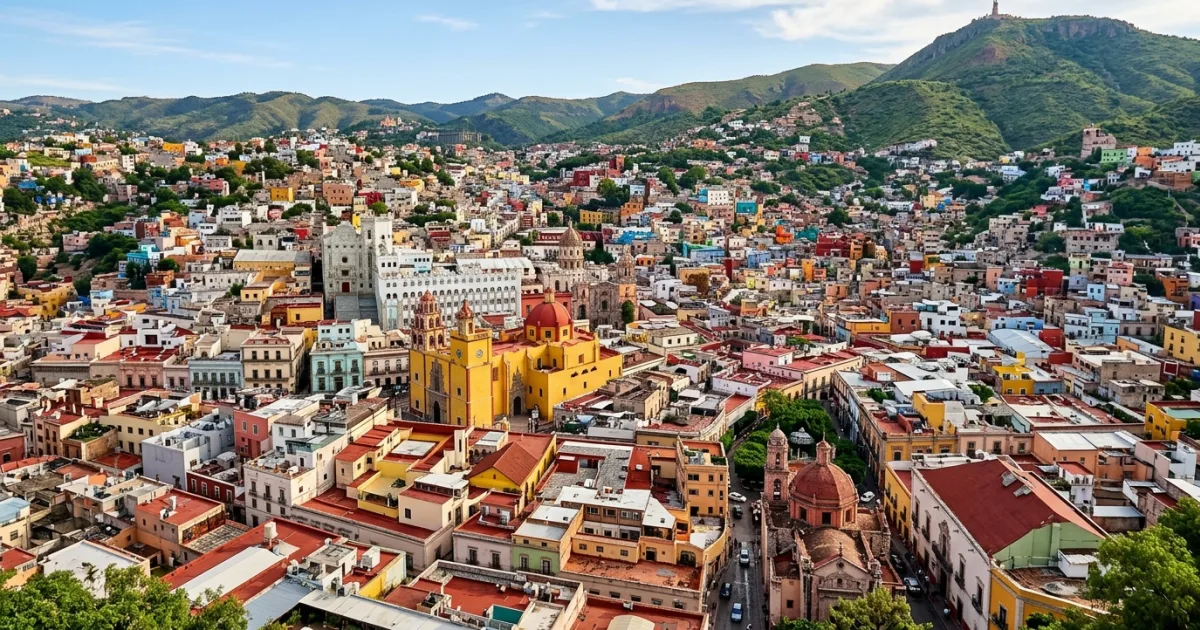
Centro Historico Guanajuato stands out among Latin American colonial settlements for its distinctive vertical topography and ingenious infrastructure. Constructed over an intricate river basin surrounded by rugged peaks, the town expanded organically along winding ravines rather than the typical Spanish grid pattern. In the 20th century, extensive drainage tunnels carved through bedrock were repurposed into subterranean roads, preserving the historic streetscape above for pedestrians and open-air social life.
Surrounding the main promenade of Jardín de la Unión are architectural masterpieces such as the neoclassical Teatro Juárez and the baroque Church of San Diego. Cultural life pulses through every plaza, marked by book fairs, street performances, university gatherings, and terrace dining. The district was declared a UNESCO World Heritage site in 1988 alongside its adjacent silver mines, honoring its monumental role in global mining history and exceptional colonial urbanism.
Reasons to Visit
- Explore an exceptional pedestrian-friendly city center interconnected by historic subterranean roadway tunnels.
- Witness remarkable Spanish colonial and neoclassical landmarks like Teatro Juárez and Basilica de Guanajuato.
- Experience traditional musical walking tours (callejoneadas) through romantic alleys like the Callejón del Beso.
- Savor regional culinary gems including Enchiladas Mineras and authentic market dishes at Mercado Hidalgo.
- Enjoy spectacular panoramic sunset vistas across the colorful hillside houses from the El Pípila monument.
Things to Avoid
- Avoid wearing smooth-soled or high-heeled footwear; the ancient stone cobblestones and ramps are slick and uneven.
- Do not rely heavily on rental cars inside the historic core; parking is severely restricted and navigating the tunnel network requires local knowledge.
- Avoid accepting street tour guide solicitations without verifying official certification badges issued by Guanajuato's tourism board.
- Do not wander deep into unfamiliar, unlit peripheral hillside alleys late at night without a local guide.
Local Transportation Tips
Centro Historico Guanajuato is primarily a pedestrian precinct. Vehicles operate primarily through the underground network of stone tunnels, with access points and bus stops located in subterranean bays. Taxis and Uber are readily available and affordable for traveling to transit hubs or outer neighborhoods. A funicular operates directly behind Teatro Juárez, providing convenient transit up the steep hillside to the El Pípila overlook for nominal ticket fares.
Travel Etiquette
- Greet shopkeepers and restaurant staff politely with 'Buenos días' or 'Buenas tardes' upon entering establishments.
- Leave a tip of 10% to 15% at sit-down dining venues and cantinas, as gratuity is rarely included automatically.
- Dress respectfully when stepping inside functioning religious structures like the Basilica Colegiata.
- Request permission before photographing artisan craftspeople or private residences in the narrow alleys.
Recommended Age Group
Centro Historico Guanajuato offers rich cultural immersion, though its physical topography presents notable accessibility challenges.
- Babies (0-2 years): Not Recommended. Narrow cobblestone streets, endless steep stairs, and high curbs make standard strollers completely impractical.
- Kids (3-12 years): Neutral. Children will enjoy the tunnel passages and funicular ride, but prolonged uphill walking can tire little legs quickly.
- Teens (13-19 years): Recommended. Teenagers will appreciate the vibrant visual atmosphere, street art, university vibe, and legendary ghost stories.
- Adults (20-64 years): Recommended. Perfect demographic for walking tours, cantina hopping, architectural exploration, and evening cultural festivals.
- Seniors (65+ years): Neutral. Active seniors comfortable with stairs and cobblestones will love the historic depth, though steep slopes require moderate endurance.
Accessibility Level: Medium
- Wheelchair accessibility is very limited throughout the historic district due to steep inclines, historic stone staircases, and uneven cobblestones.
- Select central plazas, such as Jardín de la Unión and Plaza de la Paz, offer level flagstone walkways suitable for mobility aids.
- The funicular to Monumento al Pípila provides ramped entry access, accommodating wheelchairs for panoramic valley viewing.
- Subterranean road levels are vehicle-heavy with narrow sidewalks, requiring careful planning for travelers with mobility limitations.
Did You Know?
Guanajuato's subterranean street system was not originally built for automobiles. The main tunnels were engineered as hydraulic aqueducts and flood diversion channels in the 19th and early 20th centuries to protect the silver city from devastating flash floods, before being paved over for vehicular transit in the 1960s.
Cool Statistics
- UNESCO World Heritage status granted in 1988.
- Over 8 kilometers of interconnected vehicular tunnels running underneath the historic center.
- More than 2,000 meters above sea level in elevation, creating crisp mountain air year-round.
- Home to the premier Cervantino Festival, attracting artists from over 30 countries annually.







Buy a compatible power adapter for your trip