Bosque de Chapultepec, known commonly as Chapultepec Park, represents the historical, ecological, and cultural center of Mexico City. Stretching across more than 686 hectares, it is one of the largest metropolitan public parks on the American continent. The name derives from the Nahuatl term 'Chapoltepēc', which translates to 'at the grasshopper hill'. Pre-Columbian rulers utilized the area's fresh springs to channel potable water across Lake Texcoco to the Aztec capital of Tenochtitlan, while planting sacred Ahuehuete trees, some of which still stand today.
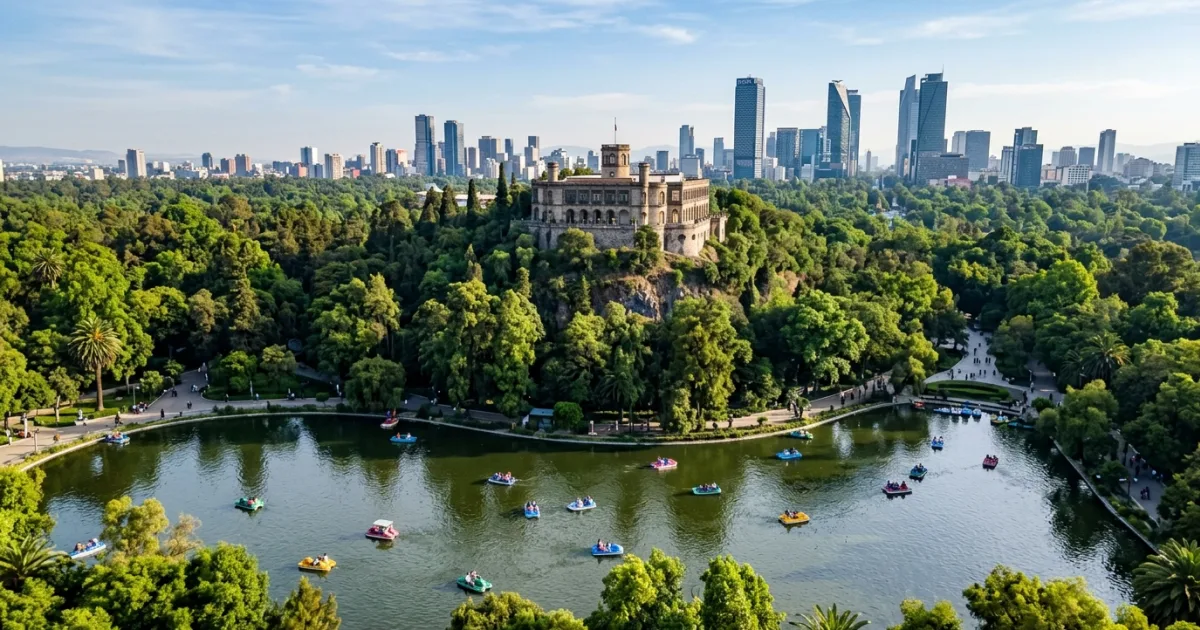
The park is split into four distinct sections. The First Section (Primera Sección) contains the highest concentration of historical monuments, including the hilltop Chapultepec Castle, the Museum of Modern Art, the Rufino Tamayo Museum, and the world-renowned National Museum of Anthropology. The Second Section offers wide recreational spaces around Lago Mayor, family entertainment, and the Cárcamo de Dolores containing Diego Rivera's submerged mural. The Third and Fourth Sections feature ecological preservation initiatives, contemporary art hubs, and restored forested corridors, making the park a versatile retreat from the bustling megalopolis.
Reasons to Visit
- Tour Chapultepec Castle, the only authentic royal residence in the Americas, boasting expansive views of the Mexico City skyline.
- Explore the National Museum of Anthropology, celebrated globally for its unmatched collection of Mesoamerican artifacts.
- Walk under ancient Montezuma cypress trees (Ahuehuetes) that have stood in the park since the Aztec empire.
- Rent a pedal boat to navigate Lago Mayor or Lago Menor in the shade of lush greenery.
- Enjoy open-air art displays, botanical conservatories, and free public cultural performances.
Things to Avoid
- Avoid planning a visit to the First Section on Mondays, when gates, museums, and the zoo are strictly closed to the public.
- Do not rely entirely on credit cards, as outdoor vendors, snack stands, and boat rentals accept cash only.
- Avoid staying inside unlit or secluded sections of the park after dark; exit promptly when the park bells ring at dusk.
- Avoid feeding the park's resident squirrels or waterbirds, which disrupts the local ecosystem.
- Do not try to visit all major museums in one afternoon; allocate dedicated time to avoid cultural exhaustion.
Local Transportation Tips
Public transportation provides the most direct and cost-effective access to Chapultepec Park. Metro Line 1 stops at Chapultepec Station directly at the eastern gate of the First Section, while Metro Line 7 stops at Auditorio and Constituyentes stations, providing immediate access to the First and Second Sections. The double-decker Metrobús Line 7 operates along Paseo de la Reforma, stopping at Chapultepec, Gandhi, and Antropología. App-based rideshares like Uber and DiDi drop off smoothly at major avenue roundabouts and designated museum bays.
Travel Etiquette
- Dress in comfortable walking attire and maintain quiet voices inside museum galleries and historical monument zones.
- Dispose of all trash in designated sorting bins (organic and inorganic) placed throughout the walkways.
- Ask permission before taking close-up portraits of street vendors, performers, or indigenous artisans.
- Bicycles and scooters must yield to pedestrians on shared pathways and are prohibited from select pedestrian-only monument ramps.
Recommended Age Group
Chapultepec Park offers varied activities and terrain that accommodate visitors of all ages with proper planning.
- Babies (0-2 years): Recommended. Paved pathways in the First and Second Sections are stroller-friendly, with plenty of shaded benches for rest and nursing.
- Kids (3-12 years): Recommended. Children will love the free Chapultepec Zoo, pedal boats on the lake, spacious open lawns, and interactive science displays.
- Teens (13-19 years): Recommended. Older children appreciate the dramatic views from the Castle, modern art installations, photography vantage points, and bustling street food stalls.
- Adults (20-64 years): Recommended. Ideal for cultural travelers, art enthusiasts, and outdoor walkers seeking world-class museums, historical architecture, and scenic natural trails.
- Seniors (65+ years): Recommended. The flat main promenades provide accessible walking, although the uphill path to Chapultepec Castle requires a steady climb or use of the mini-train shuttle.
Accessibility Level: Medium
- The primary walkways in the First and Second Sections are paved, wide, and largely step-free, suitable for manual and electric wheelchairs.
- Chapultepec Castle features ramp access along its interior courtyards, and an electric tram or shuttle service operates periodically from the base of the hill for visitors with mobility impairments.
- The National Museum of Anthropology and the Museum of Modern Art provide full wheelchair accessibility, elevators, and accessible restroom facilities.
- Accessible parking spots are available near major museum entrances along Paseo de la Reforma and Avenida Constituyentes.
Did You Know?
Chapultepec Castle is the only royal palace in the entire Western Hemisphere that served as an actual sovereign residence. It was home to Emperor Maximilian I and Empress Carlota of Mexico during the Second Mexican Empire between 1864 and 1867, prior to serving as the official residence for Mexican presidents until 1939.
Cool Statistics
- Total area exceeds 686 hectares (1,700 acres), making it roughly double the size of New York's Central Park.
- Attracts an estimated 15 to 20 million visitors each year from across the world.
- Home to over 100 species of trees and more than 60 species of resident and migratory birds.
- Houses over a dozen cultural museums, art galleries, and historic monumental sites.






Buy a compatible power adapter for your trip