Tulum stands as one of the Caribbean's most iconic coastal enclaves, situated roughly 130 kilometers south of Cancún along the eastern rim of the Yucatán Peninsula. Once a key trading post for the ancient Mayan maritime network, the destination has evolved over two decades from an off-grid backpacker sanctuary into a global epicenter for bohemian-chic aesthetics, design-led architecture, and holistic wellness.
Geographically, Tulum is split between the commercial heart of Tulum Pueblo—where day-to-day Mexican life, artisan craft markets, and bustling taquerías thrive—and the Tulum Beach strip (Boca Paila road), bordered by white sands on one side and dense subtropical jungle on the other. The surrounding terrain rests upon an extensive porous limestone shelf, hosting the planet's largest surveyed network of subterranean rivers and freshwater cenotes, offering exceptional inland swimming, cave exploration, and diving experiences.
Reasons to Visit
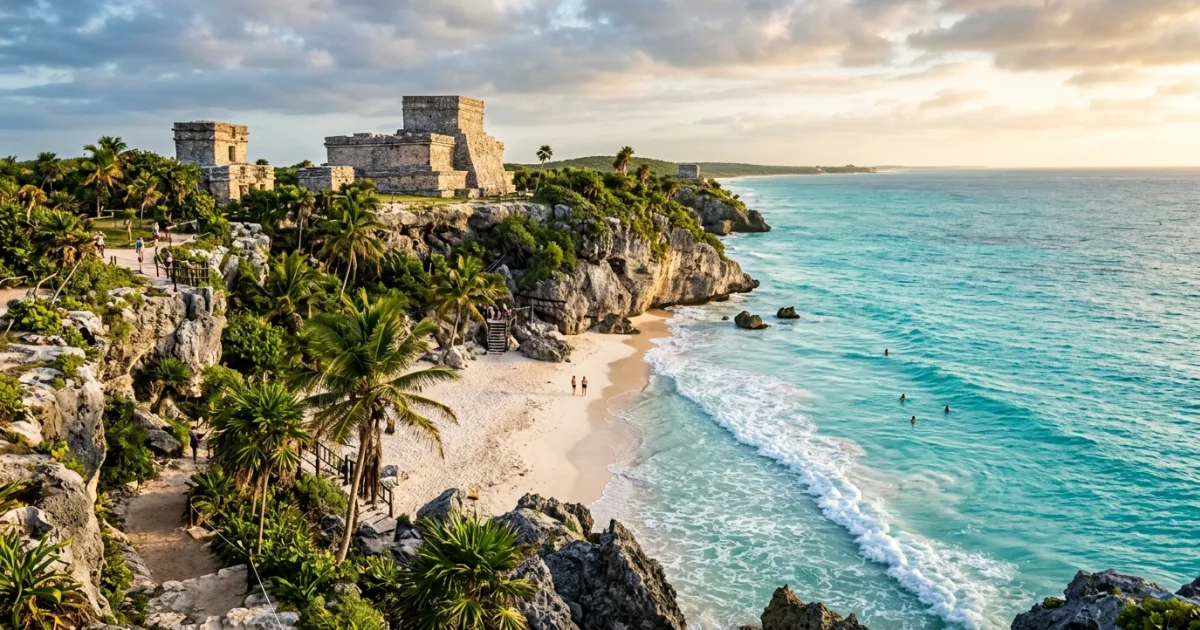
- Clifftop Mayan Architecture: Witness the iconic Castillo and Temple of the Frescoes standing dramatically against emerald ocean waves at the Tulum Archaeological Site.
- Subterranean Cenotes: Swim, snorkel, and free-dive in crystal-clear freshwater sinkholes such as Gran Cenote, Cenote Corazón, and Cenote Calavera.
- Holistic Wellness Scene: Participate in world-class yoga retreats, sound baths, ancestral temazcal sweat lodge ceremonies, and holistic oceanfront spa rituals.
- Sian Ka'an Biosphere Reserve: Explore a UNESCO World Heritage site home to coastal mangroves, wild dolphins, sea turtles, and ancient Mayan canal systems.
- Dynamic Dining & Beach Clubs: Savor experimental wood-fired cooking, mezcal cocktails, and globally celebrated DJ sets under the jungle canopy.
Things to Avoid
- Avoid using non-biodegradable, chemical sunscreens or bug sprays when swimming in cenotes, as oils contaminate delicate subterranean aquifers.
- Do not hail unmetered taxis along the beach strip without explicitly agreeing on the fare in advance; prices can fluctuate wildly without prior consensus.
- Avoid booking accommodations exclusively in the beach strip if you require strong, unbroken high-speed fiber internet, as coastal infrastructure relies heavily on generators and satellite feeds.
- Do not walk along unlit stretches of the Boca Paila beach road late at night due to lack of sidewalks and heavy motor scooter traffic.
Local Transportation Tips
Navigating Tulum depends heavily on where you stay and your destination. Bicycles and motor scooters represent the most practical way to travel along the coastal hotel zone and commute down the designated bike path between Tulum Pueblo and the ocean. Public collectivo vans operate along Highway 307 for cheap transportation north toward Akumal and Playa del Carmen. Taxis are plentiful but unmetered; always confirm the agreed price before stepping inside. Rental cars offer the greatest flexibility for exploring distant cenotes, Cobá ruins, and Valladolid, though beach-strip parking can be scarce and costly.
Travel Etiquette
- Tipping is customary across Mexican hospitality; tip 10% to 15% at sit-down restaurants and 20 to 50 pesos to baggage handlers and hotel staff.
- Shower thoroughly before entering any cenote to wash away natural body oils, perfumes, and lotions.
- Always ask permission before taking close-up portraits of indigenous Maya artisans and vendors selling traditional embroidery and handcrafts.
- Dress respectfully when stepping away from the beach into town; walking around Tulum Pueblo without a shirt or in swimwear is considered impolite by local residents.
Recommended Age Group
Tulum offers varied experiences across distinct areas, with certain infrastructure hurdles best suited for specific age brackets.
- Babies (0-2 years): Not Recommended. The high heat, intense humidity, rough dirt roads along the beach strip, and lack of stroller-accessible pathways make navigating the coastal zone with toddlers challenging.
- Kids (3-12 years): Neutral. Children will enjoy shallow cenotes and calm beach lagoons like Soliman Bay, but the prevailing nightlife atmosphere, expensive beach clubs, and busy traffic along the single beach road are less family-oriented than nearby resort hubs.
- Teens (13-19 years): Recommended. Older teenagers will appreciate snorkeling in subterranean caverns, bike rides to ruins, paddleboarding, and exploring artisan markets.
- Adults (20-64 years): Recommended. Tulum is prime territory for adults, offering vibrant beach clubs, wellness shalas, sophisticated jungle dining, cenote diving, and boutique shopping.
- Seniors (65+ years): Neutral. While guided tours of archaeological ruins and quiet luxury beachfront villas are comfortable, navigating uneven cobblestone tracks, stairs at cenotes, and heavy crowds requires solid mobility.
Accessibility Level: Medium
- The Tulum Archaeological Site features accessible paved and packed-earth pathways around central ruins, though accessing the beach stairs directly beneath the cliff is not wheelchair accessible.
- Most cenotes require descending steep wooden staircases, slick limestone steps, or vertical ladders, making them largely inaccessible for individuals with limited mobility.
- Tulum Beach road (Boca Paila) lacks paved sidewalks and curb cuts, making manual or powered wheelchair navigation difficult alongside vehicular traffic.
- Modern boutique resorts in Aldea Zama and central Tulum Pueblo offer the highest concentration of step-free ground-floor suites and roll-in showers.
Did You Know?
Tulum was originally known by the Mayan name 'Zama,' which translates to 'Dawn' or 'Morning,' reflecting its eastern orientation facing the rising sun across the Caribbean Sea. It was also one of the very few walled cities ever constructed by the Maya civilization, engineered with thick limestone ramparts to defend its coastal maritime trading hub against inland incursions.
Cool Statistics
- Tulum's ancient fortress walls stretch approximately 400 meters parallel to the coast and stand up to 5 meters tall.
- The nearby Sistema Sac Actun forms part of the world's longest explored underwater cave system, stretching over 370 kilometers.
- The Sian Ka'an Biosphere Reserve directly south of Tulum encompasses over 1.3 million acres of protected tropical ecosystems.






Buy a compatible power adapter for your trip