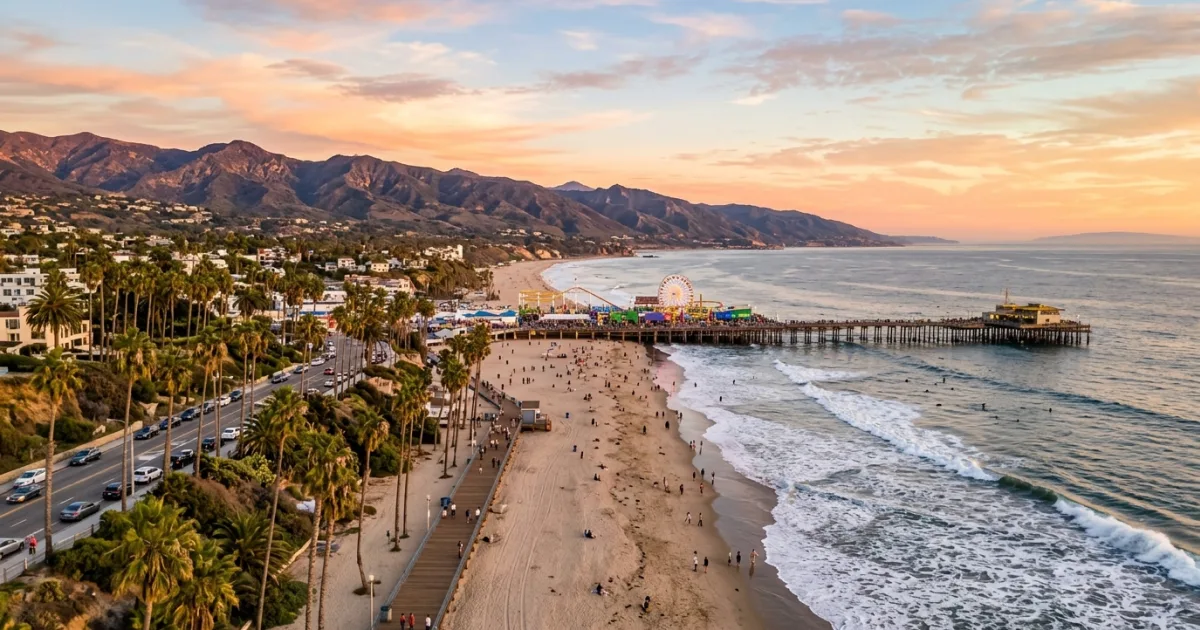
Los Angeles County represents a sprawling cultural and economic powerhouse bordering 70 miles of Pacific coastline. Established in 1850 as one of California's original counties, the territory encompasses dramatic contrasts: from the high-density skyscrapers of the financial district to the arid chaparral of the Santa Monica Mountains and the quiet historic residential streets of Pasadena.
As a global creative capital, the county holds immense cultural capital beyond Hollywood cinema. Visitors encounter pioneering modernist architecture by Frank Lloyd Wright and Richard Neutra, unmatched collections of European and contemporary art, and a thriving street culture rooted in skateboarding, surf traditions, and mural arts. The county's intricate network of neighborhoods offers completely distinct micro-climates, culinary styles, and urban rhythms within a single metropolitan boundary.
Reasons to Visit
- Unmatched Cultural Diversity: Explore distinct neighborhoods offering world-class global food, from Koreatown and Little Tokyo to the San Gabriel Valley and Boyle Heights.
- Iconic Entertainment History: Tour historic film studios, legendary screening venues, and filming landmarks that shaped international pop culture.
- World-Class Museums: Discover premier art institutions including The Getty Center, LACMA, The Broad, and the Huntington Library with vast botanical collections.
- Spectacular Coastal Landscapes: Cycle along the 22-mile Marvin Braude Strand bike path connecting scenic Pacific communities from Santa Monica to Torrance.
- Outdoor Mountain Recreation: Access hundreds of miles of pristine hiking trails throughout Griffith Park and the Santa Gabriel Mountains National Monument.
Things to Avoid
- Avoid scheduling cross-county trips during rush hour: Traveling between Downtown LA and the Westside between 4:00 PM and 7:00 PM can turn a 25-minute drive into two hours.
- Do not spend your entire vacation on Hollywood Boulevard: The Walk of Fame is heavily commercialized; allocate time instead to neighborhoods like Silver Lake, Pasadena, or Manhattan Beach.
- Avoid leaving valuables in rental vehicles: Parking lots near popular beaches and trailheads are frequent targets for smash-and-grab car break-ins.
- Do not underestimate ocean undercurrents: Always swim in designated areas monitored by the Los Angeles County Lifeguard service.
Local Transportation Tips
Navigating Los Angeles County effectively requires choosing between public transit, driving, and rideshares based on your daily itinerary. The LA Metro system operates six rail lines and dozens of bus routes, utilizing a reloadable TAP card that automatically caps daily fares at $5.00 USD. The Metro E Line (connecting Downtown LA directly to Santa Monica Beach) and the B/D Lines (connecting Downtown, Hollywood, and Koreatown) are particularly useful for avoiding freeway gridlock. For cross-county excursions into Malibu or the mountain passes, renting a vehicle is advantageous; ensure you budget for parking, which ranges from $15 to $40 USD daily in high-demand zones.
Travel Etiquette
- Tipping standard: Tip service staff 18% to 22% in full-service restaurants, $1 to $2 per drink at bars, and 10% to 15% for rideshare drivers and taxi services.
- Escalator and transit etiquette: Stand to the right and walk to the left on Metro station escalators; offer priority seats to elderly passengers and parents with strollers.
- Beach smoke-free laws: Smoking and vaping are strictly prohibited on all Los Angeles County public beaches, piers, and designated parks.
- Trail rights: Downhill hikers must yield right-of-way to uphill hikers on narrow canyon trails.
Recommended Age Group
Los Angeles County offers varied entertainment and recreational infrastructure catering effectively to different generations.
- Babies (0-2 years): Neutral. Large distances, traffic, and car seat logistics can be demanding, though temperate coastal weather and stroller-friendly beach boardwalks are accommodating.
- Kids (3-12 years): Recommended. World-famous theme parks, the Santa Monica Pier, the Natural History Museum, and accessible beaches offer endless engagement for children.
- Teens (13-19 years): Recommended. Premier pop-culture sights, studio tours, skate parks, shopping districts like Melrose Avenue, and surf culture make the region exciting for teenagers.
- Adults (20-64 years): Recommended. A premier food and beverage scene, innovative art galleries, vibrant live music, and scenic hiking provide rich urban and outdoor travel.
- Seniors (65+ years): Recommended. Renowned cultural venues like The Getty Center, Disney Concert Hall, and Huntington Gardens offer exceptional accessibility and leisurely exploration.
Accessibility Level: Medium
- Public Transportation Accessibility: All LA Metro buses are equipped with low-floor boarding ramps or lifts, and rail stations feature elevators and tactile platform edges.
- Beach Wheelchairs: Free manual and motorized beach wheelchairs are available on a first-come basis at numerous county lifeguard headquarters, including Santa Monica and Hermosa Beach.
- Museum Accommodations: Major institutions such as LACMA and the Getty Center provide complimentary wheelchair loaners, accessible tram service, and ADA-compliant pathways.
- Curb Ramps & Sidewalks: Major commercial and pedestrian districts maintain wide, accessible sidewalks with curb ramps, though older hilly residential neighborhoods can be steep.
Did You Know?
Los Angeles County covers 4,084 square miles, making it geographically larger than the states of Delaware and Rhode Island combined, and it includes two offshore islands: Santa Catalina Island and San Clemente Island.
Cool Statistics
- Population: Approximately 9.7 million residents across 88 cities.
- Coastline Length: Roughly 70 miles (112 km) of open Pacific oceanfront.
- Annual Sunshine: Averages 284 sunny days per year.
- Elevation Range: From sea level (0 ft) along the coast to 10,064 ft (3,068 m) at Mount San Antonio (Mt. Baldy).








Buy a compatible power adapter for your trip