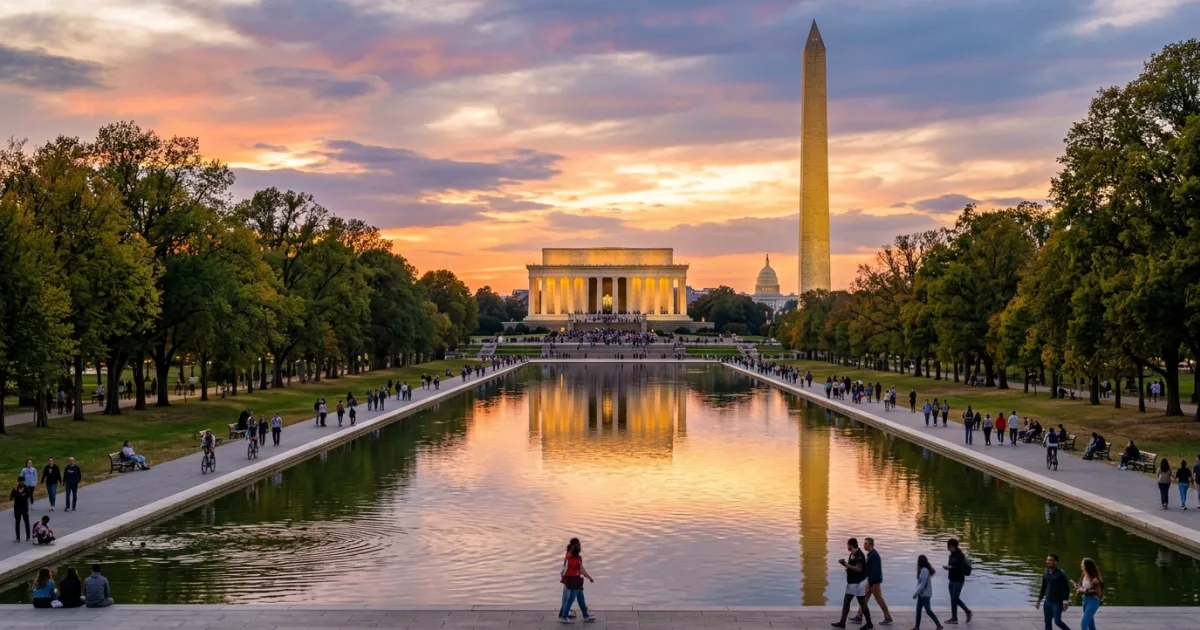
The National Mall represents one of the most celebrated urban cultural corridors in the world. Envisioned initially in Pierre Charles L'Enfant's 1791 plan for the federal capital and realized comprehensively through the McMillan Commission in 1901, the Mall embodies American architectural ambition and public civic space. Spanning approximately 1,000 acres of parkland, the linear axis links the United States Capitol at its eastern head with the Lincoln Memorial at the Potomac River's edge.
Today, millions of annual visitors explore its grand landscape, discovering the National Gallery of Art, the diverse galleries of the Smithsonian Institution, and solemn memorials paying tribute to American leaders, veterans, and historic civil rights milestones. The open green remains an active national common, staging inaugurations, peaceful demonstrations, and cultural celebrations.
Reasons to Visit
- World-class museums featuring art, aerospace, history, and science with zero admission charges.
- Iconic monumental architecture, including the Washington Monument and Lincoln Memorial.
- Profound historical resonance where landmark civil rights speeches and historical events unfolded.
- Exceptional evening illumination providing picturesque, crowd-free nighttime walking experiences.
- Direct accessibility via well-connected public rapid transit networks.
Things to Avoid
- Avoid attempting to walk the entire perimeter in one go without scheduled breaks, as distances are significantly larger than they appear on maps.
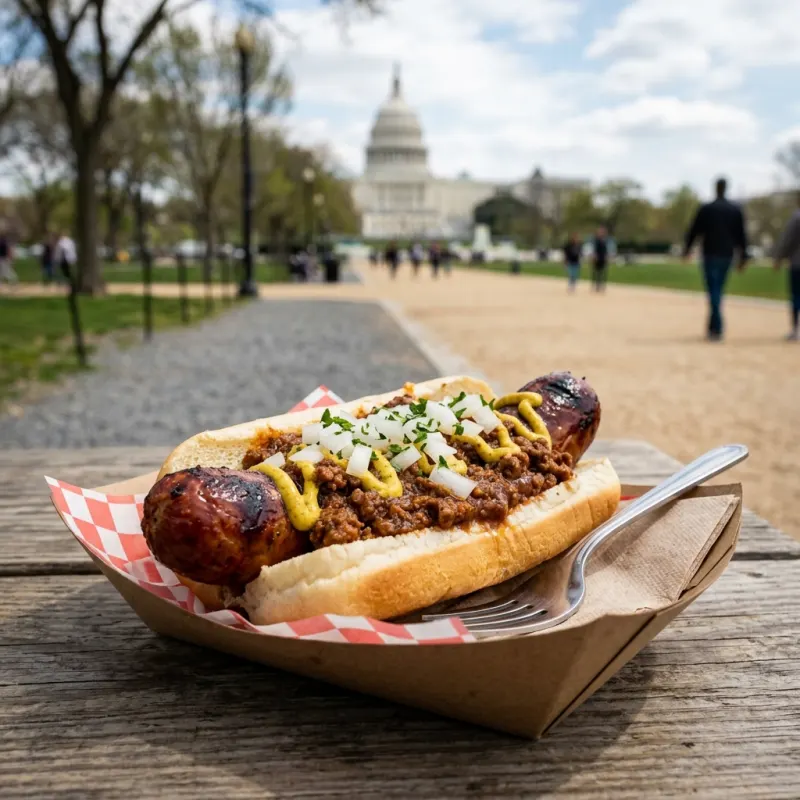
- Do not rely entirely on Mall food trucks for major meals; prices are inflated and quality varies widely compared to neighborhood restaurants.
- Avoid visiting in midday July and August without adequate sun protection and water.
- Do not ride electric scooters or bicycles on the interior memorial plazas or up monument staircases.
Local Transportation Tips
Public transit is the fastest and most practical way to reach and navigate the National Mall. Multiple WMATA Metrorail stations sit directly along the corridor, including Smithsonian (Orange, Blue, Silver lines), Federal Triangle, L'Enfant Plaza, and Archives-Navy Memorial-Penn Quarter. Capital Bikeshare maintains dozens of stations along the perimeter, providing an efficient way to cover long distances between the Capitol and Lincoln Memorial. Private vehicle parking is extremely restricted, making driving inadvisable.
Travel Etiquette
- Maintain respectful silence and decorum when visiting solemn sites like the Vietnam Veterans Memorial and the Korean War Veterans Memorial.
- Keep off restricted turf zones marked for seasonal grass restoration.
- Dispose of all trash and recyclables in official receptacles to protect local wildlife and park turf.
- Do not touch, carve, or climb on historic stonework, bronze statues, or memorial walls.
Recommended Age Group
The National Mall accommodates travelers across generations due to its expansive open spaces and diverse public exhibits.
- Babies (0-2 years): Recommended. Wide, flat paved paths make stroller navigation straightforward, though sun protection is mandatory during hot months.
- Kids (3-12 years): Recommended. Children thrive at hands-on institutions like the National Air and Space Museum and the National Museum of Natural History, complemented by outdoor lawns for burning energy.
- Teens (13-19 years): Recommended. High engagement potential through interactive museum exhibits, iconic photography backdrops, and rich historical narratives.
- Adults (20-64 years): Recommended. Extensive walking, profound cultural galleries, historic architecture, and diverse dining in nearby quarters cater perfectly to adults.
- Seniors (65+ years): Recommended. Complete ADA compliance, abundant memorial benches, and accessibility shuttles offer a comfortable visit, though pacing is vital due to long walking distances.
Accessibility Level: High
- All major monuments and Smithsonian museum facilities feature full barrier-free wheelchair access, ramps, and elevators.
- Loaner wheelchairs are provided on a first-come, first-served basis inside all Smithsonian museums.
- Paved pathways are level and wide, allowing easy navigation for mobility equipment.
- National Park Service visitor centers offer braille guides, tactile models, and assistive listening devices upon request.
Did You Know?
The Washington Monument is constructed from two different shades of marble. Construction halted in 1854 due to a lack of funds and the American Civil War; when work resumed in 1876, stone from the original quarry was unavailable, creating an unmistakable color demarcation visible about a third of the way up the obelisk.
Cool Statistics
- Welcomes approximately 24 million visits annually across its park sites.
- Spans approximately 146 acres of central lawn and over 1,000 total acres across the park system.
- Houses 11 Smithsonian museum facilities directly adjacent to its central lawns.
- The Washington Monument reaches a height of 554 feet 7 inches (169 meters), making it the world's tallest stone obelisk.









Buy a compatible power adapter for your trip