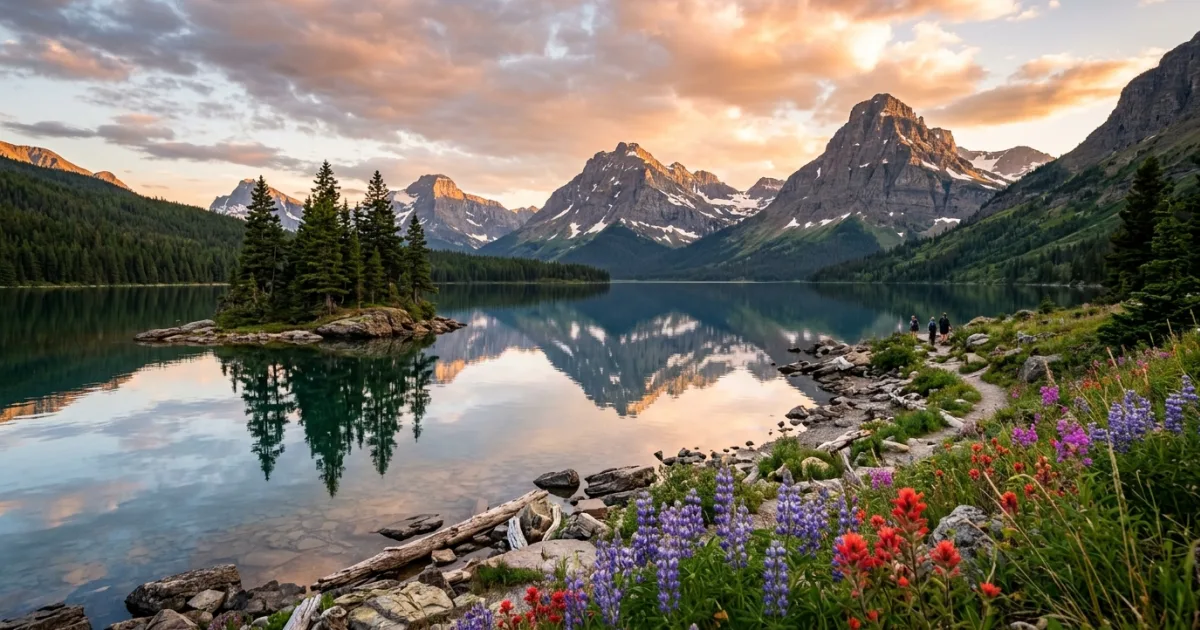
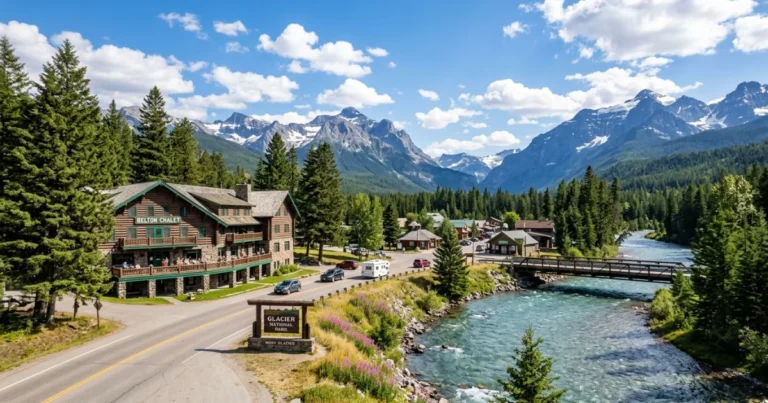
Glacier National Park is a masterpiece of natural architecture, sculpted over millennia by massive rivers of ice. Located in the northwest corner of Montana, it borders the Canadian provinces of Alberta and British Columbia, forming the Waterton-Glacier International Peace Park. The park's dramatic landscapes are characterized by jagged peaks, deep U-shaped valleys, and over 130 named lakes, with Lake McDonald and St. Mary Lake being the most prominent.
Beyond its visual splendor, Glacier is an ecological crossroads where prairie, forest, and alpine ecosystems converge. This diversity supports a rich array of flora and fauna, making it one of the most intact ecosystems in the lower 48 states. Visitors come not only for the physical challenge of its trails but for the profound sense of tranquility and awe that the ancient, ice-carved wilderness inspires.
Reasons to Visit
- Going-to-the-Sun Road: Drive one of the most spectacular alpine highways in the world, offering breathtaking views at every turn.
- Wildlife Viewing: Spot grizzly bears, bighorn sheep, mountain goats, and moose in their natural habitat.
- Hiking Paradise: Access over 700 miles of trails, ranging from the accessible Trail of the Cedars to the challenging Highline Trail.
- Glaciers: Witness the park's namesake glaciers before they retreat further due to climate change.
- Dark Sky Park: Experience world-class stargazing and astrotourism in an internationally recognized Dark Sky Park.
Things to Avoid
- Approaching Wildlife: Never get close to wild animals for a photo; it is dangerous and illegal.
- Hiking Alone: Always hike in groups to reduce the risk of surprise bear encounters.
- Relying on Cell Service: Download maps and trail guides offline, as there is virtually no signal in the park.
- Ignoring Weather Warnings: Mountain weather is unpredictable; never embark on a long hike without proper gear.
Local Transportation Tips
Navigating Glacier National Park requires planning. The most popular method is driving, though vehicle reservations are required for major corridors during summer. To alleviate traffic, the park offers a free, hop-on-hop-off shuttle system along the Going-to-the-Sun Road. For a historic and guided experience, book a tour on one of the iconic vintage Red Jammer buses, which feature roll-back canvas tops for unobstructed views of the towering peaks.
Travel Etiquette
- Leave No Trace: Pack out all trash, stay on designated trails, and do not pick wildflowers.
- Trail Right-of-Way: Hikers going uphill have the right of way. Step aside to let them pass.
- Quiet Observation: Keep noise levels down to respect the wilderness experience of others, except when making noise to deter bears.
- Respect Closures: Adhere to all trail and area closures, which are often in place for bear activity or habitat restoration.
Recommended Age Group
Glacier National Park offers diverse experiences suitable for various ages, though the rugged terrain requires consideration for mobility.
- Babies (0-2 years): Neutral. Stroller access is limited to a few paved paths like the Trail of the Cedars. Backpack carriers are necessary for most trails.
- Kids (3-12 years): Recommended. The Junior Ranger program, easy hikes like Hidden Lake Overlook, and boat tours are highly engaging for children.
- Teens (13-19 years): Recommended. Thrilling activities like whitewater rafting on the park's borders and challenging day hikes appeal strongly to this group.
- Adults (20-64 years): Recommended. Extensive backcountry trails, scenic drives, and mountaineering offer endless exploration opportunities.
- Seniors (65+ years): Recommended. The Going-to-the-Sun Road, accessible boat tours, and historic lodges provide spectacular views and comfort without strenuous effort.
Accessibility Level: Medium
- Several trails are wheelchair accessible, including the Trail of the Cedars and the Running Eagle Falls trail.
- Visitor centers at Apgar, Logan Pass, and St. Mary are fully accessible.
- The park's free shuttle system includes buses equipped with wheelchair lifts and tie-downs.
- Accessible boat tours are available on Lake McDonald, St. Mary Lake, and Two Medicine Lake, though some require advance notice for assistance.
Did You Know?
Glacier National Park is home to Triple Divide Peak. Water falling on this single mountain peak flows into three different oceans: the Pacific Ocean, the Atlantic Ocean (via the Gulf of Mexico), and the Arctic Ocean (via Hudson Bay).
Cool Statistics
- Over 1 million acres of protected wilderness.
- Features more than 700 miles of hiking trails.
- Home to 25 active glaciers, down from 150 in the mid-19th century.
- Contains over 130 named lakes and hundreds of unnamed ones.
- Designated as the world's first International Peace Park in 1932 alongside Canada's Waterton Lakes.










Buy a compatible power adapter for your trip