Downtown Las Vegas, often designated as 'Old Vegas,' holds the cultural and historical roots of the world's entertainment capital. Founded in May 1905 when the San Pedro, Los Angeles, and Salt Lake Railroad auctioned off 1,200 lots of land, the district grew rapidly from a dusty railroad town into a neon oasis. In 1931, Nevada legalized commercial gambling, prompting the construction of legendary gaming halls like the Northern Club, the Apache Hotel, and later the Golden Nugget and Binion's Horseshoe. These institutions pioneered modern casino entertainment long before the suburban mega-resorts developed further south along Las Vegas Boulevard.
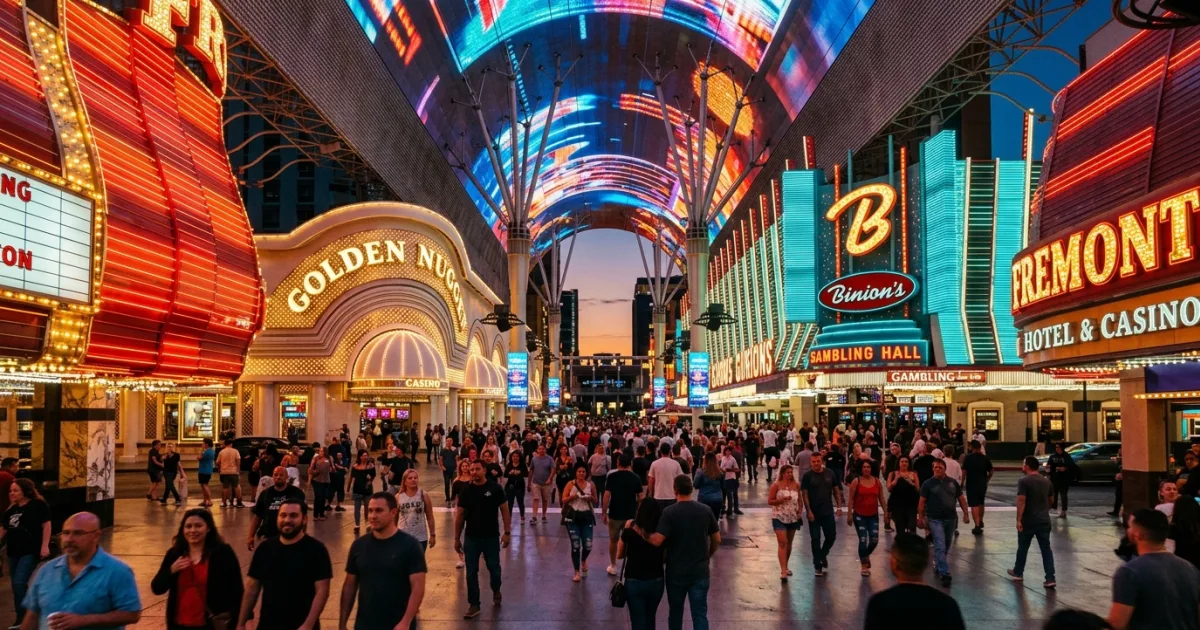
Today, Downtown Las Vegas thrives as a layered urban district blending nostalgic Americana with forward-looking urban revitalization. Beneath the multi-million-LED Viva Vision canopy of Fremont Street, visitors experience energetic street performances, historic gaming tables, and zipline adventures. Meanwhile, neighborhoods just beyond the canopy—such as Fremont East and the 18b Arts District—showcase vibrant community spaces, restored mid-century motels transformed into boutique complexes, contemporary art galleries, and innovative culinary enterprises.
Reasons to Visit
- Historic Neon & Heritage: Experience the origin sites of Las Vegas gaming history, including El Cortez, the oldest continuously operating casino in the city.
- Fremont Street Experience: Stand beneath the world's largest video canopy featuring high-energy music and visual shows alongside iconic neon marquees.
- World-Class Museums: Explore premier educational collections at The Mob Museum (National Museum of Organized Crime) and The Neon Museum's preserved historic signs.
- 18b Arts District: Immerse yourself in independent Vegas culture with indie boutiques, vintage antique malls, craft breweries, and local street murals.
- Accessible Table Minimums: Enjoy classic games of blackjack, craps, and roulette with far more approachable minimum bets than Strip properties.
Things to Avoid
- Do not wander far off main thoroughfares late at night: Avoid straying into desolate industrial lots north or east of the core entertainment zones after dark.
- Do not accept items from street performers without intending to tip: Street buskers and costumed characters on Fremont Street expect cash tips for photos.
- Do not rely exclusively on taxis: Utilize the free Downtown Loop shuttle or RTC public bus network to save money on intra-district trips.
- Do not underestimate daytime summer heat: Walking between Fremont Street and the Arts District during midday July or August can lead to rapid dehydration.
Local Transportation Tips
Downtown Las Vegas is one of the most pedestrian-friendly districts in Nevada. The central core along Fremont Street is closed to vehicular traffic. For travel between distinct sub-districts, the City of Las Vegas operates the Downtown Loop, a free hop-on, hop-off shuttle connecting Fremont Street, the Mob Museum, the Arts District, and the Las Vegas North Premium Outlets. For regional connections to the Strip, the RTC Deuce double-decker bus operates along Las Vegas Boulevard 24 hours a day. Rideshares and taxis maintain designated pickup stalls at all major Downtown casino entrances.
Travel Etiquette
- Casino Tipping: Tip table game dealers and slot attendants $1 to $5 regularly or place a bet alongside your wager for the dealer.
- Cocktail Courtesy: When receiving complimentary drinks on gaming floors, standard etiquette requires tipping cocktail servers at least $1 to $2 per drink in cash.
- Photo Etiquette: Always ask permission and offer a small dollar tip before photographing independent buskers or costumed performers on Fremont Street.
- Pedestrian Rules: Fremont Street pedestrian mall prohibits glass bottles and outside open containers purchased elsewhere during designated weekend hours; use plastic cups provided by licensed venues.
Recommended Age Group
Downtown Las Vegas offers diverse attractions, though its evening atmosphere is tailored primarily to adult visitors.
- Babies (0-2 years): Not Recommended. Loud ambient sound levels, flashing canopy lights, dense crowds, and second-hand smoke inside vintage casino properties make it unsuitable for infants.
- Kids (3-12 years): Neutral. Daytime visits to The Mob Museum, Downtown Container Park's treehouse playground, and daytime light viewings are pleasant, but the area shifts decisively toward adult entertainment after 8:00 PM.
- Teens (13-19 years): Neutral. Older teens appreciate the SlotZilla zipline, the Neon Museum, and retro vintage shopping in the Arts District, though casino gaming floors are strictly off-limits to anyone under 21.
- Adults (20-64 years): Recommended. Perfect demographic to take full advantage of historic table gaming, acclaimed craft cocktail lounges, nightlife, live music stages, and cultural museums.
- Seniors (65+ years): Recommended. Highly suited for senior travelers interested in mid-century American history, nostalgic casino gaming, flat walkable pedestrian areas, and daytime heritage tours.
Accessibility Level: Medium
- The Fremont Street Experience pedestrian concourse is entirely flat, curb-free, and fully accessible for manual and electric wheelchairs.
- Major attractions including The Mob Museum and The Neon Museum feature ADA-compliant elevators, wide ramps, and accessible restroom facilities.
- The free Downtown Loop shuttles are equipped with wheelchair boarding ramps and secure tie-downs.
- Auditory cues and high-contrast visual displays are widely integrated into renovated pedestrian crossings and transit stops throughout Downtown.
Did You Know?
The gaming license issued to the Northern Club on Fremont Street in 1931 was awarded to Mayme Stocker, making a woman the very first person legally permitted to operate a casino in Las Vegas history.
Cool Statistics
- 1,375 Feet: The exact length of the Viva Vision canopy above Fremont Street, making it the longest video screen on Earth.
- 1906: The opening year of the Golden Gate Hotel & Casino, making it the oldest continuously operating hotel in Las Vegas.
- 49 Million: The number of LEDs illuminating the Fremont Street overhead video canopy display.
- 1941: The year El Cortez opened its doors; it is now listed on the U.S. National Register of Historic Places.







Buy a compatible power adapter for your trip