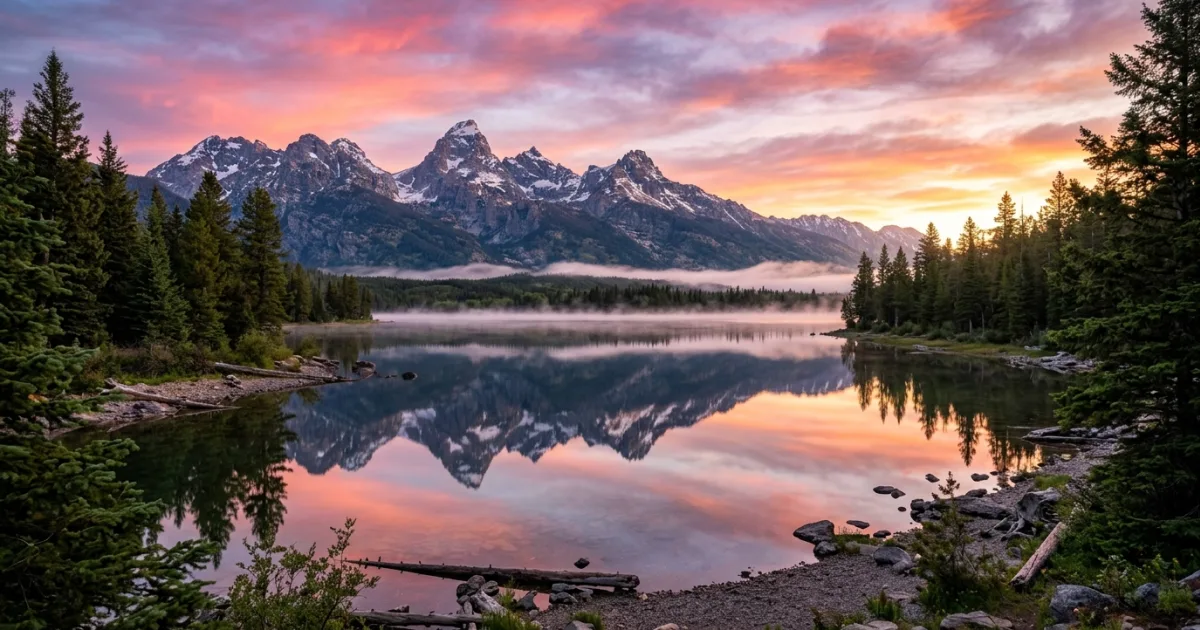
Grand Teton National Park is a masterpiece of natural architecture, where the youngest mountains in the Rocky Mountain system rise without foothills directly from the valley floor. This dramatic topography was created by seismic activity along the Teton fault, resulting in a landscape that is both visually stunning and ecologically diverse. The Snake River winds its way through the valley, providing a vital water source for the park's dense populations of moose, elk, and beavers.
Beyond its geological wonders, the park is steeped in human history, from the early Native American tribes who hunted in Jackson Hole during the summer months to the rugged fur trappers and homesteaders of the 19th century. Today, historic structures like the Mormon Row barns and the Menor's Ferry Historic District offer a glimpse into the area's pioneer past, perfectly framed by the towering peaks of the Tetons.
Reasons to Visit
- Unparalleled alpine scenery with easily accessible viewpoints along the scenic loop drive.
- World-class wildlife viewing opportunities, including grizzly bears, black bears, moose, elk, and bald eagles.
- Diverse recreational activities ranging from flat-water kayaking on Jackson Lake to technical rock climbing on the Grand Teton.
- Exceptional photography locations, particularly at sunrise at Schwabacher Landing and Mormon Row.
Things to Avoid
- Approaching wildlife for photos; always use a zoom lens and maintain safe distances.
- Hiking alone or without bear spray, as the park is prime grizzly bear habitat.
- Underestimating the altitude and weather; afternoon thunderstorms are common and dangerous on exposed peaks.
- Relying solely on cell phone navigation, as service is extremely limited or non-existent in most of the park.
Local Transportation Tips
The most practical way to explore Grand Teton National Park is by personal or rental vehicle, allowing you to navigate the scenic drives and reach trailheads at your own pace. During the summer, a multi-use pathway connects the town of Jackson to South Jenny Lake, making cycling a popular and eco-friendly option. There is no public shuttle system operating within the park, though some private tour operators offer guided bus and safari tours from Jackson.
Travel Etiquette
- Practice Leave No Trace principles by packing out all trash and staying on designated trails.
- Respect wildlife closures and speed limits, which are strictly enforced to prevent animal collisions.
- Yield to uphill hikers on trails and step aside to let faster hikers pass.
- Keep noise levels down in the backcountry to preserve the natural soundscape and avoid startling wildlife.
Recommended Age Group
Grand Teton National Park offers diverse experiences suitable for almost every age, though the rugged terrain requires some consideration.
- Babies (0-2 years): Neutral. Stroller-friendly paths exist around Jenny Lake and Colter Bay, but high altitude, intense sun exposure, and limited facilities on trails require extra care.
- Kids (3-12 years): Recommended. The Junior Ranger program, easy boat rides across Jenny Lake, and exciting wildlife spotting make it highly engaging for children.
- Teens (13-19 years): Recommended. Active teens will enjoy kayaking, horseback riding, and challenging day hikes like the Cascade Canyon Trail.
- Adults (20-64 years): Recommended. Endless opportunities for mountaineering, photography, scenic drives, and backcountry camping cater perfectly to adults seeking adventure or relaxation.
- Seniors (65+ years): Recommended. The park offers numerous accessible viewpoints, scenic drives, and flat, paved walking trails suitable for older visitors wanting to experience nature without strenuous exertion.
Accessibility Level: Medium
- Many visitor centers, including Craig Thomas Discovery and Visitor Center, are fully wheelchair accessible with ramp access and accessible restrooms.
- Several paved, multi-use pathways and boardwalks, such as the trails at String Lake and the Colter Bay marina, accommodate wheelchairs and mobility devices.
- Accessible campsites are available at major campgrounds like Gros Ventre and Colter Bay, though they should be reserved well in advance.
- Audio descriptions and braille brochures are available at visitor centers for guests with visual impairments.
Did You Know?
The Teton Range is one of the youngest mountain ranges in North America, having formed less than 10 million years ago. Unlike most mountain ranges, they lack foothills, which is why they appear to rise so dramatically and abruptly from the Jackson Hole valley floor.
Cool Statistics
- The highest peak, Grand Teton, stands at an elevation of 13,775 feet (4,198 meters).
- The park covers approximately 310,000 acres of land and water.
- Jackson Lake is the largest lake in the park, reaching depths of over 400 feet.
- The park is home to over 60 species of mammals and more than 300 species of birds.








Buy a compatible power adapter for your trip