

Low – budget‑friendly basics
Medium – moderate mid‑range costs
High – pricey lodging, dining & transport
Disclosure: This site contains affiliate links. We may earn a commission if you make a purchase, at no extra cost to you.
Low – budget‑friendly basics
Medium – moderate mid‑range costs
High – pricey lodging, dining & transport
5 shields = Excellent – very low crime or conflict.
4 shields = Safe – low risk, routine care.
3 shields = Relatively safe – use normal street smarts.
2 shields = Use caution – higher crime or periodic unrest.
1 shields = Avoid – active conflict or extreme danger.
Scores are derived from multi-year peace, homicide and security indices blended into a single 1-to-5 scale.
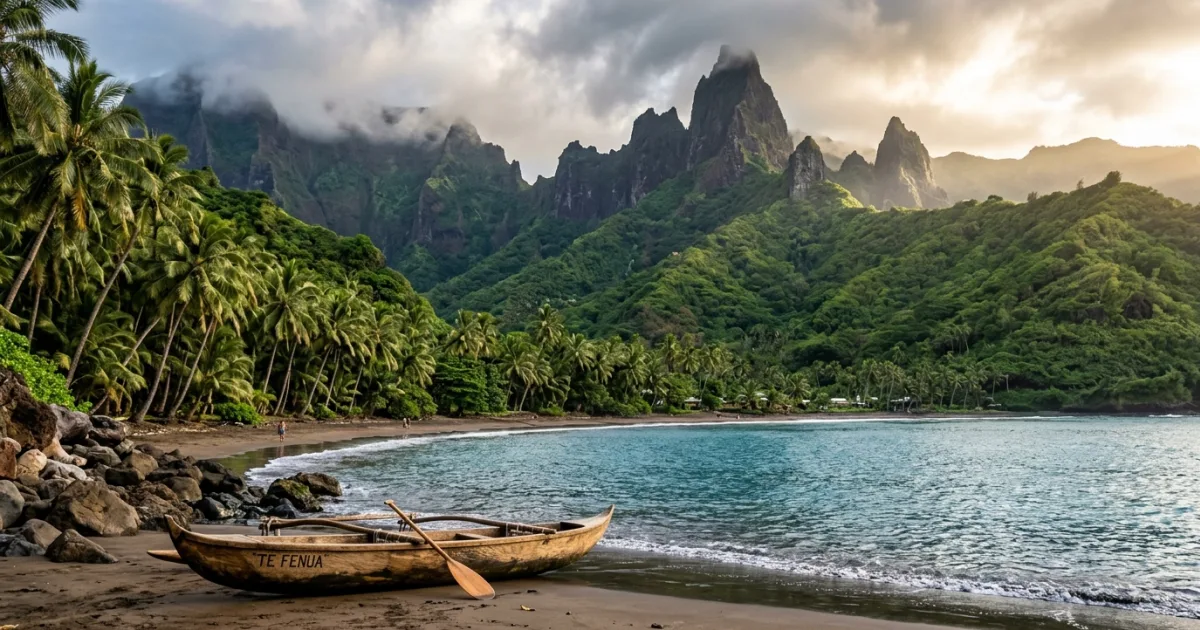
Nuku Hiva is the administrative capital and largest island of the Marquesas archipelago in French Polynesia, situated over 1,400 kilometers northeast of Tahiti. Characterized by dramatic volcanic basalt spires, deep amphitheater valleys, and untamed coastlines, the island served as the dramatic backdrop for Herman Melville's 1846 novel Typee. Its capital settlement of Taiohae curves around an expansive sunken volcanic caldera that opens directly onto the South Pacific Ocean. Travelers visit Nuku Hiva primarily for rugged overland expeditions, ancient archaeological ruins, and deep cultural immersion away from conventional resort tourism. Hikers navigate steep trails through the lush Hakaui Valley toward the towering cascade of Vaipo, while cultural explorers examine monumental tiki statues and sacred ceremonial platforms (tohua) hidden beneath centuries-old banyan trees at Kamuihei and Koueva. The island provides an unfiltered window into authentic Polynesian heritage, defined by master woodcarvers, intricate Marquesan tattooing traditions, and horseback journeys through raw equatorial landscapes.
Nuku Hiva forms the geographical and logistical core of the northern Marquesas Islands, spanning an area of 387 square kilometers. Born from two nested volcanic shield craters that collapsed millions of years ago, the island is defined by dramatic geological features: sheer ocean-plunging cliffs, saw-toothed basalt crests, and verdant hanging valleys. The natural harbor of Taiohae serves as the island’s primary administrative settlement, sheltering visiting trans-Pacific sailboats in its deep volcanic basin.
Historically, the island sustained dense clan populations organized across independent valleys, each ruled by chiefs and served by monumental megalithic sites. European contact and subsequent colonial interactions dramatically altered the island’s demographics throughout the nineteenth century, a turbulent period documented in classic literature by Herman Melville and explored by French artist Paul Gauguin across the archipelago. Today, Nuku Hiva stands as a thriving cultural stronghold where Marquesan language, woodcarving, stone sculpting, and traditional tattooing flourish in daily life.
Public transportation does not exist on Nuku Hiva. Travel between valleys necessitates hiring a robust 4x4 vehicle with a knowledgeable driver-guide, or renting a self-drive 4x4 from agencies based in Taiohae. The central spine between the airport, the Toovii plateau, and Taiohae is paved, while access roads to remote valleys like Hakaui or Haapu consist of unpaved tracks requiring skilled off-road maneuvering. For coastal travel, local boatmen (bonitier operators) provide water-taxi transfers between Taiohae, Hakaui, and Anaho.
Nuku Hiva provides an intense, off-grid adventure characterized by physical activity, remote logistics, and outdoor exploration.
Herman Melville deserted his American whaling ship, the Acushnet, in Nuku Hiva's Taiohae Bay in 1842. He fled into the dense interior of the Taipivai Valley, where he lived among the Typee people for several weeks—an escapade that inspired his breakthrough debut novel, Typee.

Nuku Hiva features an equatorial tropical oceanic climate characterized by microclimates that differ sharply between the humid windward valleys and dry leeward plateaus.
| Month | °C | °F |
|---|---|---|
| Jan | 26 | 79 |
| Feb | 26 | 79 |
| Mar | 27 | 81 |
| Apr | 27 | 81 |
| May | 26 | 79 |
| Jun | 26 | 79 |
| Jul | 25 | 77 |
| Aug | 25 | 77 |
| Sep | 25 | 77 |
| Oct | 25 | 77 |
| Nov | 26 | 79 |
| Dec | 26 | 79 |
Remember to check the weather forecast a few days before the trip and before heading to the airport.
5 shields = Excellent – very low crime or conflict.
4 shields = Safe – low risk, routine care.
3 shields = Relatively safe – use normal street smarts.
2 shields = Use caution – higher crime or periodic unrest.
1 shields = Avoid – active conflict or extreme danger.
Scores are derived from multi-year peace, homicide and security indices blended into a single 1-to-5 scale.
The rating is based on multi-year peace, crime, and security indices. Before you go, always verify current conditions through official government travel advisories.
No internet needed • Includes local translations • Free for TravelingWiz readers

Low – budget‑friendly basics
Medium – moderate mid‑range costs
High – pricey lodging, dining & transport
Per person, per day – pocket cash for small purchases.
Full daily spend estimation (accommodation, food, transportation, attractions).
Travel Style | CFP Franc (XPF) | ≈ USD ($) |
|---|---|---|
Budget | 15400 | 142 |
Mid-range | 28000 | 258 |
Comfort | 61600 | 567 |
The Prices, Daily costs, and calculator results are estimates for planning purposes only. Actual costs may vary based on season, booking timing, personal spending habits, and currency fluctuations. TravelingWiz cannot be held responsible for discrepancies between these estimates and your final trip expenses.
Choose a ready-made itinerary, plan your own trip, and keep TravelingWiz by your side while you travel.
Get the TravelingWiz app →
Discover cooking classes, tastings and local food tours
Logistics shouldn’t be the focus of your trip—the experience should. I’ve hand-vetted these essential partners to ensure your arrival, stay, and exploration are as smooth as an Athenian breeze.

Compare accommodation options and choose a stay that suits your plans and budget.
Connect with local guides for personalized help planning and exploring.
The “Engineer’s” rule: always have a backup. Secure your trip with a plan that covers every “what if” and unexpected change.
Don’t let paperwork slow you down. Get expert assistance with your application to ensure all your entry documents are in order.
Check out our related articles and blog posts to learn even more about the destination.
Share with your friends and family

