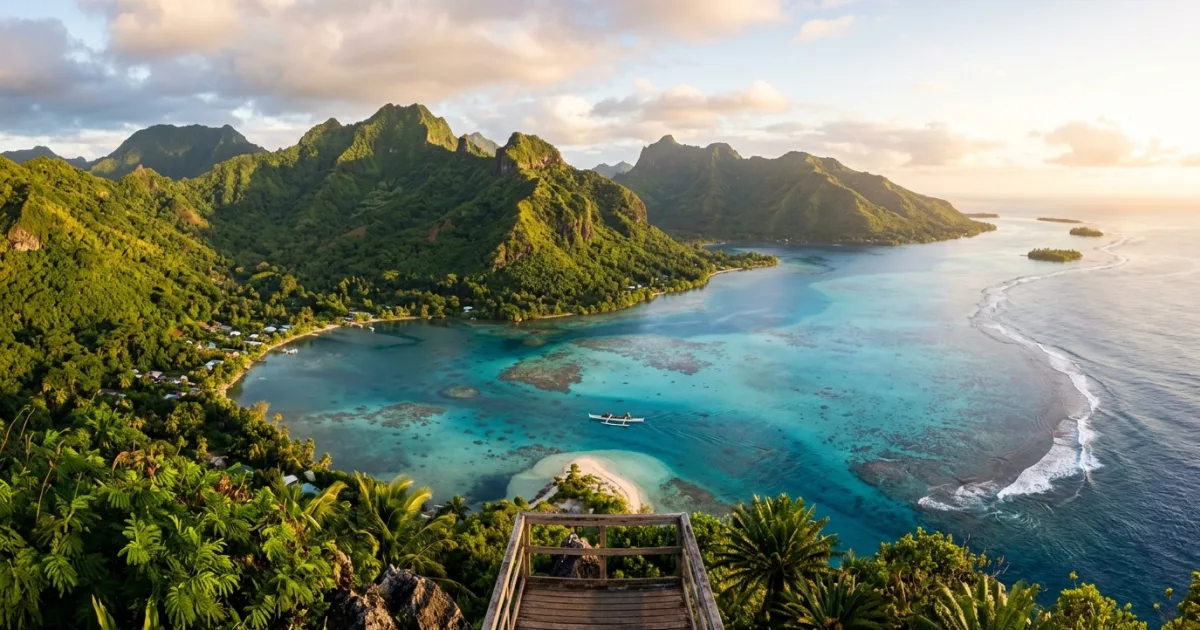
Geographically divided into northern Huahine Nui (Big Huahine) and southern Huahine Iti (Little Huahine), the island represents the historical and spiritual cradle of the Society Archipelago. Connected by a narrow channel bridge over Maroe Bay, the two landmasses are encircled by a shared protective barrier reef that encloses calm turquoise waterways dotted with uninhabited coral islets known locally as motus. Far less commercialized than Bora Bora or Moorea, Huahine has consciously rejected oversized mass resorts, preserving a sleepy agricultural character enriched by wild breadfruit trees, coconut groves, and fragrant vanilla plantations.
Culturally, Huahine holds the highest concentration of preserved archaeological monuments in French Polynesia. The royal ceremonial complex around Lake Fauna Nui in the district of Maeva features more than thirty restored stone marae built between the 16th and 18th centuries by eight competing Maohi chiefdoms. Alongside these sacred platforms, stone V-shaped fish traps constructed centuries ago in the river outlet still capture reef fish on falling tides using centuries-old tidal hydrodynamic techniques. Visiting Huahine provides a rare immersion into authentic Polynesian heritage anchored by unhurried village life and untamed tropical ecology.
Reasons to Visit
- Maeva Archaeological Complex: Walk through dozens of restored open-air stone temples (marae) constructed alongside Lake Fauna Nui and Mount Mouatapu.
- Blue-Eyed Sacred Eels: Watch enormous freshwater eels glide through the crystalline mountain stream in the quiet village of Faie.
- Untouched Lagoon Snorkeling: Drift over pristine coral gardens and swim alongside manta rays, eagle rays, and blacktip reef sharks in secluded passes.
- Authentic Polynesian Pace: Experience genuine Polynesian hospitality without crowds, oversized cruise ships, or high-density luxury chains.
- Ancient Stone Fish Traps: Observe centuries-old stone labyrinth traps designed by ancestral islanders that still function perfectly today.
Things to Avoid
- Avoid stepping on live corals or touching marine life while snorkeling; reef ecosystems here are delicate, and stonefish camouflage dangerously on rocks.
- Do not remove stones or climb on sacred marae platforms, as these archaeological monuments remain spiritually sacred to the local population.
- Avoid planning your trip without booking scooter or car rentals in advance, as vehicle supply on the island is limited and runs out quickly during peak months.
- Do not rely entirely on credit cards for minor purchases; always keep small denominations of CFP Francs for rural fruit stands and market vendors.
Local Transportation Tips
Getting around Huahine requires independent mobility due to the absence of scheduled public transit. The most practical and scenic option is renting a scooter or a compact rental car from one of the local agencies based in the port village of Fare. Bicycles and e-bikes offer an excellent alternative for exploring flat coastal roads around Fare and the Maeva ruins, though navigating the hilly terrain of southern Huahine Iti requires good cardiovascular fitness. Taxis operate primarily on an on-call basis from the airport and ferry docks, making scheduled day rentals far more cost-effective for touring the island's perimeter.
Travel Etiquette
- Always greet locals with a warm 'Ia Orana' upon entering shops, market stalls, or guesthouses; politeness is highly valued in Polynesian culture.
- Dress modestly when walking through residential villages and away from the beach by wearing a pareo (sarong) or light shirt over swimwear.
- Remove your shoes or sandals before entering someone's home or a traditional family-run guesthouse pension.
- Always ask permission before photographing local residents, fishermen, or children at community events.
Recommended Age Group
Huahine welcomes travelers of all ages, though its relaxed, adventure-oriented landscape caters most smoothly to independent travelers, active adults, and mature nature lovers.
- Babies (0-2 years): Neutral. Tropical heat, limited medical facilities, and the necessity of scooter or boat transport require cautious parental logistics and extra preparation.
- Kids (3-12 years): Neutral. Children fond of shallow lagoons, boat outings, and outdoor adventures will enjoy the island, though there are virtually no commercial entertainment venues or kids' clubs.
- Teens (13-19 years): Recommended. Ideal for teenagers who appreciate surfing, outrigger canoeing, world-class snorkeling, and scenic scooter excursions along uncrowded coastal roads.
- Adults (20-64 years): Recommended. Perfect for couples, solo travelers, and groups seeking pristine nature, rich archaeological history, peaceful beaches, and an authentic South Pacific island pace.
- Seniors (65+ years): Recommended. Highly rewarding for active seniors looking for authentic cultural experiences, scenic drives, gentle boat charters, and quiet, relaxing beachfront accommodations.
Accessibility Level: Medium
- Public infrastructure across Huahine has limited wheelchair accessibility, with few paved sidewalks and intermittent curb ramps outside the main commercial strip of Fare.
- Archaeological sites such as the Maeva Marae feature uneven grassy, gravel, and coral paths that present obstacles for manual wheelchairs or mobility aids.
- Traditional boat transfers, outrigger canoes, and lagoon charters generally require stepping from sandy shores or small wooden docks directly into vessels.
- Travelers requiring accessible amenities should confirm ground-floor bungalow accessibility directly with waterfront resorts or established guesthouses prior to booking.
Did You Know?
Legend tells that the legendary Polynesian demigod Hiro sliced the island of Huahine into two pieces—Huahine Nui and Huahine Iti—with the mighty prow of his war canoe as he raced across the ocean. The dramatic indentation left behind formed the deep waters of Maroe Bay, which separates the two islands today.
Cool Statistics
- Total land area: Approximately 74 square kilometers (28.5 square miles) across both linked islands.
- Highest peak: Mount Turi on Huahine Nui, rising 669 meters (2,195 feet) above sea level.
- Number of archaeological marae: Over 200 registered sacred stone structures, with more than 30 fully restored in the Maeva district.
- Resident population: Roughly 6,300 inhabitants living across eight traditional coastal villages.






Buy a compatible power adapter for your trip