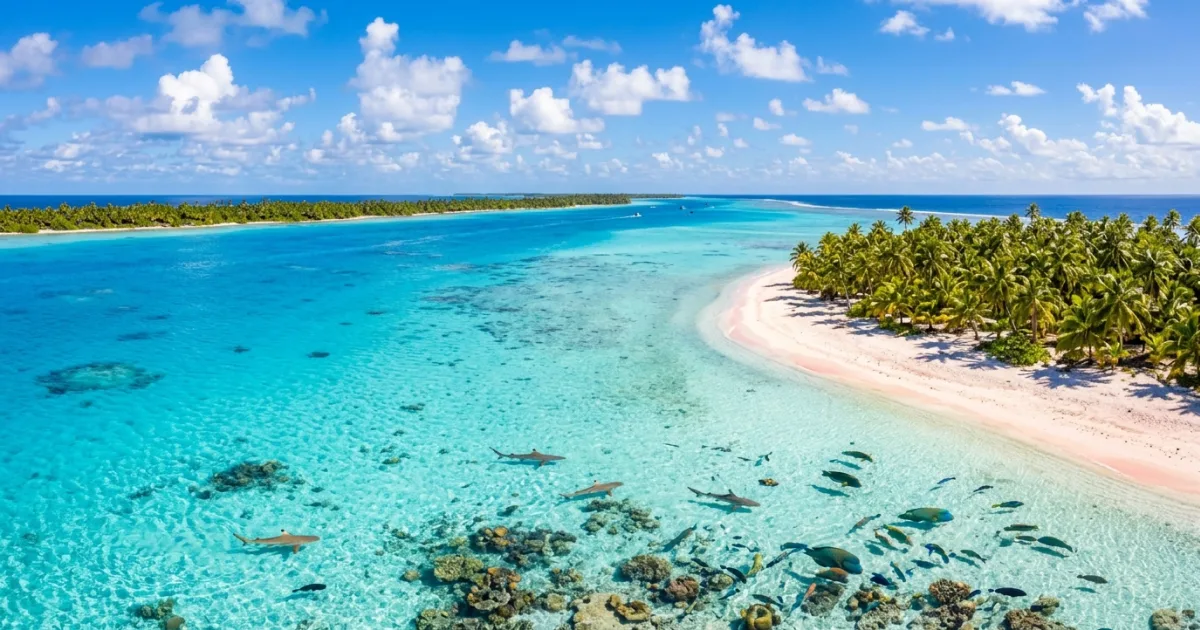
Fakarava is a pristine coral atoll situated in the Tuamotu Archipelago of French Polynesia, globally celebrated as a UNESCO Biosphere Reserve. Spanning roughly 60 kilometers in length and 21 kilometers in width, it encloses the second-largest lagoon in the territory. The destination is defined by its dramatic oceanic passes, Garuae in the north and Tumakohua in the south, which channel massive tidal currents teeming with exceptional marine biodiversity. Travelers visit primarily to experience world-class scuba diving, encountering legendary 'walls of sharks,' vibrant coral ecosystems, and undisturbed crystalline waters.
Beyond underwater exploration, the atoll maintains a deeply authentic Polynesian way of life anchored by the tranquil main village of Rotoava. Life here operates at an unhurried, serene pace, where cycling along coral-paved paths, visiting organic pearl farms, and lounging on remote pink sand beaches form the core daytime itinerary. Accommodations are predominantly family-run pensions that deliver immersive cultural hospitality and fresh lagoon cuisine. Fakarava represents an ideal sanctuary for adventurers, divers, and slow-travel enthusiasts seeking genuine isolation from mainstream tourism hubs.
Reasons to Visit
- Witness the world-famous 'wall of sharks' at Tumakohua Pass, where hundreds of grey reef sharks congregate in clear currents.
- Explore the Garuae Pass, the widest navigable pass in French Polynesia, offering drift diving among pristine coral fields and pelagic life.
- Relax on the untouched Pink Sand Beaches (Les Sables Roses) at the remote southern edge of the lagoon.
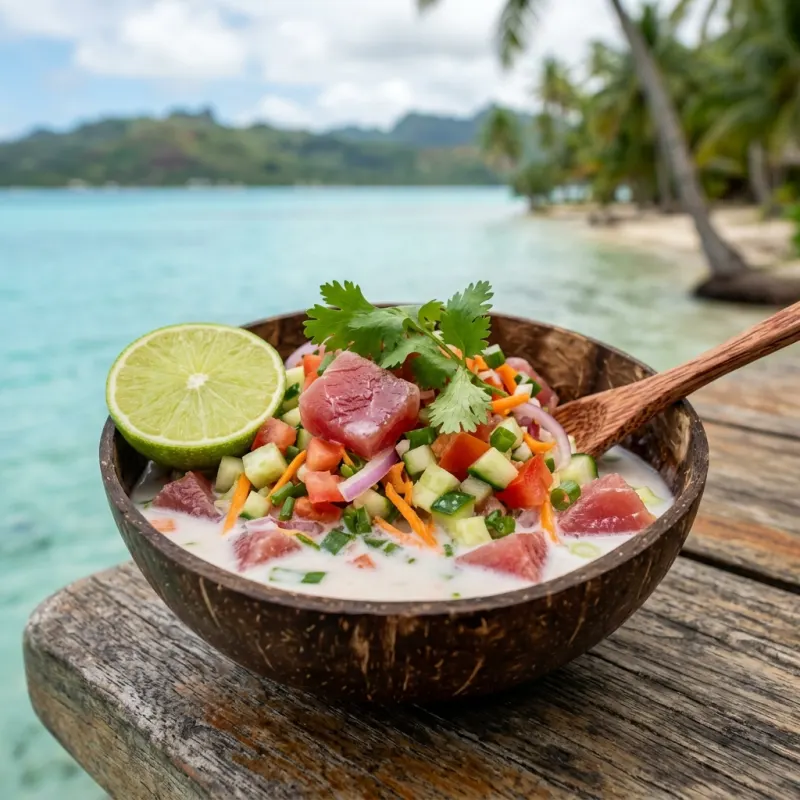
- Experience unhurried Polynesian hospitality in locally managed family pensions serving fresh daily lagoon seafood.
- Visit historic Tetamanu Village to see the first coral church built by Catholic missionaries in the mid-19th century.
Things to Avoid
- Avoid touching, standing on, or kicking the fragile coral reefs while snorkeling or diving in shallow lagoon areas.
- Do not rely entirely on credit cards or expect multiple operating ATMs on the island.
- Avoid booking flights without reserving accommodation and dive transfers well in advance, as capacity on the atoll is strictly limited.
- Do not attempt to dive the major passes without proper guide supervision or drift-diving training.
Local Transportation Tips
Transportation on Fakarava is wonderfully minimal and low-key. The northern stretch around Rotoava is traversed by a single, flat paved road extending approximately 40 kilometers, making cruiser bicycles the primary and most enjoyable mode of travel. Many pensions provide complimentary bicycles to guests. For traveling to the southern pass or remote motus (islets), motorized lagoon boat excursions are the only viable transport option, arranged through local dive operators or tour providers.
Travel Etiquette
- Greet locals with a warm 'Ia Orana' when passing on village roads or entering family shops.
- Remove your footwear before stepping inside a local home or private pension dining area.
- Dress modestly when walking through the villages of Rotoava and Tetamanu; swimsuits should be reserved for the beach or boat decks.
- Respect protected marine sanctuary regulations by not harvesting shells, coral, or disturbing wildlife.
Recommended Age Group
Fakarava offers an outdoor-centric, remote environment that appeals heavily to active adults and experienced ocean lovers.
- Babies (0-2 years): Not Recommended. The remote location, limited medical facilities, intense tropical sun, and boat-based travel pose significant logistical challenges for infant care.
- Kids (3-12 years): Neutral. Children who are confident swimmers can enjoy lagoon snorkeling and cycling, but the lack of structured entertainment, strong pass currents, and rustic living may not suit all families.
- Teens (13-19 years): Recommended. Ideal for adventurous teenagers interested in scuba certification, snorkeling, marine biology, and screen-free water adventures.
- Adults (20-64 years): Recommended. Perfect demographic for certified scuba divers, couples, ecotourists, and travelers seeking off-the-grid relaxation and drift diving.
- Seniors (65+ years): Neutral. Highly rewarding for fit, active seniors who enjoy gentle cycling and snorkeling, though boarding small dive boats and basic medical infrastructure require advance consideration.
Accessibility Level: Medium
- Paved roads in the northern sector around Rotoava are flat and barrier-free, but coral pathways can be rough and uneven.
- Pensions and guest lodges typically feature sandy grounds, steps, and unpaved entrances that present challenges for wheelchair users.
- Boat transfers between passes require physical agility to embark and disembark in open water or onto shallow beaches.
Did You Know?
Fakarava's lagoon is so vast that it could comfortably fit the entire island of Tahiti inside its borders. It was recognized by UNESCO in 1977 as an internationally significant Biosphere Reserve due to its exceptionally high concentration of rare corals, seabird colonies, and pristine marine apex predators.
Cool Statistics
- Encloses a massive lagoon area of approximately 1,121 square kilometers.
- Home to Garuae Pass, which measures over 800 meters wide, making it the largest lagoon pass in French Polynesia.
- Resident human population is fewer than 900 people spread across two historic settlements.






Buy a compatible power adapter for your trip