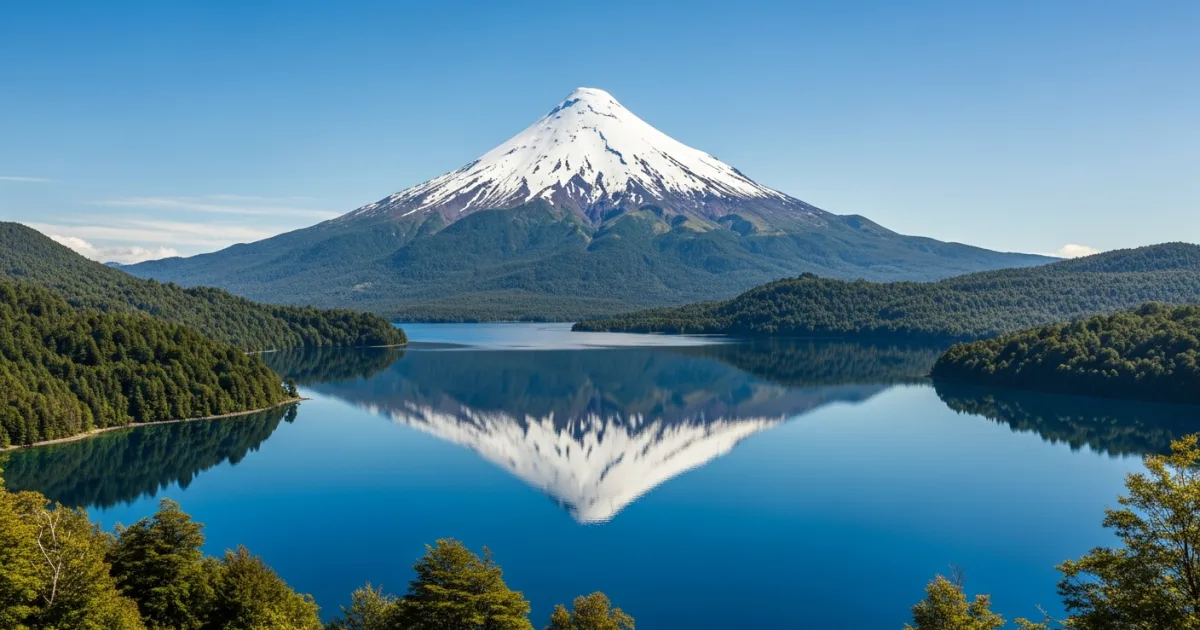
The Los Lagos Region is a geographical masterpiece where the Andes mountains meet the Pacific Ocean, shattering into a labyrinth of fjords, islands, and deep glacial lakes. The region is anchored by the bustling port city of Puerto Montt, but its true charm lies in the surrounding areas. To the north, the shores of Lake Llanquihue are dotted with picturesque towns like Puerto Varas and Frutillar, where German colonial architecture and traditions remain strong. Here, the perfectly conical Osorno Volcano dominates the skyline, offering year-round outdoor activities.
To the south and west lies the Chiloé Archipelago, a place steeped in mythology and distinct cultural heritage. Known for its iconic palafitos (colorful stilt houses) and 16 UNESCO World Heritage wooden churches, Chiloé feels like a world apart from mainland Chile. Further south, Los Lagos acts as the starting point for the Carretera Austral, one of the world's most epic road trips, leading travelers into the untouched wilderness of northern Patagonia, characterized by dense temperate rainforests, hanging glaciers, and pristine rivers.
Reasons to Visit
- Osorno Volcano: Hike, ski, or take a chairlift up this iconic, snow-capped stratovolcano for panoramic views of the Lake District.
- Chiloé Archipelago: Discover unique wooden churches, colorful stilt houses, and rich local mythology.
- Carretera Austral: Begin the ultimate Patagonian road trip from Puerto Montt, driving through untouched wilderness.
- German Heritage: Enjoy traditional kuchen (pastries) and admire 19th-century architecture in lakeside towns like Frutillar and Puerto Varas.
- Pumalín Douglas Tompkins National Park: Explore ancient Alerce forests and dramatic fjords in this massive conservation area.
Things to Avoid
- Underestimating driving times: Winding roads, unpaved sections, and ferry crossings make travel slower than it appears on a map.
- Ignoring the weather: The climate is notoriously unpredictable; always carry rain gear, even in summer.
- Bringing prohibited agricultural items: Chile's SAG (Agricultural and Livestock Service) enforces strict rules at borders and internal checkpoints.
- Skipping ferry reservations: During peak summer months, ferries to Chiloé or along the Carretera Austral can book up quickly.
Local Transportation Tips
Renting a car is the most convenient way to explore the vast and varied landscapes of Los Lagos, offering the flexibility to stop at remote viewpoints and trailheads. For those without a vehicle, a robust network of local buses (micros) connects major towns like Puerto Montt, Puerto Varas, and Castro. Ferries are an integral part of the transport infrastructure, essential for reaching Chiloé Island and navigating the fjords of the Carretera Austral. Shared taxis (colectivos) are also a cheap and efficient way to get around within city limits.
Travel Etiquette
- Respect indigenous culture: When visiting Mapuche or Huilliche communities, ask for permission before taking photographs.
- Leave No Trace: Strictly adhere to environmental guidelines in national parks; pack out all trash and stay on marked trails.
- Greetings: It is customary to greet friends and acquaintances with a single kiss on the right cheek.
- Tipping: A 10% tip (propina) is standard in restaurants and is usually added to the bill automatically; you can accept or decline it.
Recommended Age Group
Los Lagos offers a diverse range of activities that cater to various age groups, though the rugged nature of some areas requires consideration.
- Babies (0-2 years): Neutral. While major towns offer comfortable accommodations, long travel times, winding roads, and unpredictable weather can make remote exploration challenging.
- Kids (3-12 years): Recommended. Children will love the boat rides, easy nature walks, farm stays, and exploring the stilt houses of Chiloé.
- Teens (13-19 years): Recommended. The region is an adventure playground perfect for kayaking, horseback riding, zip-lining, and hiking.
- Adults (20-64 years): Recommended. Ideal for road-tripping, challenging treks, fly fishing, and enjoying the local culinary and craft beer scenes.
- Seniors (65+ years): Recommended. Scenic drives, comfortable lakeside lodges, accessible boat tours, and hot springs make it a highly enjoyable destination for mature travelers.
Accessibility Level: Medium
- Major tourist hubs like Puerto Varas and Frutillar have paved sidewalks and accessible waterfront promenades.
- Many national park trails are rugged and not wheelchair accessible, though some parks are beginning to introduce short, accessible boardwalks.
- Ferry travel to Chiloé and along the fjords generally accommodates vehicles, but passenger decks may lack elevators.
- Travelers with mobility needs should verify accessibility directly with lodges and tour operators, as infrastructure in rural areas remains limited.
Did You Know?
Chiloé Island is home to 16 distinct wooden churches that are designated as UNESCO World Heritage sites. Built by Jesuit missionaries and local indigenous builders in the 18th and 19th centuries, many of these architectural marvels were constructed entirely without the use of metal nails, relying instead on complex wooden joinery techniques inspired by local boat-building traditions.
Cool Statistics
- Los Lagos is home to the Alerce tree (Fitzroya cupressoides), one of the oldest tree species on Earth, with some individuals living over 3,000 years.
- The region serves as the official starting point (Kilometer 0) of the Carretera Austral, a 1,240 km scenic highway.
- Lake Llanquihue is the second-largest lake in Chile, covering an area of 860 square kilometers.
- The Chacao Channel, separating Chiloé from the mainland, experiences some of the strongest tidal currents in the world.






Buy a compatible power adapter for your trip