The Strait of Magellan is a 350-mile-long navigable route located at the southern tip of South America, entirely within Chilean territorial waters. It serves as the most important natural passage between the Atlantic and Pacific oceans. Before the construction of the Panama Canal, it was the primary route for steamships and sailing vessels traveling between the two oceans, offering a safer, albeit still challenging, alternative to the treacherous Drake Passage around Cape Horn.
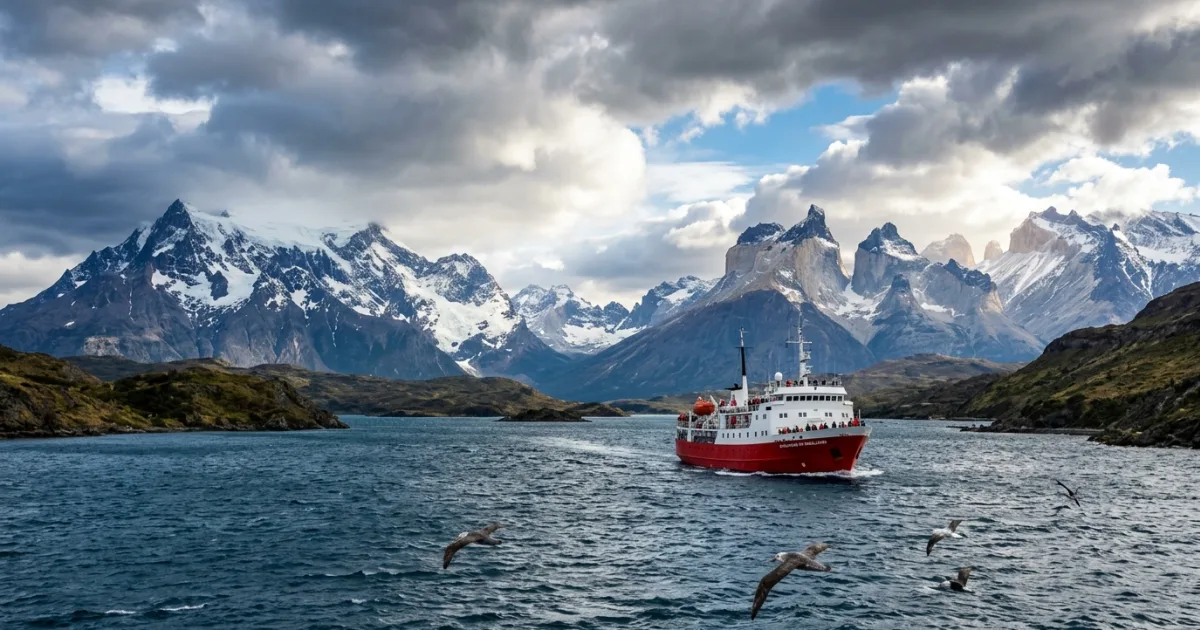
Today, the strait is a haven for eco-tourism and historical exploration. Visitors flock to Punta Arenas to embark on expeditions that showcase the region's raw beauty. The waters are teeming with marine life, including Peale's dolphins, humpback whales, and the iconic Magellanic penguins that nest on Magdalena Island. The surrounding landscapes feature dramatic fjords, ancient glaciers, and windswept steppes, providing a breathtaking backdrop for one of the world's most legendary waterways.
Reasons to Visit
- Rich Maritime History: Sail the exact routes taken by Ferdinand Magellan, Sir Francis Drake, and Charles Darwin.
- Incredible Wildlife: Get up close to massive colonies of Magellanic penguins, sea lions, and migrating whales.
- Stunning Landscapes: Experience the raw, untouched beauty of Patagonian fjords, glaciers, and snow-capped peaks.
- Gateway to the End of the World: Use the strait as a launching point for expeditions to Tierra del Fuego and Antarctica.
Things to Avoid
- Underestimating the Weather: The weather can change from sunny to freezing rain in minutes. Never leave without proper layers.
- Ignoring Safety Briefings: The waters can be dangerous; always listen to your boat captain and crew.
- Disturbing Wildlife: Maintain a respectful distance from penguins and marine life, and never feed wild animals.
- Tight Itineraries: Weather frequently causes boat tour cancellations. Leave buffer days in your schedule.
Local Transportation Tips
Transportation around the Strait of Magellan primarily involves boats and ferries. Regular car and passenger ferries operate between Punta Arenas and Porvenir (Tierra del Fuego), as well as across the Primera Angostura narrows. For sightseeing, numerous tour operators in Punta Arenas offer half-day and full-day catamaran or zodiac excursions to Magdalena Island and Cape Froward. On land, renting a car is the best way to explore the coastal roads south of Punta Arenas, such as the route to Fort Bulnes.
Travel Etiquette
- Leave No Trace: The Patagonian ecosystem is fragile. Take all trash with you and stay on marked trails.
- Respect the Wind: When opening car doors, hold them tightly so the wind doesn't rip them from their hinges.
- Punctuality: Boat tours run on strict schedules dictated by tides and weather; arrive early for departures.
Recommended Age Group
The Strait of Magellan offers incredible experiences, but the harsh weather and boat-based activities require consideration for different age groups.
- Babies (0-2 years): Not Recommended. The cold winds, rough seas, and lack of facilities on small boats make it unsuitable for infants.
- Kids (3-12 years): Neutral. Older children will love the penguins, but long, bumpy boat rides and cold weather can be challenging for younger kids.
- Teens (13-19 years): Recommended. Teens will appreciate the adventurous nature of the boat tours, wildlife spotting, and historical significance.
- Adults (20-64 years): Recommended. Ideal for adults seeking nature, photography, and maritime history in a rugged environment.
- Seniors (65+ years): Recommended. Highly enjoyable, provided seniors have good mobility to safely board and navigate moving boats. Larger ferries offer a more stable and comfortable experience.
Accessibility Level: Medium
- Accessibility on small tour boats and zodiacs is generally very limited due to narrow gangways and the need to step over gaps.
- The large public ferries (like the one to Porvenir) are more accommodating for wheelchairs, but elevator access from the car deck to passenger lounges should be confirmed in advance.
- Tours to Magdalena Island require walking on uneven, unpaved paths to see the penguins, which may be difficult for those with mobility impairments.
- Always contact tour operators directly prior to booking to discuss specific accessibility needs and vessel capabilities.
Did You Know?
When Ferdinand Magellan first navigated the passage in 1520, he originally named it the 'Strait of All Saints' (Estrecho de Todos los Santos) because his fleet entered the waters on November 1st, All Saints' Day. It was later renamed in his honor by the King of Spain.
Cool Statistics
- Length: Approximately 570 kilometers (350 miles).
- Width: Varies from 2 kilometers (1.2 miles) at its narrowest point to 32 kilometers (20 miles) at its widest.
- Discovery Year: 1520 by Ferdinand Magellan.
- Penguin Population: Magdalena Island hosts over 120,000 Magellanic penguins during the summer breeding season.







Buy a compatible power adapter for your trip