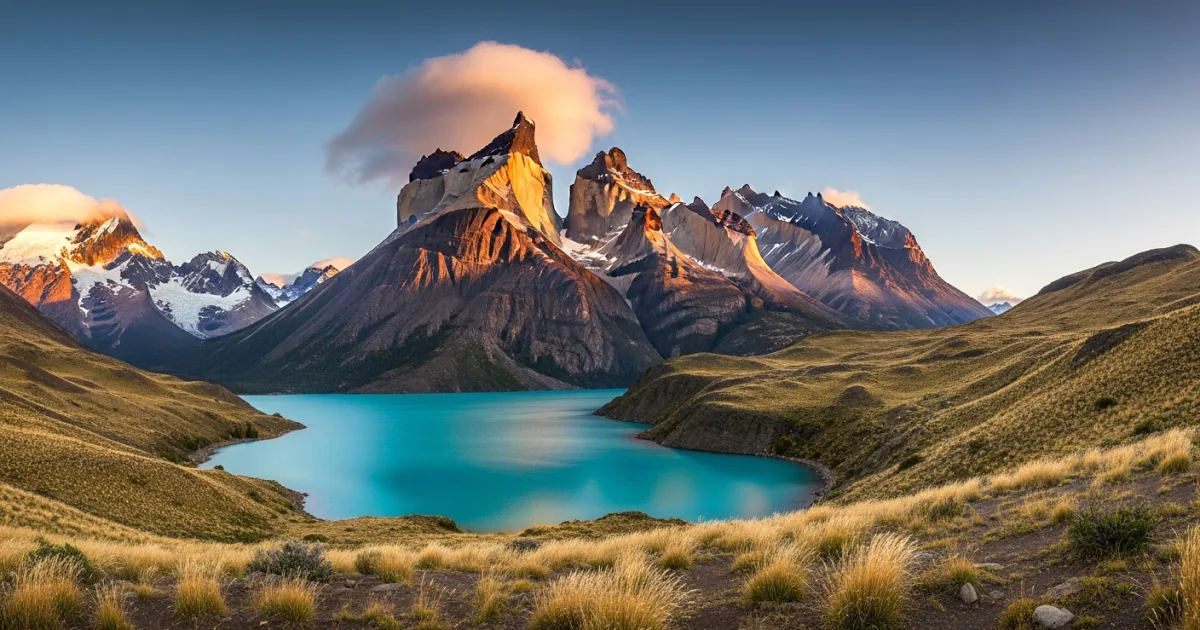
Torres del Paine National Park is a geological masterpiece shaped by millennia of glacial activity. The centerpiece of the park is the Paine Massif, an eastern spur of the Andes Mountains. The striking color contrast of the mountains—dark sedimentary rock capping lighter granite—is a result of magma intrusions that occurred over 12 million years ago. Surrounding these peaks are vast ice fields, including the Southern Patagonian Ice Field, which feeds the park's numerous vividly colored lakes, such as the turquoise Lake Nordenskjöld and the milky-grey Lake Pehoé.
Beyond its geological wonders, the park is a sanctuary for Patagonian wildlife. Conservation efforts have led to a thriving population of guanacos (wild relatives of the llama), which in turn support a healthy population of pumas. Birdwatchers flock here to see the massive Andean condor riding the thermal currents above the peaks, as well as rheas, flamingos, and caracaras. Whether you are navigating the challenging O Circuit or enjoying a scenic catamaran ride, the sheer scale and raw beauty of Torres del Paine offer a profoundly humbling experience.
Reasons to Visit
- The W Trek: One of the most famous multi-day hikes in the world, offering close-up views of the park's greatest hits over 4 to 5 days.
- Grey Glacier: A massive, calving wall of blue ice that can be viewed via hiking, kayaking, or a boat tour.
- Wildlife Photography: Exceptional opportunities to photograph pumas, guanacos, and condors in their natural, untamed habitat.
- Las Torres Base: The challenging day hike up to the glacial lake sitting directly beneath the three iconic granite towers.
Things to Avoid
- Lighting Fires: Never light a fire or use a camping stove outside of strictly designated cooking areas. The wind can spread sparks instantly, and past fires have devastated thousands of hectares.
- Hiking Off-Trail: Straying from marked paths damages fragile tundra vegetation that takes decades to recover.
- Underestimating the Weather: Do not start a long hike without proper waterproof gear, even if the sky is clear in the morning.
- Arriving Without Reservations: Do not show up expecting to find a campsite or refugio bed; you will be turned away by park rangers.
Local Transportation Tips
Accessing the park typically begins in the town of Puerto Natales, located about two hours south. Regular bus services run daily between the town and the park's main entrances (Laguna Amarga and Pudeto). Inside the park, transportation relies heavily on your own two feet. However, a catamaran operates on Lake Pehoé, connecting the Pudeto sector to Paine Grande, which is a crucial link for W Trek hikers. Shuttle vans also run between the Laguna Amarga entrance and the Las Torres sector.
Travel Etiquette
- Leave No Trace: Pack out absolutely all of your trash, including toilet paper and food scraps.
- Respect Wildlife: Maintain a safe distance from all animals. Do not feed the wildlife, as it disrupts their natural foraging habits.
- Trail Right-of-Way: Yield to hikers traveling uphill. Step aside to let faster trekkers pass.
- Quiet Hours: Respect quiet hours in campsites and refugios, as most hikers wake up before dawn to hit the trails.
Recommended Age Group
Torres del Paine offers varying levels of accessibility, but its core attractions require physical stamina and resilience to harsh weather.
- Babies (0-2 years): Not Recommended. The extreme weather, remote location, and lack of immediate medical facilities make it unsuitable for infants.
- Kids (3-12 years): Neutral. Short day trips or staying in luxury lodges can work, but multi-day treks are generally too demanding for young children.
- Teens (13-19 years): Recommended. Older, active teens will highly enjoy the hiking, wildlife spotting, and outdoor adventure.
- Adults (20-64 years): Recommended. This is the primary demographic for the W Trek and O Circuit, requiring good physical fitness and endurance.
- Seniors (65+ years): Recommended. Active seniors can enjoy the park via guided van tours, catamaran rides, and shorter, flatter walks, though rugged treks may be challenging.
Accessibility Level: Low
- Wheelchair Accessibility: Very limited. The vast majority of trails are rugged, rocky, and steep. However, some viewpoints accessible by vehicle (like Salto Grande or parts of Lago Grey) offer relatively flat, short paths.
- Accommodations: High-end eco-lodges and hotels located on the park's periphery offer accessible rooms and facilities, whereas backcountry refugios and campsites do not.
- Tours: Specialized tour operators in Puerto Natales can arrange customized driving tours that focus on roadside wildlife spotting and accessible viewpoints.
Did You Know?
The word 'Paine' (pronounced PIE-nay) originates from the indigenous Tehuelche (Aonikenk) language and translates to 'blue.' When you see the striking azure and turquoise hues of the park's glacial lakes and icebergs, the name's origin becomes immediately apparent.
Cool Statistics
- Highest Peak: Cerro Paine Grande stands at 2,884 meters (9,462 feet) above sea level.
- Wind Speeds: Gusts in the park can frequently exceed 180 km/h (110 mph) during the summer months.
- Park Size: The national park covers an expansive 227,298 hectares (561,660 acres).
- Glacial Ice: The Grey Glacier is approximately 6 kilometers wide and over 30 meters high at its face.






Buy a compatible power adapter for your trip