Perched high above Cusco's colonial core, San Blas was originally known during the Inca Empire as 'T'oqokachi' (meaning 'salt opening' or 'salt cave'). Under the Spanish viceroyalty, it became an assigned parish for indigenous artisans and craftsmen, establishing a creative legacy that has endured uninterrupted for over four centuries. Generations of the famed Mendívil, Olave, and Mérida artisan families have shaped the neighborhood's identity, renowned worldwide for distinctive religious iconography, elongated-neck angel sculptures, and master ceramic work.
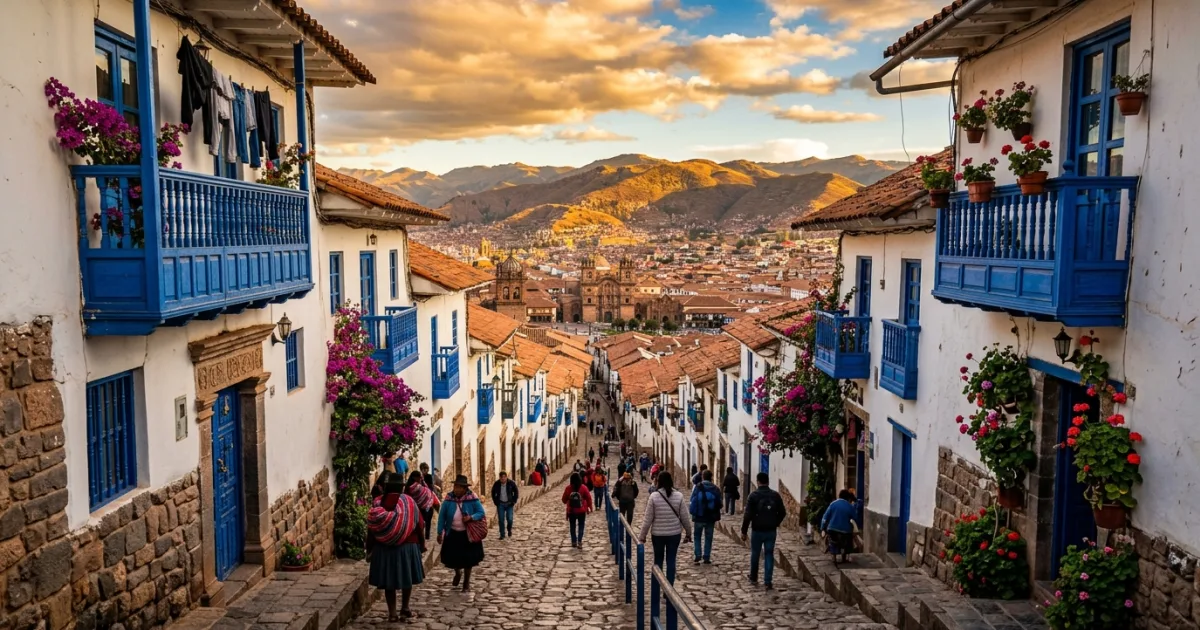
Today, the quarter retains an authentic village-like atmosphere within Cusco's urban landscape. Walking along pedestrian lanes like Calle Carmen Alto or Calle Tandapata reveals a fusion of Inca foundation walls supporting whitewashed colonial houses, punctuated by cascading flowering vines and carved wooden balconies. San Blas attracts a cosmopolitan mix of global travelers, digital nomads, local painters, and Quechua weavers, creating an eclectic, laid-back neighborhood where traditional Andean spirituality effortlessly coexists with independent coffee roasters, craft cocktail lounges, and boutique hotels.
Reasons to Visit
- Explore authentic multi-generational artisan studios and observe master sculptors crafting world-renowned religious folk art.
- Take in unobstructed, breathtaking sunset panoramas over the red-tiled roofs of historic Cusco from the Mirador de San Blas.
- Admire the world-famous carved cedar wood pulpit inside the historic 16th-century Templo de San Blas.
- Relax in specialty cafes serving single-origin Peruvian highland coffee and artisanal chocolate.
- Experience a peaceful, creative pedestrian atmosphere distinct from the hurried commercial pace of the lower city center.
Things to Avoid
- Avoid rushing up the steep Cuesta de San Blas staircase on your first day in Cusco; high altitude makes rapid uphill walking strenuous and triggers soroche (altitude sickness).
- Avoid taking rolling suitcases up the cobblestone pedestrian stairways; arrange luggage porterage with your accommodation or take a taxi to the nearest vehicle drop-off point on Calle Tandapata.
- Do not photograph indigenous artisans or street performers without asking permission and offering a modest tip.
- Avoid exchanging high-value foreign bills or 100 Sol banknotes with small souvenir vendors who may lack change or unknowingly carry counterfeit currency.
Local Transportation Tips
San Blas is predominantly a pedestrian zone consisting of narrow alleys and centuries-old stone stairways impassable by regular vehicular traffic. Walking is the only way to thoroughly explore the quarter's interior. When arriving from Alejandro Velasco Astete International Airport (CUZ) or the central train stations with luggage, hire a licensed taxi and instruct the driver to take you to the highest accessible vehicular road near your stay, such as Calle Tandapata, Calle Choquechaka, or Plaza San Blas. Fares from the city center typically run between 7 and 12 PEN ($2 to $3.50 USD).
Travel Etiquette
- Greet shopkeepers, artisans, and cafe hosts with a polite 'Buenos días' or 'Buenas tardes' upon entering their establishments.
- Bargain gently and respectfully in artisan markets; avoid aggressive haggling, as handicrafts represent days of intensive manual labor.
- Respect photography restrictions inside the Templo de San Blas and other religious sanctuaries.
- Dispose of all waste responsibly; San Blas places high value on neighborhood cleanliness and environmental stewardship.
Recommended Age Group
San Blas is a vibrant cultural enclave, but its steep Andean geography dictates visitor comfort.
- Babies (0-2 years): Not Recommended. Steep, irregular cobblestones and continuous stone staircases make strollers virtually unusable, while the high altitude can pose medical concerns for unacclimatized infants.
- Kids (3-12 years): Neutral. Children may find the steep uphill walking tiring, though interactive artisan workshops, chocolate shops, and open plazas provide fun diversions.
- Teens (13-19 years): Recommended. Teenagers appreciate the quirky shops, colorful street art, photography locations, lively cafes, and welcoming youth culture.
- Adults (20-64 years): Recommended. Perfect demographic for enjoying the boutique hotels, art galleries, world-class culinary offerings, and romantic evening viewpoints.
- Seniors (65+ years): Neutral. Highly rewarding culturally, but the combination of high altitude and steep, slippery staircases requires solid physical fitness and careful pacing.
Accessibility Level: Medium
- Wheelchair accessibility is extremely limited throughout San Blas due to widespread multi-level stone stairways and lack of curb ramps.
- Vehicular drop-off points are restricted to a few outer streets such as Calle Tandapata, requiring walking transfers to reach most accommodations.
- Public benches and flat rest areas are concentrated almost exclusively around the perimeter of Plaza San Blas.
- Travelers with limited mobility are advised to arrange private guided tours with pre-mapped, step-free vehicle routes.
Did You Know?
The signature artistic style of San Blas features religious figures—particularly the Virgin Mary and archangels—with unnaturally elongated necks. This unique aesthetic was popularized by the legendary 20th-century artisan Hilario Mendívil, who drew creative inspiration from the graceful, long necks of Andean llamas and alpacas roaming the Cusco highlands.
Cool Statistics
- Elevation: Approximately 3,420 meters (11,220 feet) above sea level, sitting roughly 50 meters higher than Cusco's Plaza de Armas.
- Historical Lineage: Continuously inhabited as an artisan community for more than 500 years.
- Pedestrian Footpaths: Over 80% of the neighborhood's interior streets consist entirely of stone staircases and pedestrian-only lanes.






Buy a compatible power adapter for your trip