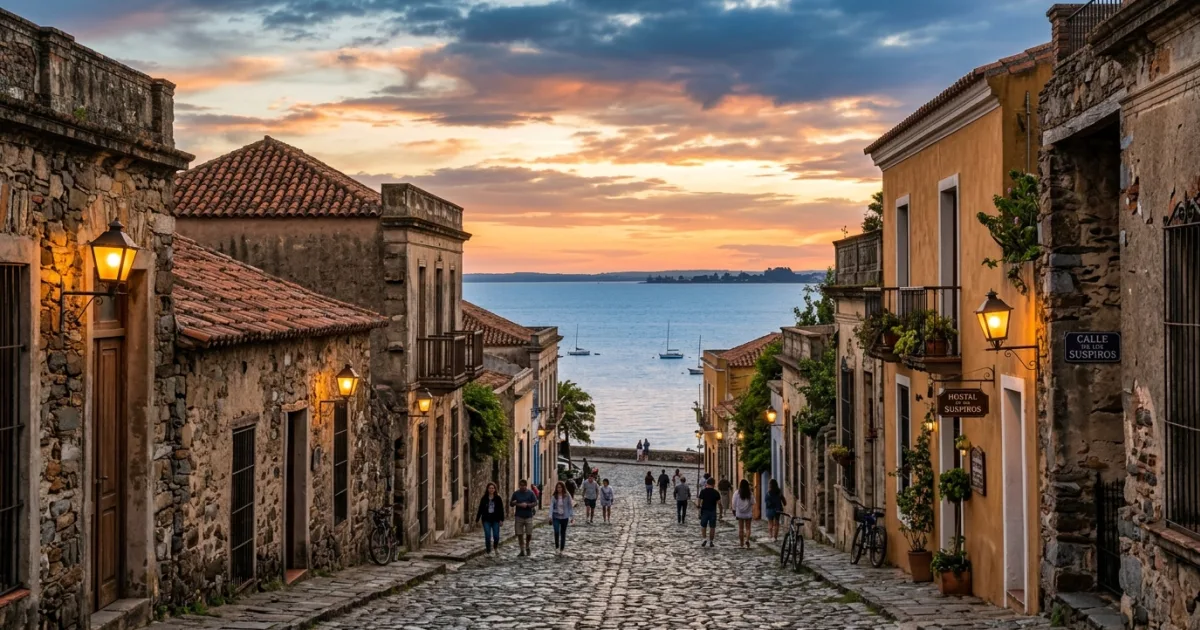
Colonia Department serves as one of the most culturally distinctive and scenic territories in southwestern Uruguay. Founded in 1680 by the Portuguese, its historic capital Colonia del Sacramento changed sovereignty multiple times between Portugal and Spain, bequeathing a hybrid architectural layout rarely observed elsewhere on the continent. Beyond the stone walls and iconic street lamps of the capital, Colonia Department is characterized by agricultural prosperity, maritime borders, and charming immigrant colonies.
The department encompasses diverse mini-regions, including Carmelo with its world-class boutique wineries and tranquil waterways, Conchillas with its distinctive British-built industrial heritage, and Colonia Suiza (Nueva Helvecia), founded by Swiss settlers whose cheese-making traditions persist today. Whether embarking on a scenic road trip along the coast or unwinding with a glass of Tannat at sunset, visitors find an authentic, peaceful slice of Uruguayan life.
Reasons to Visit
- Explore the UNESCO World Heritage historic quarter of Colonia del Sacramento, rich with 17th-century fortifications, lighthouses, and cobblestone alleys.
- Taste world-class Tannat and white varietals at family-owned bodegas across the Carmelo wine region.
- Savor artisan dairy products, handmade jams, and traditional fondue in the Swiss colony of Nueva Helvecia.
- Watch breathtaking crimson sunsets sinking over the broad expanse of the Río de la Plata.
- Experience exceptional safety, calm rural roads, and genuine South American hospitality.
Things to Avoid
- Avoid wearing thin high heels or unstable footwear in Colonia del Sacramento due to irregular, century-old cobblestone streets.
- Avoid limiting your visit solely to Colonia del Sacramento, as rural Carmelo and coastal Conchillas offer rewarding experiences.
- Do not forget to request international tourist VAT exemptions when paying for meals with foreign credit cards.
- Avoid arriving on weekends without advance lodging and ferry reservations during peak summer months.
Local Transportation Tips
Local bus lines connect the main terminal in Colonia del Sacramento to Montevideo, Carmelo, and surrounding towns reliably and affordably. For exploring the wider department at leisure, renting a car at the ferry terminal or airport is strongly recommended. Within the historic center of Colonia del Sacramento, walking is the best method of transit, although street-legal golf carts, scooters, and bicycles are widely available for hire to visit northern beaches and the Real de San Carlos bullring.
Travel Etiquette
- Greet shopkeepers, hotel staff, and servers with a polite 'Buenas tardes' or 'Buen día' before making inquiries.
- Do not touch or move the metal straw (bombilla) if invited to share yerba mate; simply drink until empty and hand it back with thanks.
- Tipping in restaurants is customary at approximately 10% in cash or added to the bill when service is not explicitly included.
- Maintain a relaxed attitude, as dining and daily life adhere to an unhurried, peaceful tempo.
Recommended Age Group
Colonia Department offers diverse experiences accommodating travelers of all generations, particularly favoring adult history and culinary enthusiasts.
- Babies (0-2 years): Neutral. Cobblestone streets can make stroller navigation challenging, though calm beaches and family-friendly parks are peaceful.
- Kids (3-12 years): Recommended. Children enjoy climbing the colonial lighthouse, riding golf carts along the coastline, and discovering old fort ramparts.
- Teens (13-19 years): Recommended. Excellent opportunities for cycling, kayaking, riverside photography, and relaxed beach days.
- Adults (20-64 years): Recommended. Perfect balance of boutique wine tasting, colonial history, gourmet dining, and romantic rural retreats.
- Seniors (65+ years): Recommended. Safe, walkable, and relaxed environment with flat waterfront paths and premier cultural heritage sites.
Accessibility Level: Medium
- The historic cobblestone district of Colonia del Sacramento presents uneven surfaces, high curbs, and natural stone ramps that can be difficult for manual wheelchair users.
- Modern areas along the waterfront Rambla feature paved, level promenades that are fully barrier-free.
- Major ferry terminals in Colonia del Sacramento offer ramp access, elevators, and accessible boarding facilities.
- Many modernized boutique hotels and major Carmelo wineries provide ground-floor accommodations and accessible vineyard pathways.
Did You Know?
The Plaza de Toros Real de San Carlos in Colonia was an authentic Spanish bullring built in 1910, which hosted only eight official bullfights before bullfighting was completely banned in Uruguay in 1912. It was meticulously restored in 2021 as a vibrant cultural center and concert arena.
Cool Statistics
- Over 300 years of contested colonial history between Portuguese and Spanish empires.
- Home to more than a dozen boutique wineries in the Carmelo viticultural corridor.
- Over 180 kilometers of scenic coastline along the Río de la Plata.
- Uruguay's leading producer of artisanal and industrial dairy products.






Buy a compatible power adapter for your trip