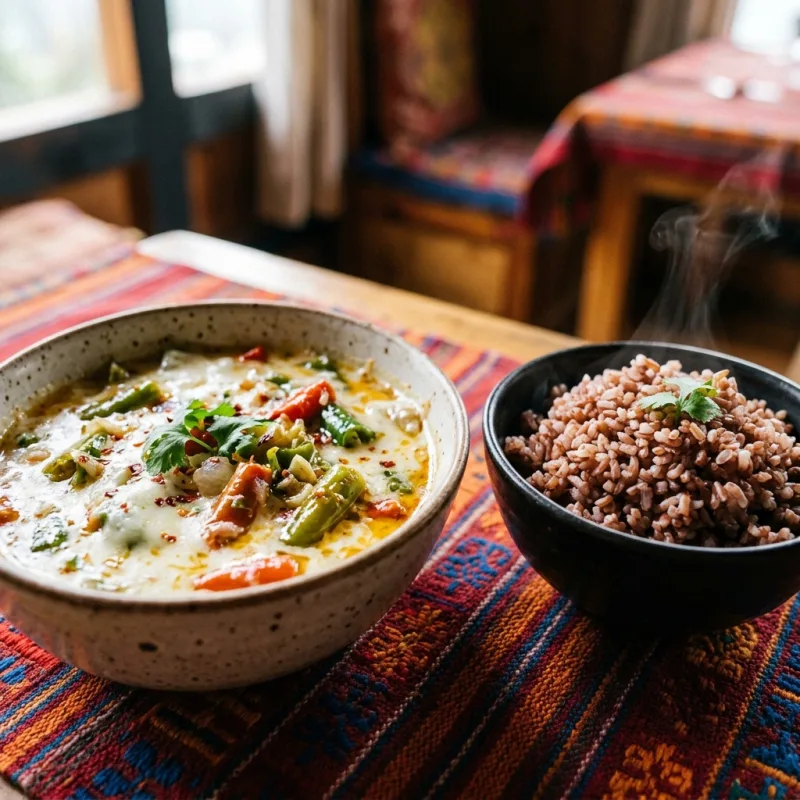
Punakha District sits in central-western Bhutan at a relatively low elevation of approximately 1,200 meters. This lower altitude bestows a warm, semi-tropical microclimate, allowing double-crop farming of red rice, mustard greens, and citrus fruits. Historically, Punakha was Bhutan's royal and administrative capital until 1955, and it remains the official winter residence of the Central Monastic Body (Dratshang) and the Je Khenpo (Chief Abbot).
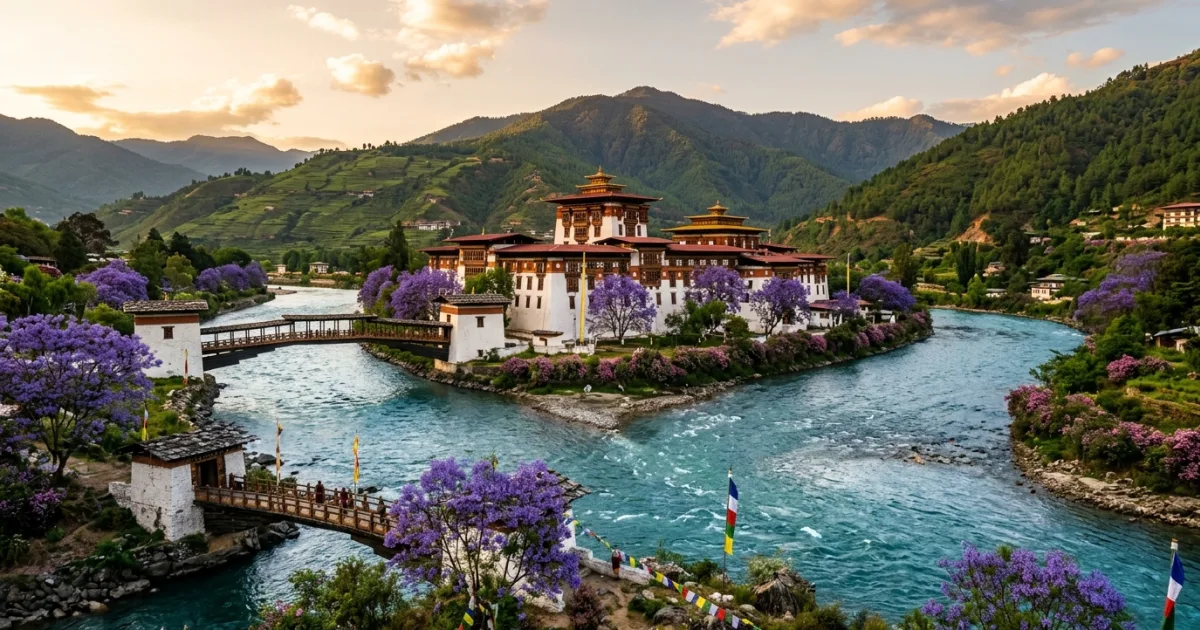
Geographically, the valley is carved by the converging waters of the Pho Chhu and Mo Chhu, giving the district scenic waterways bordered by high alpine ridgelines. Highlights include the imposing Punakha Dzong, the 160-meter Punakha Suspension Bridge, the fertility temple of Chimi Lhakhang, and tranquil village paths winding through terraced slopes. With world-class heritage hotels alongside humble community farmstays, Punakha offers an unmatched balance of architectural splendor and peaceful rural exploration.
Reasons to Visit
- Explore Punakha Dzong, widely regarded as the most picturesque fortress-monastery in the Kingdom of Bhutan.
- Walk the 160-meter Punakha Suspension Bridge, draped in colorful Buddhist prayer flags above the Pho Chhu.
- Hike through lush rice terraces to reach the Khamsum Yulley Namgyal Chorten for sweeping panoramic valley views.
- Visit Chimi Lhakhang, the renowned 15th-century fertility monastery associated with the Divine Madman, Drukpa Kunley.
- Experience gentle white-water rafting and river kayaking on the glacial-fed Mo Chhu and Pho Chhu rivers.
Things to Avoid
- Avoid wearing shorts, sleeveless tops, or hats inside any monastery, dzong, or sacred monument.
- Avoid touching Buddhist murals, altars, or sacred religious statues.
- Avoid swimming in the Pho Chhu or Mo Chhu rivers without professional guide supervision due to swift undercurrents.
- Avoid photographing inside inner temple sanctuaries where camera equipment is strictly prohibited.
- Avoid planning rapid day trips; rushing through Dochula Pass and Punakha in a single afternoon misses the valley's serene rhythm.
Local Transportation Tips
Independent public transit is limited in Punakha District. Nearly all international tourists travel in pre-booked private SUVs, minivans, or coaster buses arranged through their licensed Bhutanese tour agency. For local movement around Khuruthang and neighboring villages, shared and private taxis operate, though rates should be agreed upon in advance. Walking on foot is the primary way to explore monasteries, suspension bridges, and village farm trails.
Travel Etiquette
- Always walk clockwise around chortens (stupas), mani walls, and prayer wheels.
- Remove shoes before entering temple prayer halls and leave them neatly at designated racks.
- Use two hands when handing over or receiving items, gifts, or money as a sign of respect.
- Always ask for permission before taking close-up portraits of monks, nuns, or local villagers.
Recommended Age Group
Punakha is an enriching destination that caters to diverse traveler ages, though trail terrain and high travel costs require thoughtful planning.
- Babies (0-2 years): Neutral. Long, winding mountain roads from Paro and bumpy gravel tracks can cause motion sickness, though lower valley altitudes are gentle on infant respiration.
- Kids (3-12 years): Recommended. Children enjoy crossing the long suspension bridge, spotting river birds, rafting calm river stretches, and listening to Himalayan folk stories.
- Teens (13-19 years): Recommended. Excellent opportunities for soft adventure, including river rafting, mountain biking, photography, and hiking through hillside farmsteads.
- Adults (20-64 years): Recommended. Perfect balance of world-class cultural heritage, tranquil scenery, wellness luxury, and moderate hiking.
- Seniors (65+ years): Recommended. The temperate low altitude makes breathing comfortable, though visitors should have moderate mobility to navigate monastery stairs and uneven stone paths.
Accessibility Level: Medium
- Punakha Dzong features high stone thresholds, steep wooden interior steps, and cobble courtyards that pose significant barriers for manual wheelchair users.
- The paved approach road to the cantilever bridge of Punakha Dzong is accessible with companion assistance.
- Trailheads to Chimi Lhakhang and Khamsum Yulley Namgyal Chorten consist of dirt farm ridges and stone stairs unsuitable for wheelchairs.
- Several luxury resorts in the valley offer step-free ground-floor suites, ramped communal areas, and roll-in showers upon request.
Did You Know?
Punakha Dzong was built without the use of a single iron nail or architectural blueprint. Master builder Zhabdrung Ngawang Namgyal envisioned the entire fortress through spiritual meditation, commanding master carpenters to erect the six-story complex entirely from interlocking timber, stone masonry, and rammed earth.
Cool Statistics
- 1,200 meters: average elevation of Punakha, making it roughly 1,100 meters lower than Thimphu.
- 1637: the year Punakha Dzong was constructed at the confluence of two glacial rivers.
- 160 meters: length of the Punakha Suspension Bridge, one of the longest pedestrian suspension bridges in Bhutan.
- 100 USD: standard nightly Sustainable Development Fee (SDF) contributing toward national conservation and free healthcare.






Buy a compatible power adapter for your trip