Disclosure: This site contains affiliate links. We may earn a commission if you make a purchase, at no extra cost to you.

>
>
>
>
Punakha
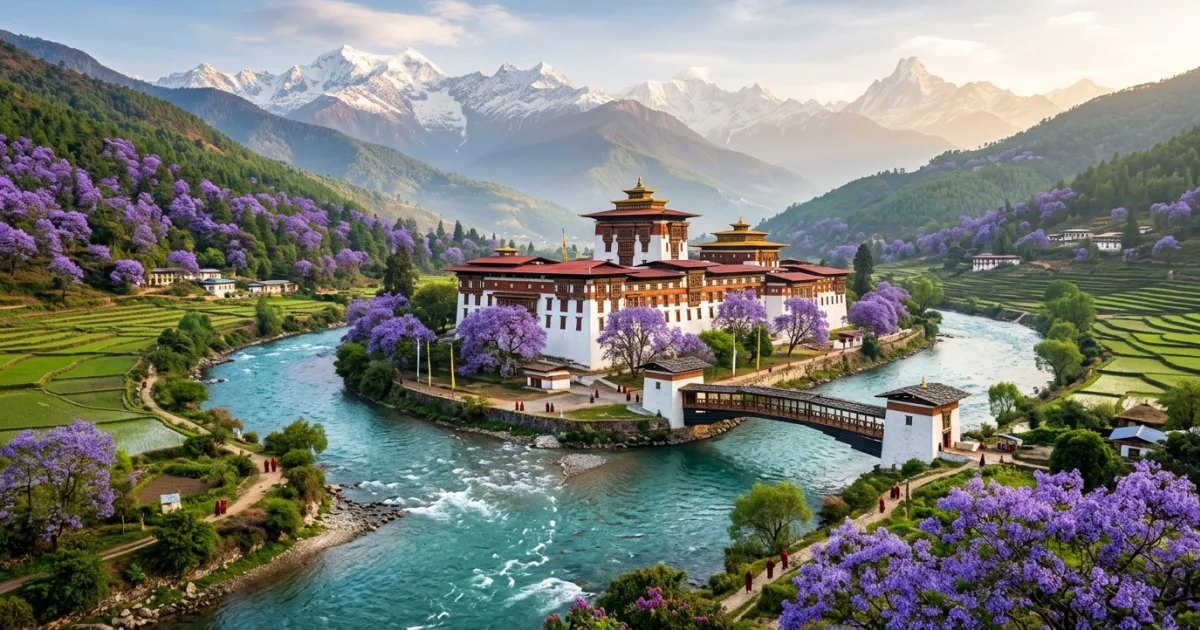
Punakha Dzong fortress beside the river with blooming jacaranda trees in Bhutan

Punakha Overview & Key Highlights

Punakha sits within an emerald river basin approximately 72 kilometers east of Thimphu, connected by the panoramic Dochula Pass. Because of its lower elevation relative to Paro and Thimphu, the valley experiences warmer, milder winters, which historically made it the preferred winter seat for Bhutan's monastic leadership and royalty. The confluence of the male and female rivers, Pho Chhu and Mo Chhu, anchors the valley's spiritual heart at the magnificent Punakha Dzong. Beyond its architectural marvels, Punakha offers gentle trekking routes across terraced fields, white-water rafting runs, and deep spiritual encounters. Visitors cross Bhutan's longest suspension bridge to reach traditional farming villages, hike through pine groves to the hilltop Khamsum Yulley Namgyal Chorten, and explore the idiosyncratic fertility shrine of Chimi Lhakhang. The valley represents a harmonious blend of profound Tibetan Buddhist spirituality and dramatic Himalayan geography.

Punakha Travel Guide: Logistics & In-Depth Tips

Punakha is situated at the junction of the Pho Chhu and Mo Chhu rivers in western-central Bhutan. As the administrative capital of Punakha District and the country's former national seat until the mid-20th century, the valley holds deep historical and political prestige. It served as the coronation site for the first King of Bhutan, Gongsar Ugyen Wangchuck, in 1907, and continues to host the wedding ceremonies of the royal family. The warm climate nurtures two seasonal rice harvests each year, painting the valley floor in brilliant tones of green and gold against steep forested mountain ridges.

The cultural life of Punakha revolves around Punakha Dzong, officially known as Pungtang Dechen Photrang Dzong ('The Palace of Great Bliss'). Constructed in 1637 by Ngawang Namgyal, the first Zhabdrung Rinpoche, this architectural wonder houses the sacred relics of Tibetan Buddhism and serves as the winter home of the Je Khenpo (Chief Abbot). Outside the fortress walls, footpaths lead through tranquil rural settlements, across expansive suspension bridges, and up to ornate chortens overlooking sweeping river bends.

Reasons to Visit

  • Explore Punakha Dzong, widely regarded as the most picturesque fortress in the Himalayan kingdom.
  • Walk across the Punakha Suspension Bridge, one of the longest pedestrian suspension bridges in Bhutan, festooned with colorful prayer flags.
  • Hike past terraced rice paddies to Chimi Lhakhang, the legendary 15th-century fertility monastery.
  • Ascend to Khamsum Yulley Namgyal Chorten for commanding 360-degree panoramic views of the river valley.
  • Experience white-water rafting on glacial Himalayan rivers flanked by lush pine forests.

Things to Avoid

  • Do not wear shorts, sleeveless tops, or hats inside monastic fortresses and religious shrines.
  • Avoid swimming in the Pho Chhu and Mo Chhu without certified professional river rafting equipment due to strong undertows.
  • Do not photograph monks, worshippers, or inner sanctum altars without explicit permission from your guide.
  • Avoid touching or disrespecting phallus talismans and painted murals, which hold sacred symbolic power in local spiritual tradition.

Local Transportation Tips

Public transit within Punakha is virtually nonexistent for international tourists. Nearly all visitors travel via pre-arranged private four-wheel-drive vehicles or tourist vans provided as part of their guided tour itinerary. Taxis operate between Punakha town (Khuruthang) and nearby hamlets, but day-to-day exploration between scenic sites, trailheads, and monasteries is handled by your designated tour driver.

Travel Etiquette

  • Always walk around chortens, stupas, and mani stones in a clockwise direction.
  • Remove shoes, hats, and sunglasses before stepping into monastery prayer halls.
  • Hand donations or receive blessed cords using both hands or with your right hand supported by your left elbow.
  • Speak softly and silence mobile devices when stepping inside sacred temple spaces.

Recommended Age Group

Punakha accommodates a range of travelers who appreciate cultural sightseeing, Himalayan heritage, and scenic walks, though long mountain drives require consideration for very young visitors.

  • Babies (0-2 years): Not Recommended. Long, winding mountain transfers over high passes and limited medical infrastructure can make travel strenuous for infants.
  • Kids (3-12 years): Neutral. Children enjoy the suspension bridges and gentle river rafting, though prolonged monastery visits may test shorter attention spans.
  • Teens (13-19 years): Recommended. Active teenagers will appreciate outdoor hiking, river rafting adventures, and striking Himalayan fortress architecture.
  • Adults (20-64 years): Recommended. Perfect for cultural travelers, photographers, hikers, and couples seeking serene nature and deep cultural immersion.
  • Seniors (65+ years): Recommended. The valley's lower altitude makes breathing easier than in Paro or Thimphu, though visitors must navigate uneven cobblestones and steep stairs inside the dzong.

Accessibility Level: Medium

  • Punakha Dzong involves steep wooden internal stairs and cobblestone courtyards that are challenging for manual wheelchair users.
  • Most trails leading to Chimi Lhakhang and Khamsum Yulley Namgyal Chorten consist of dirt tracks and stepped ascents through agricultural fields.
  • Luxury resorts in the Punakha Valley offer step-free access to dining terraces and accessible ground-floor rooms.
  • Visitors with mobility limitations should arrange for four-wheel-drive drop-offs as close as possible to the dzong footbridges.

Did You Know?

Punakha Dzong was constructed without using a single iron nail; the entire massive wooden and stone structure was joined using traditional dovetail carpentry techniques.

Cool Statistics

  • 1,250 meters: Punakha's average valley elevation, nearly 1,000 meters lower than Thimphu.
  • 160 meters: The length of the Punakha Suspension Bridge spanning the Pho Chhu river.
  • 1637: Year Punakha Dzong was founded by Zhabdrung Ngawang Namgyal.

Address:

Punakha, Bhutan

Find Nearby Accommodations

Basic Info

address icon

COUNTRY & Region

Bhutan,
Asia

ACCESSIBILITY LEVEL​

Medium
Currency icon

LOCAL CURRENCY​

Bhutanese Ngultrum (BTN)
Price level icon
High
Safety Level icon

SAFETY LEVEL

Duration icon

Recommended Duration

• 1-7 days
• Full day

Electricity

electricity icon

Electricity

220-240V, 
50Hz
Plug Socket icon

Plug Type

• Type C (Round pin)
• Type D (Three round pins in a triangular pattern)
• Type G (Three rectangular pins in a triangular pattern)
Plug types
Click To View Plug Types
Punakha is part of our
Conscious Travel collection

Activities To Do In Punakha

Best Time To Visit Punakha

Punakha is accessible year-round, but spring and autumn provide optimal weather and vibrant cultural sights.

  • March to May (Spring): Warm days, lush terrace farming, and purple jacaranda blossoms framing Punakha Dzong.
  • September to November (Autumn): Clear blue skies, crisp mountain air, and golden ripening rice fields.
  • December to February (Winter): Sunny, pleasant daytime temperatures, though nights are chilly.
  • June to August (Monsoon): Heavy rain showers, lush greenery, and occasional road closures due to mountain landslides.

Average Temperatures Per Month

Remember to check the weather forecast a few days before the trip and before heading to the airport.

Safety Level icon

Safety Level

Punakha is exceptionally safe with negligible violent crime. The main risks involve winding, unpaved mountain roads prone to rockfalls after rain, and swift river currents in the Pho Chhu and Mo Chhu rivers where swimming without professional raft gear is dangerous. Watch your step on steep, unrailed wooden staircases inside ancient dzongs.

The rating is based on multi-year peace, crime, and security indices. Before you go, always verify current conditions through official government travel advisories.

Emergency Numbers

Police: 113
Ambulance: 112

No internet needed • Includes local translations • Free for TravelingWiz readers

Spoken Languages

Dzongkha (official), English (widely spoken in hospitality and guided tourism), Sharchop

Learn The Language

  • Kuzu zangpo la: Hello / Greetings (respectful)
  • Kadrin chhe la: Thank you
  • Gaday bay zhui? How are you?
  • Legshom: Good / Fine
  • Tashi delek: Blessings / Good luck
  • Choe gi ming ga chi mo? What is your name?
  • Nga gi ming… yin: My name is…
  • Log jay gay: Goodbye / See you again
Travel Booking Partner - TravelingWiz

Trip Cost & Budgeting for Punakha, 2026

Everything you need to know about money while traveling
Is Punakha expensive for tourists in 2026? While the government daily fee increases overall trip costs, local daily expenses remain reasonable. Expect to pay around 130 BTN for a cappuccino, 200 BTN for a domestic beer, and 650 BTN for a mid-range restaurant meal. Based on our Human Verified prices, baseline travel here balances modest food costs with higher transport expenses. Use the data table below to calculate your specific daily budget based on your travel style.
Currency icon

LOCAL CURRENCY​:

Bhutanese Ngultrum (BTN)
Price level icon
High
Credit cards are accepted at major hotels, but cash in BTN or INR is essential for everyday purchases.

Per person, per day – pocket cash for small purchases.

Local: 850
Bhutanese Ngultrum (BTN)
≈ 9 USD

Full daily spend estimation (accommodation, food, transportation, attractions).

Travel Style
Bhutanese Ngultrum (BTN)
≈ USD ($)
Budget
4700
49
Mid-range
8500
89
Comfort
18700
195

The Prices, Daily costs, and calculator results are estimates for planning purposes only. Actual costs may vary based on season, booking timing, personal spending habits, and currency fluctuations. TravelingWiz cannot be held responsible for discrepancies between these estimates and your final trip expenses.

  • • Travel with a group to split private driver and guide costs when touring Punakha Valley.
  • • Indian Rupees (INR) are widely accepted 1:1 alongside BTN, making cash handling very convenient.
  • • Dine at authentic local Bhutanese eateries off the main road for traditional momos and ema datshi.
  • • Buy souvenirs and handicrafts directly from rural artisans near Punakha Dzong rather than hotel shops.

Pre-Order Tickets

Avoid disappointment when tickets sell out — and skip the long lines by booking online in advance. You’ll often save up to 20% too.
Save up to 20%

Travel Discounts & Coupons

Save on hotels, attractions, transport, and gear — find verified discounts for smarter travel spending.
Verified Coupons

What To Pack

  • Modest clothing covering shoulders, arms, and legs for temple and dzong visits
  • Slip-on walking shoes or trail runners that are easy to remove at sacred shrines
  • Warm fleece jacket or windbreaker for crossing high passes like Dochula Pass
  • Sun protection including wide-brim hat, UV sunglasses, and broad-spectrum sunscreen
  • Lightweight rain jacket or packable poncho, especially during late spring and summer
  • Binoculars for birdwatching along riverbanks and forested valley trails
We couldn't find tips for Punakha.
If you got any, please share

Recommended Itineraries for Traveling to Punakha

We couldn't find itineraries for Punakha.
you can contact us for custom trip plan

Food & Drink Highlights

Local Food Overview

Bhutanese cuisine in Punakha revolves around organic ingredients, native mountain herbs, and red rice grown directly in the valley's flooded terraces. Chilies are treated as a foundational vegetable rather than a mere spice, simmered alongside rich yak milk or cow cheese known as datshi. Local homestays and riverside lodges serve hearty dishes complemented by river greens, wild fern fronds (nakey), dried pork strips (sikam), and freshly brewed butter tea (suja).
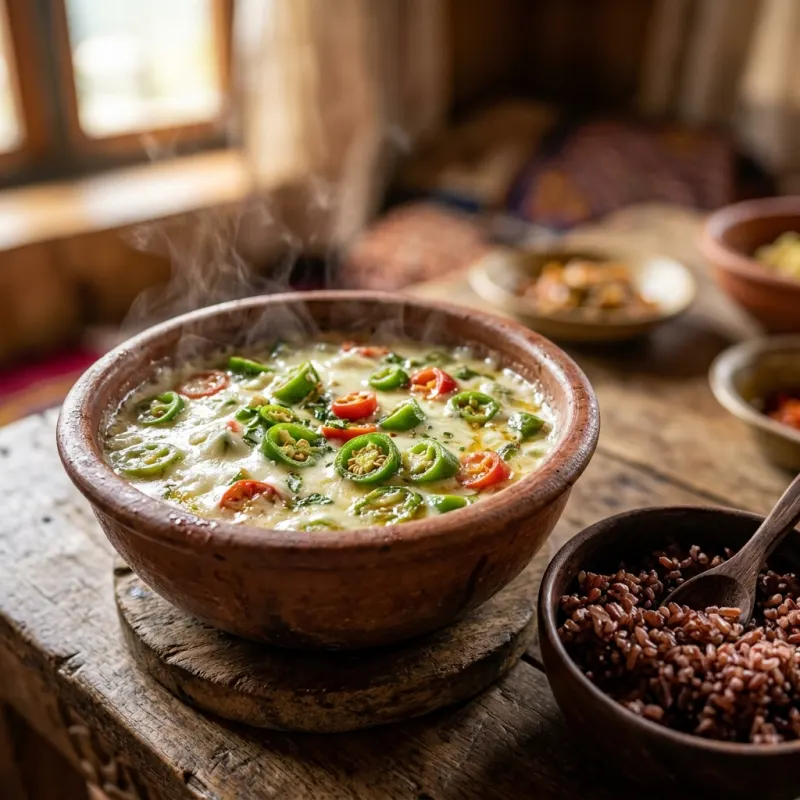
Authentic Bhutanese Ema Datshi chili and cheese stew served with red rice

Must Try Dish

Ema Datshi - Bhutan's iconic national dish featuring tender green and red chili peppers simmered gently in rich local cow milk cheese. Served bubbling alongside aromatic Bhutanese red rice, the creamy sauce tempers the sharp botanical heat of the chilies.
Food Experiences Title Icon

Food
Experiences

Discover cooking classes, tastings and local food tours

No food experience found
Maya, the human travel expert at TravelingWiz, offering curated, non-AI expertise

Maya’s Final Checklist for Punakha

Logistics shouldn’t be the focus of your trip—the experience should. I’ve hand-vetted these essential partners to ensure your arrival, stay, and exploration are as smooth as an Athenian breeze.

Where to Stay

From boutique hotels to local apartments—compare thousands of options and find the perfect stay in the best neighborhood.

Air Travel

Getting there should be seamless. Compare the best routes and prices across top airlines to start your journey on the right note.

Local Guides

Connect with experts who know the destination best. Get personalized advice and insider tips to help you plan your perfect trip.

Travel Protection

The “Engineer’s” rule: always have a backup. Secure your trip with a plan that covers every “what if” and unexpected change.

Car Rentals

Explore at your own pace with total freedom. Compare reliable rental options and find the right vehicle for your adventure.

Visa Services

Don’t let paperwork slow you down. Get expert assistance with your application to ensure all your entry documents are in order.

FAQs

Punakha is approximately 115 kilometers east of Paro, which typically takes between 3.5 to 4.5 hours by car due to the winding mountain terrain and crossing Dochula Pass at 3,100 meters.
Yes, tourists can enter Punakha Dzong accompanied by a licensed Bhutanese guide. Visitors must dress respectfully in formal attire that covers shoulders and knees, and shoes must be removed before entering sacred temple halls.
Built in 1499, Chimi Lhakhang is dedicated to Drukpa Kunley, the ‘Divine Madman.’ It is famously known as a fertility temple where couples from all over the world travel to receive blessings for childbearing.
Yes, gentle Class II to IV river rafting is offered on both the Mo Chhu (Female River, milder) and Pho Chhu (Male River, more adventurous), providing unique river-level perspectives of Punakha Dzong.

Your Insights Matter

TravelingWiz grows through the stories of our community. If you’ve recently explored ,Punakha share your tips and stories to help us perfect our guides for the next traveler.

Related Articles

Check out our related articles and blog posts to learn even more about the destination.

No related articles found

Don’t Travel Alone

Share with your friends and family

Where should we send your offline card?

We hate spam just as much as you do

newsletter_consent *