Disclosure: This site contains affiliate links. We may earn a commission if you make a purchase, at no extra cost to you.

>
>
>
>
Thimphu
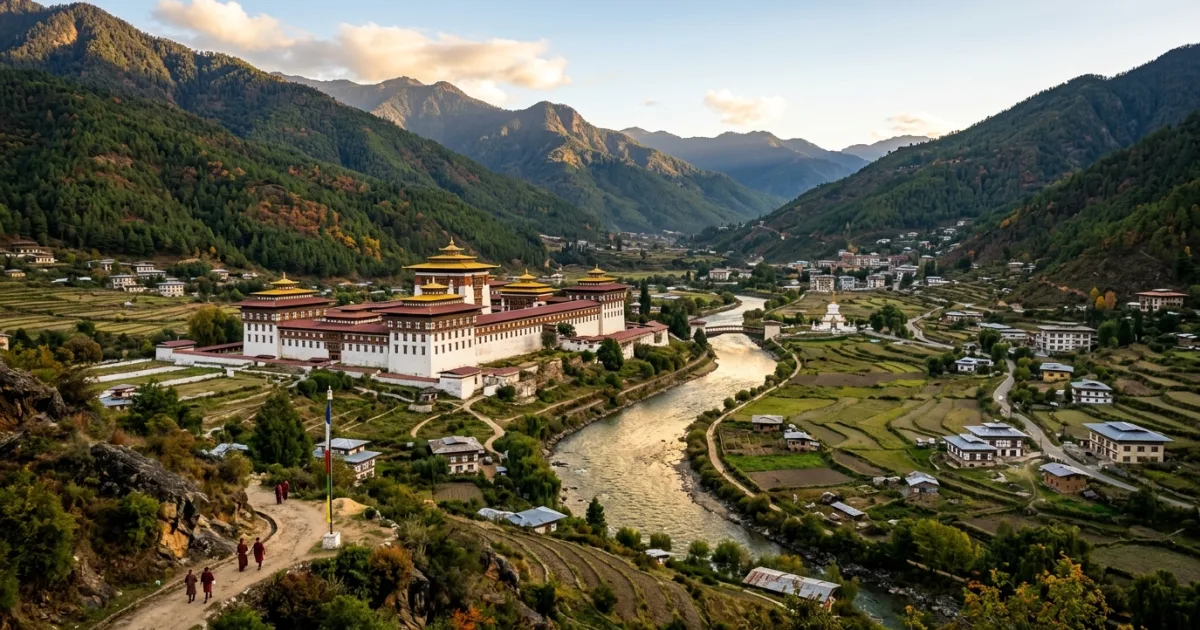
Panoramic view of Thimphu valley and Tashichho Dzong in Bhutan

Thimphu Overview & Key Highlights

Thimphu is the vibrant, highland administrative seat of Bhutan, resting along the crystalline Wang Chhu river against a backdrop of pine-cloaked Himalayan ridges. Established as the permanent national capital in 1961, the city eschews commercial urban chaos in favor of quiet preservation, ornate painted timber facades, and monastic serenity. Travelers spend their mornings circumambulating the National Memorial Chorten alongside local elders, afternoons browsing hand-woven textiles and herbal incense, and evenings admiring the illuminated courtyards of the monumental Tashichho Dzong. Because all international visitors must travel under Bhutan's sustainable tourism framework, city exploration is orderly, low-impact, and accompanied by certified local guides. Thimphu provides the country's most varied dining and gallery scene, allowing travelers to taste fiery chili-cheese curries, visit national art schools where students train in traditional painting, and watch archery matches played on neighborhood turf fields. Its cool mountain climate and preserved heritage make it an unparalleled introduction to Himalayan Buddhist civilization.

Thimphu Travel Guide: Logistics & In-Depth Tips

Thimphu is the cultural core and sovereign capital of Bhutan, resting along the winding banks of the Wang Chhu. Unlike sprawling Asian metropolises, Thimphu preserves a human scale, free from billboards, elevated highways, and skyscrapers. The valley retains a protected aesthetic, regulated by municipal codes requiring all new buildings to incorporate traditional timber cornices, arched windows, and Buddhist iconography. As the home of the Bhutanese Royal Family, the National Assembly, and the central monastic body, the city serves as the engine of the nation's Gross National Happiness philosophy.

Travelers in Thimphu encounter a rare synthesis of medieval fortress life and gentle modernization. Monks wrapped in crimson robes navigate streets alongside young tech professionals carrying smartphones, while prayer wheels spin continuously along pedestrian pathways. Key landmarks like the monumental Buddha Dordenma bronze statue gaze out over emerald pine slopes, providing panoramic vantage points over a capital that remains deeply committed to carbon negativity and cultural integrity.

Reasons to Visit

  • Explore Tashichho Dzong, a majestic whitewashed fortress functioning as both the seat of national civil government and the summer residence of the Chief Abbot.
  • Marvel at Buddha Dordenma, a 51.5-meter gilded bronze statue containing 125,000 smaller miniature Buddhas inside its chest.
  • Observe living arts at the National Institute for Zorig Chusum, where students spend years mastering Bhutan's 13 traditional crafts.
  • Experience the Centenary Farmers Market, the country's largest gathering of valley farmers selling wild honey, mountain mushrooms, and local cheeses.
  • Witness community tradition at the Changlimithang Stadium archery range, where teams compete using high-tech compound bows and perform victory dances.

Things to Avoid

  • Do not photograph inside temple inner sanctums, as taking pictures of sacred altars and deities is strictly prohibited.
  • Avoid touching prayer flags, stupas, or religious texts with your feet or placing them on the bare ground.
  • Do not buy or sell tobacco products in open public areas without observing strict customs declaration guidelines and designated smoking areas.
  • Avoid pointing your fingers directly at religious relics or monks; use an open, upturned palm instead.

Local Transportation Tips

Transportation within Thimphu is conducted predominantly via licensed tourist vans, private driver services, and metered or flat-rate local taxis. Most international itineraries include a dedicated vehicle and driver. For independent city transit, taxis are readily flagged down along Norzin Lam and main thoroughfares; negotiate or confirm the fare before departing. Central Thimphu is exceptionally pedestrian-friendly, with well-paved pathways running between the Clock Tower Square, local handicraft shops, and major downtown avenues.

Travel Etiquette

  • Always walk clockwise around chortens (stupas), prayer wheels, and temple halls.
  • Remove shoes, hats, and sunglasses before stepping across the threshold of any Buddhist temple or shrine room.
  • Address monks, government officials, and elders politely, appending the respectful honorific suffix 'la' to words and greetings.
  • Ask for permission before photographing local residents, particularly elderly monks and rural market vendors.

Recommended Age Group

Thimphu's mountain atmosphere and culturally focused sights appeal across different traveler demographics, though comfort levels vary by mobility requirements.

  • Babies (0-2 years): Neutral. The altitude and uneven stone surfaces inside historic dzongs can make stroller navigation challenging, requiring baby carriers.
  • Kids (3-12 years): Neutral. Children will enjoy the Takin Preserve and archery contests, but long temple visits and cultural protocol may test shorter attention spans.
  • Teens (13-19 years): Recommended. Older youth appreciate the unique cultural contrasts, pristine mountain trails, archery experiences, and hands-on art workshops.
  • Adults (20-64 years): Recommended. Ideal demographic for immersive architectural tours, cultural exchanges, monastery visits, and Bhutanese culinary explorations.
  • Seniors (65+ years): Recommended. The pace of private guided touring is relaxed and respectful, though visitors with cardiovascular concerns should prepare for high altitude and monastery staircases.

Accessibility Level: Medium

  • Traditional fortress-monasteries (dzongs) and historical temples feature high wooden thresholds, steep stairways, and cobblestone courtyards that present severe challenges for standard wheelchairs.
  • Modern visitor centers, including parts of the Buddha Point complex and the National Memorial Chorten perimeter, offer flat, paved promenades accessible with assistance.
  • Wheelchair-accessible restrooms are limited outside five-star luxury hotels; travelers with mobility limitations should coordinate closely with tour operators for specialized vehicle ramps and adapted itineraries.

Did You Know?

Thimphu is one of only two capital cities in Asia that does not use automated traffic lights. When municipal authorities installed a single set of electric traffic signals in the mid-1990s, the public protested that the machine felt cold and robotic. The government promptly uninstalled the lights and re-stationed the city's beloved traffic police officers, who continue directing vehicles with expressive hand signals from an ornate pagoda-style booth.

Cool Statistics

  • Thimphu sits at an average altitude of 2,334 meters (7,657 feet) above sea level.
  • The Buddha Dordenma statue is one of the largest sitting Buddha statues in the world at 51.5 meters (169 feet) tall.
  • Bhutan is carbon-negative, absorbing more greenhouse gases through its forests than Thimphu and its surrounding valleys emit.
  • The National Institute for Zorig Chusum teaches exactly 13 traditional crafts, ranging from thangka painting to woodcarving.


Address:

Thimphu, Bhutan

Find Nearby Accommodations

Basic Info

address icon

COUNTRY & Region

Bhutan,
Asia

ACCESSIBILITY LEVEL​

Medium
Currency icon

LOCAL CURRENCY​

Bhutanese Ngultrum (BTN)
Price level icon
Medium
Safety Level icon

SAFETY LEVEL

Duration icon

Recommended Duration

• 1-7 days

Electricity

electricity icon

Electricity

220-240V, 
50Hz
Plug Socket icon

Plug Type

• Type C (Round pin)
• Type D (Three round pins in a triangular pattern)
• Type G (Three rectangular pins in a triangular pattern)
Plug types
Click To View Plug Types
Thimphu is part of our
Coolcation collection

Activities To Do In Thimphu

Best Time To Visit Thimphu

Thimphu is best visited during the crisp, clear seasons of spring and autumn.

  • March to May (Spring): Mild temperatures, blooming rhododendrons, and dry skies ideal for city walking and valley hikes.
  • September to November (Autumn): Peak travel window with clear skies, unobstructed Himalayan views, and major festivals such as the Thimphu Tshechu.
  • December to February (Winter): Cold, crisp days with sunny skies and freezing nights; quieter streets but minimal tourist congestion.
  • June to August (Monsoon): Heavy Himalayan rainfall, misty valley conditions, and frequent roadblocks along mountain passes.

Average Temperatures Per Month

Remember to check the weather forecast a few days before the trip and before heading to the airport.

Safety Level icon

Safety Level

Thimphu is one of the safest national capitals in the world, with violent crime virtually nonexistent. The primary safety concerns are natural and environmental: stay hydrated to counteract mild high-altitude effects, and take care when walking at night as free-roaming community dogs can become territorial and bark loudly in packs. Carry a flashlight after dusk, as secondary side streets and drainage gutters are often poorly lit.

The rating is based on multi-year peace, crime, and security indices. Before you go, always verify current conditions through official government travel advisories.

Emergency Numbers

Police: 113
Ambulance: 112

No internet needed • Includes local translations • Free for TravelingWiz readers

Spoken Languages

Dzongkha (Official), English (widely spoken in commerce, education, and hospitality)

Learn The Language

  • Kuzu zangpo la – Hello / Greetings
  • Kadrin chhe la – Thank you
  • Nga gi ming … yin la – My name is …
  • Gaday bay zhui? – How much does this cost?
  • Chhab – Water
  • Tashi delek – Good luck / Blessings
  • Gong dhi la – Excuse me / Sorry
  • Lok jay gay la – Goodbye / See you again
Travel Booking Partner - TravelingWiz

Trip Cost & Budgeting for Thimphu, 2026

Everything you need to know about money while traveling
Is Thimphu expensive for tourists in 2026? While mandatory daily tourism fees increase overall costs, daily living expenses in the city remain moderate. You can expect to pay around 130 BTN for a cappuccino, 250 BTN for a domestic beer, and 675 BTN for a mid-range restaurant meal. Based on Human Verified prices, mid-range lodging and transport remain accessible. Use the data table below to calculate your specific daily budget based on your travel style.
Currency icon

LOCAL CURRENCY​:

Bhutanese Ngultrum (BTN)
Price level icon
Medium
Major hotels accept credit cards, but cash is essential for small shops, local markets, and taxis throughout Thimphu.

Per person, per day – pocket cash for small purchases.

Local: 690
Bhutanese Ngultrum (BTN)
≈ 7 USD

Full daily spend estimation (accommodation, food, transportation, attractions).

Travel Style
Bhutanese Ngultrum (BTN)
≈ USD ($)
Budget
3750
39
Mid-range
6850
71
Comfort
15050
157

The Prices, Daily costs, and calculator results are estimates for planning purposes only. Actual costs may vary based on season, booking timing, personal spending habits, and currency fluctuations. TravelingWiz cannot be held responsible for discrepancies between these estimates and your final trip expenses.

  • • Indian Rupees (INR) are widely accepted at parity with BTN, though 500-rupee notes may face scrutiny.
  • • Eat at authentic local eateries serving Ema Datshi set meals for generous portions at lower prices.
  • • Hire taxis on a shared basis or agree on fares in advance when exploring sights around the valley.
  • • Pay your mandatory Sustainable Development Fee online in advance to streamline arrival logistics.

Pre-Order Tickets

Avoid disappointment when tickets sell out — and skip the long lines by booking online in advance. You’ll often save up to 20% too.
Save up to 20%

Travel Discounts & Coupons

Save on hotels, attractions, transport, and gear — find verified discounts for smarter travel spending.
Verified Coupons

What To Pack

  • Modest clothing covering shoulders, arms, and legs for entry into dzongs and monasteries.
  • Sturdy walking shoes or light hiking boots for uneven stone paths and temple stairs.
  • Easily removable footwear and thick wool socks, as temple sanctums require shoe removal.
  • A warm fleece or down jacket, as mountain temperatures drop rapidly after sunset.
  • Sun protection including polarized sunglasses, broad-spectrum sunscreen, and a brimmed hat for high UV at 2,300+ meters.
  • A universal plug adapter compatible with Types C, D, and G outlets.
We couldn't find tips for Thimphu.
If you got any, please share

Recommended Itineraries for Traveling to Thimphu

We couldn't find itineraries for Thimphu.
you can contact us for custom trip plan

Food & Drink Highlights

Local Food Overview

Bhutanese cuisine centers around native chili peppers, which are treated as essential vegetables rather than mere seasonings, paired with locally churned cow and yak cheeses. Meals are anchored by generous mounds of nutty red Himalayan rice, complemented by mountain ferns, dried wild mushrooms, and slow-cooked pork or beef. Local canteens across Thimphu also serve Tibetan-influenced steamed dumplings (momos) and salted butter tea (suja).
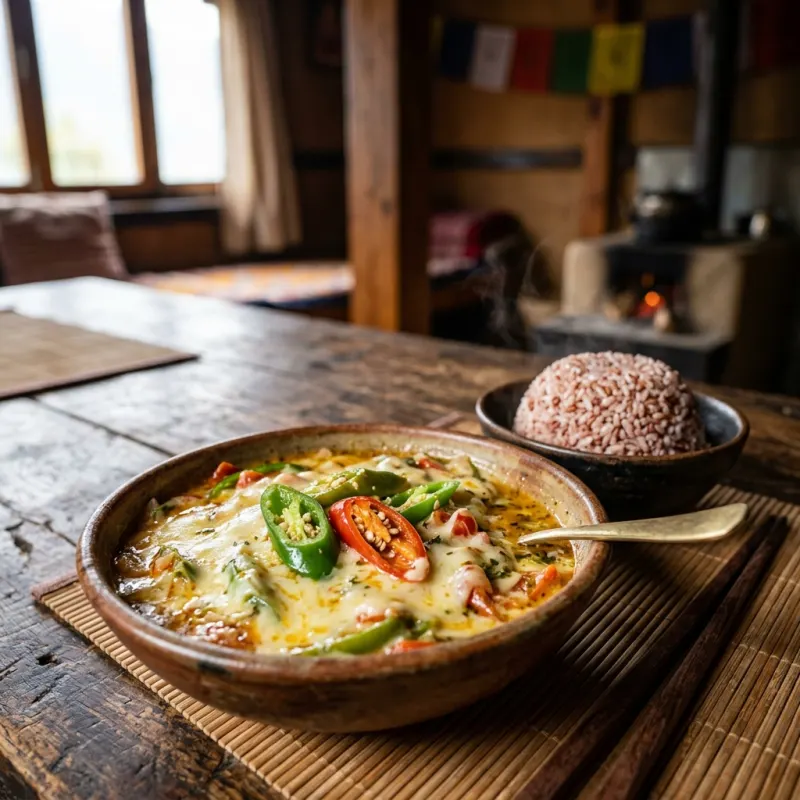
Authentic Bhutanese Ema Datshi chili and cheese stew served with Himalayan red rice

Must Try Dish

Ema Datshi - A rich, fiery stew made from sliced green or red chili peppers simmered gently with pungent, melted native cow or yak cheese. Served over steaming Himalayan red rice, it is Bhutan's definitive national dish and an essential cultural staple.
Food Experiences Title Icon

Food
Experiences

Discover cooking classes, tastings and local food tours

No food experience found
Maya, the human travel expert at TravelingWiz, offering curated, non-AI expertise

Maya’s Final Checklist for Thimphu

Logistics shouldn’t be the focus of your trip—the experience should. I’ve hand-vetted these essential partners to ensure your arrival, stay, and exploration are as smooth as an Athenian breeze.

Where to Stay

From boutique hotels to local apartments—compare thousands of options and find the perfect stay in the best neighborhood.

Air Travel

Getting there should be seamless. Compare the best routes and prices across top airlines to start your journey on the right note.

Local Guides

Connect with experts who know the destination best. Get personalized advice and insider tips to help you plan your perfect trip.

Travel Protection

The “Engineer’s” rule: always have a backup. Secure your trip with a plan that covers every “what if” and unexpected change.

Car Rentals

Explore at your own pace with total freedom. Compare reliable rental options and find the right vehicle for your adventure.

Visa Services

Don’t let paperwork slow you down. Get expert assistance with your application to ensure all your entry documents are in order.

FAQs

Yes. Bhutanese regulations require all international tourists (except regional tourists from India, Bangladesh, and the Maldives who have separate guidelines) to arrange their travel through a licensed tour operator or book certified accommodation and guides in advance.
A set of traffic lights was installed in the 1990s, but the citizens and government preferred human interaction and visual appeal. Today, white-gloved traffic officers direct traffic with choreographed hand movements from decorative pavilions.
Visitors must dress conservatively: shirts with collars, long trousers or full-length skirts, and covered shoulders. Hats, umbrellas, and shoes must be removed before entering sacred temple halls.
Thimphu sits at approximately 2,334 meters (7,657 feet). Most travelers experience only mild shortness of breath or slight headaches on the first day, but drinking plenty of water and pacing physical activity helps acclimatization.

Your Insights Matter

TravelingWiz grows through the stories of our community. If you’ve recently explored ,Thimphu share your tips and stories to help us perfect our guides for the next traveler.

Related Articles

Check out our related articles and blog posts to learn even more about the destination.

No related articles found

Don’t Travel Alone

Share with your friends and family

Where should we send your offline card?

We hate spam just as much as you do

newsletter_consent *