Datong occupies a pivotal position in northern Shanxi province, bounded by the Yin Mountains to the north and the Yan Mountains to the east. Historically recognized as Pingcheng when it served as the capital of the Northern Wei Dynasty between 398 and 494 CE, Datong functioned as a vital cultural crossroads between nomadic steppe traditions and Han Chinese administrative systems. This historic synthesis produced an extraordinary legacy of monumental sculpture and architecture, most visibly preserved at the Yungang Grottoes, where over 51,000 carved Buddhist statues line the sandstone cliffs of Mount Wuzhou.
Beyond its ancient imperial footprint, modern Datong presents visitors with a compelling contrast of urban reconstruction and quiet historical survival. The downtown area is enveloped by reconstructed defensive walls that provide elevated vantage points across traditional courtyards and the grand Liao-era prayer halls of Huayan Temple and Shanhua Temple. With straightforward high-speed rail connections from Beijing, Datong offers an immersive, culturally profound excursion into China's northern frontier history.
Reasons to Visit
- The Yungang Grottoes feature exceptional fifth-century Buddhist rock-cut carvings displaying artistic influences from Gandhara, Persia, and imperial China.
- The precarious Hanging Temple (Xuankong Si) stands suspended against the sheer sandstone cliffs of Mount Heng, combining Buddhist, Taoist, and Confucian shrines.
- The ancient city core contains Huayan Temple and Shanhua Temple, housing rare Liao and Jin dynasty wooden halls and statues.
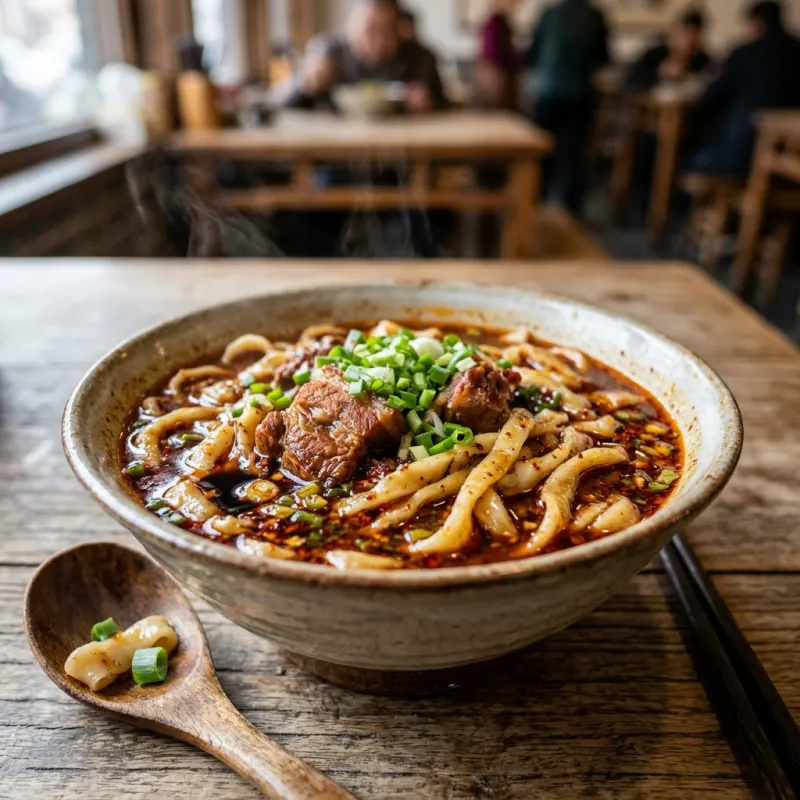
- Datong offers world-famous Shanxi noodle culture, highlighted by knife-shaved noodles prepared fresh at traditional street eateries.
- The reconstructed Ming-era city walls provide expansive walking and cycling circuits with sweeping views across the urban landscape.
Things to Avoid
- Avoid booking unverified private taxi tours at train station exits without agreeing on clear pricing or using meter apps.
- Do not plan a trip to the Hanging Temple without booking ticket reservations in advance during peak domestic holidays.
- Avoid visiting in mid-winter without heavy thermal gear, as northern Shanxi winds bring temperatures well below freezing.
- Do not photograph inside delicate cave grottos or protected temple halls where flash photography is strictly prohibited.
Local Transportation Tips
Datong offers a clean and efficient urban transit network. City buses operate extensively across all metropolitan districts, connecting the main train stations, historical gates, and outer attractions like the Yungang Grottoes for 1 to 3 CNY per trip. Taxis and licensed ride-hailing services such as Didi Chuxing are affordable, reliable, and easily accessible. High-speed rail terminates at Datong South Station, which connects to the city center via direct public buses and express taxi lines.
Travel Etiquette
- Dress respectfully when visiting active Buddhist temples like Huayan Temple by covering shoulders and avoiding bare knees.
- Step over the raised wooden thresholds at ancient temple doors rather than stepping directly onto them, per traditional customs.
- Refrain from touching ancient wall carvings, frescoes, and wooden beams at protected cultural monuments.
- Carry digital payment setups (Alipay or WeChat Pay) linked to overseas cards, as physical cash change is increasingly uncommon.
Recommended Age Group
Datong provides rewarding cultural exploration across most demographics, though physical walking requirements vary between sites.
- Babies (0-2 years): Not Recommended. Navigating narrow cliff walkways at the Hanging Temple and uneven stone steps around Yungang Grottoes is impractical with strollers.
- Kids (3-12 years): Recommended. Older children appreciate the dramatic scale of the giant Buddha statues and walking atop the wide city ramparts.
- Teens (13-19 years): Recommended. Fascinating architectural feats, cliffside shrines, and vibrant night markets make this destination captivating for teenagers.
- Adults (20-64 years): Recommended. Ideal for cultural travelers, photographers, and history enthusiasts seeking authentic heritage sites and culinary variety.
- Seniors (65+ years): Recommended. Temple courtyards in the city center are flat and accessible, although the steep stairs of the Hanging Temple require sound physical fitness.
Accessibility Level: Medium
- The Yungang Grottoes site features flat paved main concourses, wheelchair ramps, and shuttle golf carts for accessing the central cave plazas.
- The Hanging Temple is not wheelchair accessible due to steep, narrow timber staircases suspended along the mountain rock face.
- Huayan Temple and Shanhua Temple offer largely flat courtyards, though elevated stone thresholds require assistance for manual wheelchairs.
- Datong South High-Speed Railway Station is fully equipped with barrier-free elevators, tactile paving, and accessible restrooms.
Did You Know?
The Hanging Temple on Mount Heng has clung to the vertical face of Jinlong Canyon for more than 1,500 years, sustained by crossbeam supports embedded deep into stone bedrock and hidden vertical cantilevers.
Cool Statistics
- Over 51,000 individual Buddhist statues are preserved across 252 caves and niches at the Yungang Grottoes.
- The reconstructed ancient city wall of Datong stretches approximately 7.24 kilometers in total perimeter.
- Datong sits at an average altitude of approximately 1,040 meters above sea level on the Shanxi plateau.






Buy a compatible power adapter for your trip