Disclosure: This site contains affiliate links. We may earn a commission if you make a purchase, at no extra cost to you.

>
>
>
>
Shanxi
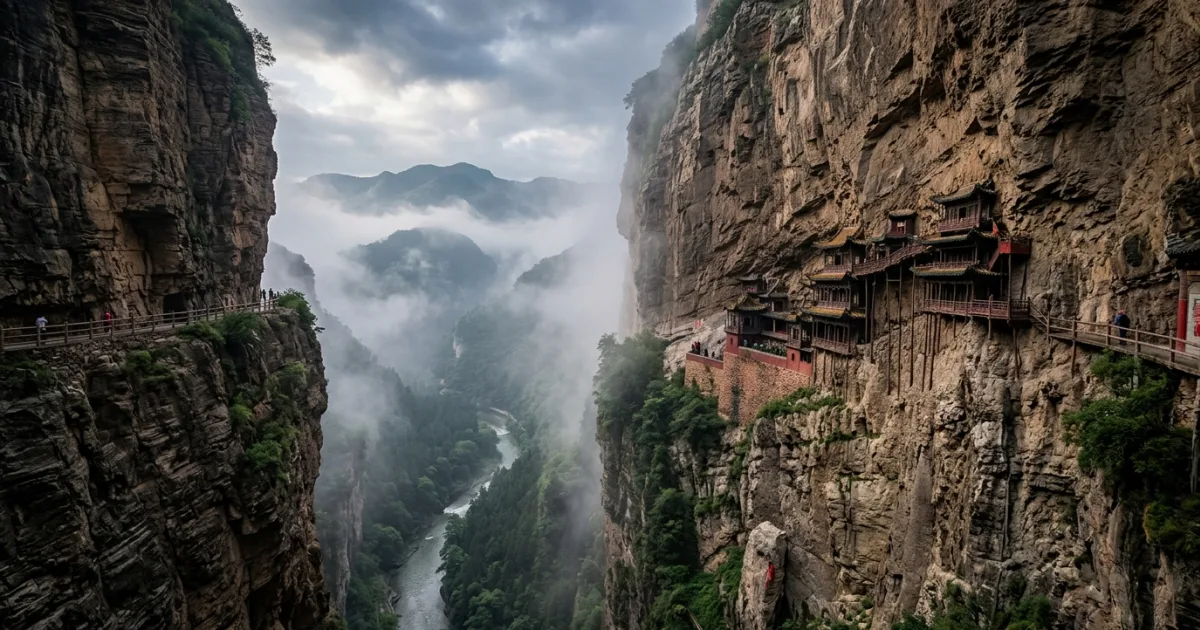
The Hanging Temple clinging to the sheer cliff of Mount Heng in Shanxi China

Shanxi Overview & Key Highlights

Shanxi serves as the cradle of classical Chinese architecture, holding over seventy percent of China's surviving wooden structures built before the Ming Dynasty. Situated on a plateau bounded by the Yellow River to the west and the Taihang Mountains to the east, the province preserves an extraordinary density of cultural relics. Travelers journey across the province to encounter ancient marvels including the UNESCO-listed Yungang Grottoes in Datong, the cliffside Hanging Temple of Mount Heng, the sacred Buddhist peaks of Mount Wutai, and the intact Ming-era walled city of Pingyao. Beyond monumental architectural achievements, Shanxi delivers an evocative landscape of Loess Plateau canyons, grand merchant family compounds, and centuries of culinary tradition centered on handmade noodles and aged mature vinegar. High-speed rail lines now seamlessly link regional cultural centers like Taiyuan, Datong, and Pingyao, making independent travel straightforward and efficient. Whether admiring thousand-year-old wooden brackets or exploring subterranean coal mining heritage, visitors experience an authentic, deeply layered narrative of northern Chinese civilization.

Shanxi Travel Guide: Logistics & In-Depth Tips

Shanxi Province occupies a vital geographic corridor in northern China, flanked by the loess hills of Shaanxi and the high peaks of Hebei. Known historically as 'West of the Mountains,' Shanxi functioned for millennia as a defensive frontier, an imperial buffer zone, and a prosperous mercantile highway. Because of its dry climate and protective topography, the province holds China's greatest treasure trove of preserved timber architecture dating back to the Tang, Song, and Liao dynasties, offering an unparalleled open-air museum experience.

A modern journey through Shanxi unfolds across distinct historical eras. In the north, Datong showcases fifth-century Buddhist rock carvings and defensive sections of the Great Wall. In the central plains, grand family residences like the Wang Family Compound illustrate the immense wealth amassed by Jin merchants who founded China's earliest draft-bank financial systems. Meanwhile, UNESCO-designated Mount Wutai continues to serve as an active pilgrimage destination where Tibetan and Han Buddhist monasteries operate harmoniously among misty highland peaks.

Reasons to Visit

  • Extraordinary Ancient Architecture: Encounter the world's most intact timber temples, including Foguang Temple and the cliff-hanging marvel of Xuankong Si.
  • UNESCO World Heritage Treasures: Marvel at the monumental Yungang Grottoes, the sacred monastic peaks of Mount Wutai, and the intact walled city of Pingyao.
  • Cradle of Chinese Noodle Culture: Taste authentic knife-cut, cat's-ear, and rolled oat noodles perfected over centuries.
  • Fascinating Merchant History: Tour sprawling residential fortress compounds that showcase imperial-era banking and courtyard design.
  • Dramatic Plateau Landscapes: Photograph terraced yellow loess hills, the crashing waters of Hukou Waterfall, and rugged Taihang Mountain gorges.

Things to Avoid

  • Do not rely strictly on cash or international cards: Set up Alipay and WeChat Pay before visiting, as digital payment is universal.
  • Do not attempt Mount Wutai without warm clothing: Highland weather changes abruptly and temperatures drop significantly after sunset even in mid-summer.
  • Avoid unregistered black taxis at train stations: Use official metered queues or Didi via WeChat/Alipay to prevent overcharging.
  • Do not touch or lean on ancient wooden temple brackets: These structures are delicate national treasures protected under strict conservation laws.

Local Transportation Tips

Shanxi boasts a modern and efficient transport network. High-speed rail is the optimal way to journey between Datong, Taiyuan, Pingyao, and Linfen, with trains reaching speeds up to 250–300 km/h. Local cities feature clean, inexpensive bus routes (1–2 CNY) and affordable metered taxis. For remote attractions like the Hanging Temple, Yingxian Wooden Pagoda, or Wang Family Compound, booking a shared tourist shuttle or hiring a licensed day car via your hotel front desk provides the most flexibility.

Travel Etiquette

  • Remove sunglasses and hats when entering active Buddhist temples, and walk clockwise around stupas and prayer halls.
  • Avoid stepping directly onto the raised wooden thresholds of temple gates; step cleanly over them as a sign of respect.
  • Ask permission before photographing practicing monks, nuns, or ritual ceremonies.
  • Tipping is not customary in Shanxi restaurants, taxis, or hotels.

Recommended Age Group

Shanxi offers rich rewards for travelers of different generations, though the rugged terrain and extensive walking demand moderate stamina.

  • Babies (0-2 years): Not Recommended. Ancient cobbled streets, steep temple stairs, and lack of stroller ramps present substantial physical hurdles.
  • Kids (3-12 years): Neutral. Children fascinated by martial arts, historic fortresses, and cave statues will enjoy highlights, though frequent temple sightseeing may lead to fatigue.
  • Teens (13-19 years): Recommended. Excellent destination for teens interested in history, ancient architecture, photography, and outdoor mountain exploration.
  • Adults (20-64 years): Recommended. Ideal for independent cultural travelers, photographers, and hikers capable of navigating plateau terrain and long walking days.
  • Seniors (65+ years): Recommended. Highly rewarding for culturally minded seniors who pace their visits carefully; note that cable cars and flat paths assist access at major sites like Mount Wutai and Yungang Grottoes.

Accessibility Level: Medium

  • Major premier sights such as Yungang Grottoes feature paved walkways, accessible ramps, and wheelchair rentals near visitor centers.
  • Historic preservation areas like Pingyao Ancient City and mountain temples contain high door thresholds, irregular stone paving, and long stairways with limited accessibility.
  • Modern high-speed rail stations are fully equipped with elevators, priority boarding, and accessible restroom facilities.
  • Hiring an accessible private van service with driver is recommended for travelers with mobility constraints traveling between distant provincial sites.

Did You Know?

Shanxi holds Foguang Temple on Mount Wutai, whose Great East Hall was built in 857 AD. It was rediscovered in 1937 by pioneering Chinese architectural historians Liang Sicheng and Lin Huiyin, disproving the long-held Western assertion that no Tang Dynasty timber structures survived on mainland China.

Cool Statistics

  • Houses over 28,000 recorded historic sites and ancient monuments.
  • Contains more than 70% of China's surviving pre-Ming Dynasty wooden architectural structures.
  • The Hanging Temple clings to Mount Heng suspended more than 50 meters above the canyon floor.
  • The Yungang Grottoes encompass 45 major caves housing over 51,000 carved Buddhist stone statues.

Address:

Shanxi, China

Find Nearby Accommodations

Basic Info

address icon

COUNTRY & Region

China,
Asia

ACCESSIBILITY LEVEL​

Medium
Currency icon

LOCAL CURRENCY​

Chinese Yuan (CNY)
Price level icon
Low
Safety Level icon

SAFETY LEVEL

Duration icon

Recommended Duration

• 1-7 days
• More than a week

Electricity

electricity icon

Electricity

220-240V, 
50Hz
Plug Socket icon

Plug Type

• Type A (Flat blade)
• Type C (Round pin)
• Type I (Two flat pins in V-shape, grounding pin)
Plug types
Click To View Plug Types
Shanxi is part of our
Culinary Heritage collection

Things To Do In Shanxi

Total: 2

Activities To Do In Shanxi

Best Time To Visit Shanxi

Shanxi features a continental monsoon climate characterized by dry, windy springs, warm summers, and crisp, cold winters.

  • May to June: Ideal travel window with mild daytime temperatures, clear skies, and blooming vegetation across the plateau.
  • July to August: Peak season for Mount Wutai, offering cool highland conditions while lower cities experience occasional heavy rain and warm days.
  • September to October: The absolute best time for clear photography, comfortable walking conditions, and vibrant autumn foliage along the Taihang Mountains.
  • November to April: Cold, dry low season with sub-zero temperatures, though offering uncrowded sites and atmospheric snow over ancient temple rooftops.

Average Temperatures Per Month

Remember to check the weather forecast a few days before the trip and before heading to the airport.

Safety Level icon

Safety Level

Shanxi is exceptionally safe for domestic and international travelers, with violent crime being practically nonexistent. Take care when walking on worn, slick temple stones and steep staircases at the Hanging Temple or Mount Heng. Watch out for unauthorized taxi drivers at railway stations and always demand metered rides or use verified rideshare apps. Stay adequately hydrated and use skin moisturizer to avoid discomfort from the region's low ambient humidity.

The rating is based on multi-year peace, crime, and security indices. Before you go, always verify current conditions through official government travel advisories.

Emergency Numbers

Police: 110
Ambulance: 120

No internet needed • Includes local translations • Free for TravelingWiz readers

Spoken Languages

Mandarin Chinese (Standard Chinese), Jin Chinese dialects

Learn The Language

  • Nǐ hǎo – Hello
  • Xièxie – Thank you
  • Duōshao qián? – How much does this cost?
  • Wǒ yào zhège – I want this
  • Cèsuǒ zài nǎlǐ? – Where is the restroom?
  • Tài guì le – Too expensive
  • Bù yào là – Not spicy, please
  • Jiù mìng! – Help!
Travel Booking Partner - TravelingWiz

Trip Cost & Budgeting for Shanxi, 2026

Everything you need to know about money while traveling
Is Shanxi expensive for tourists in 2026? No, Shanxi remains an exceptionally affordable destination in China for budget and mid-range travelers. You can expect to pay around 25 CNY for a cappuccino, 12 CNY for a domestic beer, and 60 CNY for a solid main meal at a local mid-range restaurant. With our Human Verified prices, exploring Shanxi's historic sights offers fantastic value. Use the data table below to calculate your specific daily budget based on your travel style.
Currency icon

LOCAL CURRENCY​:

Chinese Yuan (CNY)
Price level icon
Low
Mobile pay via Alipay or WeChat linked to foreign cards dominates, while cash and credit cards are rarely accepted.

Per person, per day – pocket cash for small purchases.

Local: 55
Chinese Yuan (CNY)
≈ 28 USD

Full daily spend estimation (accommodation, food, transportation, attractions).

Travel Style
Chinese Yuan (CNY)
≈ USD ($)
Budget
310
28
Mid-range
560
63
Comfort
1230
132

The Prices, Daily costs, and calculator results are estimates for planning purposes only. Actual costs may vary based on season, booking timing, personal spending habits, and currency fluctuations. TravelingWiz cannot be held responsible for discrepancies between these estimates and your final trip expenses.

  • Link your foreign credit card to Alipay or WeChat Pay before arriving to pay seamlessly everywhere.
  • Visit top cultural sites like the Shanxi Museum in Taiyuan, which offers free admission with advance online reservation.
  • Travel between cities like Taiyuan, Datong, and Pingyao on high-speed bullet trains for cheap, fast transit.
  • Dine at local noodle shops for authentic Shanxi Daoxiao Mian meals that cost under 20 CNY.

Pre-Order Tickets

Avoid disappointment when tickets sell out — and skip the long lines by booking online in advance. You’ll often save up to 20% too.
Save up to 20%

Travel Discounts & Coupons

Save on hotels, attractions, transport, and gear — find verified discounts for smarter travel spending.
Verified Coupons

What To Pack

  • Sturdy walking shoes with excellent traction for navigating stone staircases and cobblestone pathways.
  • Moisturizer, lip balm, and hydrating eye drops to counter the dry plateau atmosphere.
  • Layered outerwear and windbreakers, as high-altitude sites like Mount Wutai experience sharp temperature drops.
  • Universal power adapter compatible with Chinese Type A, C, and I wall outlets.
  • Pre-installed mobile payment apps (Alipay and WeChat Pay) linked to an international credit card.
  • UV-protective sunglasses and a wide-brim hat for intense northern sun exposure.
  • Compact dust masks or bandanas for windy conditions across the Loess Plateau.
We couldn't find tips for Shanxi.
If you got any, please share

Recommended Itineraries for Traveling to Shanxi

We couldn't find itineraries for Shanxi.
you can contact us for custom trip plan

Food & Drink Highlights

Local Food Overview

Shanxi is celebrated throughout China as the ancestral capital of wheat noodles and aged mature vinegar (Shanxi Laochencu). Culinary tradition dictates over two hundred distinct methods of preparing wheaten dough, ranging from knife-cut ribbons to rolled oat noodles. Local dishes balance bold savory flavors with the complex, mellow acidity of sorghum-fermented vinegar. Regional highlights include tender Pingyao corned beef, fragrant fried lamb buns, and sweet yellow-millet porridges that provide nourishment across the cool northern plateau.
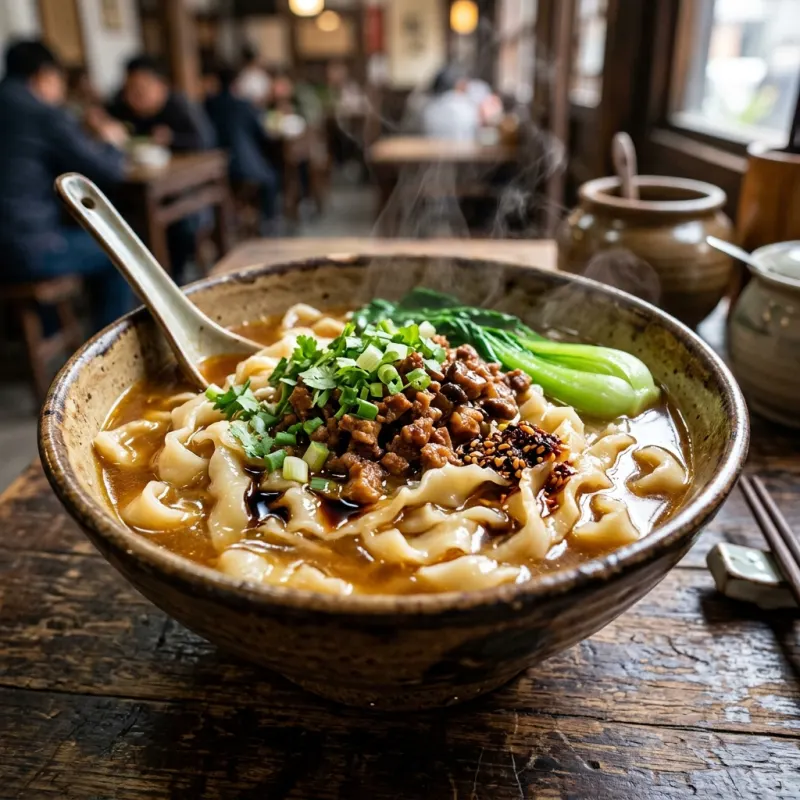
Steaming bowl of traditional Shanxi knife-cut noodles with savory broth and herbs

Must Try Dish

Shanxi Daoxiao Mian (Knife-Cut Noodles) - Fresh wheat dough shaved swiftly from a wooden block directly into boiling water, yielding thick, chewy noodles with crisp edges. Served in a rich meat broth and topped with braised pork gravy, fresh cilantro, garlic, and a generous splash of dark aged Shanxi vinegar.
Food Experiences Title Icon

Food
Experiences

Discover cooking classes, tastings and local food tours

No food experience found
Maya, the human travel expert at TravelingWiz, offering curated, non-AI expertise

Maya’s Final Checklist for Shanxi

Logistics shouldn’t be the focus of your trip—the experience should. I’ve hand-vetted these essential partners to ensure your arrival, stay, and exploration are as smooth as an Athenian breeze.

Where to Stay

From boutique hotels to local apartments—compare thousands of options and find the perfect stay in the best neighborhood.

Air Travel

Getting there should be seamless. Compare the best routes and prices across top airlines to start your journey on the right note.

Local Guides

Connect with experts who know the destination best. Get personalized advice and insider tips to help you plan your perfect trip.

Travel Protection

The “Engineer’s” rule: always have a backup. Secure your trip with a plan that covers every “what if” and unexpected change.

Car Rentals

Explore at your own pace with total freedom. Compare reliable rental options and find the right vehicle for your adventure.

Visa Services

Don’t let paperwork slow you down. Get expert assistance with your application to ensure all your entry documents are in order.

FAQs

China’s high-speed rail network connects major provincial destinations including Datong, Taiyuan, Pingyao, and Linfen. Bullet trains are punctual, comfortable, and significantly faster than buses or car rentals.
A well-paced itinerary requires five to seven days. This allows ample time to explore the Yungang Grottoes and Hanging Temple in Datong, wander Pingyao Ancient City, and spend two days among the sacred temples of Mount Wutai.
English proficiency is limited outside major hotels and international ticket booths. Travelers should use translation apps, carry hotel cards written in Chinese characters, and use visual menus in smaller eateries.

Your Insights Matter

TravelingWiz grows through the stories of our community. If you’ve recently explored ,Shanxi share your tips and stories to help us perfect our guides for the next traveler.

Related Articles

Check out our related articles and blog posts to learn even more about the destination.

No related articles found

Don’t Travel Alone

Share with your friends and family

Where should we send your offline card?

We hate spam just as much as you do

newsletter_consent *