Disclosure: This site contains affiliate links. We may earn a commission if you make a purchase, at no extra cost to you.
Dujiangyan

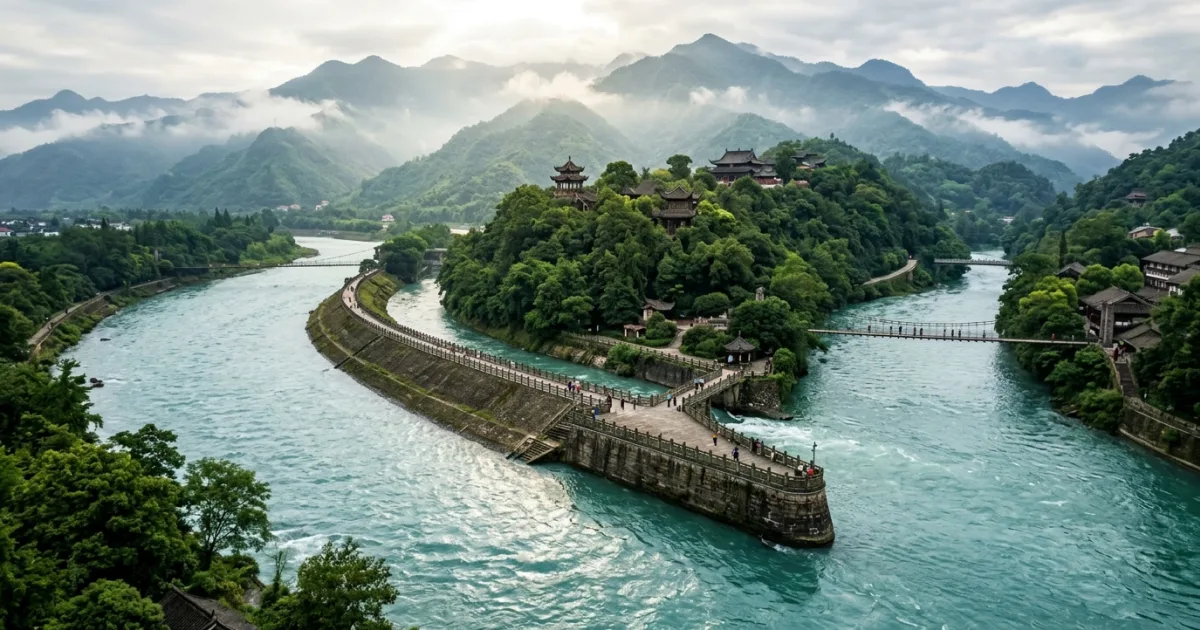
Wide panoramic view of Dujiangyan Irrigation System and rushing turquoise waters under misty green mountains

Basic Info

COUNTRY & Region

China,
Asia

ACCESSIBILITY LEVEL​

  • High: Widely accessible with good facilities for disabilities.
  • Medium: Some accessible options, but limitations exist.
  • Low: Limited accessibility; many barriers for disabilities.
Medium

LOCAL CURRENCY​

Chinese Yuan (CNY)

Price Level

Low – budget‑friendly basics

Medium – moderate mid‑range costs

High – pricey lodging, dining & transport

Low

SAFETY LEVEL

5 shields = Excellent – very low crime or conflict.

4 shields = Safe – low risk, routine care.

3 shields = Relatively safe – use normal street smarts.

2 shields = Use caution – higher crime or periodic unrest.

1 shields = Avoid – active conflict or extreme danger.

Scores are derived from multi-year peace, homicide and security indices blended into a single 1-to-5 scale.

Recommended Duration

1-7 days, Full day

Dujiangyan Overview & Key Highlights

Dujiangyan is an ancient engineering marvel and cultural hub situated on the northwestern edge of the fertile Chengdu Plain in Sichuan Province. Constructed around 256 BCE during the Warring States period, its UNESCO-listed irrigation system continues to automatically divert the Min River, controlling catastrophic flooding and irrigating over 5,300 square kilometers of farmland without the use of a conventional concrete dam. Beyond this hydrological triumph, the city acts as the primary gateway to Mount Qingcheng, revered historically as one of the quintessential birthplaces of Chinese Taoism. Visitors navigate a peaceful landscape where deep emerald waters cut through misty foothills crowned by ancient wooden pavilions, quiet Taoist shrines, and bamboo forests. The city also hosts the Dujiangyan Panda Base, offering dedicated conservation encounters away from heavy urban centers. Connected seamlessly to central Chengdu via a thirty-minute intercity bullet train, Dujiangyan delivers a balanced blend of profound historical heritage, cool mountain microclimates, and vibrant Sichuan teahouse culture.

Dujiangyan Travel Guide: Logistics & In-Depth Tips

Dujiangyan stands as a testament to harmonious human co-existence with nature, founded over 2,200 years ago during the Qin dynasty by magistrate Li Bing and his son. Rather than relying on rigid barriers, the complex utilizes natural hydrological forces—including centrifugal water movement and riverbed silt sedimentation—to regulate water distribution through three core components: Yuzui (Fish Mouth Levee), Feishayan (Flying Sand Weir), and Baopingkou (Bottle-Neck Channel). This feat turned the drought-prone Sichuan basin into the legendary 'Land of Abundance' (Tianfu Zhi Guo).

Beyond its civil engineering accolades, Dujiangyan encompasses tranquil Taoist culture and lush subtropical vegetation. Mount Qingcheng's Front Mountain offers misty climbs between timber-frame temples nestled into dense green canopies, while the Back Mountain provides rugged trekking trails along mountain brooks and timber bridges. At the foot of the mountains, the city thrives around the rushing Min River, where illuminated bridges and buzzing night markets serve up local culinary delicacies every evening.

Reasons to Visit

  • Witness the world's oldest and only surviving non-dam irrigation system still functioning continuously after more than two millennia.
  • Explore Mount Qingcheng, the serene spiritual cradle where Taoist master Zhang Daoling established the Celestial Masters lineage.
  • Experience meaningful panda conservation without massive crowds at the Dujiangyan Base of the China Conservation and Research Center for the Giant Panda.
  • Admire the illuminated architecture of the South Bridge (Nanqiao) and watch the turquoise mountain river torrents under dramatic evening lighting.
  • Indulge in relaxed Sichuan teahouse culture directly alongside forested riverbanks while sipping green Maofeng or Jasmine tea.

Things to Avoid

  • Avoid using unregistered transport touts outside railway stations; rely instead on official metered taxi lines or ride-hailing via Alipay.
  • Do not underestimate the physical stamina required to summit Mount Qingcheng entirely on foot; consider taking the cable car one way if traveling with family.
  • Avoid visiting during major Chinese public holidays (such as National Day in early October or Spring Festival) without securing train tickets weeks beforehand.
  • Do not wear smooth-soled street shoes; stone footpaths around riverbanks and temples are frequently slick with river spray and mountain moss.

Local Transportation Tips

Public transit in Dujiangyan is efficient and visitor-friendly. High-speed intercity trains directly link Chengdu to Lidui Park Station, placing you within a five-minute walk of the Dujiangyan Irrigation scenic area entrance. Local city buses cost 2 CNY per ride and connect major tourist hubs, while licensed green taxis and Didi rides are readily available and affordable, rarely exceeding 30 to 40 CNY between downtown and Mount Qingcheng.

Travel Etiquette

  • Keep your voice lowered when entering Taoist shrine halls and avoid stepping directly on wooden door thresholds.
  • Do not take photographs of Taoist monks or priests performing rituals without seeking explicit permission first.
  • Maintain quiet and avoid tapping on enclosure glass when observing giant pandas at the research base.
  • Show respect during tea service by lightly tapping two fingers on the table when someone refills your teacup.

Recommended Age Group

Dujiangyan offers diverse cultural and natural attractions that cater exceptionally well to older children, teens, and adults, while requiring thoughtful mobility planning for tiny infants.

  • Babies (0-2 years): Neutral. The abundance of steep stone staircases and cobblestones makes heavy stroller usage difficult, requiring baby carriers.
  • Kids (3-12 years): Recommended. Educational irrigation exhibits, lively bamboo parks, and giant panda encounters make it highly engaging for young learners.
  • Teens (13-19 years): Recommended. Mountain trekking paths, river suspension bridges, and dramatic night illumination at the South Bridge captivate active teenagers.
  • Adults (20-64 years): Recommended. Perfect balance of civil engineering history, serene Taoist temple hikes, authentic food, and scenic nature escapes.
  • Seniors (65+ years): Recommended. Paved pathways along the river, scenic cable cars up Mount Qingcheng, and ubiquitous relaxing teahouses offer comfortable paces.

Accessibility Level: Medium

  • The primary riverbank paths inside the Dujiangyan Irrigation Park near Baopingkou are wide, mostly flat, and wheelchair-accessible with gentle ramps.
  • Mount Qingcheng contains numerous uneven stone steps; however, accessible cable cars and lake ferry crossings assist mobility-impaired visitors across major sections.
  • Modern visitor centers provide barrier-free restrooms, wheelchair loan services, and clearly marked accessible pathways.

Did You Know?

The Dujiangyan Irrigation System's innovative design survived the catastrophic 8.0-magnitude Wenchuan earthquake in 2008 almost completely intact, despite being situated right along the primary fault line.

Cool Statistics

  • Over 2,280 years of uninterrupted, operational hydraulic service since 256 BCE.
  • Irrigates more than 10 million mu (approx. 6,700 square kilometers) of agricultural land across Sichuan.
  • Designated as a joint UNESCO World Heritage Site alongside Mount Qingcheng in the year 2000.

Address:

Dujiangyan, China

Find Nearby Accommodations

Electricity

220-240V, 
50Hz

Plug Type

Type A (Flat blade), Type C (Round pin), Type I (Two flat pins in V-shape, grounding pin)
Plug types
Click To View Plug Types
Dujiangyan is part of our
Coolcation collection

Activities To Do In Dujiangyan

Best Time To Visit Dujiangyan

Dujiangyan features a subtropical monsoon climate heavily influenced by the adjacent Qinghai-Tibet plateau foothills, resulting in abundant mist, cool summers, and relatively mild winters.

  • March to May (Spring): Fresh greenery, flowering mountain trails, comfortable daytime temperatures (15°C to 22°C), and low precipitation make this ideal for walking tours.
  • June to August (Summer): While humid, temperatures hover around 26°C to 29°C, serving as a cool mountain getaway for travelers escaping Chengdu's summer heat.
  • September to November (Autumn): Crisp air, golden foliage across Mount Qingcheng, and stable weather offer prime conditions for photography and outdoor excursions.
  • December to February (Winter): Chilly, misty, and atmospheric with temperatures around 4°C to 9°C; quiet crowds create a meditative ambiance at Taoist sanctuaries.

Average Temperatures Per Month

Average monthly temperaturesMonthly source values, with Celsius and Fahrenheit equivalents in the following data table.0°32°9°48°18°64°26°79°35°95°JanJan: 6°C / 43°FFebFeb: 9°C / 48°FMarMar: 14°C / 57°FAprApr: 17°C / 63°FMayMay: 21°C / 70°FJunJun: 24°C / 75°FJulJul: 26°C / 79°FAugAug: 26°C / 79°FSepSep: 23°C / 73°FOctOct: 17°C / 63°FNovNov: 13°C / 55°FDecDec: 7°C / 45°F
View temperature data
Average monthly temperatures
Month°C°F
Jan643
Feb948
Mar1457
Apr1763
May2170
Jun2475
Jul2679
Aug2679
Sep2373
Oct1763
Nov1355
Dec745

Remember to check the weather forecast a few days before the trip and before heading to the airport.

Safety Level

5 shields = Excellent – very low crime or conflict.

4 shields = Safe – low risk, routine care.

3 shields = Relatively safe – use normal street smarts.

2 shields = Use caution – higher crime or periodic unrest.

1 shields = Avoid – active conflict or extreme danger.

Scores are derived from multi-year peace, homicide and security indices blended into a single 1-to-5 scale.

Dujiangyan is an exceptionally safe destination with negligible violent crime, extensive camera monitoring, and friendly locals. Take caution on wet flagstone walkways and river embankments, which become slick when wet. During high summer rainstorms, monitor local park announcements regarding swollen river levels or temporary mountain trail closures.

The rating is based on multi-year peace, crime, and security indices. Before you go, always verify current conditions through official government travel advisories.

Emergency Numbers

Police: 110
Ambulance: 120

No internet needed • Includes local translations • Free for TravelingWiz readers

Spoken Languages

Mandarin Chinese, Southwestern Mandarin (Sichuanese dialect)
Travel Booking Partner - TravelingWiz

Learn The Language

  • Hello: Nǐ hǎo (nee-how)
  • Thank you: Xièxiè (shyeh-shyeh)
  • How much does this cost?: Duōshǎo qián? (dwo-shaow chyen)
  • Where is…?: …zài nǎlǐ? (…zeye nah-lee)
  • Bill, please: Mǎidān (my-dahn)
  • I want this: Wǒ yào zhège (waw yaow jay-guh)
  • Not spicy, please: Bù yào là (boo yaow lah)
  • Goodbye: Zàijiàn (zeye-jyen)
  • Delicious: Hǎochī (how-chrr)

Trip Cost & Budgeting for Dujiangyan, 2026

Everything you need to know about money while traveling
Is Dujiangyan expensive for tourists in 2026? No, Dujiangyan offers moderate and reasonable travel expenses for visitors. With Human Verified prices, expect to pay around 28 CNY for a cappuccino, 10 CNY for a domestic beer, and 50 CNY for a meal at a mid-range restaurant. Accommodation and local transport remain quite affordable compared to primary Chinese metropolises. Use the data table below to calculate your specific daily budget based on your travel style.

LOCAL CURRENCY​:

Chinese Yuan (CNY)

Price Level:

Low – budget‑friendly basics

Medium – moderate mid‑range costs

High – pricey lodging, dining & transport

Low

Cards Vs. Cash

Mobile payments like Alipay and WeChat Pay dominate, while traditional foreign credit cards are rarely accepted directly.

How Much Cash to Carry (on you)

Per person, per day – pocket cash for small purchases.

Local: 35
Chinese Yuan (CNY)
≈ 28 USD

Average Daily Costs (per person)

Full daily spend estimation (accommodation, food, transportation, attractions).

Travel Style
Chinese Yuan (CNY)
≈ USD ($)
Budget
195
42
Mid-range
350
90
Comfort
770
210
Note

The Prices, Daily costs, and calculator results are estimates for planning purposes only. Actual costs may vary based on season, booking timing, personal spending habits, and currency fluctuations. TravelingWiz cannot be held responsible for discrepancies between these estimates and your final trip expenses.

Best Value Tips

  • • Take the high-speed train from Chengdu or Xipu to Lidui Park Station for around 15 CNY instead of expensive taxis.
  • • Link your international credit card to Alipay or WeChat Pay before arriving to conveniently pay for transit and snacks.
  • • Book entrance tickets for Dujiangyan Irrigation System and Panda Valley online in advance to guarantee official prices.
  • • Eat at local Sichuan noodle shops and eateries away from scenic entrance gates to keep meal costs under 25 CNY.

Tours & Tickets

Explore tours, attractions, and ticket options to plan your visit.
Plan ahead

Travel Offers & Coupons

Browse travel offers and coupons from our affiliate partners.
Affiliate partner offers

What To Pack

  • Slip-resistant walking shoes or hiking boots for moist, moss-covered stone stairs at Mount Qingcheng and the irrigation walkways.
  • Lightweight waterproof jacket or compact umbrella to prepare for perpetual mountain mist and spontaneous rainfall.
  • Portable power bank with charging cables to maintain phone battery for Alipay, WeChat Pay, and navigation apps.
  • Breathable layers in summer and fleece mid-layers for autumn and winter when river valley humidity lowers the sensible temperature.
  • Modest clothing covering shoulders and knees when visiting active Taoist temples like Erwang Temple and Tianshi Cave.
Only the good stuff!
Browse recommended travel gear
Check out our free packing list tool

Recommended Itineraries for Traveling to Dujiangyan

Take your itinerary with you

Choose a ready-made itinerary, plan your own trip, and keep TravelingWiz by your side while you travel.

Get the TravelingWiz app

Food & Drink Highlights

Local Food Overview

Dujiangyan culinary traditions reflect the signature bold flavors of Sichuan, featuring aromatic chili oils, fermented bean paste (doubanjiang), and numbing Sichuan peppercorns, balanced by river-fresh ingredients and wild mountain herbs. The city's signature dishes emphasize freshwater river fish, cold-tossed spiced chicken, and preserved cured meats aged in the forested heights of Mount Qingcheng. Dining along the riverbanks in communal teahouses with cold dishes and roasted sunflower seeds is an indispensable cultural ritual.

Must Try Dish

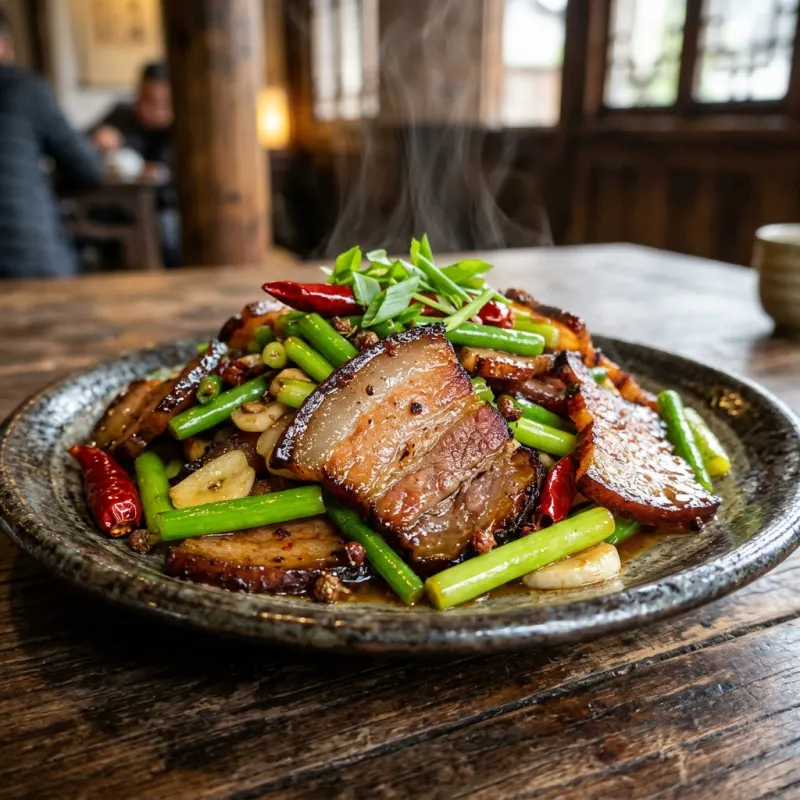
Qingcheng Mountain Cured Pork (La Rou) - Thick, succulent slices of wood-smoked pork belly stir-fried with seasonal mountain garlic shoots and fermented black beans, yielding an earthy, savory flavor profile balanced with subtle smoke.
Sichuan style cured pork stir-fried with green mountain leeks and garlic shoots

Maya’s Final Checklist for Dujiangyan

Logistics shouldn’t be the focus of your trip—the experience should. I’ve hand-vetted these essential partners to ensure your arrival, stay, and exploration are as smooth as an Athenian breeze.

Maya, the human travel expert at TravelingWiz, offering curated, non-AI expertise

Where to Stay

Compare accommodation options and choose a stay that suits your plans and budget.

Air Travel

Compare flight options and find a route that fits your plans.

Local Guides

Connect with local guides for personalized help planning and exploring.

Travel Protection

The “Engineer’s” rule: always have a backup. Secure your trip with a plan that covers every “what if” and unexpected change.

Car Rentals

Compare rental options and choose a car that suits your trip.

Visa Information

Don’t let paperwork slow you down. Get expert assistance with your application to ensure all your entry documents are in order.

FAQs

Take the intercity bullet train from Chengdu Xipu Railway Station. Trains run frequently throughout the day, reaching Dujiangyan Station or Lidui Park Station in roughly 20 to 35 minutes for under 15 CNY.
Yes. Start early at the Dujiangyan Irrigation System around 8:30 AM, enjoy lunch near the South Bridge, and take a 20-minute taxi to Mount Qingcheng Front Mountain for an afternoon hike and cable car ride.
Built around 256 BCE by governor Li Bing, it harnesses the natural topography and water flow of the Min River to control floods and irrigate farmland without constructing a dam wall across the river.

Your Insights Matter

TravelingWiz grows through the stories of our community. If you’ve recently explored ,Dujiangyan share your tips and stories to help us perfect our guides for the next traveler.

Where should we send your offline card?

We hate spam just as much as you do

newsletter_consent *