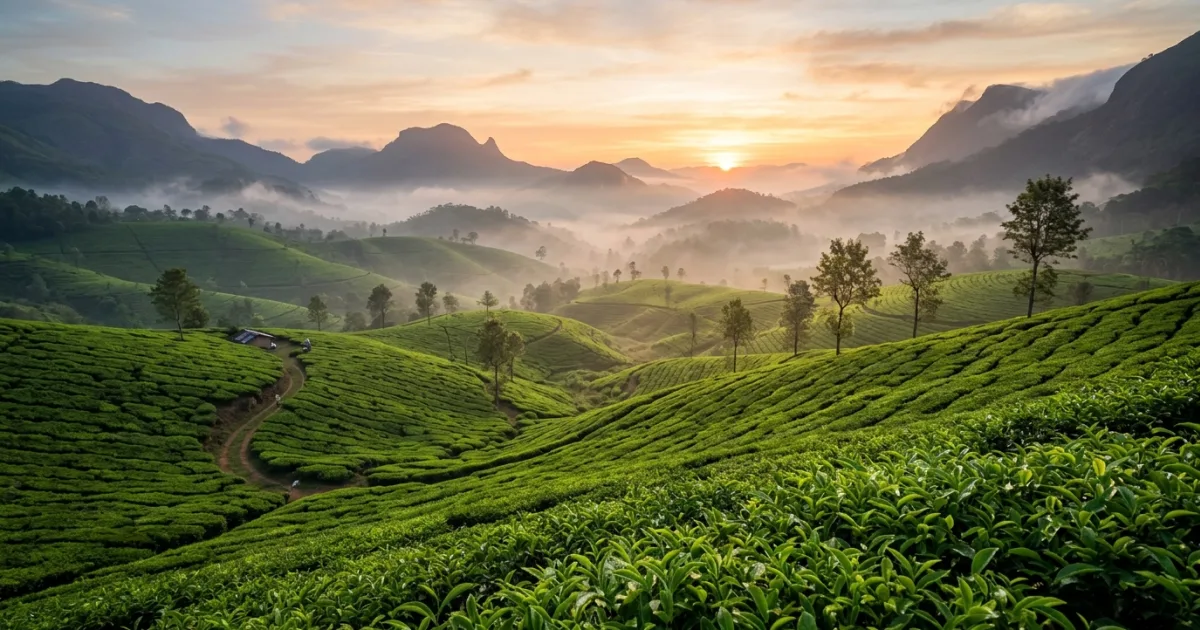
Wayanad distinguishes itself from the coastal image of Kerala through its rugged high-altitude topography, rolling tea gardens, and ancient prehistoric heritage. Located along the Western Ghats mountain spine, the district acts as an ecological corridor connecting Karnataka’s Nagarhole and Bandipur reserves with Tamil Nadu’s Mudumalai sanctuary. Travelers here encounter rich biodiversity alongside traditional cash-crop agriculture that yields high-grade cardamoms, pepper, coffee, and vanilla.
The region’s human history stretches back millennia, as evidenced by the petroglyphic etchings inside Edakkal Caves, which date to the Neolithic era. Today, Wayanad balances its rustic agrarian traditions with eco-conscious tourism, inviting visitors to experience treehouse stays, bamboo rafting on Kuruva Island, and deep explorations of indigenous tribal folklore.
Reasons to Visit
- Explore the Neolithic petroglyphs at Edakkal Caves, one of the rarest prehistoric rock art sites in South India.
- Embark on jeep safaris across Muthanga Wildlife Sanctuary to observe wild elephants, gaurs, and diverse bird species.
- Trek through high-altitude grasslands to witness the heart-shaped Chembra Lake nestled beneath mountain mist.
- Stay on historic coffee and tea plantations to learn about small-batch processing and traditional spice farming.
- Experience bamboo rafting down the Kabini River tributaries surrounding the forested sandbars of Kuruva Island.
Things to Avoid
- Avoid driving through forested ghat passes after dark, as road closures are legally enforced and elephant crossings are frequent.
- Do not litter plastic or disregard marked paths in eco-sensitive zones like Chembra Peak and Banasura Sagar Dam.
- Avoid planning tight schedules that attempt to cover southern and northern Wayanad in one day; transit times are long due to winding roads.
- Do not touch or disturb petroglyphs and cave walls inside Edakkal Caves.
Local Transportation Tips
Wayanad does not have an active railway station or commercial airport; the nearest transit hubs are Kozhikode Railway Station (approx. 85 km) and Calicut International Airport (CCJ, approx. 95 km). Within the district, state-run KSRTC buses connect the central towns of Kalpetta, Mananthavady, and Sulthan Bathery, but remote viewpoints and nature trails are best reached via hired private taxis or self-drive cars comfortable with mountain hairpin bends.
Travel Etiquette
- Dress conservatively when entering rural hamlets, temples, and indigenous settlements out of cultural respect.
- Always ask permission before photographing local farmers, plantation workers, or indigenous tribal residents.
- Keep noise levels strictly subdued during forest nature walks and wildlife sanctuary safaris.
- Remove footwear before entering local homestays and religious sacred sites.
Recommended Age Group
Wayanad offers rewarding nature experiences, though mountainous terrain dictates suitability across different age segments.
- Babies (0-2 years): Neutral. The winding ghat roads often cause motion sickness in young infants, and remote trail paths lack stroller infrastructure.
- Kids (3-12 years): Recommended. Children enjoy open plantation spaces, dam boat rides, tribal archery demonstrations, and spotting wildlife in sanctuaries.
- Teens (13-19 years): Recommended. An exciting playground for active teenagers interested in ziplining, river rafting, mountain trekking, and wilderness camping.
- Adults (20-64 years): Recommended. Perfect demographic match for eco-lodges, spice trail hikes, wellness retreats, and scenic mountain road trips.
- Seniors (65+ years): Neutral. While estate stays are peaceful, many key attractions like Edakkal Caves require steep, uneven uphill climbs with numerous stairs.
Accessibility Level: Medium
- Major high-altitude trails and historical sites (e.g., Edakkal Caves and Chembra Peak) feature rocky stairs and natural stone pathways with minimal wheelchair accessibility.
- Banasura Sagar Dam and Pookode Lake offer paved promenades and accessible entry pathways near parking lots.
- Upscale resorts often provide ground-level cottages, though pre-confirming accessibility features is essential due to hilly property terrain.
Did You Know?
The name 'Wayanad' is derived from 'Vayal Nadu', a Malayalam term that translates literally to 'The Land of Paddy Fields', honoring the emerald rice terraces nestled in its mountain valleys.
Cool Statistics
- Over 26% of Wayanad’s geographical area is enveloped in protected evergreen and deciduous forests.
- Edakkal Caves feature petroglyphs estimated to be up to 6,000 years old, dating back to the Neolithic period.
- Banasura Sagar Dam in Wayanad is recognized as the largest earth dam in India and the second largest in Asia.







Buy a compatible power adapter for your trip