Kolhapur stands as a bastion of regional pride and historical legacy in Western Maharashtra. Governed historically by the Shilahara dynasty, the Yadavas, and later established as a prominent Maratha princely state under the descendants of Chhatrapati Shivaji Maharaj, the city seamlessly balances its royal pedigree with working-class agrarian roots. The urban landscape is anchored by the sacred Mahalakshmi Temple, an ornate stone sanctuary constructed in the Hemadpanthi architectural style where thousands of pilgrims gather daily to pay homage to the mother goddess Ambabai.
Beyond its spiritual stature, Kolhapur has fostered distinct institutional traditions. The city is celebrated as a cradle of Indian cinema, having hosted the pioneering studios of Baburao Painter and Dadasaheb Phalke's contemporaries. It also preserves the living tradition of Kushti wrestling, with traditional red-clay training arenas (talims) operating across residential neighborhoods. With stately monuments like the New Palace—designed by British architect Major Mant in Indo-Saracenic splendor—and immediate access to lush Sahyadri hill passes, Kolhapur delivers a multidimensional cultural travel experience.
Reasons to Visit
- Sacred Architecture: Marvel at the intricate stone carvings and sanctified atmosphere of the 7th-century Mahalakshmi Temple.
- Maratha Royal Splendor: Tour the New Palace Museum displaying weapons, royal costumes, and artifacts of the Chhatrapati rulers.
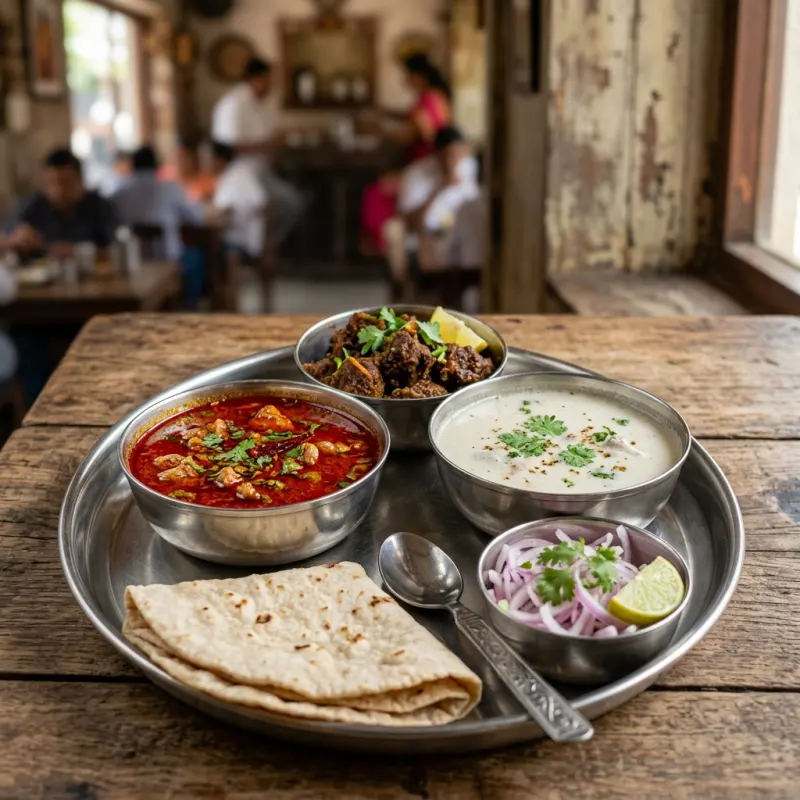
- World-Class Gastronomy: Sample genuine Tambada Rassa, Pandhra Rassa, and spicy Kolhapuri Misal right from their regional birthplace.
- Artisanal Leatherwork: Purchase hand-stitched, vegetable-tanned Kolhapuri chappals directly from multi-generational leather artisans.
- Panhala Fort Excursions: Explore ancient stone ramparts, Sajja Kothi, and panoramic Sahyadri views situated just 20 kilometers from the city.
Things to Avoid
- Avoid wearing footwear, socks, or leather belts inside the sanctum of the Mahalakshmi Temple; clear storage stalls are provided at the entrance gates.
- Do not underestimate the spice level of street misal if you have a sensitive stomach; specify 'medium' or 'mild' spice.
- Avoid hiring unmetered auto-rickshaws outside transit hubs without settling the fare beforehand.
- Do not enter traditional wrestling talims without permission from the resident ustaad (master coach) or while wearing outdoor shoes.
Local Transportation Tips
Kolhapur's compact urban center is best navigated using auto-rickshaws, which are widely available at railway depots, bus stations, and market plazas. While meters are standard, agreeing on the fare prior to long journeys is standard practice. Municipal KMT city buses connect peripheral neighborhoods, while Maharashtra State Road Transport Corporation (MSRTC) buses offer frequent, economical departures from Central Bus Stand (CBS) to surrounding destinations like Panhala Fort, Narsobawadi, and Rankala Lake. Walking is pleasant around the pedestrianized temple precinct and Bhausingji Road.
Travel Etiquette
- Dress conservatively when visiting temples, covering shoulders and knees out of respect for local religious customs.
- Remove your shoes outside homes, shrines, and heritage wrestling arenas (talims).
- Use your right hand when giving or receiving money, food, and religious offerings.
- Ask for permission before photographing local wrestlers during their training sessions or artisans at work in their workshops.
Recommended Age Group
Kolhapur caters comfortably to cultural enthusiasts of varied ages, though accessibility nuances require planning for very young travelers and less mobile seniors.
- Babies (0-2 years): Neutral. Busy temple alleys and uneven flagstone surfaces can make stroller use impractical, requiring front-facing baby carriers.
- Kids (3-12 years): Recommended. Exploring the wide grounds of Panhala Fort, boating on Rankala Lake, and touring the New Palace collection of vintage weapons and stuffed wildlife engage children effectively.
- Teens (13-19 years): Recommended. Teenagers will appreciate the historical martial fortresses, active wrestling gyms, lively shopping bazaars, and vibrant culinary challenges.
- Adults (20-64 years): Recommended. Ideal for cultural exploration, culinary tours, heritage photography, and architectural discovery.
- Seniors (65+ years): Recommended. Well-suited for spiritual pilgrimages and museum visits, though temple lines can be long; opting for VIP darshan passes is advised.
Accessibility Level: Medium
- The Mahalakshmi Temple complex features uneven cobblestone pavements and multiple stone thresholds, though dedicated assistance ramps are installed near select entrance pavilions.
- The New Palace Museum includes ramp access to ground-level galleries, but upper displays require navigating staircases.
- Pavements along market streets such as Mahadwar Road are frequently congested with merchandise, presenting challenges for self-propelled wheelchair users.
- Hiring an air-conditioned private taxi for point-to-point transit is strongly recommended for travelers with limited mobility.
Did You Know?
Twice a year during an astronomical phenomenon known as Kiranotsav (Festival of Sun Rays), the rays of the setting sun travel directly through the stone portals of the Mahalakshmi Temple to illuminate the feet, chest, and face of the goddess's idol.
Cool Statistics
- The Mahalakshmi Temple complex dates back to the 7th century, featuring stone pillars carved during the Chalukya dynasty.
- Kolhapuri Chappals earned an official Geographical Indication (GI) tag in 2019, certifying their authentic regional manufacturing.
- Panhala Fort is one of the largest fortresses in the Deccan region, boasting a perimeter wall measuring over 14 kilometers.






Buy a compatible power adapter for your trip