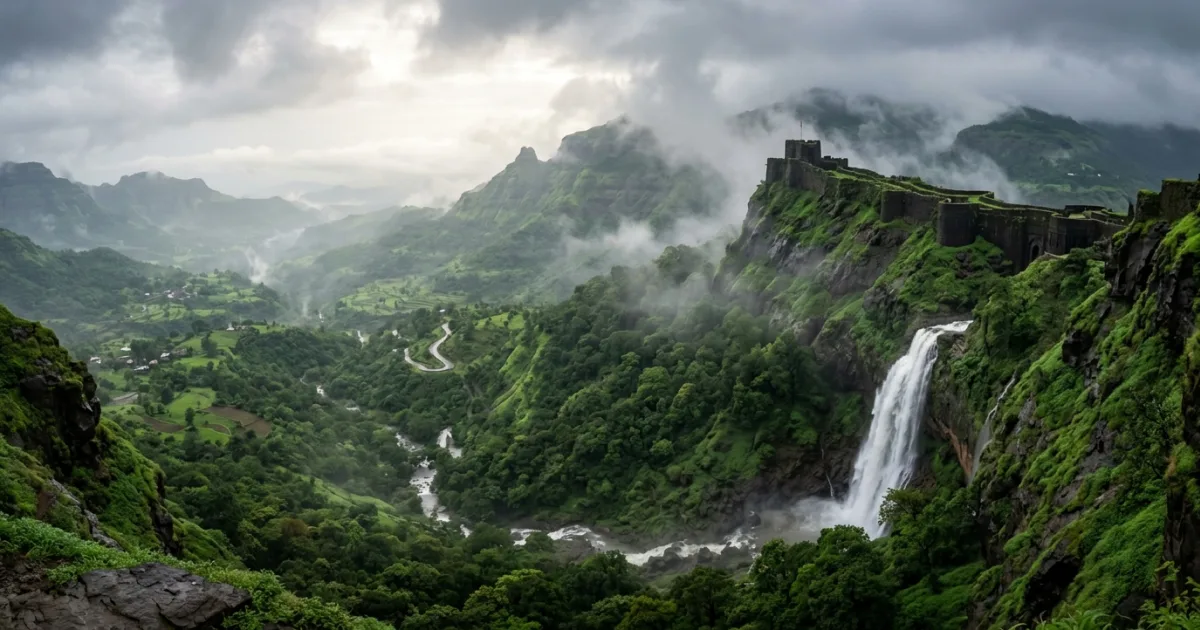
Western Maharashtra encompasses the historic heartland of the Marathi-speaking Deccan plateau, flanked by the dramatic Western Ghats (Sahyadri Range) on its western rim. This region has served as the epicentre of military prowess, agricultural prosperity, and progressive social movements in India. The landscape shifts rapidly from dramatic basalt escarpments with sheer 1,000-meter drops into the Konkan coastal plain to gently rolling black-cotton soil plains renowned for grape vineyards, pomegranate orchards, and sugarcane belts.
For the traveler, Western Maharashtra provides an alternative to India's overcrowded golden triangles. The region is dotted with over 300 hill and forest forts—including legendary fortifications like Sinhagad, Rajgad, Pratapgad, and Panhala—that stand as open-air monuments to Maratha engineering. Beyond history, it provides world-class agro-tourism, serene riverside ashrams along the Krishna River, and thriving craft traditions like Kolhapuri leather chappals and handwoven Paithani sarees.
Reasons to Visit
- Maratha Fortress Trails: Hike up historic stone ramparts, hidden escape sally ports, and rock-cut cisterns built by Chhatrapati Shivaji Maharaj.
- Kaas Plateau Floral Bloom: Witness a UNESCO World Natural Heritage site blanketed in endemic wildflowers every post-monsoon autumn.
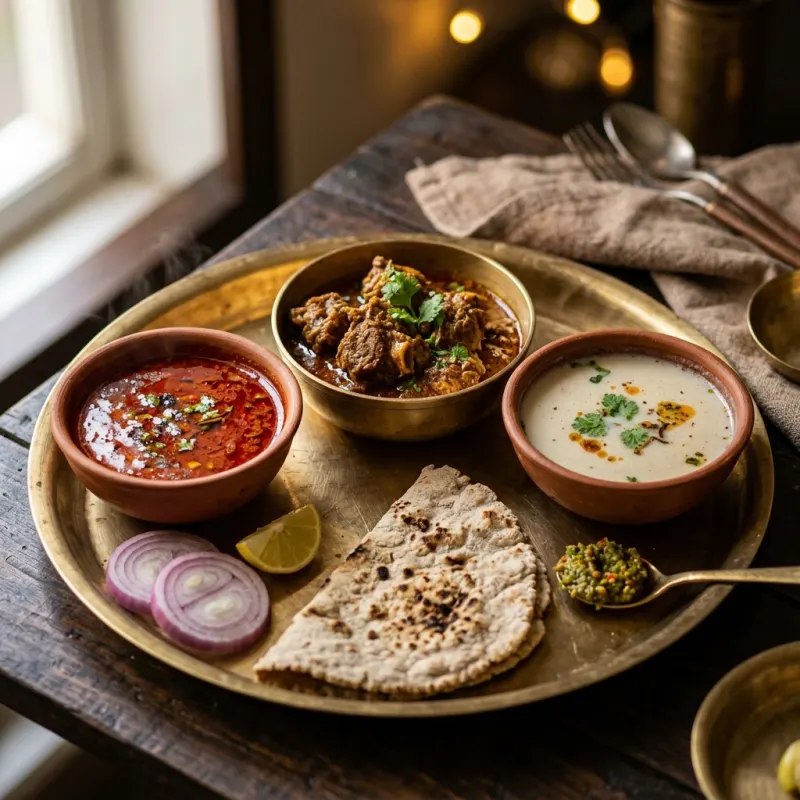
- World-Class Gastronomy: Taste bold regional delicacies, from Pune's spiced Misal Pav to Kolhapur's celebrated non-vegetarian rassa broths.
- Sahyadri Escarpment Vistas: Enjoy misty mountain viewpoints, strawberry farms, and cool breezes at hill stations like Panchgani and Mahabaleshwar.
- Living Spiritual Traditions: Experience devotion at ancient temples like Kolhapur Mahalaxmi and the Warkari pilgrim paths leading to Pandharpur.
Things to Avoid
- Do not attempt to cross flooded mountain streams or step close to unfenced cliff edges during the monsoon season.
- Avoid feeding monkeys at tourist viewpoints and fort trailheads, as they can become aggressive and snatch belongings.
- Do not wear revealing clothing when visiting traditional rural temples or orthodox village communities.
- Do not drive recklessly on steep ghat passes like Amba Ghat, Bhor Ghat, or Pasarni Ghat; always yield to uphill heavy vehicles.
Local Transportation Tips
Travel between major cities is efficient via expressways and rail routes, notably the Mumbai-Pune Expressway and the Pune-Bengaluru National Highway (NH 48). For reaching remote forts and rural villages, hiring a private vehicle with a driver is strongly recommended. Pune serves as the primary international and domestic flight hub, while local auto-rickshaws operate on meters in larger cities.
Travel Etiquette
- Remove footwear before entering any temple, sacred sanctum, or private rural home.
- Use your right hand when giving or receiving money, food, and gifts.
- Greet locals with folded hands and the traditional salutation 'Namaskar' or 'Jai Shivaji' to show cultural respect.
- Always ask permission before photographing rural residents, farmers, or worshippers in temple courtyards.
Recommended Age Group
Western Maharashtra offers diverse experiences catering to different fitness levels and travel preferences, with particular appeal to energetic explorers and multi-generational families.
- Babies (0-2 years): Neutral. Hill stations like Panchgani and urban stays in Pune are well equipped for infants, but rough fort trails and bumpy rural ghat roads make trekking challenging with baby strollers.
- Kids (3-12 years): Recommended. Children will love exploring old fort cannons, picking fresh strawberries at Mahabaleshwar farms, and discovering interactive science parks.
- Teens (13-19 years): Recommended. An absolute playground for active teenagers interested in mountain trekking, rappelling, camping under Sahyadri stars, and learning Indian martial history.
- Adults (20-64 years): Recommended. Perfect for scenic road trips, heritage fort exploration, wine tours, high-energy food explorations, and nature photography.
- Seniors (65+ years): Recommended. Outstanding for cultural and religious tourism with accessible temple towns, leisurely colonial-era hill station stays, and heritage gardens, provided strenuous fort climbs are avoided.
Accessibility Level: Medium
- Modern hotels and upscale resorts in Pune, Mahabaleshwar, and Kolhapur feature level elevator access and roll-in showers.
- Historic hill forts have steep, uneven, hand-carved stone steps with no ramp access, making them largely inaccessible to wheelchair users.
- Major pilgrimage centers such as Kolhapur Mahalaxmi provide special queue assistance and battery-operated carts for elderly visitors and individuals with reduced mobility.
- Hiring a private vehicle allows travelers with limited mobility to enjoy dramatic scenic ghat lookouts directly from roadside vantage points.
Did You Know?
The Maratha hill forts of Western Maharashtra were engineered with such brilliant strategic foresight that Shivaji Maharaj utilized their sheer vertical basalt cliffs as natural defensive walls, requiring minimal man-made masonry to make them virtually impregnable to medieval siege warfare.
Cool Statistics
- Home to 12 iconic Maratha Military Landscapes nominated for UNESCO World Heritage status.
- Kaas Plateau hosts over 850 species of flowering plants, more than 30 of which are found nowhere else on Earth.
- Western Maharashtra produces over 65 percent of India's total table grapes and houses major award-winning Indian wineries.






Buy a compatible power adapter for your trip