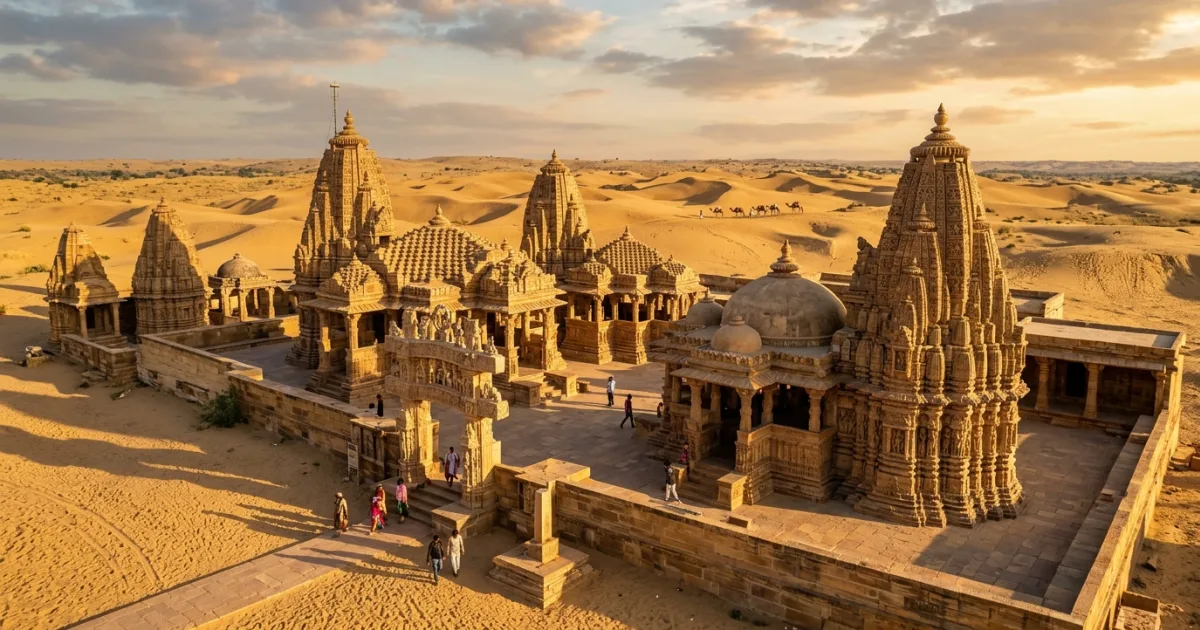
Osian was a flourishing trade nucleus and religious pilgrimage center during the Gurjara-Pratihara dynasty between the 8th and 12th centuries. Strategically perched on an ancient caravan crossway through the Marwar desert, it drew affluent merchants who commissioned elaborate stone temples honoring Hindu and Jain pantheons. The resulting architectural output showcases some of the finest sandstone carvings in northern India, earning Osian its reputation as an open-air museum of early medieval Indian art. Today, the town preserves a tranquil village atmosphere nestled amid golden sand dunes.
The town's architectural pinnacle includes the Sachiya Mata Temple, perched gracefully atop a hill overlooking the settlement, reached by a series of covered stone archways. Equally renowned is the Mahavira Temple, dedicated to the 24th Jain Tirthankara, which remains an active center of veneration known for its ornamental Torana gateways and finely carved pillars. In recent decades, Osian has evolved into a premier destination for desert tourism, providing travelers with secluded camel treks, luxury desert tent camps, and pristine starlit nights away from the commercial crowds of larger tourist centers.
Reasons to Visit
- Marvel at 8th to 11th-century Gurjara-Pratihara architecture and intricate stone carvings.
- Ascend the ceremonial stairs to Sachiya Mata Temple for sweeping views of the Thar Desert.
- Experience tranquil camel safaris across rolling dunes without the heavy commercial crowds of Jaisalmer.
- Spend an atmospheric night glamping under clear, light-pollution-free desert skies.
- Explore an off-the-beaten-path stop seamlessly integrated into a wider Marwar or Jodhpur itinerary.
Things to Avoid
- Avoid planning full-day outdoor desert safaris between April and June when daytime temperatures regularly cross 40°C.
- Do not bring genuine leather belts, wallets, or jackets into the sanctum sanctorum of the Jain temple complexes.
- Avoid hiring unvetted safari touts on the highway; instead, book directly with established local desert camps or registered town guides.
- Do not photograph worshipers during active prayer rituals inside temple inner sanctums without explicit permission.
Local Transportation Tips
Osian is compact enough that the town center, local markets, and nearby temple clusters can easily be explored on foot. For reaching the Sachiya Mata hill base or traveling between scattered temple sites, auto-rickshaws are readily available near the main bazaar and train station. Reaching the outlying sand dunes and safari camps requires either pre-arranged resort pickup, an auto-rickshaw, or a hired 4x4 vehicle. Regular state buses and passenger trains link Osian directly to Jodhpur Railway Station.
Travel Etiquette
- Remove your shoes, hats, and leather accessories before entering any active temple sanctuary.
- Dress conservatively; long pants or skirts and covered shoulders are required at religious monuments.
- Walk clockwise (pradakshina) around temple shrines and central sanctums.
- Always ask permission before photographing local Marwari elders, sadhus, or artisans in the bazaar.
- Refrain from public displays of affection in and around traditional village areas and sacred sites.
Recommended Age Group
Osian offers culturally rewarding and adventurous experiences, though its terrain and climate require consideration across different age brackets.
- Babies (0-2 years): Not Recommended. Fine desert dust, intense heat during midday, and historic temple complexes with steep stone staircases present mobility challenges for strollers.
- Kids (3-12 years): Recommended. Children thoroughly enjoy the novelty of camel rides across rolling sand dunes, interactive desert campfires, and wide-open spaces.
- Teens (13-19 years): Recommended. Sand dune exploration, quad biking, desert stargazing, and vibrant photographic backdrops make Osian appealing to teenagers.
- Adults (20-64 years): Recommended. Perfect demographic to appreciate the intricate temple iconography, cultural history, heritage desert walks, and serene luxury glamping.
- Seniors (65+ years): Neutral. Highly enriching for history lovers, but navigating uneven stone steps and sandy terrain at temple sites demands moderate physical mobility.
Accessibility Level: Medium
- Ancient temple complexes, including the Mahavira and Sun Temples, contain raised stone plinths and narrow entryways with limited wheelchair accessibility.
- Sachiya Mata Temple requires ascending numerous stone stairs to reach the main shrine, which may be challenging for individuals with reduced mobility.
- Modern desert resorts and luxury tented camps generally offer flat ground layouts, though traversing loose sand dunes requires assistance.
- Taxis and private vehicles can park close to the base of the major central temples to minimize walking distances.
Did You Know?
Osian is the ancestral homeland and cultural cradle of the Oswal Jain community, one of India's most prominent mercantile dynasties. The community trace their historical and spiritual lineage directly to the mass conversion guided by Acharya Ratnaprabhasuri at the Mahavira Temple in Osian over a millennium ago.
Cool Statistics
- Home to over 18 major historic Hindu and Jain temples dating between the 8th and 12th centuries.
- Located approximately 65 kilometers north of the Sun City of Jodhpur.
- Sachiya Mata Temple sits atop a hill featuring a staircase sheltered by more than 100 decorated stone arches.
- Situated on the ancient trans-Thar caravan trail connecting the Arabian Sea ports to northern Gangetic trade centers.






Buy a compatible power adapter for your trip