Marwar, translating historically as the 'Land of Death' due to its unforgiving desert climate, represents one of Rajasthan's most culturally distinct territories. Spanning southwestern Rajasthan, the region encompasses the major districts of Jodhpur, Barmer, Jalore, Nagaur, and Pali. Despite its harsh natural conditions, Marwar fostered powerful merchant communities and the formidable Rathore dynasty, whose architectural masterpieces define the skyline. The region's history is inextricably linked to trans-continental spice and silk caravan routes, bringing monumental wealth that funded sandstone palaces, ornate stepwells, and deeply entrenched artistic guilds.
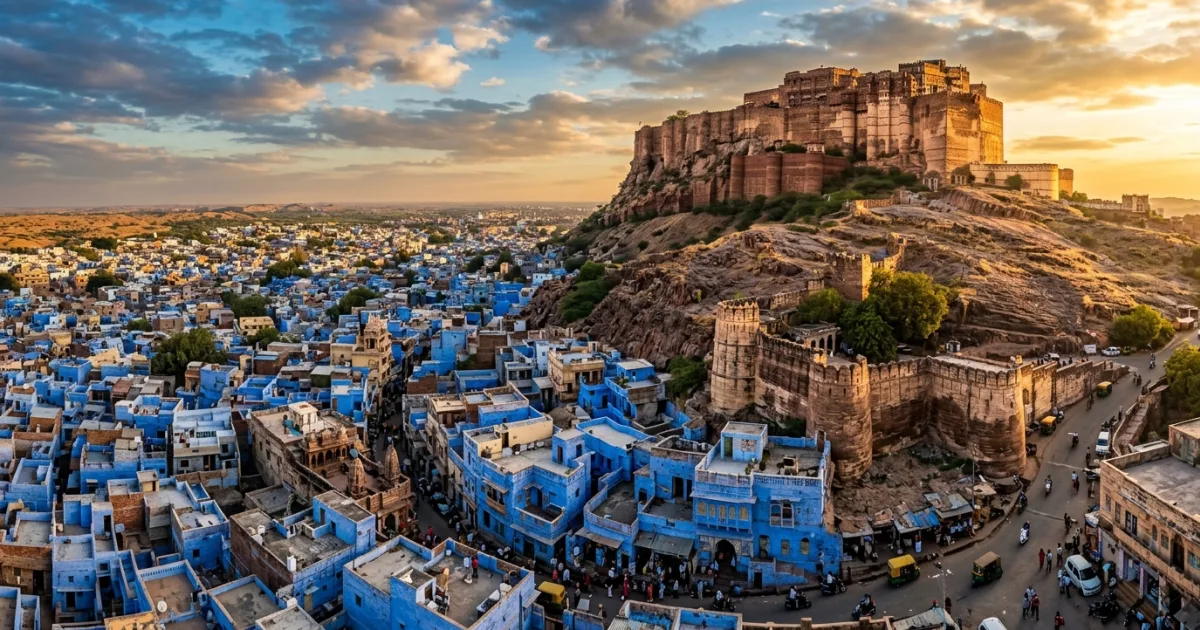
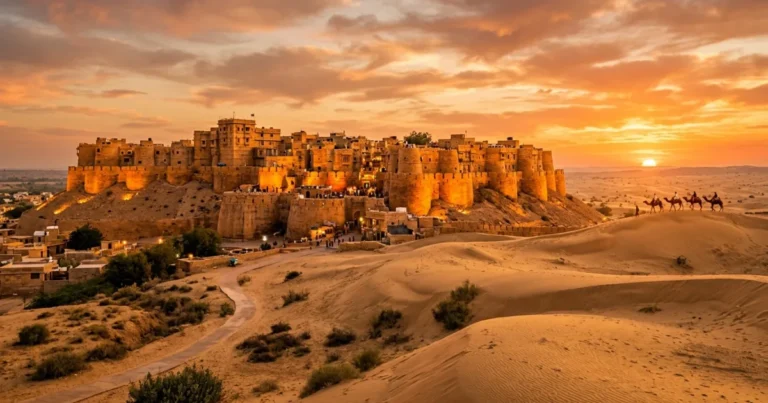
Today, journeying through Marwar presents a layered encounter with living tradition. Ancient desert forts such as Ahhichatragarh in Nagaur and Mehrangarh in Jodhpur tower over sprawling old towns painted in hues of cobalt and ochre. Rural outposts reveal strong ecological stewardship, most notably practiced by the Bishnoi sect who have defended native trees and blackbuck antelopes for centuries. With dramatic sand dunes, camel festivals, and unmatched silver and handloom bazaars, Marwar captures the quintessential soul of Rajasthan's arid frontier.
Reasons to Visit
- Magnificent Fort Architecture: Explore awe-inspiring bastions like Mehrangarh Fort, Nagaur Fort, and Jalore Fort perched majestically above desert plains.
- Living Blue Cities and Havelis: Wander through the winding, photogenic alleys of Jodhpur's old quarters painted in radiant indigo.
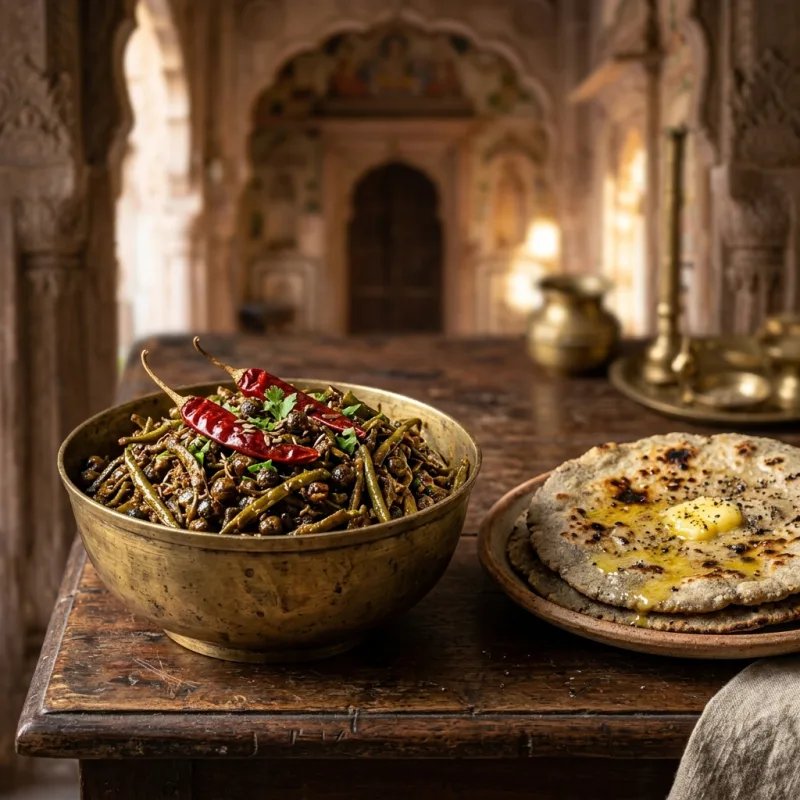
- Unique Desert Culinary Heritage: Savor authentic Marwari thalis, Pyaaz Kachoris, Mawa Kachori, and wild desert preparations found nowhere else on earth.
- Pioneering Conservation Communities: Witness the legendary wildlife and tree protection ethos of indigenous Bishnoi settlements.
- Artisanal Craftsmanship: Shop directly from master artisans specializing in block printing, tie-dye (bandhani), leather mojari shoes, and woven dhurries.
Things to Avoid
- Avoid booking unaccredited freelance desert safari touts lurking near railway stations and major bus terminals.
- Do not photograph local village residents, particularly women, without first requesting polite permission.
- Never accept mineral water bottles with loose or unsealed caps.
- Do not plan extensive outdoor desert treks during the oppressive midday heat between 12:00 PM and 3:30 PM.
- Avoid wearing footwear inside Hindu and Jain temples; always use socks to walk over sun-baked marble floors.
Local Transportation Tips
Getting around Marwar is straightforward via public and private transport. The Indian Railways network connects major regional hubs like Jodhpur, Pali, and Nagaur with frequent express trains. For travel between smaller towns and villages, state-operated RSRTC buses run reliably, though hiring a private car with a dedicated driver remains the most comfortable method for multi-day road trips. Inside towns, auto-rickshaws and cycle-rickshaws provide inexpensive local connections; always negotiate and settle on the fare prior to departure or insist on meter usage where applicable.
Travel Etiquette
- Dress conservatively by keeping knees, shoulders, and chest covered, particularly outside metropolitan areas and inside sacred shrines.
- Remove shoes before entering private residences, temples, and certain heritage monuments.
- Use the right hand for eating, passing money, and greeting individuals with a respectful 'Namaste' or local 'Khamma Ghani'.
- Bargaining is expected in traditional souvenir bazaars, but conduct negotiations with good humor and respectful restraint.
Recommended Age Group
Marwar's historic ramparts, steep fortress ascents, and desert climate require moderate stamina, making it ideal for certain traveler demographics.
- Babies (0-2 years): Not Recommended. Rugged terrain, uneven stone stairs, dust, and significant temperature fluctuations make stroller navigation and infant care challenging.
- Kids (3-12 years): Neutral. Children enjoy camel rides and majestic fort bastions, though long road transfers and midday heat can test patience.
- Teens (13-19 years): Recommended. Thrilling zip-lining over fort moats, desert quad-biking, vibrant bazaars, and photography hotspots keep teenagers highly engaged.
- Adults (20-64 years): Recommended. Perfect demographic for admiring intricate palace architecture, taking regional road trips, and exploring rich culinary traditions.
- Seniors (65+ years): Neutral. Heritage hotels with elevators and guided golf cart services inside Mehrangarh provide comfort, but steep inclines and uneven paving in old quarters require caution.
Accessibility Level: Medium
- Major monuments like Mehrangarh Fort feature elevator access to upper galleries, but extensive outer pathways consist of steep, cobblestone ramps.
- Historic havelis, stepwells, and desert tent camps rarely have step-free access or roll-in showers.
- Hiring a private vehicle with an experienced driver offers the most reliable transit for travelers with limited mobility.
Did You Know?
The Rathore rulers of Marwar bred the famous Marwari horse, an ancient and rare warhorse known worldwide for its distinctive inward-turning lyre-shaped ears and legendary battlefield loyalty.
Cool Statistics
- Over 500 years of recorded history surround Jodhpur's Mehrangarh Fort, founded atop a 125-meter cliff in 1459.
- The Bishnoi community observes 29 cardinal environmental and moral tenets formulated by Guru Jambheshwar in 1485.
- Marwar's Thar desert supports one of the highest human population densities of any arid desert ecosystem globally.







Buy a compatible power adapter for your trip