Disclosure: This site contains affiliate links. We may earn a commission if you make a purchase, at no extra cost to you.

>
>
>
>
>
Jhunjhunu
Panoramic view of the multi-arched sandstone Khetri Mahal in Jhunjhunu, Rajasthan.

Jhunjhunu Overview & Key Highlights

Jhunjhunu serves as the historic administrative heart of Rajasthan's semi-arid Shekhawati region, renowned internationally as an open-air art gallery. Established in the mid-fifteenth century, the town flourished under Marwari merchant patronage, leaving behind grand havelis covered in elaborate frescoes, multi-tiered stepwells, and imposing defensive outposts like Badalgarh Fort. Wandering through its narrow bazaars reveals an astonishing contrast between bustling modern trade and quiet, faded courtyards painted with mythological epics, colonial trains, and royal pageantry. Beyond its painted residential mansions, Jhunjhunu is dominated by architectural marvels such as the multi-arched Khetri Mahal, which famously inspired Jaipur's Hawa Mahal with its intricate flow of cooling desert air. The town also attracts major spiritual pilgrimage traffic to the massive marble complex of the Rani Sati Temple. Because Jhunjhunu experiences intense desert heat during late spring and summer, visitors should plan their trips during the cool, dry winter months to explore the sprawling architectural heritage comfortably on foot.

Jhunjhunu Travel Guide: Logistics & In-Depth Tips

Jhunjhunu occupies an influential place in the cultural geography of northern Rajasthan, acting as the historic focal point of the Shekhawati confederation. Founded in the 15th century by the Kaimkhani nawabs and subsequently conquered by the Shekhawat Rajputs under Shardul Singh in 1730, the town evolved into a thriving commercial hub along caravan trade corridors. Wealthy Marwari trading families channeled their mercantile fortunes into grand architectural commissions, transforming residential compounds into elaborate displays of prestige and devotion.

Today, Jhunjhunu preserves an eclectic architectural visual archive. The exterior walls, inner courtyards (chowks), and verandas of mansions like the Modi Haveli, Tibrewal Haveli, and Kaniram Narsinghdas Tiberwal Haveli boast intricate fresco murals created using natural mineral pigments. These artworks depict a fascinating intersection of classic Hindu epics, local desert legends, and arriving Western technologies such as steam locomotives, motorcars, and gramophones. Walking along Jhunjhunu's historic lanes offers travelers an immersive encounter with an intact, uncommercialized slice of Indian artistic heritage.

Reasons to Visit

  • Open-Air Murals: Examine centuries-old wall paintings that decorate traditional multi-courtyard havelis with remarkable detail and color.
  • Khetri Mahal: Marvel at the 18th-century palace without doors or windows, built entirely on arched colonnades that inspired Jaipur's Hawa Mahal.
  • Mertani Baori: Descend the symmetrical stone steps of an intricate historical stepwell engineered for desert water storage.
  • Rani Sati Temple: Experience one of northern Rajasthan's largest marble pilgrimage complexes, celebrated for its craftsmanship and sacred rituals.
  • Uncrowded Heritage: Discover authentic Shekhawati architecture free from the heavy tourist commercialization seen in busier regional towns.

Things to Avoid

  • Avoid wearing footwear or leather articles inside active sanctums at Rani Sati Temple and local shrines.
  • Do not touch, scratch, or lean against delicate historic frescoes, which are vulnerable to moisture and oil damage.
  • Avoid booking midday walking tours between April and June, when desert temperatures can trigger severe dehydration.
  • Do not accept unsolicited haveli guide services without agreeing upon an exact fee beforehand.
  • Avoid throwing plastic garbage down historical stepwells or inside abandoned palace corridors.

Local Transportation Tips

Auto-rickshaws form the backbone of local transit in Jhunjhunu, running frequently between the railway station, central bus stand, and key heritage monuments. Fares should be negotiated prior to boarding, with a typical cross-town hop costing between 50 and 100 INR, or around 600 to 800 INR for half-day hire. The historic core around Nehru Bazaar and the oldest havelis is best explored on foot due to tight lane widths. For day excursions to surrounding towns such as Mandawa, Nawalgarh, or Alsisar, private taxis can be booked via hotel concierges or central taxi stands.

Travel Etiquette

  • Dress conservatively by covering shoulders, chests, and knees, especially when entering religious premises or residential heritage quarters.
  • Always remove your shoes at the entrance of temples and private haveli living quarters.
  • Ask for permission before taking portraits of local residents, especially women and holy men.
  • Use your right hand for exchanging money, dining, and receiving blessed food offerings (prasad).
  • Greet elders and shopkeepers with a polite 'Namaste' accompanied by a slight bow.

Recommended Age Group

Jhunjhunu's rough terrain, historic structures, and authentic atmosphere require careful consideration across different age brackets.

  • Babies (0-2 years): Not Recommended. Narrow cobblestone streets, high stone thresholds, lack of baby changing amenities, and desert dust present significant logistical hurdles for strollers and infants.
  • Kids (3-12 years): Neutral. Children interested in forts and stepwells may enjoy exploring, but the lack of interactive exhibits and the requirement for extensive quiet walking can prove tiring.
  • Teens (13-19 years): Recommended. Teenagers with an appreciation for history, vibrant street photography, and vintage architecture will find the detailed wall frescoes and dramatic palaces fascinating.
  • Adults (20-64 years): Recommended. Independent travelers, photographers, and heritage enthusiasts can freely navigate the maze-like haveli lanes and soak up authentic desert culture.
  • Seniors (65+ years): Neutral. Many historic buildings lack elevators, feature steep and worn stone steps, and have uneven paving; mature travelers with good mobility can manage comfortably, but those with joint or balance limitations will find access challenging.

Accessibility Level: Medium

  • Pavements in the historic market zones are uneven, narrow, and often obstructed by steps, posts, or trade displays.
  • Historic havelis, Khetri Mahal, and stepwells feature steep stairs without handrails and lack wheelchair ramps or elevators.
  • Rani Sati Temple's central complex offers flat paved marble courtyards, though perimeter areas still involve stone thresholds.
  • Accessible public restrooms are virtually non-existent; modern facilities are restricted to newer heritage hotels outside the center.
  • Travelers requiring mobility support should arrange private car transportation with driver-assisted transfers directly to monument gateways.

Did You Know?

Khetri Mahal, constructed around 1770 by Thakur Bhopal Singh of Khetri, features no glass windows, doors, or heavy timber barriers. Instead, its multi-tiered levels rely purely on open pillared pavilions and interlocking arches, creating natural air currents that cool the interior during extreme desert heatwaves. Maharaja Sawai Pratap Singh was so impressed by this open ventilation design that he modeled Jaipur's iconic Hawa Mahal after it in 1799.

Cool Statistics

  • Over 50 historic havelis and stepwells dot the central urban fabric of Jhunjhunu.
  • Khetri Mahal rises across 2 primary multi-arched levels completely open to the wind.
  • Mertani Baori plunges down more than 30 meters through stone-hewn tiers of stairs.
  • The town sits approximately 320 meters above sea level on the edge of the Thar desert.

Address:

Jhunjhunu, India

Find Nearby Accommodations

Basic Info

address icon

COUNTRY & Region

India,
Asia

ACCESSIBILITY LEVEL​

Medium
Currency icon

LOCAL CURRENCY​

Indian Rupee (INR)
Price level icon
Low
Safety Level icon

SAFETY LEVEL

Duration icon

Recommended Duration

• 1-7 days
• Full day

Electricity

electricity icon

Electricity

220-240V, 
50Hz
Plug Socket icon

Plug Type

• Type C (Round pin)
• Type D (Three round pins in a triangular pattern)
• Type M (Three round pins, larger)
Plug types
Click To View Plug Types
Jhunjhunu is part of our
Culinary Heritage collection

Activities To Do In Jhunjhunu

Best Time To Visit Jhunjhunu

Jhunjhunu experiences an extreme semi-arid climate characterized by blistering summers, brief monsoon rains, and mild, crisp winters.

  • October to March (Peak Season): Pleasant daytime temperatures ranging between 18°C and 28°C offer optimal conditions for walking tours, architectural photography, and local market exploration.
  • April to June (Off-Peak): Extreme heat routinely pushes daytime mercury above 42°C, making midday sightseeing exhausting and uncomfortable.
  • July to September (Shoulder Season): Moderate monsoon showers revitalize the surrounding scrub landscape, lowering temperatures slightly despite elevated humidity.

Average Temperatures Per Month

Remember to check the weather forecast a few days before the trip and before heading to the airport.

Safety Level icon

Safety Level

Jhunjhunu is a peaceful and conservative provincial market town with low violent crime rates. Travelers should maintain situational awareness in congested bazaar alleys where speeding motorbikes and stray cattle share pedestrian paths. Female travelers should dress conservatively to respect regional norms and avoid unwanted stares. Avoid unlit lanes around Badalgarh Fort after sunset, drink only bottled or filtered water, and inspect street food for hygienic preparation.

The rating is based on multi-year peace, crime, and security indices. Before you go, always verify current conditions through official government travel advisories.

Emergency Numbers

Police: 112
Ambulance: 108

No internet needed • Includes local translations • Free for TravelingWiz readers

Spoken Languages

Hindi, Marwari, English (limited in local markets, fluent in heritage hotels)

Learn The Language

  • Namaste: Hello / Greetings
  • Dhanyavaad: Thank you
  • Kripya: Please
  • Haan / Nahin: Yes / No
  • Yeh kitne ka hai?: How much is this?
  • Rani Sati Mandir kahan hai?: Where is the Rani Sati Temple?
  • Bill de dijiye: Please give the bill
  • Madad chahiye: I need help
Travel Booking Partner - TravelingWiz

Trip Cost & Budgeting for Jhunjhunu, 2026

Everything you need to know about money while traveling
Is Jhunjhunu expensive for tourists in 2026? No, Jhunjhunu is an affordable destination in Rajasthan offering excellent value for travelers. You can expect to pay around 100 INR for a cappuccino, 180 INR for a local beer, and 400 INR for a standard main meal at a mid-range restaurant. Featuring Human Verified prices, visiting this heritage town will not strain your budget. Use the data table below to calculate your specific daily budget based on your travel style.
Currency icon

LOCAL CURRENCY​:

Indian Rupee (INR)
Price level icon
Low
Cash is essential in Jhunjhunu, as smaller heritage hotels, local markets, and auto-rickshaws rarely accept credit cards.

Per person, per day – pocket cash for small purchases.

Local: 330
Indian Rupee (INR)
≈ 24 USD

Full daily spend estimation (accommodation, food, transportation, attractions).

Travel Style
Indian Rupee (INR)
≈ USD ($)
Budget
1820
22
Mid-range
3300
54
Comfort
7250
120

The Prices, Daily costs, and calculator results are estimates for planning purposes only. Actual costs may vary based on season, booking timing, personal spending habits, and currency fluctuations. TravelingWiz cannot be held responsible for discrepancies between these estimates and your final trip expenses.

  • • Hire an auto-rickshaw for a negotiated full-day tour of havelis instead of paying individual point-to-point fares.
  • • Dine at local dhabas near Peeru Singh Circle for filling and authentic Rajasthani thalis at low prices.
  • • Pay entry fees directly at monument counters rather than booking through third-party agencies with added commissions.
  • • Visit in the shoulder months of October or March to secure lower rates on heritage accommodation.

Pre-Order Tickets

Avoid disappointment when tickets sell out — and skip the long lines by booking online in advance. You’ll often save up to 20% too.
Save up to 20%

Travel Discounts & Coupons

Save on hotels, attractions, transport, and gear — find verified discounts for smarter travel spending.
Verified Coupons

What To Pack

  • Breathable cotton or linen clothing for daytime exploration
  • Warm fleece jacket or shawl for cold desert winter evenings
  • Sturdy walking shoes with reliable grip for uneven stone streets and haveli stairs
  • Modest attire covering shoulders and knees for temple visits
  • Slip-on footwear or thick socks for walking on cold temple marble
  • Sun protection including high-SPF sunscreen, wide-brim hat, and sunglasses
  • Universal power adapter compatible with Type D and M plugs
  • Moisturizer, lip balm, and oral rehydration salts for the arid climate
We couldn't find tips for Jhunjhunu.
If you got any, please share

Recommended Itineraries for Traveling to Jhunjhunu

We couldn't find itineraries for Jhunjhunu.
you can contact us for custom trip plan

Food & Drink Highlights

Local Food Overview

The culinary identity of Jhunjhunu reflects traditional Shekhawati foodways adapted to the harsh conditions of the Thar Desert edge. Rich gravies flavored with local spices, mustard oil, and dried desert pods like ker and sangri dominate meal spreads. Gram flour (besan) and pearl millet (bajra) serve as primary staples alongside clarified butter (ghee). Jhunjhunu is also widely celebrated for its rich milk confectionery, especially caramelized mawa peda, renowned across northern India for its dense texture and cardamom aroma.
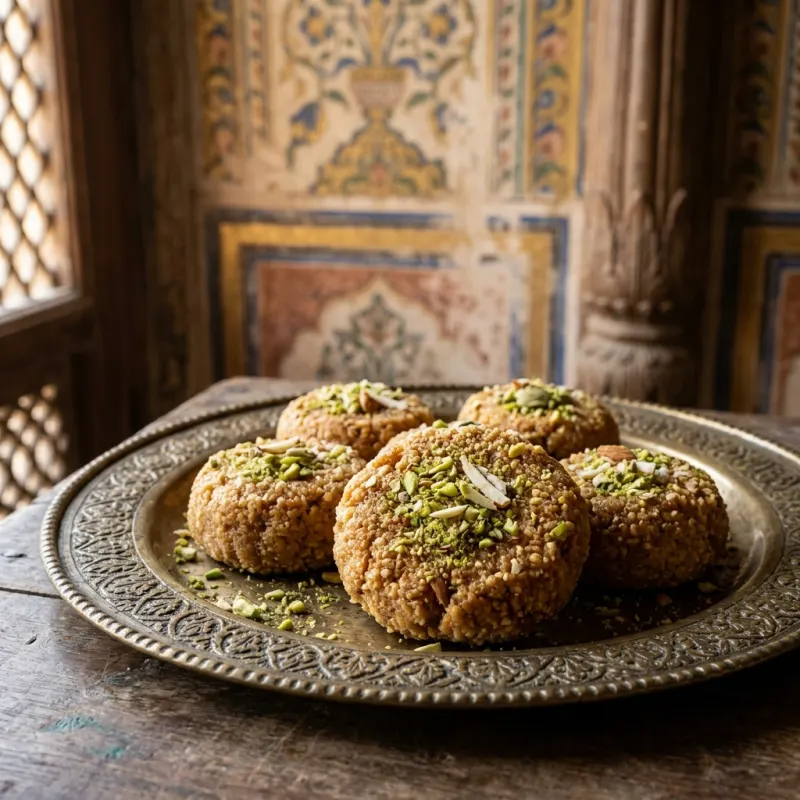
Authentic golden-brown Chirawa Peda sweets garnished with pistachios on a traditional brass plate.

Must Try Dish

Chirawa Peda - A decadent sweet made from slowly condensed milk solids, roasted until golden brown, and spiced with green cardamom and nutmeg. Its dense, crumbly texture and rich caramel flavor make it the quintessential culinary specialty of the district.
Food Experiences Title Icon

Food
Experiences

Discover cooking classes, tastings and local food tours

No food experience found
Maya, the human travel expert at TravelingWiz, offering curated, non-AI expertise

Maya’s Final Checklist for Jhunjhunu

Logistics shouldn’t be the focus of your trip—the experience should. I’ve hand-vetted these essential partners to ensure your arrival, stay, and exploration are as smooth as an Athenian breeze.

Where to Stay

From boutique hotels to local apartments—compare thousands of options and find the perfect stay in the best neighborhood.

Air Travel

Getting there should be seamless. Compare the best routes and prices across top airlines to start your journey on the right note.

Local Guides

Connect with experts who know the destination best. Get personalized advice and insider tips to help you plan your perfect trip.

Travel Protection

The “Engineer’s” rule: always have a backup. Secure your trip with a plan that covers every “what if” and unexpected change.

Car Rentals

Explore at your own pace with total freedom. Compare reliable rental options and find the right vehicle for your adventure.

Visa Services

Don’t let paperwork slow you down. Get expert assistance with your application to ensure all your entry documents are in order.

FAQs

Jhunjhunu is globally famous for its historic painted havelis featuring 18th- and 19th-century frescoes, the columned Khetri Mahal, Mertani Baori stepwell, and the massive Rani Sati Temple complex.
Jhunjhunu is well connected by regular state-run express buses and direct passenger trains from both Jaipur (approx. 3.5 to 4 hours) and New Delhi (approx. 4.5 to 5.5 hours).
One full day to two days provides sufficient time to tour the major havelis, Khetri Mahal, stepwells, and Rani Sati Temple, or to use Jhunjhunu as a base for exploring nearby towns like Mandawa and Nawalgarh.
Most havelis are privately maintained; while many do not have official state ticketing counters, caretakers typically charge a modest preservation fee of 100 to 200 INR per visitor.
Yes, Jhunjhunu is a hospitable and calm town with low crime rates. Standard travel precautions regarding modesty, nocturnal navigation, and keeping valuables secure apply.

Your Insights Matter

TravelingWiz grows through the stories of our community. If you’ve recently explored ,Jhunjhunu share your tips and stories to help us perfect our guides for the next traveler.

Related Articles

Check out our related articles and blog posts to learn even more about the destination.

No related articles found

Don’t Travel Alone

Share with your friends and family

Where should we send your offline card?

We hate spam just as much as you do

newsletter_consent *