Disclosure: This site contains affiliate links. We may earn a commission if you make a purchase, at no extra cost to you.

>
>
>
>
Shekhawati Region

Shekhawati Region

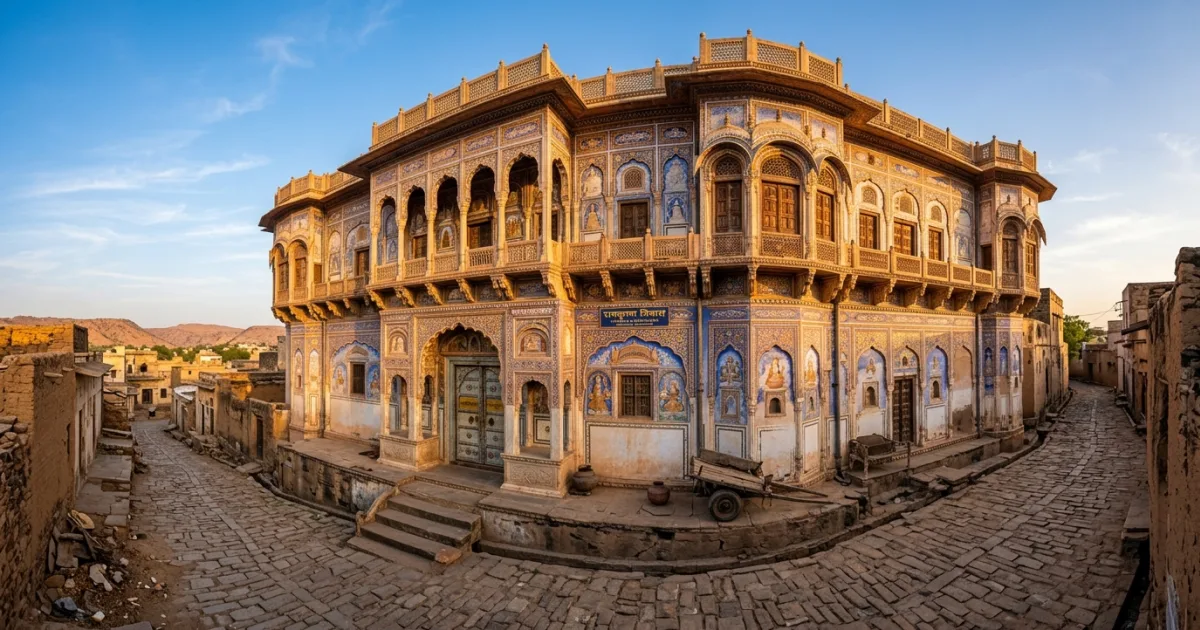
Frescoed exterior of an ornate historic haveli in Shekhawati Rajasthan

Shekhawati Region Overview & Key Highlights

Shekhawati Region is situated in northern Rajasthan, encompassing towns such as Mandawa, Nawalgarh, Fatehpur, and Jhunjhunu. Widely celebrated as the world's largest open-air art gallery, this semi-arid historic expanse is famous for thousands of grand havelis built by affluent Marwari merchants between the eighteenth and early twentieth centuries. Every surface of these palatial mansions showcases intricate fresco work depicting mythological epics, local folklore, and early colonial inventions like trains and gramophones. A road journey across Shekhawati provides travelers with an intimate alternative to the heavily touristed Golden Triangle circuit. Visitors traverse quiet desert lanes, wander through atmospheric courtyards, and sleep in thoughtfully restored heritage properties. The region offers exceptional architectural depth, authentic Rajasthani hospitality, and a preserved slice of desert merchant history away from modern urban congestion.

Shekhawati Region Travel Guide: Logistics & In-Depth Tips

Shekhawati is a historic desert expanse nestled in northeastern Rajasthan, bordered by Jaipur, Bikaner, and Haryana. In the eighteenth and nineteenth centuries, the region flourished as a strategic trading nexus along crucial caravan routes linking the ports of Gujarat with northern Indian commercial centers. Marwari merchants amassed tremendous fortunes in textiles, spices, and opium, channeling their wealth into building colossal mansions known as havelis. To outdo their peers in architectural prestige, these merchants commissioned skilled artisans to adorn every facade, ceiling, and courtyard wall with lavish fresco work executed in natural mineral pigments.

Today, Shekhawati stands as an unparalleled open-air gallery preserving social history on plaster. The artwork transitions chronologically from traditional scenes of Hindu deities and courtly processions to whimsical depictions of British colonial inventions, including steam locomotives, aeroplanes, and early gramophones. Beyond Mandawa, towns like Nawalgarh, Fatehpur, Ramgarh, and Jhunjhunu offer ornate stepwells (baoris), grand memorial chhatris (cenotaphs), and imposing mud-and-stone forts, all wrapped in a tranquil, authentic rural Rajasthani atmosphere.

Reasons to Visit

  • Witness thousands of preserved historic frescoes decorating entire streets of grand merchant havelis.
  • Stay overnight in authentic eighteenth-century forts and restored desert mansions operated as boutique heritage stays.
  • Experience rural Rajasthani life free from the aggressive hawking and heavy crowds typical of major tourist cities.
  • Explore intricate multi-tiered architectural stepwells (baoris) engineered for desert survival.
  • Photograph mesmerizing combinations of European colonial technology and classical Indian mythology depicted side by side on ancient walls.

Things to Avoid

  • Avoid touching or rubbing the fresco surfaces, as natural oils and physical friction accelerate the degradation of fragile mineral pigments.
  • Do not rely exclusively on online digital payment apps or credit cards in remote villages, as network connectivity can be spotty.
  • Avoid planning your outdoor haveli walking tours between 12:00 PM and 3:30 PM from late spring through summer due to intense heat.
  • Do not enter private living quarters within occupied havelis without clear permission from resident owners or caretakers.

Local Transportation Tips

Travel between Shekhawati's towns is best accomplished by hiring a private car and driver, which offers complete flexibility across rural backroads. Local state buses connect main district hubs such as Jhunjhunu, Sikar, and Churu, but their schedules can be irregular and crowded. For navigating narrow town lanes lined with havelis, three-wheeled auto-rickshaws or walking are the most practical options, as larger vehicles cannot fit through many historic gateways.

Travel Etiquette

  • Dress conservatively by covering shoulders and knees when exploring town streets and religious sites.
  • Always remove your shoes before stepping across the threshold of active shrines, temples, or private residential quarters.
  • Ask for permission before photographing residents, particularly village elders and women in traditional attire.
  • Offer a polite, small gratuity (around 50 to 100 INR) to haveli caretakers who unlock private chambers and turn on lighting for you.

Recommended Age Group

Shekhawati is an enriching destination for travelers who appreciate history, visual art, and peaceful exploration, though site accessibility varies across older historic properties.

  • Babies (0-2 years): Not Recommended. The uneven stone alleys, high door thresholds, and lack of dedicated diaper-changing facilities make stroller navigation practically impossible.
  • Kids (3-12 years): Neutral. Children may find painted depictions of elephants, horses, and antique trains intriguing, but the lack of interactive play spaces and high midday heat can cause fatigue.
  • Teens (13-19 years): Recommended. Photography enthusiasts and history students will appreciate the intricate street art, castle architecture, and distinctive rural landscape.
  • Adults (20-64 years): Recommended. Ideal for cultural travelers, photographers, and road-trippers seeking unhurried architectural exploration and character-filled heritage lodgings.
  • Seniors (65+ years): Neutral. Older travelers who love art and history will enjoy the region immensely, though high stone steps, narrow haveli staircases, and uneven paving require good mobility or gentle pacing.

Accessibility Level: Medium

  • Most historic havelis and stepwells feature steep stone steps, narrow stairwells, and raised thresholds with no ramp or elevator access.
  • Town pathways in historic quarters often consist of uneven cobblestones, dirt tracks, and narrow passages that pose significant obstacles for wheelchair users.
  • Travelers with limited mobility are advised to arrange private car transport directly to entrance gates and select modern or fully renovated heritage hotels that offer ground-floor rooms.

Did You Know?

Many Shekhawati frescoes feature steam locomotives, motorcars, and biplanes that the local artists had never seen in person. The painters created these depictions solely based on descriptions, newspaper clippings, and verbal accounts provided by traveling merchants returning from major port cities.

Cool Statistics

  • Over 2,000 intricately painted havelis are concentrated across the towns and villages of Shekhawati.
  • The region spans approximately 13,784 square kilometers across Rajasthan's desert fringe.
  • Many prominent Indian industrialist dynasties, including the Birlas, Goenkas, and Mittals, trace their ancestral roots to Shekhawati.


Address:

Shekhawati Region, India

Find Nearby Accommodations

Basic Info

address icon

COUNTRY & Region

India,
Asia

ACCESSIBILITY LEVEL​

Medium
Currency icon

LOCAL CURRENCY​

Indian Rupee (INR)
Price level icon
Low
Safety Level icon

SAFETY LEVEL

Duration icon

Recommended Duration

• 1-7 days

Electricity

electricity icon

Electricity

220-240V, 
50Hz
Plug Socket icon

Plug Type

• Type C (Round pin)
• Type D (Three round pins in a triangular pattern)
• Type M (Three round pins, larger)
Plug types
Click To View Plug Types
Shekhawati Region is part of our
Culinary Heritage collection

Things To Do In Shekhawati Region

Total: 3

Activities To Do In Shekhawati Region

Best Time To Visit Shekhawati Region

Shekhawati experiences extreme seasonal temperatures typical of the Thar Desert fringe, making timing critical for comfort.

  • October to March (Peak Season): Ideal winter months with pleasant daytime temperatures between 18°C and 28°C and cool evenings, perfect for walking tours and architectural sightseeing.
  • April to June (Summer Season): Scorching dry heat with daytime temperatures frequently exceeding 42°C; outdoor exploration is generally discouraged during midday.
  • July to September (Monsoon Season): Humid with brief, intermittent showers that revitalize the arid landscape, accompanied by moderate visitor crowds and lower room rates.

Average Temperatures Per Month

Remember to check the weather forecast a few days before the trip and before heading to the airport.

Safety Level icon

Safety Level

Shekhawati is peaceful and welcoming, with low rates of violent crime. Visitors should exercise sensible precautions when walking in poorly lit alleys after dark. Havelis are often centuries old; watch your step on steep stone stairways, low doorframes, and uneven open terraces. Drink only bottled or filtered water, and avoid unpasteurized street dairy products to prevent stomach upsets.

The rating is based on multi-year peace, crime, and security indices. Before you go, always verify current conditions through official government travel advisories.

Emergency Numbers

Police: 112
Ambulance: 108

No internet needed • Includes local translations • Free for TravelingWiz readers

Spoken Languages

Hindi, Marwari, English

Learn The Language

  • Namaste: Hello / Greetings
  • Dhanyavaad: Thank you
  • Kripya: Please
  • Haan / Nahin: Yes / No
  • Kitna hua?: How much is this?
  • Yeh kahan hai?: Where is this?
  • Paani milega?: May I have water?
  • Rukhiye: Stop / Wait
Travel Booking Partner - TravelingWiz

Trip Cost & Budgeting for Shekhawati Region, 2026

Everything you need to know about money while traveling
Is Shekhawati Region expensive for tourists in 2026? No, the Shekhawati region remains a very affordable destination for travelers exploring Rajasthan. Expect to pay around ₹150 for a cappuccino, ₹250 for a domestic beer, and ₹450 for a main meal in a mid-range restaurant. Featuring Human Verified prices, visiting the famous painted havelis offers high cultural value at modest costs. Use the data table below to calculate your specific daily budget based on your travel style.
Currency icon

LOCAL CURRENCY​:

Indian Rupee (INR)
Price level icon
Low
Cards are accepted at larger heritage hotels, but cash is necessary for local transport, small havelis, and street dining.

Per person, per day – pocket cash for small purchases.

Local: 450
Indian Rupee (INR)
≈ 5 USD

Full daily spend estimation (accommodation, food, transportation, attractions).

Travel Style
Indian Rupee (INR)
≈ USD ($)
Budget
2500
26
Mid-range
4500
47
Comfort
9900
103

The Prices, Daily costs, and calculator results are estimates for planning purposes only. Actual costs may vary based on season, booking timing, personal spending habits, and currency fluctuations. TravelingWiz cannot be held responsible for discrepancies between these estimates and your final trip expenses.

  • • Explore towns like Nawalgarh and Fatehpur on foot or via shared auto-rickshaws to avoid expensive private taxis.
  • • Stay in smaller locally run heritage homestays or havelis rather than high-end resort properties for better rates.
  • • Eat thalis at local vegetarian eateries where meals are generous, authentic, and cost a fraction of hotel dining.
  • • Carry small currency notes of ₹20, ₹50, and ₹100 for haveli caretaker tips and local market transactions.

Pre-Order Tickets

Avoid disappointment when tickets sell out — and skip the long lines by booking online in advance. You’ll often save up to 20% too.
Save up to 20%

Travel Discounts & Coupons

Save on hotels, attractions, transport, and gear — find verified discounts for smarter travel spending.
Verified Coupons

What To Pack

  • Breathable cotton and linen clothing for warm daytime exploration
  • Light woolens or a fleece jacket for chilly winter mornings and nights
  • Sturdy walking shoes with reliable grip for uneven stone streets and haveli stairs
  • Sun protection including high-SPF sunscreen, wide-brim hat, and UV sunglasses
  • A slip-on pair of socks for walking comfortably across sun-heated temple courtyards where shoes are removed
  • Moisturizer, lip balm, and nasal saline spray to counter dry, semi-arid winds
  • A small, bright pocket flashlight for illuminating dim interior fresco rooms
We couldn't find tips for Shekhawati Region.
If you got any, please share

Recommended Itineraries for Traveling to Shekhawati Region

We couldn't find itineraries for Shekhawati Region.
you can contact us for custom trip plan

Food & Drink Highlights

Local Food Overview

Shekhawati cuisine reflects the resourceful culinary traditions of arid Rajasthan, emphasizing pulses, dairy, and sun-dried vegetables due to historical water scarcity. Dishes are boldly seasoned with cumin, coriander, red chilies, and asafoetida, cooked generously in pure clarified butter (ghee). Traditional thali meals feature coarse grain breads paired with rich yogurt-based curries and lentil preparations that have nourished desert travelers for generations.
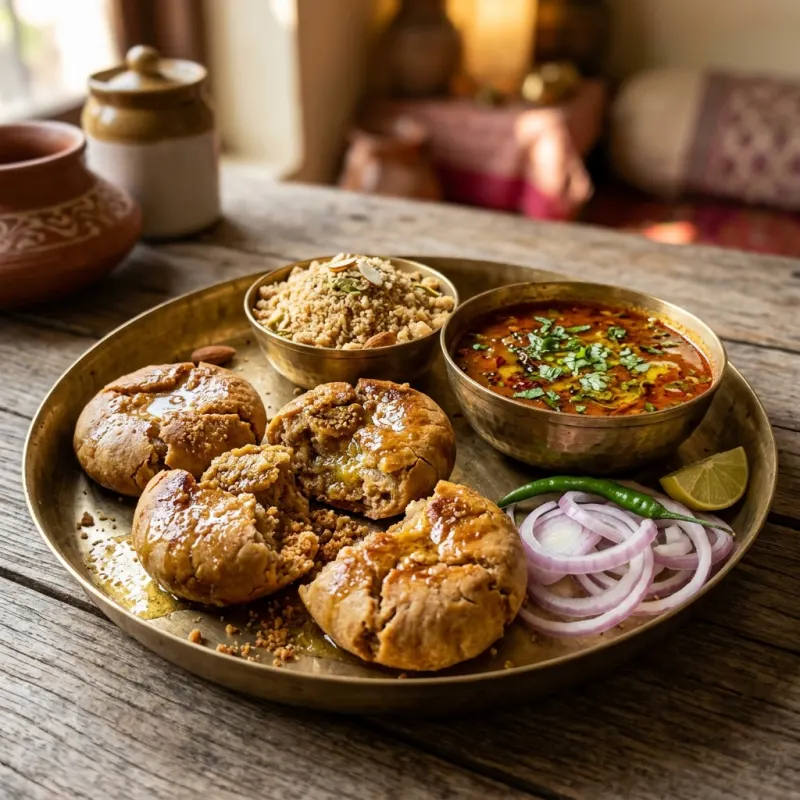
Authentic Rajasthani Dal Baati Churma served on a traditional brass thali

Must Try Dish

Dal Baati Churma - This signature desert feast consists of crisp, round baked wheat flour dumplings soaked in warm clarified butter, paired with a spiced five-lentil curry. It is finished with churma, a sweet crumbly accompaniment made from roasted flour, raw sugar, and nuts.
Food Experiences Title Icon

Food
Experiences

Discover cooking classes, tastings and local food tours

No food experience found
Maya, the human travel expert at TravelingWiz, offering curated, non-AI expertise

Maya’s Final Checklist for Shekhawati Region

Logistics shouldn’t be the focus of your trip—the experience should. I’ve hand-vetted these essential partners to ensure your arrival, stay, and exploration are as smooth as an Athenian breeze.

Where to Stay

From boutique hotels to local apartments—compare thousands of options and find the perfect stay in the best neighborhood.

Air Travel

Getting there should be seamless. Compare the best routes and prices across top airlines to start your journey on the right note.

Local Guides

Connect with experts who know the destination best. Get personalized advice and insider tips to help you plan your perfect trip.

Travel Protection

The “Engineer’s” rule: always have a backup. Secure your trip with a plan that covers every “what if” and unexpected change.

Car Rentals

Explore at your own pace with total freedom. Compare reliable rental options and find the right vehicle for your adventure.

Visa Services

Don’t let paperwork slow you down. Get expert assistance with your application to ensure all your entry documents are in order.

FAQs

Hiring a private car with an experienced driver from Jaipur or Delhi is the most efficient and comfortable way to explore the scattered towns of Shekhawati. Auto-rickshaws are suitable for short trips within individual towns like Mandawa or Nawalgarh.
A stay of two to three days allows visitors to see the premier havelis, cenotaphs, and stepwells across Mandawa, Nawalgarh, and Fatehpur without rushing.
Some havelis remain home to descendant families or live-in caretakers called chokidars, while others have been turned into heritage boutique hotels or stand preserved as private museums.
Photography is permitted in most open havelis, though some private owners or caretakers may charge a modest camera fee between 50 and 200 INR.

Your Insights Matter

TravelingWiz grows through the stories of our community. If you’ve recently explored ,Shekhawati Region share your tips and stories to help us perfect our guides for the next traveler.

Related Articles

Check out our related articles and blog posts to learn even more about the destination.

No related articles found

Don’t Travel Alone

Share with your friends and family

Where should we send your offline card?

We hate spam just as much as you do

newsletter_consent *