Disclosure: This site contains affiliate links. We may earn a commission if you make a purchase, at no extra cost to you.

>
>
>
>
>
Nawalgarh
Intricate painted haveli facade with detailed frescoes in Nawalgarh Shekhawati

Nawalgarh Overview & Key Highlights

Nawalgarh stands as the vibrant cultural anchor of Rajasthan's semi-arid Shekhawati region, universally celebrated as an open-air art gallery. Established in 1737 by Thakur Nawal Singh, the settlement grew into an opulent trading post along northern caravan trails where affluent Marwari merchant families competed to construct elaborate multi-courtyard mansions known as havelis. These residences, adorned from plinth to cornice with intricate fresco paintings depicting Hindu epics, British colonial innovations, and daily desert folklore, offer an architectural snapshot of India's pre-industrial mercantile wealth. Beyond its museum-grade architectural facades, Nawalgarh preserves an authentic rural rhythm that remains remarkably unmarred by heavy commercial tourism. Exploring the maze of dusty lanes reveals living neighborhoods where bustling bazaars sell traditional brassware, potters throw clay vessels on wooden wheels, and historic stepwells anchor community life. Visitors typically spend several days soaking in the faded grandeur of Poddar Haveli, Aath Haveli, and Morarka Haveli, making it an essential hub for historians, photographers, and slow travelers seeking Rajasthani heritage in its most unfiltered form.

Nawalgarh Travel Guide: Logistics & In-Depth Tips

Nawalgarh functions as the artistic heart of Rajasthan's Shekhawati region, earning its international reputation as the highest concentration of high-quality painted havelis in India. Founded in the mid-eighteenth century by Thakur Nawal Singh, the town evolved into a prosperous trading epicenter where Marwari mercantile dynasties amassed vast fortunes through trans-regional trade in silk, opium, spices, and cotton. Eager to display their affluence, these merchant families commissioned local master artists (chiteras) to cover every square inch of their palatial residences with elaborate fresco work, fusing traditional Rajput and Mughal artistic motifs with eccentric European influences.

Today, Nawalgarh presents an immersive historic landscape where grand gateways, arched multi-level courtyards (chowks), carved wooden jharokhas, and vibrant murals exist side-by-side with contemporary rural commerce. Walking through the town's central grid reveals not only premier restored sites such as the Dr. Ramnath A. Poddar Haveli Museum and the Morarka Haveli, but also dozens of quietly aging, unrestored estates that convey an evocative sense of architectural nostalgia. Free from the chaotic tour-bus crowds of Jaipur, Nawalgarh invites slow exploration, thoughtful cultural exchanges, and unhurried photographic wandering.

Reasons to Visit

  • Witness the world-famous Shekhawati fresco art decorating grand private residential palaces.
  • Experience authentic, peaceful Rajasthani small-town hospitality far removed from mass commercial circuits.
  • Stay in lovingly preserved, family-operated heritage mansions featuring traditional courtyards and antique furnishings.
  • Discover historic stepwells (baoris) and ornate cenotaphs that highlight pre-modern engineering and memorial art.
  • Enjoy a paradise for heritage photography with stunning natural light hitting vibrantly painted facades.

Things to Avoid

  • Avoid photographing local residents, particularly women, inside residential neighborhoods without explicit verbal permission.
  • Do not touch, scratch, or lean against fragile antique fresco murals, which are susceptible to flaking and moisture damage.
  • Avoid planning outdoor sightseeing itineraries during midday hours between April and June when extreme desert temperatures peak.
  • Do not rely exclusively on digital payments or local ATMs; always carry sufficient paper cash.
  • Avoid accepting informal guide services from unsolicited touts outside public transit stops.

Local Transportation Tips

Nawalgarh's historic core is compact and best navigated entirely on foot, allowing easy access into narrow residential lanes inaccessible to motor vehicles. For journeys between peripheral havelis, the railway station, and the main bus stop, three-wheeled auto-rickshaws and cycle-rickshaws are readily available. Always agree on the fare prior to departure, as meters are not utilized. For excursions into neighboring Shekhawati settlements like Mandawa, Fatehpur, or Dundlod, hiring a private car with a local driver through your accommodation is the most efficient option.

Travel Etiquette

  • Remove your shoes before entering temples, private courtyards, and designated heritage museum rooms.
  • Dress conservatively by keeping knees, midriffs, and shoulders covered when walking through public streets and residential quarters.
  • Use your right hand for greeting locals, passing money, and accepting food or drink.
  • Offer a modest tip (50 to 100 INR) to haveli caretakers who unlock private chambers and inner courtyards for viewing.

Recommended Age Group

Nawalgarh offers rich educational and sensory rewards for travelers of varying generations, though structural accessibility presents physical limitations for certain visitors.

  • Babies (0-2 years): Not Recommended. Uneven dirt streets, high doorway thresholds, and narrow stairwells render strollers unusable, while specialized baby supplies are scarce in town.
  • Kids (3-12 years): Neutral. Children may enjoy the fort-like atmosphere and colorful paintings, but the lack of interactive modern attractions and extensive walking can lead to fatigue.
  • Teens (13-19 years): Recommended. The striking open-air art, vintage architecture, and vivid street photography backdrops make it engaging for curious older youth and history students.
  • Adults (20-64 years): Recommended. Perfect for cultural enthusiasts, architectural historians, photographers, and independent travelers seeking rich heritage immersion.
  • Seniors (65+ years): Neutral. While mature travelers will deeply appreciate the tranquil atmosphere and deep history, climbing steep, narrow haveli staircases with low handrails demands sturdy mobility.

Accessibility Level: Medium

  • Historic havelis feature elevated plinths, high stone thresholds, and steep, narrow staircases that do not accommodate wheelchairs.
  • Town streets alternate between paved asphalt, loose cobblestones, and dirt paths with uneven surfaces and open drainage curbs.
  • Restored heritage hotels rarely offer modern elevator systems; travelers with limited mobility should request ground-floor courtyard rooms in advance.
  • Vehicular traffic is restricted in the narrowest residential alleys, requiring moderate walking capability for full exploration.

Did You Know?

Nawalgarh's fresco murals famously capture the arrival of the Industrial Revolution in British India. Because local Marwari traders traveled frequently to Bombay and Calcutta, artists who had never seen modern inventions painted whimsical depictions of steam locomotives, biplanes, motorcars, and gramophones based entirely on verbal descriptions sent back by merchants.

Cool Statistics

  • Home to more than 100 historic painted havelis scattered across its central municipal grid.
  • Established in 1737 AD by Thakur Nawal Singh of the Shekhawat Rajput dynasty.
  • The Poddar Haveli features over 750 individual restored wall paintings illustrating mythology, local festivals, and colonial life.


Address:

Nawalgarh, India

Find Nearby Accommodations

Basic Info

address icon

COUNTRY & Region

India,
Asia

ACCESSIBILITY LEVEL​

Medium
Currency icon

LOCAL CURRENCY​

Indian Rupee (INR)
Price level icon
Low
Safety Level icon

SAFETY LEVEL

Duration icon

Recommended Duration

• 1-7 days
• Full day

Electricity

electricity icon

Electricity

220-240V, 
50Hz
Plug Socket icon

Plug Type

• Type C (Round pin)
• Type D (Three round pins in a triangular pattern)
• Type M (Three round pins, larger)
Plug types
Click To View Plug Types
Nawalgarh is part of our
Culinary Heritage collection

Activities To Do In Nawalgarh

Best Time To Visit Nawalgarh

Nawalgarh experiences an arid subtropical desert climate characterized by scorching summers, brief monsoon rains, and crisp, comfortable winters.

  • October to March (Peak Season): Ideal touring conditions with pleasant daytime temperatures between 18°C and 28°C, clear skies, and chilly nights.
  • April to June (Summer Season): Extremely hot with temperatures regularly exceeding 42°C; outdoor sightseeing during midday is uncomfortable and unadvisable.
  • July to September (Monsoon Season): Occasional intense showers provide relief from the heat and revive local vegetation, though humidity rises substantially.

Average Temperatures Per Month

Remember to check the weather forecast a few days before the trip and before heading to the airport.

Safety Level icon

Safety Level

Nawalgarh is a peaceful town with a low incidence of violent crime. Visitors should navigate unpaved lanes with care after dusk, as street lighting is sparse and stray cattle or dogs are common. Modest dress covering shoulders and knees is strongly recommended to respect traditional Rajasthani social norms. Drink only bottled or filtered water, and inspect safety railings carefully when climbing upper haveli balconies, which often feature low parapets.

The rating is based on multi-year peace, crime, and security indices. Before you go, always verify current conditions through official government travel advisories.

Emergency Numbers

Police: 112
Ambulance: 108

No internet needed • Includes local translations • Free for TravelingWiz readers

Spoken Languages

Hindi, Marwari, and basic English in heritage hotels and key museum havelis.

Learn The Language

  • Namaste: Traditional respectful greeting
  • Dhanyavaad: Thank you
  • Kitna hua?: How much does this cost?
  • Haan / Nahin: Yes / No
  • Madad kijiye: Please help me
  • Pani: Water
  • Kahan hai?: Where is it located?
  • Rukhiye: Stop / Please wait
Travel Booking Partner - TravelingWiz

Trip Cost & Budgeting for Nawalgarh, 2026

Everything you need to know about money while traveling
Is Nawalgarh expensive for tourists in 2026? Not at all, as this heritage town in Rajasthan remains very budget-friendly for travelers. Based on our Human Verified prices, expect to pay around 120 INR for a cappuccino, 200 INR for a domestic beer, and 300 INR for a main meal in a standard restaurant. Accommodation and local transport are also quite affordable. Use the data table below to calculate your specific daily budget based on your travel style.
Currency icon

LOCAL CURRENCY​:

Indian Rupee (INR)
Price level icon
Low
Cash is essential in Nawalgarh, as credit cards are seldom accepted outside major heritage hotels.

Per person, per day – pocket cash for small purchases.

Local: 400
Indian Rupee (INR)
≈ 4 USD

Full daily spend estimation (accommodation, food, transportation, attractions).

Travel Style
Indian Rupee (INR)
≈ USD ($)
Budget
2200
23
Mid-range
4000
42
Comfort
8800
93

The Prices, Daily costs, and calculator results are estimates for planning purposes only. Actual costs may vary based on season, booking timing, personal spending habits, and currency fluctuations. TravelingWiz cannot be held responsible for discrepancies between these estimates and your final trip expenses.

  • • Explore the historic havelis on foot or negotiate a flat daily rate with a local auto-rickshaw driver.
  • • Choose traditional Rajasthani thalis at local eateries for authentic, affordable, and filling meals.
  • • Withdraw cash in Jaipur or Jhunjhunu prior to arriving, as town ATMs can occasionally be unreliable.
  • • Consider staying in family-run heritage homestays that offer home-cooked meals and local guidance.

Pre-Order Tickets

Avoid disappointment when tickets sell out — and skip the long lines by booking online in advance. You’ll often save up to 20% too.
Save up to 20%

Travel Discounts & Coupons

Save on hotels, attractions, transport, and gear — find verified discounts for smarter travel spending.
Verified Coupons

What To Pack

  • Breathable cotton and linen clothing for warm daytime exploration.
  • A warm fleece jacket or shawl for cold desert winter nights.
  • Slip-on walking shoes for frequent removal at temples and private havelis.
  • A wide-brimmed sun hat, polarized sunglasses, and high-SPF sunscreen.
  • A dust mask or lightweight scarf to guard against desert wind and road dust.
  • Sufficient cash in small rupee denominations for entry fees and markets.
  • Universal plug adapters for two-pin and three-pin round Indian sockets.
We couldn't find tips for Nawalgarh.
If you got any, please share

Recommended Itineraries for Traveling to Nawalgarh

We couldn't find itineraries for Nawalgarh.
you can contact us for custom trip plan

Food & Drink Highlights

Local Food Overview

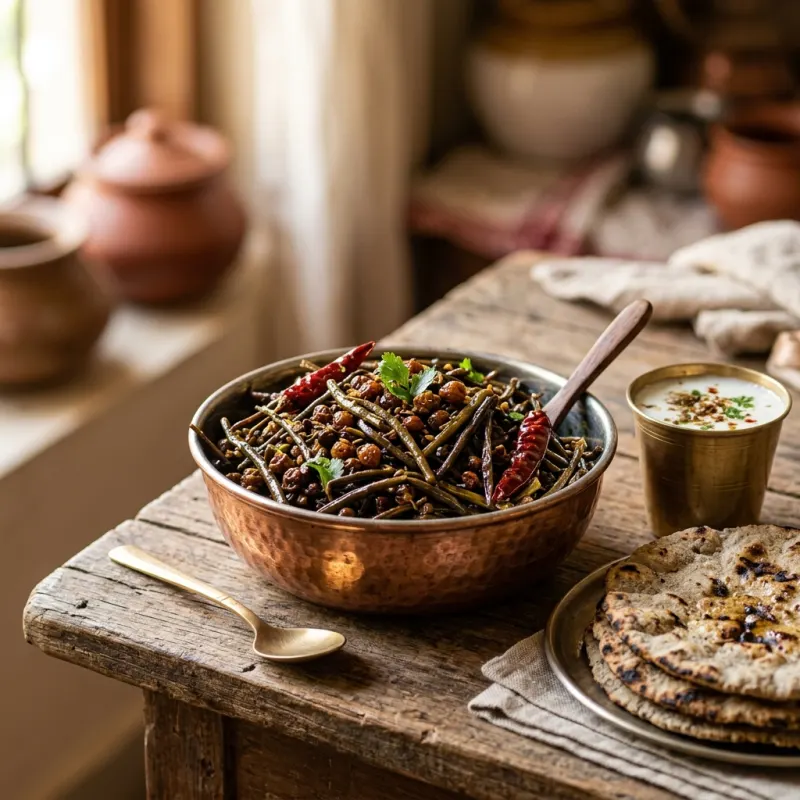
Shekhawati cuisine reflects the ingenious resourcefulness of desert cooking, emphasizing dishes with high nutritional density, extended shelf lives, and limited reliance on water. Meals are anchored by staples such as bajra (pearl millet) rotis, clarified butter (ghee), and robust lentil curries. The local palate is defined by dried desert beans and berries—most famously ker and sangri—cooked with wild spices and yogurt gravies. Sweet preparations, including mawa kachori and rich milk pedas from local sweet shops, serve as celebratory culinary fixtures.
Ker Sangri traditional Rajasthani dry curry with bajra roti

Must Try Dish

Ker Sangri - A tangy, spiced Marwari dry curry made from wild desert beans and caper berries slow-cooked in mustard oil with whole red chilies, dried mango powder, and aromatic local spices. Best eaten warm with thick hand-rolled bajra rotis and fresh churned butter.
Food Experiences Title Icon

Food
Experiences

Discover cooking classes, tastings and local food tours

No food experience found
Maya, the human travel expert at TravelingWiz, offering curated, non-AI expertise

Maya’s Final Checklist for Nawalgarh

Logistics shouldn’t be the focus of your trip—the experience should. I’ve hand-vetted these essential partners to ensure your arrival, stay, and exploration are as smooth as an Athenian breeze.

Where to Stay

From boutique hotels to local apartments—compare thousands of options and find the perfect stay in the best neighborhood.

Air Travel

Getting there should be seamless. Compare the best routes and prices across top airlines to start your journey on the right note.

Local Guides

Connect with experts who know the destination best. Get personalized advice and insider tips to help you plan your perfect trip.

Travel Protection

The “Engineer’s” rule: always have a backup. Secure your trip with a plan that covers every “what if” and unexpected change.

Car Rentals

Explore at your own pace with total freedom. Compare reliable rental options and find the right vehicle for your adventure.

Visa Services

Don’t let paperwork slow you down. Get expert assistance with your application to ensure all your entry documents are in order.

FAQs

Two full days provide sufficient time to tour the major painted havelis, visit the local stepwells, browse the craft bazaars, and take an architectural walking tour without rushing.
Nawalgarh is located approximately 140 kilometers northwest of Jaipur. You can reach the town by direct state transport buses, local passenger trains, or a private taxi ride taking roughly three hours via the Jaipur-Jhunjhunu highway.
Yes, most havelis remain private family property. Some have been converted into heritage museums or boutique hotels, while others are maintained by resident caretakers who allow visitor access for a small courtesy fee.

Your Insights Matter

TravelingWiz grows through the stories of our community. If you’ve recently explored ,Nawalgarh share your tips and stories to help us perfect our guides for the next traveler.

Related Articles

Check out our related articles and blog posts to learn even more about the destination.

No related articles found

Don’t Travel Alone

Share with your friends and family

Where should we send your offline card?

We hate spam just as much as you do

newsletter_consent *