The Special Region of Yogyakarta (Daerah Istimewa Yogyakarta, or DIY) occupies a unique constitutional position as Indonesia's only remaining royal monarchy recognized by the central government. Ruled by the reigning Sultan of Yogyakarta, who concurrently serves as provincial governor, the territory functions as an autonomous living bastion of Javanese royal arts, ethical philosophy, and heritage craftsmanship. The city center radiates outward from the Kraton, a sprawling palace complex constructed in 1755 that remains the residential and ceremonial center of the Sultanate.
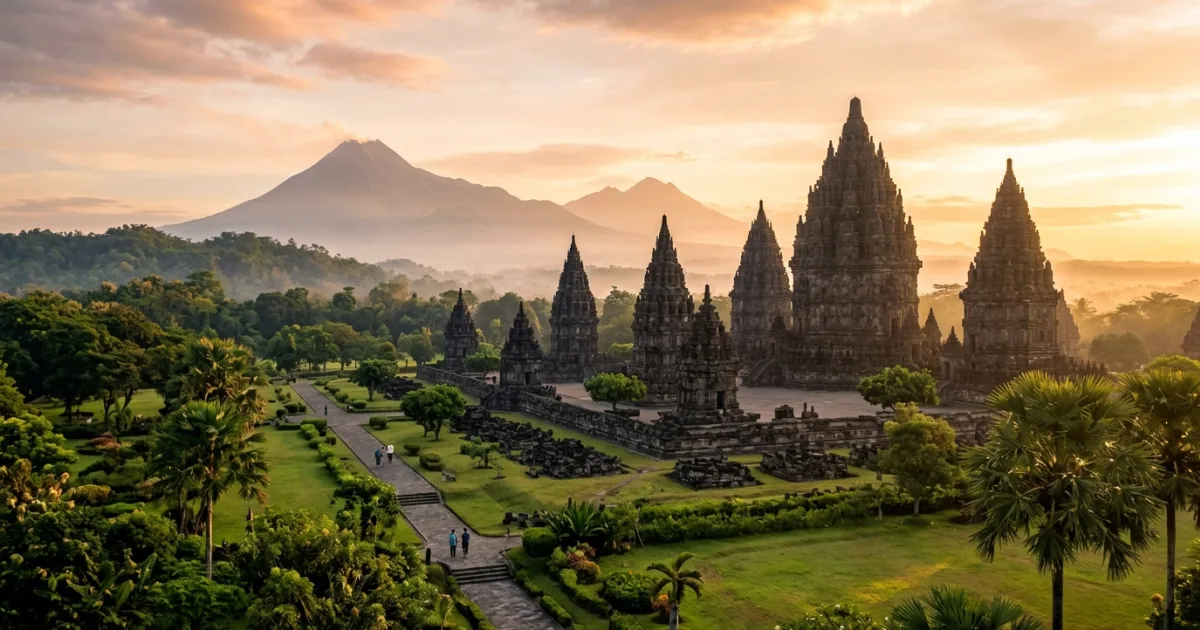
Surrounding the metropolis lies a landscape steeped in spiritual significance and natural contrasts. To the north towers Mount Merapi, an active stratovolcano revered in local cosmology as an earthly counterpart to the royal court and the southern sea spirits of the Indian Ocean. Dotting the plains are world-renowned archaeological monuments, including the towering ninth-century Hindu spires of Prambanan and easy access to the colossal Buddhist sanctuary of Borobudur. From traditional silver smithing in Kotagede to the thriving contemporary galleries in southern neighborhoods, Yogyakarta bridges an extraordinary spectrum of Javanese identity.
Reasons to Visit
- Stand in awe before the towering stone spires of the 9th-century Prambanan temple compound, a masterpiece of Hindu architectural artistry.
- Immerse yourself in authentic royal Javanese court culture with live gamelan performances and shadow puppet showcases inside the historic Kraton.
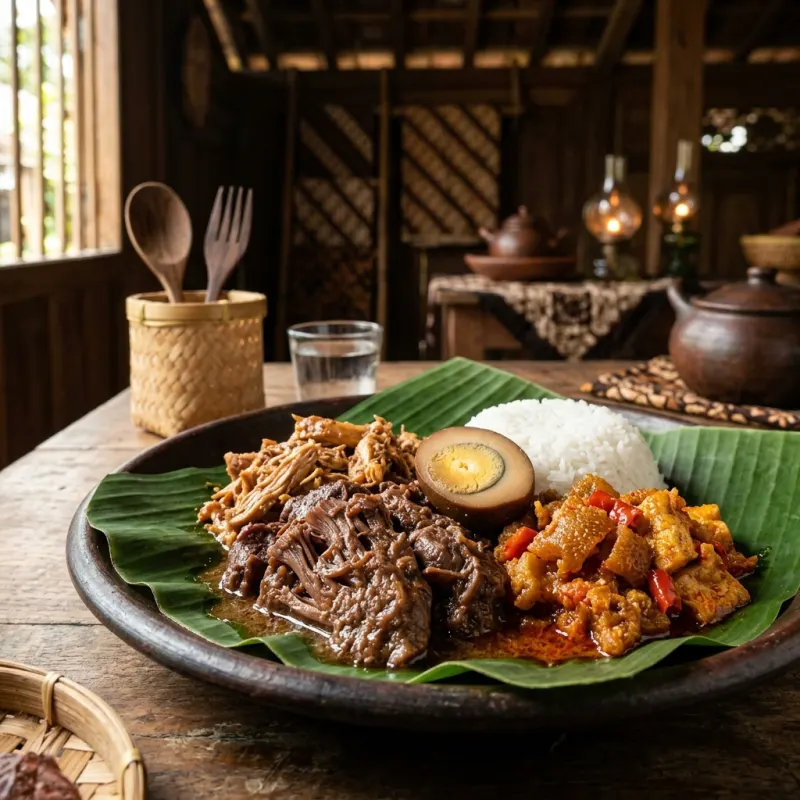
- Savor legendary Javanese culinary creations, from traditional slow-cooked Gudeg to charcoal-boiled Kopi Joss coffee.
- Experience thrilling adventure with off-road 4x4 lava tours across the scenic foothills of Mount Merapi.
- Explore dramatic geological wonders, including the underground river systems of Pindul Cave and the mystical light beam of Jomblang Cave.
- Wander through Kotagede, the historic capital of the ancient Mataram Sultanate, known for centuries-old silver craft and Dutch colonial architecture.
Things to Avoid
- Avoid using your left hand to hand over money, documents, or food, as it is considered culturally impolite throughout Java.
- Do not point your feet directly at sacred statues, royal thrones, or local elders when seated on traditional floor mats.
- Never venture into the rough surf of southern Indian Ocean beaches like Parangtritis without checking flags, as undertows are dangerously powerful.
- Avoid touching anyone on the head, including small children, as the head is revered as the most sacred part of the body in Javanese belief.
- Do not purchase unverified 'antiques' or historical artifacts from street hawkers without certification, as genuine relics are protected state property.
Local Transportation Tips
Yogyakarta provides diverse transport choices tailored to urban and regional travel. The Trans Jogja bus system operates clean, air-conditioned routes connecting major landmarks, including Malioboro, the airport, and Prambanan, for a flat, economical fare. For point-to-point urban transit, app-based motorcycle and car taxis via Grab and Gojek offer fixed, upfront rates. Traditional horse carriages (andong) and cycle-rickshaws (becak) remain romantic options along Jalan Malioboro, though fares should always be negotiated prior to boarding. For journeys into rural districts like Sleman or Gunungkidul, renting an automatic scooter or hiring a private driver for the day is the most time-efficient method.
Travel Etiquette
- Dress respectfully when visiting temples, mosques, and royal palaces by keeping knees and upper arms covered.
- Remove your footwear before entering Javanese private residences, prayer halls, and traditional pavilion pavilions.
- Greet locals with a gentle handshake accompanied by a polite slight nod of the head and a warm smile.
- Maintain a calm, measured tone during negotiations; public displays of anger or impatience cause loss of face and hinder cooperation.
Recommended Age Group
Yogyakarta is a remarkably versatile destination that enriches travelers across generations, especially those with an interest in living culture and archaeology.
- Babies (0-2 years): Neutral. Tropical heat, bumpy footpaths, and uneven temple steps present logistical hurdles with standard strollers, though welcoming hospitality is universal.
- Kids (3-12 years): Recommended. Children will love the interactive puppet workshops, sandy southern shores, gentle cave tubing tours, and open-top volcanic jeep expeditions.
- Teens (13-19 years): Recommended. High appeal through subterranean adventures, Instagrammable sunrise temple vistas, thriving street food markets, and vibrant modern arts scenes.
- Adults (20-64 years): Recommended. The ultimate destination for deep cultural exploration, culinary discoveries, architectural photography, and diverse nature treks.
- Seniors (65+ years): Recommended. Rich cultural heritage, accessible boutique heritage hotels, peaceful palace complexes, and cost-effective private driver logistics suit mature travelers well.
Accessibility Level: Medium
- Major central heritage sites like the Kraton feature relatively level ground, but historical paving and raised thresholds require assistance for manual wheelchairs.
- Prambanan Temple provides flat perimeter walkways offering panoramic views, though climbing inside the inner sanctum spires requires negotiating steep stone stairs.
- Pavements along central thoroughfares like Jalan Malioboro have been modernized with tactile paving and curb cuts, though outer areas remain uneven.
- Hiring an accessible private van with an experienced local driver is the smoothest way to navigate the region for travelers with mobility needs.
Did You Know?
Yogyakarta served as the provisional capital of the Republic of Indonesia from 1946 to 1948 during the Indonesian National Revolution against Dutch colonial forces. Because Sultan Hamengkubuwono IX offered full royal treasury support and safe haven to the fledgling republican government, Indonesia's central leadership granted Yogyakarta its permanent, self-governing 'Special Region' status upon full independence.
Cool Statistics
- Home to over 500 cataloged archaeological heritage sites spanning Hindu, Buddhist, and Islamic eras.
- Mount Merapi is one of Indonesia's most active volcanoes, having erupted over 80 times since the year 1000 CE.
- The region boasts over 100 higher education institutions, earning its famous national moniker 'Kota Pelajar' (The City of Students).
- More than 3,000 active batik artisans operate workshops throughout the Bantul and Kotagede districts alone.






Buy a compatible power adapter for your trip