Disclosure: This site contains affiliate links. We may earn a commission if you make a purchase, at no extra cost to you.

>
>
>
Java
Sunrise over Mount Bromo and the Tengger caldera in Java

Java Overview & Key Highlights

Java is the cultural and economic heart of Indonesia, home to over half of the country's population and a staggering array of geographical wonders. From the bustling metropolis of Jakarta to the ancient temples of Borobudur and Prambanan, the island offers a dense concentration of history, art, and commerce. Visitors can explore royal palaces in Yogyakarta, witness the blue flames of the Ijen crater, and hike the otherworldly landscapes of Mount Bromo. Navigating Java is an adventure in itself, with an extensive train network connecting major hubs across lush volcanic landscapes and terraced rice paddies. While the island's dense population means traffic and crowds are common, escaping to the cooler highlands or remote national parks reveals a serene, deeply spiritual side of the island. Whether you are seeking culinary delights, ancient heritage, or active volcano trekking, Java provides an intense and rewarding Indonesian experience.

Java Travel Guide: Logistics & In-Depth Tips

Java is an island of striking contrasts, where ancient traditions seamlessly coexist with rapid modernization. As the world's most populous island, it pulses with an undeniable energy, most palpable in the sprawling capital of Jakarta. Yet, just a train ride away, the landscape transforms into a serene tapestry of emerald rice terraces, dense teak forests, and towering volcanic peaks. The island's geological volatility has shaped not only its dramatic topography but also its fertile soils, which have sustained powerful agrarian kingdoms for centuries.

The cultural heartland of Java lies in the central and eastern provinces, particularly around the royal city of Yogyakarta. Here, the legacy of the Mataram Sultanate endures in classical Javanese dance, batik artistry, and shadow puppetry (wayang kulit). The island is also home to two of Southeast Asia's most significant archaeological sites: the massive Buddhist mandala of Borobudur and the towering Hindu spires of Prambanan. Beyond history, Java offers unparalleled adventure, from the pre-dawn hike up Mount Bromo to witness the sunrise over the Tengger caldera, to the challenging descent into the Ijen crater to see its famous blue sulfur flames.

Reasons to Visit

  • Ancient Temples: Explore UNESCO World Heritage sites like Borobudur and Prambanan, showcasing incredible 8th and 9th-century architecture.
  • Volcanic Landscapes: Trek active volcanoes such as Mount Bromo, Mount Merapi, and Mount Ijen for surreal, otherworldly vistas.
  • Cultural Heritage: Immerse yourself in traditional Javanese arts, including batik making, gamelan music, and wayang kulit (shadow puppets) in Yogyakarta and Surakarta.
  • Scenic Train Journeys: Experience some of the most beautiful railway routes in Asia, cutting through lush mountains and rural villages.
  • Culinary Diversity: Taste a wide array of regional dishes, from Jakarta's savory street food to Yogyakarta's sweet Gudeg.

Things to Avoid

  • Drinking Tap Water: Stick to bottled or properly filtered water to avoid waterborne illnesses.
  • Disrespectful Attire: Avoid wearing revealing clothing, especially when visiting religious sites or rural villages.
  • Underestimating Traffic: Do not assume short distances mean quick travel times; traffic in cities like Jakarta and Bandung can be severe.
  • Ignoring Volcano Warnings: Never hike an active volcano if local authorities have issued exclusion zones or warnings.
  • Public Displays of Affection: Keep physical affection discreet, as Indonesia is a conservative country.

Local Transportation Tips

Java boasts the most developed transportation infrastructure in Indonesia. The Kereta Api Indonesia (KAI) train system is highly recommended for intercity travel, offering Executive, Business, and Economy classes that are punctual, air-conditioned, and scenic. For shorter distances within cities, ride-hailing apps like Grab and Gojek (which offer both car and motorcycle taxis) are ubiquitous, cheap, and reliable. Traditional transport options like becak (cycle rickshaws) and angkot (public minivans) are available but require haggling and knowledge of local routes. Domestic flights connect major hubs like Jakarta, Yogyakarta, and Surabaya for those short on time.

Travel Etiquette

  • Always use your right hand for eating, passing objects, and shaking hands, as the left hand is considered unclean.
  • Dress modestly, particularly outside of major tourist resorts; covering shoulders and knees is a sign of respect.
  • Remove your shoes before entering a local home or a mosque.
  • Avoid pointing with your index finger; instead, use your thumb with your hand folded, or gesture with an open hand.
  • Keep your voice down and avoid public displays of anger, as maintaining harmony and 'saving face' are crucial in Javanese culture.

Recommended Age Group

Java offers a diverse range of experiences, but its tropical climate and vast distances require some consideration for different age groups.

  • Babies (0-2 years): Neutral. The intense heat, humidity, and long transit times between major sights can be challenging for infants, though high-end hotels offer excellent facilities.
  • Kids (3-12 years): Recommended. Children will be fascinated by the ancient temples, train rides, and accessible nature parks, though parents should manage expectations regarding travel times.
  • Teens (13-19 years): Recommended. The island offers high-engagement activities like volcano trekking, jeep tours, and vibrant city exploration that appeal strongly to teenagers.
  • Adults (20-64 years): Recommended. Perfect for adults seeking a mix of deep cultural immersion, culinary exploration, and active outdoor adventures.
  • Seniors (65+ years): Neutral. While luxury train travel and cultural sites are highly accessible, uneven terrain at archaeological sites and intense heat can be physically demanding.

Accessibility Level: Medium

  • Major airports and high-end hotels in Jakarta, Bandung, and Yogyakarta offer good wheelchair accessibility.
  • The KAI train network provides accessible seating and ramps at major stations, though assistance from staff is often required.
  • Historical sites like Borobudur and Prambanan have made efforts to improve accessibility, but steep stairs and uneven stone pathways remain challenging for wheelchair users.
  • Sidewalks in most Javanese cities are often uneven, obstructed, or non-existent, making street navigation difficult for those with mobility impairments.
  • Accessible public restrooms are rare outside of modern shopping malls and international hotels.

Did You Know?

Java is home to the largest Buddhist temple in the world, Borobudur. Built in the 9th century during the Sailendra Dynasty, the monument consists of nine stacked platforms topped by a central dome, decorated with 2,672 relief panels and 504 Buddha statues. It was hidden under volcanic ash and jungle growth for centuries before being rediscovered in the 1800s.

Cool Statistics

  • Java is the world's most populous island, home to over 150 million people.
  • The island contains more than 45 active volcanoes.
  • Borobudur Temple took an estimated 75 years to build using over 2 million stone blocks.
  • Jakarta, located on Java's northwest coast, is the largest city in Southeast Asia.
  • Java produces some of the world's most famous coffee, leading to the word 'Java' becoming a slang term for coffee globally.


Address:

Java, Indonesia

Find Nearby Accommodations

Basic Info

address icon

COUNTRY & Region

Indonesia,
Asia

ACCESSIBILITY LEVEL​

Medium
Currency icon

LOCAL CURRENCY​

Indonesian Rupiah (IDR)
Price level icon
Low
Safety Level icon

SAFETY LEVEL

Duration icon

Recommended Duration

• 1-7 days
• More than a week

Electricity

electricity icon

Electricity

220-240V, 
50Hz
Plug Socket icon

Plug Type

• Type C (Round pin)
• Type F (Two round pins with earth clips)
Plug types
Click To View Plug Types
Java is part of our
Conscious Travel collection

Activities To Do In Java

Best Time To Visit Java

The best time to visit Java is during the dry season, which runs from May to September. During these months, the weather is generally sunny and dry, making it ideal for volcano trekking, temple exploration, and overland travel.

  • May to September (Dry Season): Optimal conditions for outdoor activities and sightseeing. July and August are peak tourist months.
  • October to April (Wet Season): Expect heavy, frequent downpours, particularly in the afternoons. While landscapes are lush and green, flooding can disrupt travel plans, and volcano trails may be slippery or closed.

Average Temperatures Per Month

Remember to check the weather forecast a few days before the trip and before heading to the airport.

Safety Level icon

Safety Level

Java is generally safe for tourists, but petty theft like pickpocketing can occur in crowded markets and major transit hubs. Always use reputable taxi companies like Bluebird or ride-hailing apps to avoid scams. Be aware of active volcanic activity; always check local advisories from the Center for Volcanology and Geological Hazard Mitigation (PVMBG) before trekking. Traffic can be chaotic, so exercise extreme caution if renting a scooter and always wear a helmet.

The rating is based on multi-year peace, crime, and security indices. Before you go, always verify current conditions through official government travel advisories.

Emergency Numbers

Police: 110
Ambulance: 119

No internet needed • Includes local translations • Free for TravelingWiz readers

Spoken Languages

Indonesian (Bahasa Indonesia) is the official language. Javanese, Sundanese, and Madurese are widely spoken regional languages. English is commonly understood in tourist areas, major hotels, and by younger generations.

Learn The Language

  • Selamat pagi (Good morning)
  • Terima kasih (Thank you)
  • Sama-sama (You’re welcome)
  • Berapa harganya? (How much is this?)
  • Di mana toilet? (Where is the toilet?)
  • Saya tidak mengerti (I don’t understand)
  • Tolong (Help / Please)
  • Permisi (Excuse me)
Travel Booking Partner - TravelingWiz

Trip Cost & Budgeting for Java, 2026

Everything you need to know about money while traveling

Java stands out as an incredibly budget-friendly destination for international travelers, offering exceptional value across food, transport, and accommodation. While luxury resorts in Jakarta or Yogyakarta can command higher prices, everyday expenses like a hearty bowl of soto ayam or a local train ticket cost just a few dollars. With TravelingWiz's Human Verified data, a typical traveler should expect to spend around $45 USD per day for a mid-range trip. Click the Trip Cost Calculator button below the table to work out your personal budget for this trip.

Currency icon

LOCAL CURRENCY​:

Indonesian Rupiah (IDR)
Price level icon
Low
While major hotels, upscale restaurants, and large supermarkets in cities accept credit cards, cash (Indonesian Rupiah) is essential for street food, small purchases, local transport, and rural areas. ATMs are widely available across the island.

Per person, per day – pocket cash for small purchases.

Local: 114700
Indonesian Rupiah (IDR)
≈ 6 USD

Full daily spend estimation (accommodation, food, transportation, attractions).

Travel Style
Indonesian Rupiah (IDR)
≈ USD ($)
Budget
630750
36
Mid-range
1146850
65
Comfort
2523050
143

The Prices, Daily costs, and calculator results are estimates for planning purposes only. Actual costs may vary based on season, booking timing, personal spending habits, and currency fluctuations. TravelingWiz cannot be held responsible for discrepancies between these estimates and your final trip expenses.

  • Utilize the excellent and affordable Kereta Api Indonesia (KAI) train network for intercity travel instead of flying.
  • Eat at local 'warungs' (small family-owned eateries) or street food stalls for authentic and inexpensive meals.
  • Book domestic flights and train tickets well in advance during local holidays like Eid al-Fitr (Lebaran) to avoid price surges.
  • Consider staying in guesthouses or homestays (losmen) for budget-friendly accommodation that often includes breakfast.
  • Use ride-hailing apps like Grab or Gojek for transparent, low-cost local transportation.

Pre-Order Tickets

Avoid disappointment when tickets sell out — and skip the long lines by booking online in advance. You’ll often save up to 20% too.
Save up to 20%

Travel Discounts & Coupons

Save on hotels, attractions, transport, and gear — find verified discounts for smarter travel spending.
Verified Coupons

What To Pack

  • Lightweight, breathable clothing for the tropical heat and humidity.
  • Modest clothing (covering shoulders and knees) for visiting temples and religious sites.
  • A warm fleece or jacket for early morning volcano treks, as temperatures drop significantly at altitude.
  • Comfortable, sturdy walking shoes or hiking boots for uneven terrain and trails.
  • High SPF sunscreen, sunglasses, and a wide-brimmed hat for sun protection.
  • A universal power adapter and a portable power bank for long train journeys.
  • Mosquito repellent containing DEET or Picaridin.
We couldn't find tips for Java.
If you got any, please share

Recommended Itineraries for Traveling to Java

We couldn't find itineraries for Java.
you can contact us for custom trip plan

Food & Drink Highlights

Local Food Overview

Javanese cuisine is known for its complex flavor profiles, often balancing sweetness with savory and spicy notes. Rice is the staple, accompanied by an array of curries, fermented soy products like tempeh, and fresh sambals.
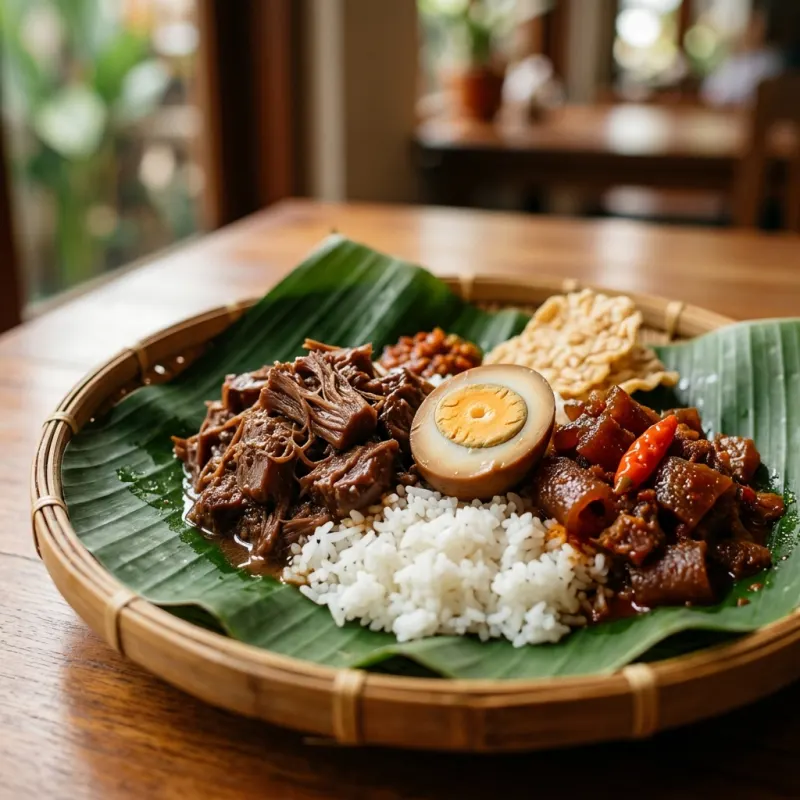
A traditional serving of Gudeg on a banana leaf

Must Try Dish

Gudeg is a traditional Javanese slow-cooked jackfruit stew simmered in coconut milk and palm sugar. It offers a rich, sweet, and savory flavor profile, typically served with rice, egg, and spicy krecek.
Food Experiences Title Icon

Food
Experiences

Discover cooking classes, tastings and local food tours

No food experience found
Maya, the human travel expert at TravelingWiz, offering curated, non-AI expertise

Maya’s Final Checklist for Java

Logistics shouldn’t be the focus of your trip—the experience should. I’ve hand-vetted these essential partners to ensure your arrival, stay, and exploration are as smooth as an Athenian breeze.

Where to Stay

From boutique hotels to local apartments—compare thousands of options and find the perfect stay in the best neighborhood.

Air Travel

Getting there should be seamless. Compare the best routes and prices across top airlines to start your journey on the right note.

Local Guides

Connect with experts who know the destination best. Get personalized advice and insider tips to help you plan your perfect trip.

Travel Protection

The “Engineer’s” rule: always have a backup. Secure your trip with a plan that covers every “what if” and unexpected change.

Car Rentals

Explore at your own pace with total freedom. Compare reliable rental options and find the right vehicle for your adventure.

Visa Services

Don’t let paperwork slow you down. Get expert assistance with your application to ensure all your entry documents are in order.

FAQs

Many nationalities can obtain a Visa on Arrival (VoA) for tourism purposes, valid for 30 days and extendable once. Always check the latest regulations on the official Indonesian immigration website before traveling.
No, tap water is not safe to drink in Indonesia. Always consume bottled or filtered water, and use it for brushing your teeth as well.
The train network (KAI) is the most efficient, comfortable, and scenic way to travel between major cities like Jakarta, Bandung, Yogyakarta, and Surabaya. Domestic flights and buses are also available.
Modest dress is required. Both men and women should wear clothing that covers their shoulders and knees. Sarongs are often provided or available for rent at major sites like Borobudur and Prambanan.

Your Insights Matter

TravelingWiz grows through the stories of our community. If you’ve recently explored ,Java share your tips and stories to help us perfect our guides for the next traveler.

Related Articles

Check out our related articles and blog posts to learn even more about the destination.

No related articles found

Don’t Travel Alone

Share with your friends and family

Where should we send your offline card?

We hate spam just as much as you do

newsletter_consent *