Disclosure: This site contains affiliate links. We may earn a commission if you make a purchase, at no extra cost to you.

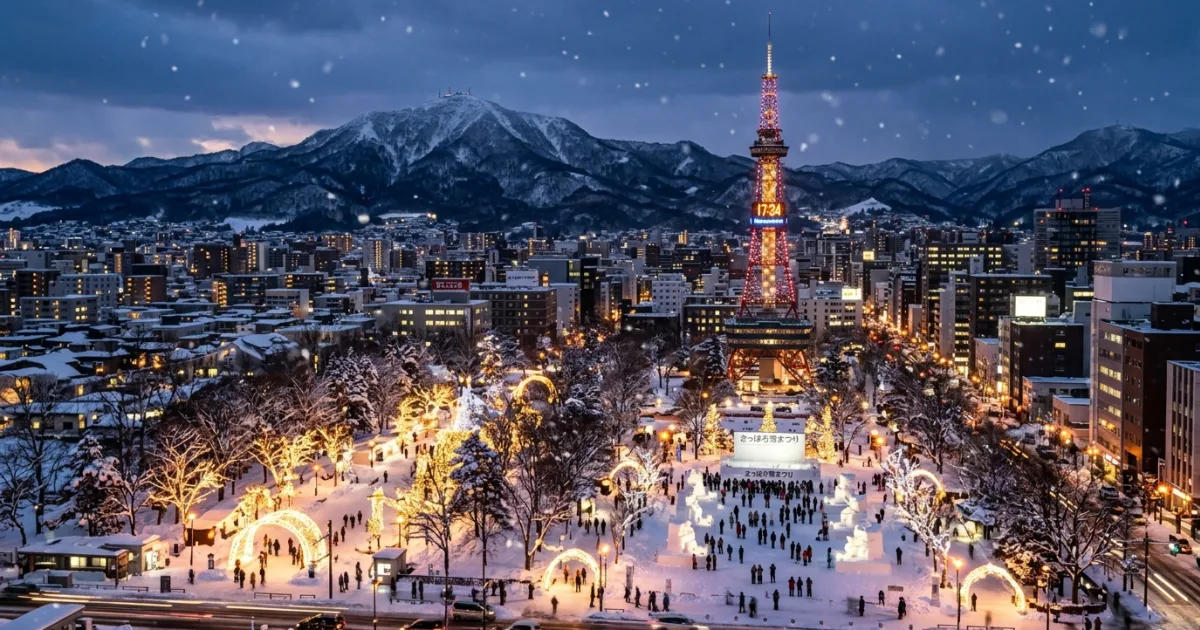
Panoramic twilight view of Sapporo featuring illuminated Odori Park and snow-covered mountains

Sapporo Overview & Key Highlights

Sapporo serves as the dynamic administrative and cultural capital of Hokkaido, anchored by an orderly grid layout designed during the Meiji era. Set against rugged alpine silhouettes, this northern metropolis balances wide tree-lined boulevards and expansive green spaces like Odori Park with bustling culinary corridors such as Susukino. The city functions as both a sophisticated urban hub and a launching pad for Hokkaido's untamed natural landscapes, offering exceptional culinary, cultural, and outdoor access across every season. Renowned worldwide for its legendary powder snow, Sapporo transforms into an international winter spectacle during the annual Sapporo Snow Festival. Conversely, the summer and autumn months deliver refreshingly temperate escapes characterized by lush beer gardens, vibrant farm-to-table dining, and accessible mountain hiking trails. From steaming bowls of rich miso ramen along Ganso Ramen Yokocho to restorative thermal soaks in nearby Jozankei Onsen, Sapporo provides a distinctly spacious, welcoming, and sensory-rich Japanese urban experience.

Sapporo Travel Guide: Logistics & In-Depth Tips

Sapporo stands apart from most historical Japanese castle cities due to its modern nineteenth-century inception. Established in 1869 when Hokkaido was officially integrated into modern Japan, foreign advisors—notably American educators and engineers—were invited to assist in planning the settlement. Consequently, the city features an American-style orthogonal grid plan centered around Odori Park, a broad green median that cleanly divides the city into northern and southern sectors. Today, with a population exceeding 1.9 million, Sapporo is the fifth-largest city in Japan, blending functional northern architecture with an unhurried, spacious civic demeanor.

Geographically nestled in the Ishikari Plain flanked by Mount Moiwa and Mount Teine, Sapporo experiences dramatic seasonal shifts that define daily life. Winters are characterized by roughly five meters of annual snowfall, transforming the landscape into a winter sports wonderland, managed through an extensive network of underground tunnels, covered shopping arcades, and heated roads. When the snow melts, the city explodes into lush greenery, supporting open-air terrace dining, vibrant craft breweries, and expansive botanical grounds that make it an extraordinarily liveable northern capital.

Reasons to Visit

  • World-Class Gastronomy: Home to signature miso ramen, fresh king crab, sea urchin rice bowls, Jingisukan barbecue, and creamy Hokkaido dairy products.
  • The Sapporo Snow Festival: One of the globe's premier winter celebrations, featuring colossal, illuminated snow and ice sculptures towering over Odori Park.
  • Temperate Summer Climate: Serves as an ideal coolcation destination, remaining comfortable, dry, and cool while central and southern Japan experience intense summer heat and humidity.
  • Exceptional Alpine & Hot Spring Proximity: Located minutes from premier ski slopes like Sapporo Teine and tranquil natural hot spring gorges such as Jozankei Onsen.
  • Seamless Urban Infrastructure: Enjoy barrier-free, weather-protected travel through the extensive Chi-Ka-Ho underground pedestrian network connecting major commercial districts.

Things to Avoid

  • Do Not Walk on Winter Ice Without Proper Tread: Avoid smooth leather-soled shoes or high heels between December and March; falling on packed black ice is the leading cause of tourist injuries.
  • Do Not Litter on City Streets: Public trash cans are scarce throughout Japan; always carry a small plastic bag for personal refuse until returning to your hotel room or convenience store bin.
  • Do Not Smoke While Walking Outdoors: Street smoking is banned in designated city zones, including central Odori and Susukino; smoke exclusively inside sealed smoking booths.
  • Avoid Late Midnight Subway Travel: The Sapporo Municipal Subway ceases operations shortly after midnight; ensure you schedule return transit or prepare for taxi fares if lingering late in Susukino.

Local Transportation Tips

Navigating Sapporo is intuitive and efficient thanks to its strict grid-based addressing system and well-connected transit infrastructure. The Sapporo Municipal Subway operates three lines—Namboku (Green), Tozai (Orange), and Toho (Blue)—which intersect at Odori Station and connect the main residential, administrative, and entertainment hubs. Standard IC cards such as Kitaca, Suica, and Pasmo tap seamlessly across turnstiles, and visitors can take advantage of discounted subway day passes on weekends.

Above ground, a historic streetcar (tram) loop circles the southwest sector of the city, providing charming, scenic access to Mount Moiwa ropeway connections. In central Sapporo, the vast Chi-Ka-Ho underground walkway links Sapporo Station directly to Odori and Susukino across nearly two kilometers of climate-controlled, pedestrian-only space, allowing travelers to comfortably walk the city center regardless of freezing temperatures or summer rainfall.

Travel Etiquette

  • Escalator Protocol: Stand on the left side of escalators to allow active walkers to pass on the right, adhering to standard Hokkaido and eastern Japan custom.
  • Onsen and Sento Etiquette: Thoroughly wash and rinse your body at the seated shower stations before stepping into communal hot spring baths; tattoos should be concealed with waterproof patches where required.
  • Indoor Footwear Separation: Remove outdoor footwear immediately upon stepping into traditional ryokans, izakayas with tatami seating, or historic wooden temples, switching into provided house slippers.
  • Queueing Respect: Wait in single-file orderly lines behind marked pavement zones when waiting for subways, trams, and bus doors to open.

Recommended Age Group

Sapporo's flat terrain, modern infrastructure, and diverse seasonal activities make it universally appealing, though winter demands specific precautions for the youngest and oldest travelers.

  • Babies (0-2 years): Neutral. Sapporo provides clean, family-friendly nursing rooms in major stations and department stores, but navigating heavy snowdrifts and icy sidewalks with strollers in midwinter is impractical.
  • Kids (3-12 years): Recommended. Children thoroughly enjoy the interactive snow parks, the Moerenuma Park glass pyramid, the hands-on displays at the Shiroi Koibito Chocolate Factory, and the Takino Suzuran Hillside Park.
  • Teens (13-19 years): Recommended. Teenagers will appreciate the accessible ski and snowboarding hills, bustling pop-culture shopping districts, manga stores, and unique food scenes like soup curry and ramen alleys.
  • Adults (20-64 years): Recommended. An optimal destination for active exploration, vibrant culinary circuits, craft beer gardens, onsen relaxation, and mountain trekking.
  • Seniors (65+ years): Recommended. Highly accessible during spring, summer, and autumn due to flat walking paths, elevators across public transit, and barrier-free access; winter visits require extra caution regarding icy surfaces.

Accessibility Level: Medium

  • Subway Barrier-Free Access: Every station on the Sapporo Municipal Subway network is equipped with multi-functional elevators, dedicated wheelchair gates, and tactile paving for visually impaired travelers.
  • Climate-Controlled Walkways: The extensive Chi-Ka-Ho subterranean promenade features level, smooth flooring with zero grade changes, multiple street-level elevator lifts, and accessible public restrooms throughout.
  • Low-Floor Streetcars: The Sapporo streetcar system includes modern low-floor 'Sirius' and 'Polaris' tram models with wide boarding platforms, permitting roll-on access for wheelchairs and strollers.

Did You Know?

Sapporo's iconic Odori Park was originally constructed in 1871 not as a decorative leisure garden, but as a massive 105-meter-wide firebreak designed to prevent urban blazes from spreading between the administrative northern zone and the residential southern sector of the developing frontier city.

Cool Statistics

  • Snowfall Record: Sapporo receives an average of 597 centimeters (approx. 20 feet) of snow annually, making it one of the snowiest major metropolitan areas on Earth.
  • Underground Network: The Chi-Ka-Ho underground corridor stretches over 1.9 kilometers (1.2 miles), creating one of Japan's longest continuous subterranean shopping and walking networks.
  • Beer Brewing Legacy: Sapporo Brewery, founded in 1876, is the oldest existing beer brand in Japan.


Address:

Sapporo, Japan

Find Nearby Accommodations

Basic Info

address icon

COUNTRY & Region

Japan,
Asia

ACCESSIBILITY LEVEL​

Medium
Currency icon

LOCAL CURRENCY​

Japanese Yen (JPY)
Price level icon
Medium
Safety Level icon

SAFETY LEVEL

Duration icon

Recommended Duration

• 1-7 days

Electricity

electricity icon

Electricity

100-110V, 
50Hz
Plug Socket icon

Plug Type

• Type A (Flat blade)
• Type B (Flat blade with grounding pin)
Plug types
Click To View Plug Types
Sapporo is part of our
Accessible Travel collection

Activities To Do In Sapporo

Best Time To Visit Sapporo

Sapporo delivers dramatic seasonal variations, making timing central to your travel focus.

  • Winter (December to March): Prime season for winter sports enthusiasts and festival-goers, with peak crowds arriving in early February for the Sapporo Snow Festival. Sub-zero temperatures and heavy snowfall are standard.
  • Summer (June to August): The premier 'Coolcation' season in Japan, offering pleasant temperatures around 20°C to 26°C without the oppressive humidity found on Honshu, complemented by the Odori Park Beer Garden.
  • Autumn (September to November): Crisp mountain air and spectacular fall foliage across Jozankei and Maruyama Park, accompanied by abundant autumn harvest food festivals.
  • Spring (April to May): Late-blooming cherry blossoms arriving in early May, though early spring can feature muddy snowmelt conditions.

Average Temperatures Per Month

Remember to check the weather forecast a few days before the trip and before heading to the airport.

Safety Level icon

Safety Level

Sapporo ranks among the safest urban destinations globally, with exceptionally low rates of violent and petty crime. The primary hazard is physical: icy, compacted pavements between December and March can lead to severe slips; exercise caution, walk flat-footed ('penguin walk'), and install slip-on rubber spikes on shoe soles. Susukino features vibrant nightlife where touts may occasionally solicit foreigners; politely ignore street touts and avoid entering establishments without clearly posted bilingual menus and price lists.

The rating is based on multi-year peace, crime, and security indices. Before you go, always verify current conditions through official government travel advisories.

Emergency Numbers

Police: 110
Ambulance: 119

No internet needed • Includes local translations • Free for TravelingWiz readers

Spoken Languages

Japanese (English is widely signed in transit networks, hotels, and major tourist hubs).

Learn The Language

  • Konnichiwa: Hello
  • Arigatou gozaimasu: Thank you very much
  • Sumimasen: Excuse me / Pardon
  • Kore wa ikura desu ka?: How much is this?
  • O-kaikei o onegaishimasu: Check/bill, please
  • Eigo ga hanasemasu ka?: Do you speak English?
  • Tasukete kudasai: Please help me
  • Doko desu ka?: Where is [it]?
Travel Booking Partner - TravelingWiz

Trip Cost & Budgeting for Sapporo, 2026

Everything you need to know about money while traveling
Is Sapporo expensive for tourists in 2026? While Japan has a reputation for high costs, Sapporo remains moderate and offers great value. Based on Human Verified prices, you can expect to pay around 767 JPY for a cappuccino, 675 JPY for a pint of domestic beer, and 2,250 JPY for a mid-range restaurant meal. Use the data table below to calculate your specific daily budget based on your travel style.
Currency icon

LOCAL CURRENCY​:

Japanese Yen (JPY)
Price level icon
Medium
Credit cards are widely accepted in major hotels and stores, but cash is still needed for small ramen shops.

Per person, per day – pocket cash for small purchases.

Local: 2000
Japanese Yen (JPY)
≈ 13 USD

Full daily spend estimation (accommodation, food, transportation, attractions).

Travel Style
Japanese Yen (JPY)
≈ USD ($)
Budget
11000
70
Mid-range
20000
127
Comfort
44000
279

The Prices, Daily costs, and calculator results are estimates for planning purposes only. Actual costs may vary based on season, booking timing, personal spending habits, and currency fluctuations. TravelingWiz cannot be held responsible for discrepancies between these estimates and your final trip expenses.

  • • Load a contactless IC card (such as Kitaca or Suica) with cash for quick payments on subways, buses, and convenience stores.
  • • Eat lunch at local ramen alleys and soup curry spots for delicious, authentic meals under 1,500 JPY.
  • • Purchase a weekend One-Day Subway Pass (Donchika Ticket) to save money on unlimited city transit.
  • • Grab quick breakfasts, coffee, and fresh snacks at Seicomart, Hokkaido's beloved discount convenience store chain.

Pre-Order Tickets

Avoid disappointment when tickets sell out — and skip the long lines by booking online in advance. You’ll often save up to 20% too.
Save up to 20%

Travel Discounts & Coupons

Save on hotels, attractions, transport, and gear — find verified discounts for smarter travel spending.
Verified Coupons

What To Pack

  • Winter Gear: Thermal base layers (Merino wool or Heattech), heavy down parka, waterproof snow boots with deep traction treads, ice cleats (slip-on spikes available at local convenience stores), fleece-lined gloves, and touch-screen compatible mittens.
  • Summer & Shoulder Season: Lightweight layers, a windbreaker or light waterproof jacket for evening temperature drops, comfortable walking sneakers, and UV protection.
  • Everyday Essentials: Universal power adapter (Types A and B), coin purse for loose change, portable battery pack, and slip-on walking shoes for frequent removal at traditional restaurants and shrines.
We couldn't find tips for Sapporo.
If you got any, please share

Recommended Itineraries for Traveling to Sapporo

We couldn't find itineraries for Sapporo.
you can contact us for custom trip plan

Food & Drink Highlights

Local Food Overview

Hokkaido represents Japan's agricultural, dairy, and seafood powerhouse, with Sapporo serving as its epicenter of culinary innovation. The city is the birthplace of rich miso ramen, traditionally topped with butter, sweet corn, and tender char siu pork, as well as aromatic soup curry laden with regional root vegetables and tender chicken leg. Diners celebrate fresh seafood ranging from sweet red king crab and sea urchin (uni) to briny salmon roe (ikura) over rice at Nijo Market. Dining culture also embraces Jingisukan—savory grilled mutton seared over domed metal skillets alongside mountains of onions and cabbage—paired with crisp, locally brewed Sapporo Classic lager.
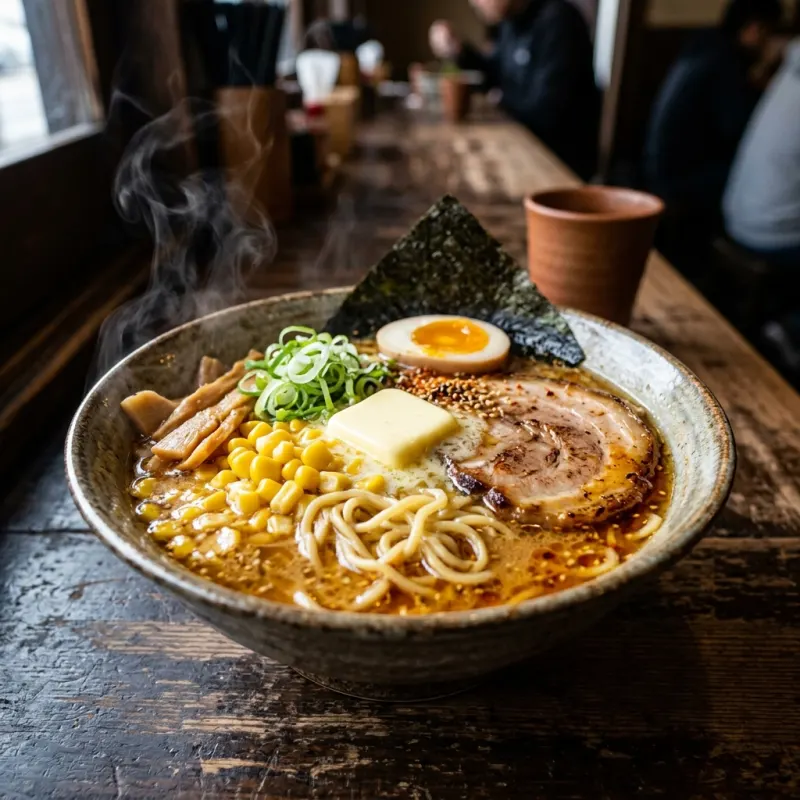
Authentic bowl of Sapporo Miso Ramen with pork belly, butter, and sweet corn

Must Try Dish

Sapporo Miso Ramen - Thick, wavy egg noodles submerged in an intensely rich broth crafted from roasted miso paste, pork bone stock, and lard. Garnished with tender braised pork belly, crisp bean sprouts, sweet local corn, and Hokkaido butter, this iconic dish was engineered to insulate and warm diners against sub-zero northern winters.
Food Experiences Title Icon

Food
Experiences

Discover cooking classes, tastings and local food tours

No food experience found
Maya, the human travel expert at TravelingWiz, offering curated, non-AI expertise

Maya’s Final Checklist for Sapporo

Logistics shouldn’t be the focus of your trip—the experience should. I’ve hand-vetted these essential partners to ensure your arrival, stay, and exploration are as smooth as an Athenian breeze.

Where to Stay

From boutique hotels to local apartments—compare thousands of options and find the perfect stay in the best neighborhood.

Air Travel

Getting there should be seamless. Compare the best routes and prices across top airlines to start your journey on the right note.

Local Guides

Connect with experts who know the destination best. Get personalized advice and insider tips to help you plan your perfect trip.

Travel Protection

The “Engineer’s” rule: always have a backup. Secure your trip with a plan that covers every “what if” and unexpected change.

Car Rentals

Explore at your own pace with total freedom. Compare reliable rental options and find the right vehicle for your adventure.

Visa Services

Don’t let paperwork slow you down. Get expert assistance with your application to ensure all your entry documents are in order.

FAQs

A stay of 3 to 4 days is ideal to experience Sapporo’s urban core, museums, and distinct food scene, while also allowing time for a relaxing day trip to Otaru or Jozankei Onsen.
Yes. Transit signage, municipal subways, JR trains, and tourist information centers offer comprehensive English information, and translation apps easily bridge any gaps at smaller izakayas.
The JR Rapid Airport train connects New Chitose Airport directly to Sapporo Station in approximately 37 minutes, departing every 12 minutes.
Absolutely. Sapporo is renowned as a premier ‘Coolcation’ haven, remaining significantly cooler and less humid than Tokyo or Osaka, featuring vibrant outdoor parks and extensive open-air beer gardens.
Yes. Pavements are covered in packed snow and treacherous black ice from December to March; insulated waterproof boots with deep treads or rubber ice grips are essential for safety.

Your Insights Matter

TravelingWiz grows through the stories of our community. If you’ve recently explored ,Sapporo share your tips and stories to help us perfect our guides for the next traveler.

Related Articles

Check out our related articles and blog posts to learn even more about the destination.

No related articles found

Don’t Travel Alone

Share with your friends and family

Where should we send your offline card?

We hate spam just as much as you do

newsletter_consent *