Abashiri serves as the cultural and logistical anchor of the Sea of Okhotsk coastline in Eastern Hokkaido. Geographically sheltered by volcanic peaks and fringed by vast brackish lakes, it played a pivotal role in the modernization and territorial mapping of northern Japan during the Meiji period. Today, the town presents an intriguing balance between frontier history and extreme seasonal geography, captivating domestic and international voyagers who arrive to witness the frozen ocean currents carrying pack ice southward from Siberia.
Aside from its celebrated icy winters, Abashiri anchors an ecologically diverse biome spanning Lake Abashiri, Lake Notoro, and Lake Tofutsu. These sanctuaries host thousands of migrating whooper swans, white-tailed sea eagles, and rare coastal waterfowl. Paired with geothermal onsen springs, thriving agricultural plateaus, and direct highway corridors connecting to the UNESCO-listed Shiretoko Peninsula, Abashiri stands out as one of Hokkaido's most rewarding northern frontiers.
Reasons to Visit
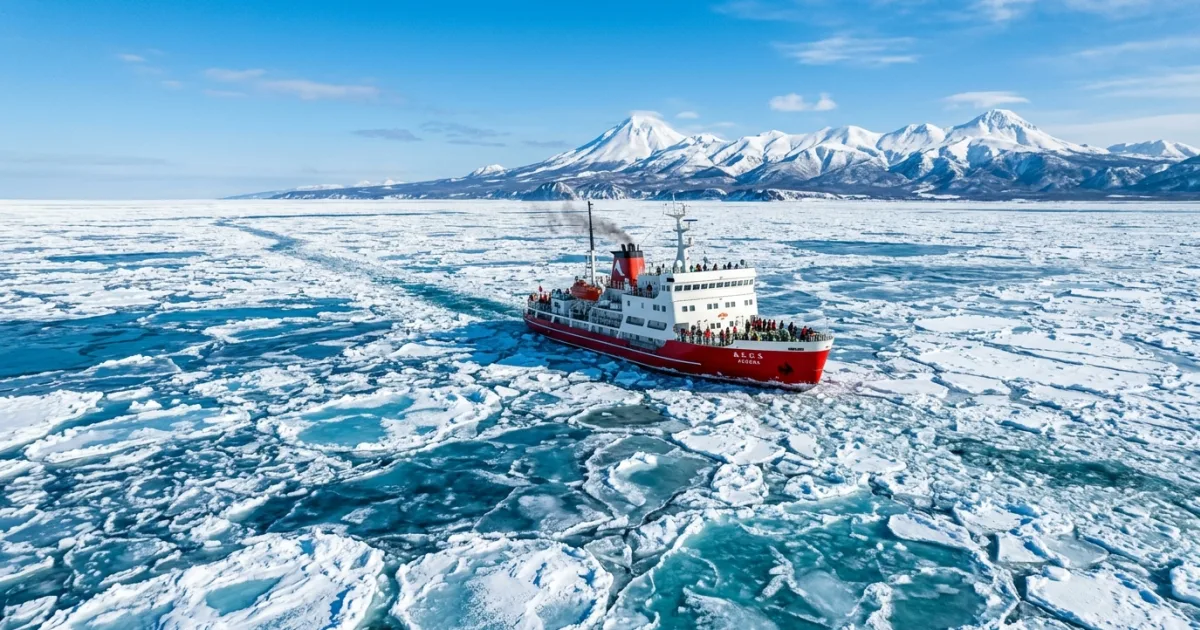
- Witness the majestic natural spectacle of drift ice breaking aboard the icebreaker ship Aurora.
- Explore the historically preserved wooden radial cell houses of the open-air Abashiri Prison Museum.
- Experience panoramic 360-degree views across Mount Tento overlooking the Sea of Okhotsk and distant Shiretoko mountain ranges.
- Feast on freshly harvested Okhotsk king crab, sea urchin, and Hokkaido scallops straight from coastal fishing ports.
- Observe crimson glasswort carpets at Lake Notoro and migrating swans at Lake Tofutsu.
Things to Avoid
- Avoid venturing onto ocean drift ice independently from beaches; floating ice sheets can detach rapidly and cause fatal cold-water immersion.
- Do not rely entirely on public buses during off-peak seasons without verifying return timetables, as rural services are infrequent.
- Avoid driving without winter winterized snow tires and all-wheel drive during blizzards and ice storms.
- Do not arrive at popular drift ice boat departures without pre-booked tickets during February peak weekends.
Local Transportation Tips
Abashiri is traversed primarily by regional JR Senmo Main Line trains and Abashiri Kanko buses linking central Abashiri Station with Mount Tento attractions, the icebreaker port, and Lake Abashiri. While local buses operate steadily throughout the winter drift ice festival period, hiring a rental car from Memanbetsu Airport or downtown Abashiri remains the most versatile method for exploring regional coastlines, national park viewpoints, and neighboring Shiretoko.
Travel Etiquette
- Remove your shoes when entering traditional ryokans, historical indoor museum pavilions, and tatami-matted dining spaces.
- Observe traditional onsen bathing customs: wash thoroughly with soap before entering thermal mineral pools and tie up long hair.
- Dispose of all trash in designated receptacles or carry it back to your accommodation, as public garbage bins are rare along Japanese nature routes.
- Do not photograph working prison facilities; ensure you are within the designated Abashiri Prison Museum park rather than the active modern penitentiary.
Recommended Age Group
Abashiri provides compelling educational and outdoor experiences across multiple generations, though sub-zero winter temperatures require tailored planning.
- Babies (0-2 years): Neutral. Deep winter freezing winds can be harsh for infants, though indoor museums and thermal hot spring hotels remain welcoming.
- Kids (3-12 years): Recommended. Children love the thrilling crunch of the Aurora icebreaker ship, seal spotting, and interactive frozen ice displays at the Okhotsk Ryuhyo Museum.
- Teens (13-19 years): Recommended. Older youth appreciate the escape-artist legends of the Abashiri Prison, Golden Kamuy manga cultural references, and ice fishing.
- Adults (20-64 years): Recommended. Perfect for scenic nature photography, seafood gastronomy, road trips, and cultural exploration.
- Seniors (65+ years): Recommended. Excellent access via heated tour buses, panoramic sightseeing decks, accessible scenic viewpoints, and relaxing onsen resorts.
Accessibility Level: Medium
- The Aurora icebreaker cruise terminal and main passenger vessel features ramp access and elevator service to main viewing decks.
- The Okhotsk Ryuhyo Museum on Mount Tento provides full wheelchair accessibility, elevators, and smooth paved corridors.
- The historical Abashiri Prison Museum features paved main pathways, though certain heritage wooden prison structures have raised door thresholds and gravel paths.
- Memanbetsu Airport and JR Abashiri Station feature step-free facilities, elevators, and accessible restroom amenities.
Did You Know?
Abashiri is the southern limit of the Northern Hemisphere's drifting sea ice, where freshwater runoff from Russia's Amur River lowers seawater salinity, enabling thick ice sheets to freeze and float hundreds of kilometers south to Hokkaido's northern coast.
Cool Statistics
- Over 500,000 visitors journey to Abashiri annually to experience coastal drift ice and frontier heritage.
- The Abashiri Prison Museum features a radial five-wing cellhouse built in 1912, modeled directly after Belgium's Louvain Prison.
- Winter temperatures in Abashiri regularly drop below -15°C (5°F) during January and February ice-viewing seasons.






Buy a compatible power adapter for your trip