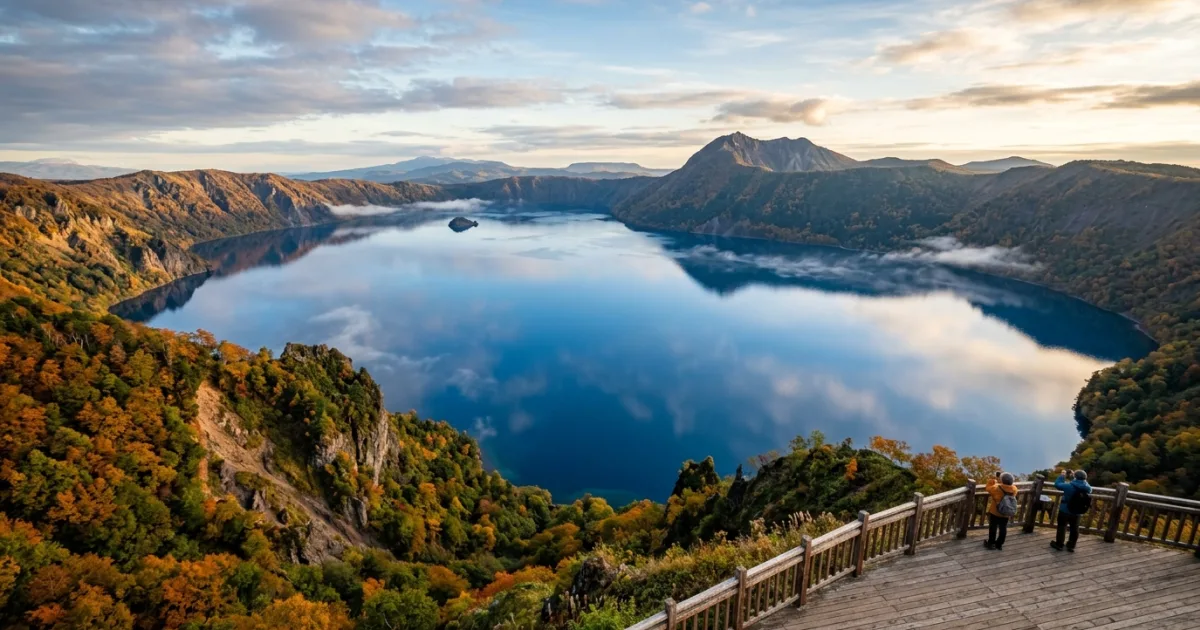
Akan-Mashu National Park occupies over 90,000 hectares of rugged volcanic terrain across Eastern Hokkaido. Formed by colossal caldera collapses thousands of years ago, the region encompasses three major caldera lakes: Lake Akan, Lake Mashu, and Lake Kussharo. Each body of water maintains distinct hydrological characteristics. Lake Kussharo is the largest caldera lake in Japan and features natural hot spring beaches where steam rises from the sand. Lake Mashu, contained within sheer cliff walls rising hundreds of meters, boasts some of the clearest water in the world and has no river outlets or inlets. Lake Akan sits flanked by active volcanoes, Mount Meakan and Mount Oakan, supporting rare ecological wonders such as marimo algae balls.
Beyond its geological drama, the region is a spiritual heartland. Lake Akan holds Hokkaido's largest existing Ainu community at Ainu Kotan, where indigenous traditions continue through vibrant performances, wood carving studios, and cultural education centers. The park's geothermal veins feed numerous historic hot spring towns, including Kawayu Onsen, known for its strongly acidic, therapeutic sulfuric waters. Akan Mashu offers travelers an exceptionally well-preserved glimpse into Hokkaido's untamed natural core, free from the crowded tourist corridors of southern Japan.
Reasons to Visit
- Gaze into the intense sapphire waters of Lake Mashu from high-altitude observation decks.
- Experience deep relaxation in the mineral-rich geothermal waters of Kawayu Onsen and Lake Akan Onsen.
- Witness raw planetary energy at Mount Io, where active fumaroles hiss and deposit bright yellow sulfur crystals.
- Immerse in indigenous Ainu craft, music, and theater within the preserved Lake Akan Ainu Kotan.
- Hike the dynamic, moon-like volcanic ridge of Mount Meakan for sweeping views over active steam vents and primeval forests.
Things to Avoid
- Do not attempt to scramble down the crater cliffs of Lake Mashu, as access to the lakeshore is strictly forbidden and heavily fined for environmental conservation.
- Do not approach wild animals, particularly Ezo brown bears or deer, or feed them from vehicle windows along park roads.
- Do not wear silver jewelry into hot spring baths around Kawayu Onsen, as high sulfur and acid levels will instantly tarnish metal.
- Do not rely entirely on public buses during late autumn and winter when seasonal lines cease operation.
Local Transportation Tips
A rental car equipped with GPS is the most practical and flexible method for exploring Akan Mashu. Highways are wide, well-maintained, and boast clear English road signs. Major entry points include Kushiro Airport, Memanbetsu Airport, and JR Mashu Station. Local Akan Bus lines connect central hubs such as Kushiro City and Lake Akan, while seasonal tourist loop buses serve Lake Mashu and Mount Io during peak summer months. Winter travel requires four-wheel-drive vehicles with studless snow tires due to heavy snowfall and black ice on mountain passes.
Travel Etiquette
- Follow strict Japanese onsen etiquette: wash and rinse thoroughly at washing stations before entering communal bath waters, and keep hair tied up.
- Respect sacred Ainu sites and artifacts; ask for permission before photographing craftsmen or ceremonial performances in Ainu Kotan.
- Practice Leave No Trace principles on hiking trails by carrying all personal trash back to your accommodation, as wilderness garbage bins are intentionally absent.
- Observe drone flight regulations, which require prior official authorization from the Ministry of the Environment before flying within the national park.
Recommended Age Group
Akan Mashu provides memorable outdoor adventures, though suitability varies according to physical endurance and logistical needs.
- Babies (0-2 years): Neutral. Caldera viewpoints and lakeside town walks are manageable with strollers, but remote medical facilities and long drives between towns require extra planning.
- Kids (3-12 years): Recommended. Children enjoy interactive lakeside boat cruises, natural footbaths along sandy beaches at Lake Kussharo, and easy woodland trails.
- Teens (13-19 years): Recommended. Excellent terrain for active mountain hiking, canoeing on caldera lakes, and learning about active vulcanology and Ainu heritage.
- Adults (20-64 years): Recommended. Perfect balance of scenic driving, rugged mountain trekking, immersive wellness onsen retreats, and photography.
- Seniors (65+ years): Recommended. Most prime viewpoints feature barrier-free wooden boardwalks and vehicle pull-offs, complemented by relaxing traditional hot spring accommodations.
Accessibility Level: Medium
- Observation decks at Lake Mashu (Deck 1) and Lake Akan lakeside promenades feature ramped access and paved barrier-free paths.
- Mount Io visitor center offers flat wheelchair-accessible boardwalks leading up to the lower geothermal viewing areas.
- Backcountry alpine hiking trails around Mount Meakan and Nishibetsu are rugged, steep, and unsuitable for travelers with mobility limitations.
Did You Know?
Lake Mashu is celebrated in Japanese folklore as 'Foggy Lake Mashu' (Kiri no Mashu), and local legend whimsically states that if an unmarried traveler views the lake surface completely clear of fog, their wedding will be significantly delayed.
Cool Statistics
- Lake Mashu recorded a historic water clarity depth of 41.6 meters, rivaling Russia's Lake Baikal for the clearest lake in the world.
- Lake Kussharo has a perimeter of 57 kilometers, making it Japan's largest caldera lake by surface area.
- The national park contains over 800 plant species and forms a crucial habitat for the endangered Blakiston's fish owl.






Buy a compatible power adapter for your trip