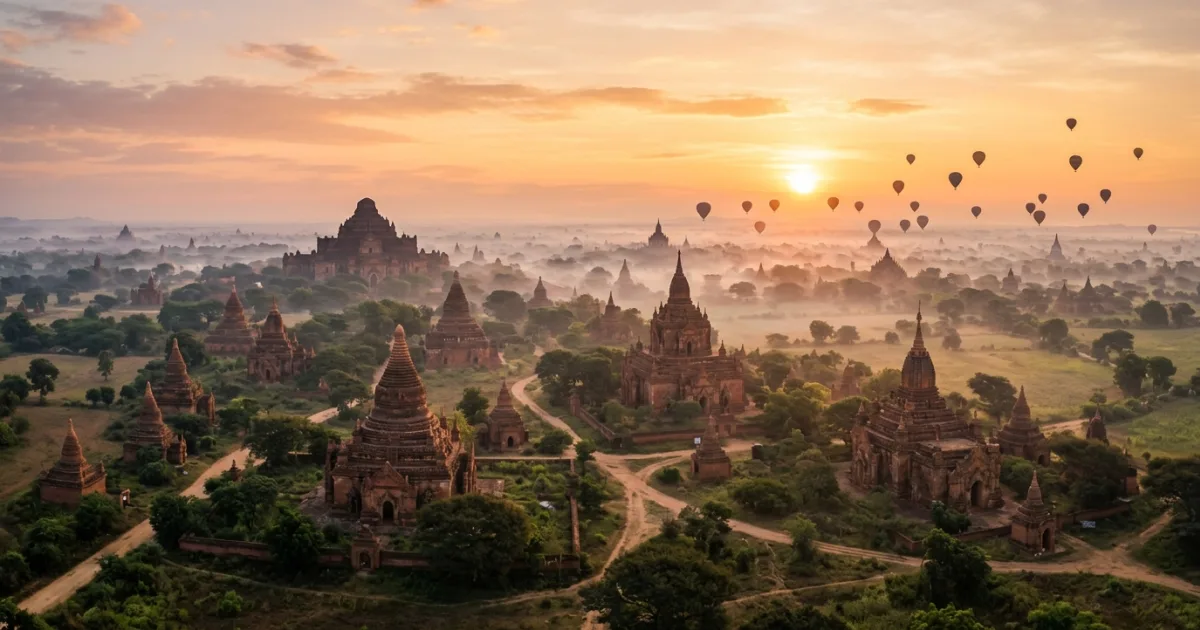
Central Myanmar forms the geographical and spiritual nucleus of the country, defined by the sweeping waters of the Ayeyarwady River and the vast archaeological plains of Bagan. This arid expanse, often referred to as the Dry Zone, preserves the tangible remnants of successive royal kingdoms spanning over a millennium, from the classical monuments of the Bagan Empire to the last royal capital at Mandalay.
Beyond its monumentality, the region showcases daily Burmese Buddhist life, characterized by morning alms collections, intricate gold-leaf and woodcarving craftsmanship, and serene river commerce. While current logistical and political considerations require thorough preparation, Central Myanmar remains one of Southeast Asia's most visually and culturally profound landscapes.
Reasons to Visit
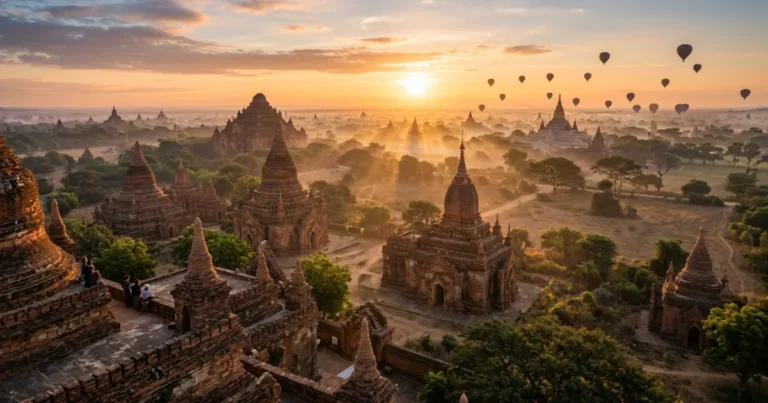
- Explore thousands of 11th- to 13th-century brick temples and pagodas dotting the archaeological plains of Bagan.
- Witness sunrise over U Bein Bridge in Amarapura, the world's longest and oldest teakwood footbridge.
- Experience traditional Burmese Buddhist heritage and scholastic monastic life around Mandalay Hill and Sagaing.
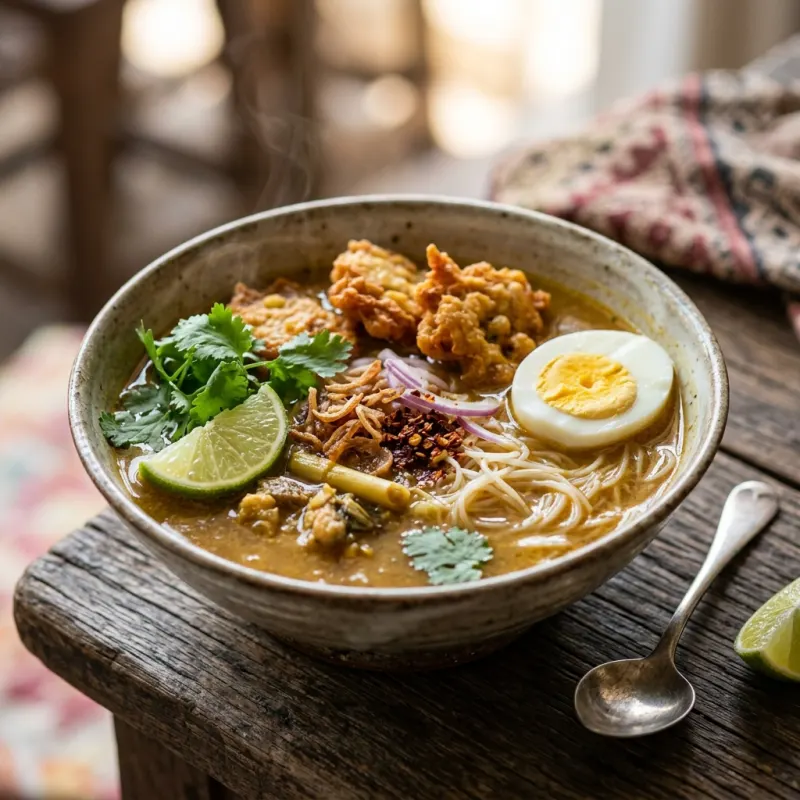
- Sample regional culinary treasures such as authentic Mohinga and fermented tea leaf salad at lively morning markets.
- Observe traditional artisanal crafts including lacquerware production in Myinkaba and marble carving near Mahamuni Pagoda.
Things to Avoid
- Do not wear revealing clothing, short shorts, or sleeveless tops inside religious grounds or monastery complexes.
- Avoid touching the head of any local person or pointing your feet toward monks, Buddha statues, or elders.
- Do not climb onto ancient stupas or brick ruins under any circumstances.
- Avoid photographing police officers, military personnel, checkpoints, or government facilities.
- Do not drink tap water; use purified bottled water or reverse-osmosis filtered water stations.
Local Transportation Tips
Travel between major hubs in Central Myanmar relies on express private air-conditioned coaches, river ferries, or domestic flights connecting Mandalay and Nyaung-U (Bagan). Within Bagan, silent electric bicycles (e-bikes) provide the most flexible and eco-friendly method for navigating sandy temple trails. In Mandalay, ride-hailing apps like Grab, motorized three-wheeled tuk-tuks, and motorbike taxis are common for city travel.
Travel Etiquette
- Remove shoes and socks before setting foot on any monastery or pagoda grounds.
- Receive and present items using your right hand, supported gently at the wrist or elbow by your left hand.
- Greet monks with a subtle bow of the head and avoid sitting higher than ordained monastic members.
- Refrain from public displays of affection in conservative village and temple areas.
Recommended Age Group
Central Myanmar offers profound historic and cultural rewards but demands physical endurance and patience given regional climatic conditions and modest infrastructure.
- Babies (0-2 years): Not Recommended. Extreme heat, uneven sandy pathways, scarce medical infrastructure, and pervasive dust present significant challenges for infants.
- Kids (3-12 years): Neutral. Children interested in history and cycling may enjoy e-biking through Bagan, though long drives and oppressive midday temperatures require careful pacing.
- Teens (13-19 years): Recommended. Teenagers generally embrace e-bike exploration, rich archaeological ruins, photography, and distinctive food markets.
- Adults (20-64 years): Recommended. Independent and culturally focused adult travelers will find the ancient architecture, artisan workshops, and landscape photography deeply engaging.
- Seniors (65+ years): Neutral. Uneven steps, barefoot temple walking on hot tiles, and limited healthcare access make travel physically demanding unless organized through private vehicular tours.
Accessibility Level: Medium
- Temple complexes and archaeological sites in Bagan consist primarily of sandy roads, steep staircases, and raised thresholds with virtually no ramp infrastructure.
- Footwear must be removed at pagodas, which requires walking barefoot on uneven stone or scorching sunlit tiles.
- Modern international hotels in Mandalay provide step-free access and elevators, but street pavements are uneven and lack drop curbs.
- Arranging private chartered vans with dedicated drivers offers the most accessible transit method across the region.
Did You Know?
Bagan contains over 2,200 surviving Buddhist temples, stupas, and monasteries constructed between the 9th and 13th centuries, marking one of the dense archaeological concentrations on earth.
Cool Statistics
- Over 2,200 cataloged historical brick monuments survive across the Bagan Archaeological Zone.
- U Bein Bridge spans 1.2 kilometers (0.75 miles) across Taungthaman Lake, supported by more than 1,000 teak pillars.
- Mandalay Hill rises 240 meters above the central river plain, providing panoramic vistas of the royal palace walls and the Shan Hills.







Buy a compatible power adapter for your trip