Disclosure: This site contains affiliate links. We may earn a commission if you make a purchase, at no extra cost to you.

>
>
>
>
Manang
Panoramic view of Manang village beneath snow-capped Annapurna peaks in Nepal

Manang Overview & Key Highlights

Manang sits at an elevation of 3,519 meters (11,545 feet) in the broad glacial valley of the Marshyangdi River, framed directly beneath the towering northern ramparts of the Annapurna massif. As the traditional capital and primary acclimatization settlement along the legendary Annapurna Circuit trek, this ancient village bridges lush Himalayan foothills with the arid, Tibetan-influenced rain shadow of northern Nepal. Flat-roofed stone dwellings, fluttered prayer flags, and centuries-old chortens define the village layout, providing an atmospheric haven where mountaineers and trekkers rest before crossing the formidable Thorong La pass. Travelers primarily spend multiple days here adjusting their physiology while exploring high-altitude side trails to glacial viewpoints, cave hermitages, and high alpine lakes. From watching the early morning alpenglow illuminate Gangapurna glacier to sampling fresh Himalayan sea buckthorn juice in cozy wood-stove warmed tea houses, Manang provides a rich blend of raw wilderness and ancient Buddhist heritage. Beyond its trekking utility, the village preserves an independent Gurung and Manangi trading culture with deep roots extending across trans-Himalayan trade routes.

Manang Travel Guide: Logistics & In-Depth Tips

Manang holds a storied position in the trans-Himalayan trade network that historically linked the salt plains of Tibet with the agricultural lowlands of the subcontinent. Situated within the dry upper valley of the Marshyangdi, the village presents a striking contrast to the lush subtropical valleys crossed in the lower Annapurna foothills. The traditional architecture is uniquely adapted to high-altitude winds and seasonal snowfall, featuring compact stone walls, mud plaster, flat roofs used for drying firewood and grains, and wooden ladders connecting tiered family compounds.

Today, Manang operates as the cultural and logistical epicenter of the upper district. While tourism has introduced modern bakeries, gear shops, and satellite connectivity, the heartbeat of the village remains rooted in Tibetan Buddhism. Ancient gompas like the 900-year-old Braga Monastery, located just twenty minutes down the valley, showcase priceless murals, clay statues, and ancient scriptures preserved through generations of isolated mountain winters.

Reasons to Visit

  • Spectacular panorama of the Annapurna Range, featuring unobstructed views of Annapurna II, III, IV, and the hanging glaciers of Gangapurna.
  • Essential acclimatization base camp with access to world-class high-altitude day treks like Kicho Tal (Ice Lake) and Milarepa Cave.
  • Authentic encounter with Manangi cultural heritage, Tibetan Buddhist gompas, and traditional stone village architecture.
  • Vibrant teahouse culture featuring fresh cinnamon rolls, local yak cheese, and warm communal wood stoves.
  • Unpolluted alpine night skies ideal for astrophotography and Milky Way stargazing.

Things to Avoid

  • Avoid skipping your acclimatization rest day in Manang; ascending too quickly above 3,500 meters significantly raises the danger of HAPE and HACE.
  • Do not drink untreated tap or stream water; always filter or chemically sterilize water.
  • Avoid walking on the downhill side of trails when encountering pack animals like yaks, dzo, or mules.
  • Do not display disrespect at religious sites; always walk clockwise around stupas, mani walls, and prayer wheels.
  • Avoid purchasing uninspected wildlife parts or unregulated antiques from unregulated trailside vendors.

Local Transportation Tips

Within Manang village, travel is conducted entirely on foot across stone alleys, dirt tracks, and suspension bridges. Between trailheads, pack horses and mules transport heavy duffels for trekkers. A rugged, unpaved mountain track links Manang to lower towns like Chame and Besisahar, serviced by shared four-wheel-drive Mahindra Bolero jeeps; this route is rough, prone to landslides during rains, and best utilized by travelers who have already acclimatized.

Travel Etiquette

  • Circumambulate all Buddhist monuments, mani stone walls, and chortens in a clockwise direction.
  • Always remove your trekking shoes before stepping inside monastery shrines, private homes, and temple sanctuaries.
  • Ask for permission before photographing local residents, particularly elderly villagers in traditional attire.
  • Keep public displays of romantic affection discreet out of respect for conservative mountain customs.

Recommended Age Group

Due to its extreme high-altitude location, rugged trails, and sub-zero nighttime temperatures, Manang is suited exclusively for physically prepared travelers.

  • Babies (0-2 years): Not Recommended. Severe risks of acute mountain sickness, rapid hypothermia, and lack of pediatric emergency care make traveling here unsafe for infants.
  • Kids (3-12 years): Not Recommended. The prolonged multi-day trekking requirement, extreme cold, and altitude risks are unsuitable for young children.
  • Teens (13-19 years): Recommended. Fit, active teenagers who enjoy wilderness hiking and adapt well to rugged rustic living will thrive on this adventure.
  • Adults (20-64 years): Recommended. Ideal for trekkers, mountaineers, photographers, and adventure travelers with good cardiovascular fitness.
  • Seniors (65+ years): Neutral. Older travelers who maintain robust mountain fitness and clear altitude travel with their doctor can manage well, though evacuation insurance is mandatory.

Accessibility Level: Low

  • Wheelchair accessibility is virtually nonexistent due to narrow stone paths, steep uneven slopes, boulder fields, and hanging suspension bridges.
  • Accommodations consist of rustic multistory wooden teahouses with narrow stairwells and lack elevators or barrier-free ramps.
  • Medical infrastructure is limited to a seasonal volunteer clinic; emergency evacuation is conducted almost solely by high-altitude helicopter.

Did You Know?

During the 18th century, the King of Nepal granted the people of Manang special customs and duty-free trading privileges across Southeast Asia. As a result, many Manangi families traveled extensively to Hong Kong, Bangkok, and Singapore as gem and herb merchants, making this remote Himalayan outpost surprisingly cosmopolitan long before western trekkers arrived.

Cool Statistics

  • Elevation: 3,519 meters (11,545 feet) above sea level.
  • Average annual rainfall: Less than 450 millimeters due to the rain-shadow effect of the Annapurnas.
  • Home to Braga Monastery (Bhraka Gompa), which dates back more than 900 years.
  • Location of the highest permanent altitude medical clinic in the Annapurna Conservation Area.

Address:

Manang, Nepal

Find Nearby Accommodations

Basic Info

address icon

COUNTRY & Region

Nepal,
Asia

ACCESSIBILITY LEVEL​

Low
Currency icon

LOCAL CURRENCY​

Nepalese Rupee (NPR)
Price level icon
Low
Safety Level icon

SAFETY LEVEL

Duration icon

Recommended Duration

• 1-7 days

Electricity

electricity icon

Electricity

220-240V, 
50Hz
Plug Socket icon

Plug Type

• Type C (Round pin)
• Type D (Three round pins in a triangular pattern)
• Type M (Three round pins, larger)
Plug types
Click To View Plug Types
Manang is part of our
Coolcation collection

Activities To Do In Manang

Best Time To Visit Manang

Manang experiences an alpine climate characterized by an arid rain-shadow effect, meaning it receives significantly less monsoon rain than the southern slopes of the Annapurnas, though transition seasons offer optimal conditions.

  • Spring (March to May): Daytime temperatures are mild, rhododendrons bloom lower on the approach trail, and passes are generally accessible with clear skies.
  • Autumn (September to November): The undisputed premier season with crisp, dust-free skies, extraordinary mountain visibility, and stable trail conditions.
  • Winter (December to February): Sub-zero cold dominates, heavy snowfall can block trail access to Thorong La, and many tea houses shut down for seasonal migration southward.
  • Monsoon (June to August): While Manang itself is drier than Pokhara, access roads and lower river valley trails are prone to severe landslides and washed-out suspension bridges.

Average Temperatures Per Month

Remember to check the weather forecast a few days before the trip and before heading to the airport.

Safety Level icon

Safety Level

Altitude sickness (Acute Mountain Sickness or AMS) is the single greatest hazard facing visitors in Manang, which sits well above the critical 3,000-meter threshold. Never ignore symptoms like persistent headaches, dizziness, or nausea; attend the daily afternoon altitude briefing hosted by the Himalayan Rescue Association (HRA) post in town. Always yield the mountain trail to yak caravans and mule trains by stepping onto the inner uphill wall of the cliff, never the drop-off side. Avoid sudden ascents without at least two nights spent acclimatizing in Manang before pushing upward to Yak Kharka or Thorong Phedi.

The rating is based on multi-year peace, crime, and security indices. Before you go, always verify current conditions through official government travel advisories.

Emergency Numbers

Police: 100
Ambulance: 102

No internet needed • Includes local translations • Free for TravelingWiz readers

Spoken Languages

Nepali, Manangi (Gurung dialect), English

Learn The Language

  • Namaste: Hello / Respectful greeting
  • Dhanyabad: Thank you
  • Subha bihani: Good morning
  • Tapaiko naam k ho?: What is your name?
  • Mero naam… ho: My name is…
  • Kati parcha?: How much does this cost?
  • Mitho cha: It is delicious
  • Pani: Water
Travel Booking Partner - TravelingWiz

Trip Cost & Budgeting for Manang, 2026

Everything you need to know about money while traveling
Is Manang expensive for tourists in 2026? No, Manang remains a budget-friendly Himalayan trekking destination, though high altitude adds a slight premium to goods. Expect to pay around 200 NPR for a coffee, 800 NPR for a domestic beer, and 900 NPR for a mid-range teahouse meal. Featuring Human Verified prices, daily expenses here stay surprisingly low compared to global mountain towns. Use the data table below to calculate your specific daily budget based on your travel style.
Currency icon

LOCAL CURRENCY​:

Nepalese Rupee (NPR)
Price level icon
Low
Credit cards are not accepted in Manang, so carrying sufficient Nepali cash is essential for all trail expenses.

Per person, per day – pocket cash for small purchases.

Local: 750
Nepalese Rupee (NPR)
≈ 38 USD

Full daily spend estimation (accommodation, food, transportation, attractions).

Travel Style
Nepalese Rupee (NPR)
≈ USD ($)
Budget
4150
19
Mid-range
7500
30
Comfort
16500
49

The Prices, Daily costs, and calculator results are estimates for planning purposes only. Actual costs may vary based on season, booking timing, personal spending habits, and currency fluctuations. TravelingWiz cannot be held responsible for discrepancies between these estimates and your final trip expenses.

  • • Order Dal Bhat at teahouses for free refills and maximum calories at a fixed price.
  • • Carry a solar charger and water purification tablets to avoid daily charging and bottled water fees.
  • • Purchase trail snacks, toiletries, and extra gear in Kathmandu or Besisahar to avoid altitude markups.
  • • Always eat meals where you sleep, as teahouses discount room rates when you purchase your meals there.

Pre-Order Tickets

Avoid disappointment when tickets sell out — and skip the long lines by booking online in advance. You’ll often save up to 20% too.
Save up to 20%

Travel Discounts & Coupons

Save on hotels, attractions, transport, and gear — find verified discounts for smarter travel spending.
Verified Coupons

What To Pack

  • High-SPF mineral sunscreen (SPF 50+) and polarized UV400 sunglasses to counter intense alpine glare.
  • Thermal merino wool base layers and a high-fill down jacket for freezing nighttime temperatures.
  • Acetazolamide (Diamox) and personal altitude medicine under physician guidance.
  • Water purification tablets or UV steripen, as bottled water sales are banned or restricted to curb plastic waste.
  • Sturdy, broken-in waterproof trekking boots with extra pairs of wool socks.
  • High-capacity portable power bank, as lodge charging ports often incur hourly fees or depend on fickle solar arrays.
  • Sufficient cash in Nepalese Rupees, as local ATMs are notoriously unreliable or frequently offline.
We couldn't find tips for Manang.
If you got any, please share

Recommended Itineraries for Traveling to Manang

We couldn't find itineraries for Manang.
you can contact us for custom trip plan

Food & Drink Highlights

Local Food Overview

Dining in Manang reflects the hearty demands of high-altitude life and the convergence of traditional Tibetan cuisine with classic Nepali staples. Meals are centered around complex carbohydrates and warming broths designed to sustain trekkers facing cold winds and strenuous climbs. Dal Bhat (steamed rice, spiced lentil soup, fermented leafy greens, and vegetable curry) remains the staple fuel, alongside Tibetan flatbreads, tingmo (steamed buns), thukpa (noodle soup), and momos (dumplings filled with local vegetables or minced yak meat). Notably, Manang is famous for its village bakeries, which turn out fresh apple pies and cinnamon rolls made from locally harvested Mustang and Manang apples, paired with tart, vitamin-rich sea buckthorn berry juice.
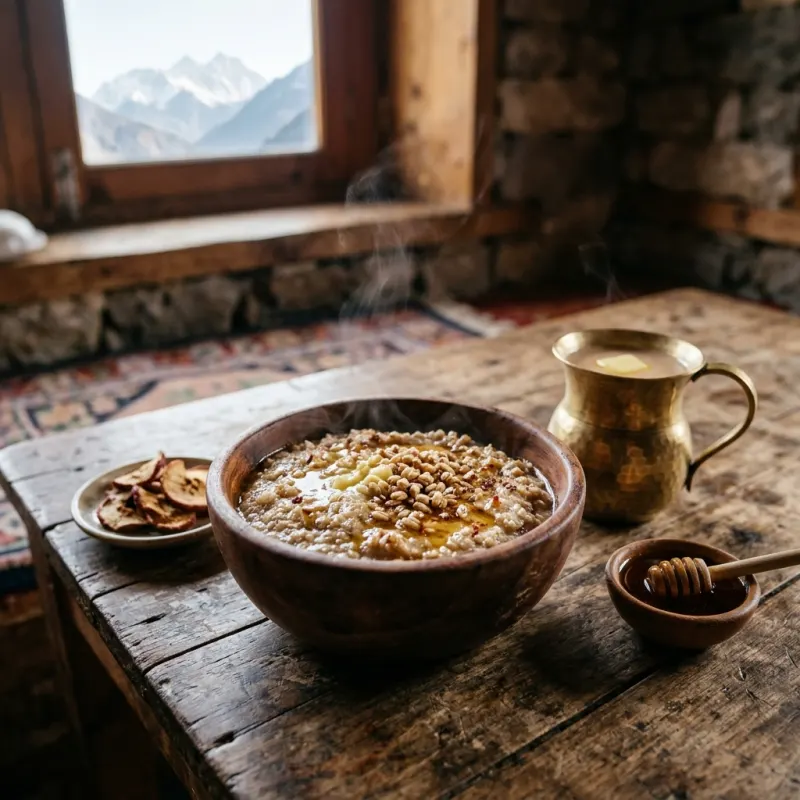
Bowl of Tibetan Tsampa roasted barley porridge with butter tea in Manang

Must Try Dish

Tibetan Tsampa Porridge - A hearty, traditional high-altitude staple made from roasted barley flour stirred into warm butter tea or fresh milk. It provides dense, sustained energy and warmth essential for acclimatizing to the rigorous Himalayan chill.
Food Experiences Title Icon

Food
Experiences

Discover cooking classes, tastings and local food tours

No food experience found
Maya, the human travel expert at TravelingWiz, offering curated, non-AI expertise

Maya’s Final Checklist for Manang

Logistics shouldn’t be the focus of your trip—the experience should. I’ve hand-vetted these essential partners to ensure your arrival, stay, and exploration are as smooth as an Athenian breeze.

Where to Stay

From boutique hotels to local apartments—compare thousands of options and find the perfect stay in the best neighborhood.

Air Travel

Getting there should be seamless. Compare the best routes and prices across top airlines to start your journey on the right note.

Local Guides

Connect with experts who know the destination best. Get personalized advice and insider tips to help you plan your perfect trip.

Travel Protection

The “Engineer’s” rule: always have a backup. Secure your trip with a plan that covers every “what if” and unexpected change.

Car Rentals

Explore at your own pace with total freedom. Compare reliable rental options and find the right vehicle for your adventure.

Visa Services

Don’t let paperwork slow you down. Get expert assistance with your application to ensure all your entry documents are in order.

FAQs

Manang is located at 3,519 meters (11,545 feet) above sea level. Trekkers on the Annapurna Circuit generally spend at least two consecutive nights here to let their bodies acclimatize before climbing toward the 5,416-meter Thorong La pass.
Yes, rugged four-wheel-drive jeeps navigate the unpaved mountain dirt road from Besisahar to Manang. However, driving directly to Manang drastically increases the risk of severe acute mountain sickness due to the rapid altitude gain.
Most lodges offer Wi-Fi access via satellite or Everest Link cards, though speeds fluctuate based on weather and electricity stability. Nepal Telecom (NTC) and Ncell SIM cards get patchy 3G/4G coverage in the village center.
Popular day hikes include the steep climb to Ice Lake (Kicho Tal) at 4,600 meters, the trek to Milarepa’s Cave at 4,200 meters, and the shorter walk across the river to the turquoise Gangapurna glacial lake and viewpoint.
Yes, the Himalayan Rescue Association (HRA) operates an active clinic staffed by volunteer international doctors during the main spring and autumn trekking seasons, providing altitude sickness consultations and hyperbaric chamber treatments.

Your Insights Matter

TravelingWiz grows through the stories of our community. If you’ve recently explored ,Manang share your tips and stories to help us perfect our guides for the next traveler.

Related Articles

Check out our related articles and blog posts to learn even more about the destination.

No related articles found

Don’t Travel Alone

Share with your friends and family

Where should we send your offline card?

We hate spam just as much as you do

newsletter_consent *