Janakpur stands as a pivotal historical node where epic mythology and modern living converge. Situated across the flat Terai plain in southeastern Nepal, the city functions as the focal point of the Mithila cultural sphere, which extends across the border into northern Bihar. The city's identity remains irrevocably tied to the Ramayana, attracting hundreds of thousands of pilgrims annually who come to pay homage at shrines commemorating Sita's life and her sacred bond with Rama.
The urban fabric of Janakpur is centered around broad squares and historic water tanks, creating a relaxed pace of life distinct from Nepal's high-altitude mountain hubs. In the streets surrounding Janaki Mandir, generational artisans preserve Maithili painting, characterized by eye-catching two-dimensional depictions of deities, local fauna, and fertility symbols using natural pigments and fine bamboo twigs.
Reasons to Visit
- Marvel at the palatial stone architecture of Janaki Mandir, known locally as the Nau Lakha Mandir.
- Experience the spiritual Ganga Aarti ceremony conducted every evening on the stone ghats of Ganga Sagar.
- Discover the world of Mithila folk painting through community art centers and workshops.
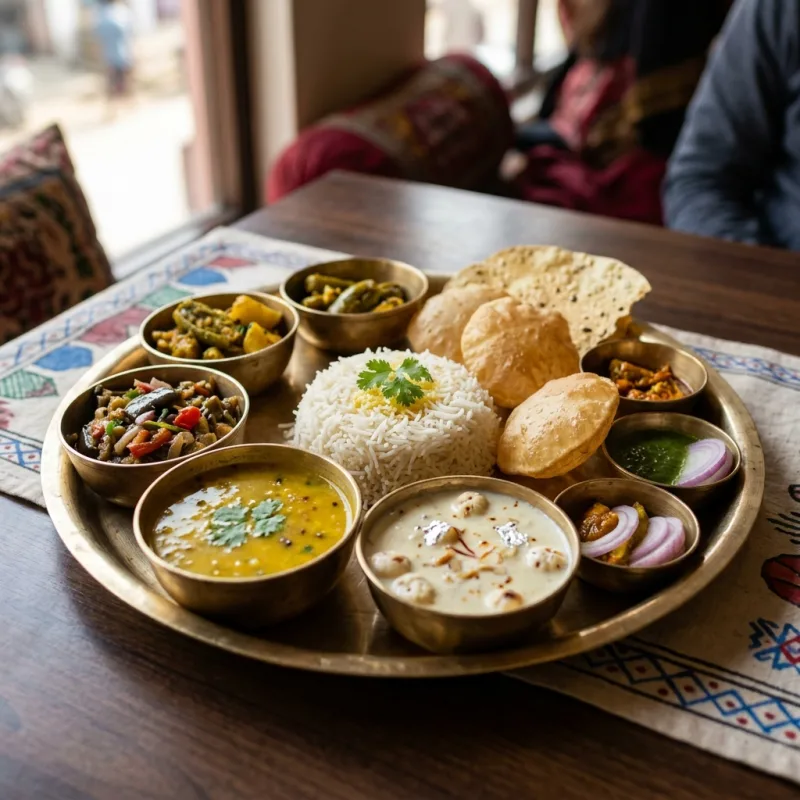
- Taste authentic Terai culinary staples, from freshly made litti chokha to lotus seed puddings.
- Witness the vibrant celebrations during Vivah Panchami and Chhath Puja, when the entire city turns into a festive open-air theater.
Things to Avoid
- Avoid wearing skimpy shorts or sleeveless shirts when approaching religious complexes.
- Do not photograph priests or pilgrims during private prayer rituals without seeking explicit permission.
- Avoid drinking tap water or accepting unpeeled raw fruits from street vendors without washing them yourself.
- Do not travel without mosquito repellent in the evening hours, especially around the stagnant waters of uncleaned ponds.
Local Transportation Tips
Urban transit in Janakpur relies predominantly on eco-friendly battery rickshaws (e-rickshaws) and traditional cycle rickshaws. E-rickshaws provide an efficient way to traverse city avenues, with short hops costing between 50 and 150 NPR per passenger. For trips to surrounding cultural outposts, such as the Janakpur Women's Development Center in Kuwa, hiring an auto-rickshaw on an hourly basis or arranging private car transport through your hotel is advisable.
Travel Etiquette
- Always remove your footwear before entering temple courtyards, residential compounds, and traditional art studios.
- Walk in a clockwise direction around shrines, sacred trees, and religious ponds.
- Use your right hand when giving or receiving money, food, or religious offerings.
- Address locals with the respectful greeting 'Pranam' combined with folded hands at chest level.
Recommended Age Group
Janakpur welcomes travelers across all generations, offering rich cultural, spiritual, and historical encounters best suited for those comfortable with dusty, vibrant urban environments.
- Babies (0-2 years): Neutral. Cobblestone surroundings, crowded festival seasons, and uneven sidewalks present navigation challenges with standard push strollers.
- Kids (3-12 years): Neutral. Children fascinated by colorful mythology and lively outdoor celebrations enjoy the city, though play facilities and Western-style children's entertainment remain scarce.
- Teens (13-19 years): Recommended. Teenagers with interests in photography, vibrant ethnic art forms, anthropology, and architecture will find the urban sensory immersion captivating.
- Adults (20-64 years): Recommended. An outstanding destination for independent explorers, photographers, and culture lovers looking to step off Nepal's standard trekking circuits.
- Seniors (65+ years): Recommended. A premier sacred pilgrimage hub offering profound spiritual meaning, flat terrain, and accessible short distances between major shrines.
Accessibility Level: Medium
- Terrain across Janakpur is fundamentally flat, presenting minimal elevation changes compared to hilly Himalayan destinations.
- Pavements outside major temple grounds are frequently uneven, featuring open gutters and unpaved shoulders that complicate self-propelled wheelchair use.
- Janaki Mandir has stepped thresholds at its main gateways, requiring assistance for manual wheelchair access into the main courtyard.
- Battery rickshaws offer affordable point-to-point transport for travelers with reduced mobility, eliminating lengthy walking intervals.
Did You Know?
Janaki Mandir is widely referred to as 'Nau Lakha Mandir' (Temple of Nine Lakhs) because Queen Vrisha Bhanu of Tikamgarh spent exactly nine hundred thousand silver rupees to build the structure between 1895 and 1910.
Cool Statistics
- Home to over 70 sacred historic ponds (pokharis) used for spiritual rituals and community cooling.
- Spans 4,860 square feet of intricate marble and stone carving across the central Janaki complex.
- Serves as the primary operational terminus for Nepal's modern cross-border passenger railway link.






Buy a compatible power adapter for your trip