Disclosure: This site contains affiliate links. We may earn a commission if you make a purchase, at no extra cost to you.

>
>
>
>
Gorak Shep
Wide view of Gorak Shep settlement surrounded by Himalayan peaks in Nepal

Gorak Shep Overview & Key Highlights

Gorak Shep serves as the final established settlement on the classic trek toward Everest Base Camp, sitting at a staggering elevation of 5,164 meters (16,942 feet) on a frozen sandbed adjacent to the Khumbu Glacier. Framed by formidable Himalayan peaks including Pumori, Lingtren, and Nuptse, this desolate high-altitude outpost provides the last available indoor shelter before reaching the foot of Mount Everest. Accommodations consist of austere stone tea houses built primarily to sustain mountaineers, researchers, and trekkers attempting the morning climb up Kala Patthar or the final push to Base Camp. The environment here is uncompromisingly alpine, marked by sub-zero temperatures, thin atmospheric oxygen, and windswept glacial moraines. Despite the harsh logistics and lack of municipal infrastructure, Gorak Shep offers an awe-inspiring base for observing the sheer scale of the Khumbu Icefall and crystalline night skies unpolluted by artificial light. Reaching this remote frontier requires days of disciplined trekking, strict acclimatization protocols, and mental endurance, rewarding visitors with one of the most striking mountain vistas on Earth.

Gorak Shep Travel Guide: Logistics & In-Depth Tips

Gorak Shep occupies a singular position in global mountaineering as the final habitation cluster before Mount Everest's standard southern climbing route. Sitting at an elevation of 5,164 meters, it rests on the dried-up silt bed of an ancient glacial lake, flanked directly by the debris-strewn Khumbu Glacier. The hamlet consists of just a handful of substantial lodges established to handle the seasonal influx of international trekkers making their pilgrimage toward Everest Base Camp and the iconic vantage point of Kala Patthar.

Life at this altitude is defined by raw survival and minimal luxury. Water is obtained from melted glacial ice or hauled from lower sources, electricity is strictly solar-powered and rationed, and ambient temperatures plunge well below freezing inside indoor hallways as soon as darkness falls. Trekkers typically arrive exhausted after days of ascending through the Khumbu Valley, using Gorak Shep as a critical launchpad for their final milestones before starting the rapid descent back to oxygen-rich lower elevations.

Reasons to Visit

  • Serve as the direct staging ground for hiking to Everest Base Camp (5,364 m).
  • Undertake the legendary dawn or sunset ascent of Kala Patthar (5,545 m) for unobstructed vistas of Mount Everest's summit.
  • Experience the stark, lunar majesty of the high Khumbu Glacier and surrounding 7,000-meter peaks.
  • Witness the extraordinary resilience of the Sherpa community operating logistical hubs in extreme alpine terrain.
  • Observe crystalline night skies with zero light pollution, offering remarkable astrophotography opportunities over the Himalayas.

Things to Avoid

  • Avoid sleeping with wet hair or damp clothes, which can trigger severe hypothermia in unheated rooms.
  • Never ignore symptoms of altitude sickness such as persistent throbbing headaches, coughing, or confusion in an effort to push forward.
  • Do not rely on card payments or digital money transfers; always bring sufficient cash reserves.
  • Avoid consuming meat or heavy alcohol, as food spoilage and dehydration compound the physical strain of high altitude.
  • Do not place electronic devices or camera batteries outside your sleeping bag at night, as the deep freeze will drain their charge completely.

Local Transportation Tips

There are no wheeled vehicles, roads, or animal carriages in Gorak Shep. All movement is on foot along rocky trails, glacial moraines, and scree paths. Heavy gear and commercial supplies are transported exclusively by human porters, dzopkyos (yak-cattle hybrids), and purebred yaks. In medical emergencies, transport is handled via chartered high-altitude rescue helicopters, which land on designated clearing pads near the edge of the dried lakebed when atmospheric visibility permits.

Travel Etiquette

  • Walk clockwise around all Buddhist mani stones, chortens, and prayer flag installations encountered along the approach trails.
  • Always give the right of way to heavily burdened porters and ascending trekkers on narrow moraine ledges.
  • Do not leave trash or toilet paper on the mountain; carry out everything you bring in to protect the fragile alpine ecology.
  • Ask for permission before taking close-up portraits of local lodge staff, mountain guides, or porters.
  • Keep communal dining rooms quiet after the wood or dung stoves burn down, as trekkers sleep early before 4:00 AM summit pushes.

Recommended Age Group

Gorak Shep is an extreme high-altitude alpine outpost with severe environmental hazards that require mature physiological development and extensive physical conditioning.

  • Babies (0-2 years): Not Recommended. Extreme altitude of 5,164 meters poses life-threatening risks of AMS, HAPE, and HACE, with zero pediatric medical facilities available.
  • Kids (3-12 years): Not Recommended. Severe hypothermia risks, grueling multi-day foot travel, and rapid altitude sickness make this trek unsuitable and dangerous for young children.
  • Teens (13-19 years): Neutral. Physically fit, well-acclimatized older teenagers accustomed to rigorous multi-day mountaineering may participate under experienced guide supervision.
  • Adults (20-64 years): Recommended. Well-conditioned adult trekkers who follow systematic acclimatization schedules can safely manage the strenuous high-altitude conditions.
  • Seniors (65+ years): Neutral. Highly experienced mountain hikers with pristine cardiovascular health and medical clearance can undertake the trek, though evacuation insurance is mandatory.

Accessibility Level: Low

  • Gorak Shep is completely inaccessible to wheelchair users or travelers with limited physical mobility due to steep, rocky glacial terrain and lack of roads.
  • Trails consist of unstable boulder fields, frozen mud, loose scree, and icy inclines requiring continuous balance and foot stability.
  • Tea houses feature narrow doorways, steep internal wooden staircases, and lack ground-floor or barrier-free bathroom amenities.
  • Travelers unable to trek on foot can only visit the area via scenic helicopter landing tours, which land briefly for photographs before descending immediately to avoid altitude shock.

Did You Know?

Gorak Shep was the original base camp for the 1952 Swiss expedition and the historic 1953 British expedition that saw Sir Edmund Hillary and Tenzing Norgay make the first confirmed ascent of Mount Everest. The expedition teams used Gorak Shep before moving the staging post further up the Khumbu Glacier to its modern location closer to the Icefall.

Cool Statistics

  • Elevation: 5,164 meters (16,942 feet) above sea level, where atmospheric oxygen is approximately 50% of sea-level concentration.
  • Average nighttime temperature during trekking season: -15°C to -20°C (5°F to -4°F).
  • Distance to Everest Base Camp: Roughly 3.5 kilometers (2.2 miles) traversing dynamic glacial moraine.
  • Permanent native population: Zero; the settlement is occupied solely by seasonal lodge operators and mountain support staff.


Address:

Gorak Shep, Khumbu Pasanglhamu, Nepal

Find Nearby Accommodations

Basic Info

address icon

COUNTRY & Region

Nepal,
Asia

ACCESSIBILITY LEVEL​

Low
Currency icon

LOCAL CURRENCY​

Nepalese Rupee (NPR)
Price level icon
High
Safety Level icon

SAFETY LEVEL

Duration icon

Recommended Duration

• 1-7 days
• Overnight

Electricity

electricity icon

Electricity

220-240V, 
50Hz
Plug Socket icon

Plug Type

• Type C (Round pin)
• Type D (Three round pins in a triangular pattern)
• Type M (Three round pins, larger)
Plug types
Click To View Plug Types
Gorak Shep is part of our
Coolcation collection

Activities To Do In Gorak Shep

Best Time To Visit Gorak Shep

Gorak Shep is best visited during the pre-monsoon and post-monsoon trekking windows when weather stability is highest and mountain visibility is optimal.

  • March to May (Pre-Monsoon): Warming temperatures and blooming lower valleys, though spring afternoons often bring localized cloud cover; peak Everest expedition activity at Base Camp.
  • October to November (Post-Monsoon): The premier trekking window featuring crystal-clear skies, minimal precipitation, and razor-sharp mountain panoramas, accompanied by freezing nighttime temperatures.
  • December to February (Winter): Bitterly cold conditions with temperatures regularly plunging below -25°C (-13°F); many tea houses close and heavy snow can block trail access.
  • June to September (Monsoon): Heavy rain at lower elevations, dense cloud cover obscuring peaks, trail mud, leeches, and frequent flight cancellations at Lukla Airport.

Average Temperatures Per Month

Remember to check the weather forecast a few days before the trip and before heading to the airport.

Safety Level icon

Safety Level

Acute Mountain Sickness (AMS), High Altitude Pulmonary Edema (HAPE), and High Altitude Cerebral Edema (HACE) are lethal hazards at 5,164 meters. Never ascend if experiencing persistent headaches, nausea, or dizziness; descending immediately is the only definitive cure. Ensure your travel insurance includes emergency helicopter evacuation up to 6,000 meters. Drink four to five liters of fluids daily to combat dehydration from rapid breathing in dry mountain air. Stay clear of the cliff edge when yak trains or mule teams pass, always stepping onto the mountainside of the trail to avoid being nudged off drops.

The rating is based on multi-year peace, crime, and security indices. Before you go, always verify current conditions through official government travel advisories.

Emergency Numbers

Police: 100
Ambulance: 102

No internet needed • Includes local translations • Free for TravelingWiz readers

Spoken Languages

Sherpa, Nepali, and conversational English among tea house operators and mountain guides.

Learn The Language

  • Namaste: Hello / Greetings
  • Dhanyabad: Thank you
  • Tashi Delek: Blessings and good fortune (Sherpa greeting)
  • Kasto cha?: How are you?
  • Sanchai cha: I am fine
  • Pani: Water
  • Bistari: Slowly (essential trekking advice)
  • Jam jam: Let’s go
Travel Booking Partner - TravelingWiz

Trip Cost & Budgeting for Gorak Shep, 2026

Everything you need to know about money while traveling
Is Gorak Shep expensive for tourists in 2026? Yes, due to its extreme altitude and remote location, prices here are among the highest in Nepal. Expect to pay around 400 NPR for a coffee, 1,000 NPR for a domestic beer, and 1,300 NPR for a main meal like dal bhat. Based on our Human Verified prices, high transport costs drive up everyday expenses. Use the data table below to calculate your specific daily budget based on your travel style.
Currency icon

LOCAL CURRENCY​:

Nepalese Rupee (NPR)
Price level icon
High
Credit cards are not accepted in Gorak Shep, so carrying sufficient cash in Nepalese Rupees is essential.

Per person, per day – pocket cash for small purchases.

Local: 650
Nepalese Rupee (NPR)
≈ 50 USD

Full daily spend estimation (accommodation, food, transportation, attractions).

Travel Style
Nepalese Rupee (NPR)
≈ USD ($)
Budget
3600
30
Mid-range
6500
50
Comfort
14300
85

The Prices, Daily costs, and calculator results are estimates for planning purposes only. Actual costs may vary based on season, booking timing, personal spending habits, and currency fluctuations. TravelingWiz cannot be held responsible for discrepancies between these estimates and your final trip expenses.

  • • Order Dal Bhat for main meals as it typically comes with free refills of rice, lentils, and curry.
  • • Use water purification tablets or a UV filter bottle to avoid paying high prices for bottled water.
  • • Bring a fully charged high-capacity power bank to avoid hourly fees for charging devices at lodges.
  • • Withdraw all needed cash in Kathmandu or Namche Bazaar, as there are no ATMs past Lukla.

Pre-Order Tickets

Avoid disappointment when tickets sell out — and skip the long lines by booking online in advance. You’ll often save up to 20% too.
Save up to 20%

Travel Discounts & Coupons

Save on hotels, attractions, transport, and gear — find verified discounts for smarter travel spending.
Verified Coupons

What To Pack

  • Heavyweight down jacket rated to at least -20°C (-4°F)
  • Four-season sleeping bag with thermal liner
  • Polarized Category 4 sunglasses for severe snow and glacial glare
  • High-SPF mineral sunscreen and broad-spectrum zinc lip balm
  • Water purification tablets or UV sterilizer (freezing temperatures disable hollow-fiber filters)
  • High-capacity power banks kept warm inside interior clothing pockets
  • Prescribed Diamox (Acetazolamide) and blister management kits
  • Sturdy, well-broken-in high-altitude trekking boots and thermal merino wool socks
  • Oximeter to track blood oxygen saturation twice daily
We couldn't find tips for Gorak Shep.
If you got any, please share

Recommended Itineraries for Traveling to Gorak Shep

We couldn't find itineraries for Gorak Shep.
you can contact us for custom trip plan

Food & Drink Highlights

Local Food Overview

Dining in Gorak Shep centers entirely around high-carbohydrate sustenance designed to fuel strenuous trekking in frigid conditions. Every food ingredient consumed here must be flown into Lukla or driven to lower trailheads and subsequently transported uphill on human backs or yak caravans. Menus across the tea houses are largely standardized under local lodge management committees, featuring hearty Sherpa staples such as potato dishes, garlic soup (believed locally to ease altitude acclimation), Tibetan flatbreads, instant noodles, and the ever-present Dal Bhat. Fresh vegetables and fruits are exceedingly rare at this altitude, making preserved legumes, grains, and root vegetables the foundation of every meal.
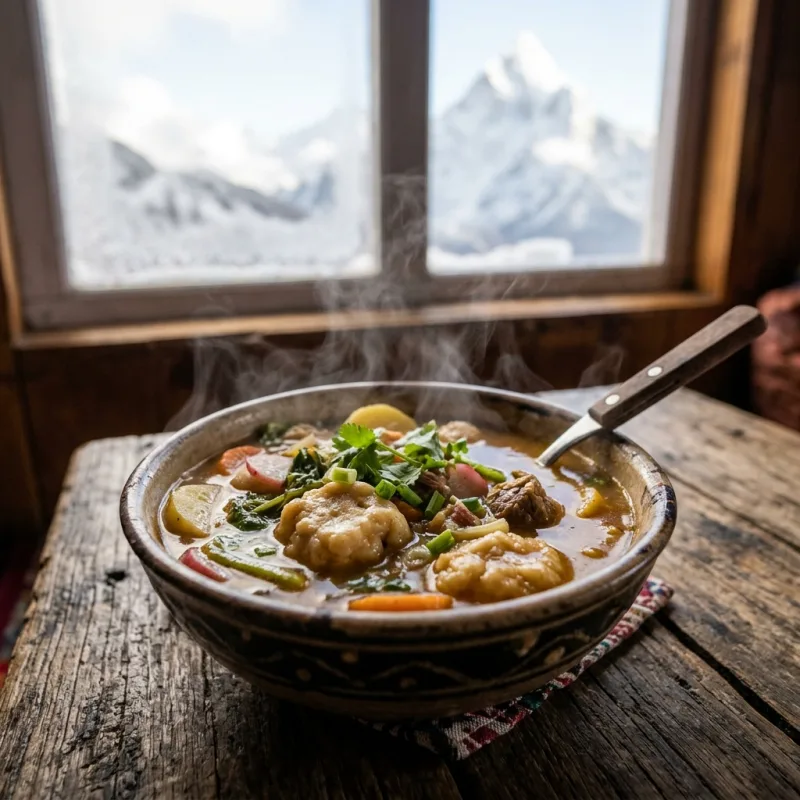
Steaming bowl of traditional Sherpa stew Shyakpa on a wooden table in high altitude Nepal

Must Try Dish

Sherpa Stew (Shyakpa) - A rich, warming Himalayan broth loaded with hand-rolled dough dumplings, root vegetables, and fragrant alpine spices. It provides essential warmth, hydration, and complex carbohydrates after a grueling trek along the Khumbu moraine.
Food Experiences Title Icon

Food
Experiences

Discover cooking classes, tastings and local food tours

No food experience found
Maya, the human travel expert at TravelingWiz, offering curated, non-AI expertise

Maya’s Final Checklist for Gorak Shep

Logistics shouldn’t be the focus of your trip—the experience should. I’ve hand-vetted these essential partners to ensure your arrival, stay, and exploration are as smooth as an Athenian breeze.

Where to Stay

From boutique hotels to local apartments—compare thousands of options and find the perfect stay in the best neighborhood.

Air Travel

Getting there should be seamless. Compare the best routes and prices across top airlines to start your journey on the right note.

Local Guides

Connect with experts who know the destination best. Get personalized advice and insider tips to help you plan your perfect trip.

Travel Protection

The “Engineer’s” rule: always have a backup. Secure your trip with a plan that covers every “what if” and unexpected change.

Car Rentals

Explore at your own pace with total freedom. Compare reliable rental options and find the right vehicle for your adventure.

Visa Services

Don’t let paperwork slow you down. Get expert assistance with your application to ensure all your entry documents are in order.

FAQs

Most trekkers stay only one or two nights. The standard itinerary involves arriving from Lobuche, visiting Everest Base Camp that afternoon, sleeping in Gorak Shep, ascending Kala Patthar at dawn, and immediately descending to a lower altitude such as Pheriche or Dingboche.
No, Mount Everest’s peak is obscured from Gorak Shep by the Nuptse ridge and Mount Pumori’s foothills. To see the full summit pyramid, trekkers must hike roughly two hours up the neighboring peak of Kala Patthar (5,545 meters).
No, private guest bedrooms are unheated, built with thin plywood partitions, and routinely freeze solid overnight. The only source of warmth is the central dining room stove, typically fired by dried yak dung for a few hours each evening.
Yes, Airgeddon or Everest Link prepaid Wi-Fi cards can be purchased at the lodges, and regional telecom SIM cards occasionally provide faint cellular data, though sub-zero weather and satellite disruptions cause frequent service outages.

Your Insights Matter

TravelingWiz grows through the stories of our community. If you’ve recently explored ,Gorak Shep share your tips and stories to help us perfect our guides for the next traveler.

Related Articles

Check out our related articles and blog posts to learn even more about the destination.

No related articles found

Don’t Travel Alone

Share with your friends and family

Where should we send your offline card?

We hate spam just as much as you do

newsletter_consent *