Disclosure: This site contains affiliate links. We may earn a commission if you make a purchase, at no extra cost to you.

>
>
>
>
Namche Bazaar

Namche Bazaar

Panoramic overview of Namche Bazaar Sherpa village in the Everest region of Nepal

Namche Bazaar Overview & Key Highlights

Namche Bazaar sits at an altitude of 3,440 meters (11,286 feet) inside the Sagarmatha National Park in northeastern Nepal. Functioning as the historic trading hub and administrative center of the Khumbu region, this amphitheater-shaped Sherpa settlement provides the primary acclimatization stop for mountaineers and trekkers heading toward Everest Base Camp. Stone-paved alleys, terraced lodges, gear outfitters, and traditional bakeries fill the horseshoe-shaped mountain bowl, framed by towering peaks such as Kongde Ri and Thamserku. Visitors spend vital acclimatization days hiking to viewpoints like the Everest View Hotel or exploring the local Sherpa Culture Museum and Sagarmatha National Park Visitor Centre. Despite its remote mountain location, accessible exclusively on foot or via helicopter, Namche features surprisingly modern infrastructure, including reliable espresso bars, gear repair shops, and high-speed satellite internet connections. The town balances Tibetan-influenced Buddhist culture, manifested in spinning prayer wheels and mani stones, with vibrant international trekking commerce.

Namche Bazaar Travel Guide: Logistics & In-Depth Tips

Namche Bazaar rests inside an expansive natural mountain bowl in the Khumbu region of eastern Nepal. Located at 3,440 meters above sea level within the boundaries of Sagarmatha National Park, the settlement functions as the vibrant cultural, economic, and logistical heart of the Everest region. Historically, Namche was a central staging outpost where Tibetan traders crossed the high glaciated pass of Nangpa La on yaks to exchange salt, wool, and dried meat for lowland Nepalese grains. Today, this historic commercial vitality persists as international trekkers, climbing expeditions, and local Sherpas intermingle along stone-stepped corridors.

The town's architecture consists of tiered multi-story stone buildings and colorful tin-roofed lodges cut directly into the steep granite hillside. Visitors usually arrive after completing the steep final ascent past the double suspension Hillary Bridge, finding a bustling alpine town equipped with climbing outfitters, German bakeries, traditional gompas, and Irish pubs. Namche serves as the critical junction point where mountaineering routes diverge toward Everest Base Camp, Gokyo Lakes, and the Thame Valley, making thorough acclimatization and logistical preparation here vital for safety at higher altitudes.

Reasons to Visit

  • Strategic Acclimatization Base: Offers optimal elevation for acclimatization hikes toward Hotel Everest View and the twin villages of Khumjung and Khunde.
  • Authentic Sherpa Culture: Houses centuries-old Buddhist traditions, prayer wheels, chortens, and the insightful Sherpa Culture Museum at Namche Danda.
  • Spectacular Mountain Panoramas: Provides immediate views of peaks including Thamserku, Kongde Ri, Ama Dablam, and the Everest massif from surrounding hilltops.
  • Unique High-Altitude Market: Hosts the vibrant Saturday Market where lowland merchants and highland Sherpas assemble to trade fresh produce, goods, and spices.
  • Comprehensive Gear Hub: Provides modern trekking gear, rental shops, map stores, and equipment repairs before heading deeper into the Himalayas.

Things to Avoid

  • Avoid skipping acclimatization rest days; ascending directly past Namche without a recovery night dramatically increases altitude sickness risks.
  • Do not drink unfiltered or untreated tap and stream water under any circumstances to avoid severe waterborne bacterial infections.
  • Avoid walking on the exposed drop-off side of trails when encountering pack animals such as yaks, dzo, and mules.
  • Do not take photos inside Tibetan Buddhist monasteries or of local monks without asking explicit permission first.
  • Avoid relying on credit cards or local ATMs for everyday lodge expenses, as connectivity outages are common.

Local Transportation Tips

Namche Bazaar features no vehicular roads; all inner-town movement is on foot across steep stone staircases and cobblestone pathways. Goods, building materials, and food supplies are transported throughout the village and regional trails by human porters, pack mules, or zhopkyok (yak-cow crossbreeds). For emergency medical transport or luxury point-to-point transit, private helicopter operators utilize the helipad situated at the top ridge of Namche.

Travel Etiquette

  • Always walk around Buddhist stupas, mani stones, and prayer flag poles in a clockwise direction, keeping the religious monuments on your right side.
  • Remove trekking boots and hats before stepping inside monastery shrines or local private homes.
  • Dress modestly by avoiding skimpy athletic apparel when walking through the village or touring cultural heritage sites.
  • Greet locals and fellow trekkers warmly with the traditional gesture of pressed palms accompanied by 'Namaste' or 'Tashi Delek'.

Recommended Age Group

Due to extreme elevation, high physical exertion, and rugged alpine trails, visiting Namche Bazaar is best suited for experienced and physically conditioned travelers.

  • Babies (0-2 years): Not Recommended. Severe risks of unmonitored infant altitude illness, sub-zero nocturnal cold, and absence of neonatal medical facilities.
  • Kids (3-12 years): Neutral. Feasible only for older children with prior mountain trekking experience who can articulate symptoms of altitude sickness and tolerate multi-day trail hiking.
  • Teens (13-19 years): Recommended. Young adults with baseline athletic fitness thrive on the Himalayan trails and enjoy the cultural immersion.
  • Adults (20-64 years): Recommended. Prime demographic for Everest trail trekking, capable of managing stamina requirements and acclimatization protocols.
  • Seniors (65+ years): Recommended. Highly rewarding for fit seniors equipped with medical clearance, proper acclimatization timing, and reliable trekking poles.

Accessibility Level: Medium

  • Trail Terrain: Namche Bazaar is built on a steep natural amphitheater consisting exclusively of steep stone stairs, uneven bedrock, and unpaved dirt tracks.
  • Wheelchair Access: There is zero wheelchair infrastructure or step-free access throughout the town, making standard mobility devices unusable.
  • Alternative Mobility: Visitors with physical limitations must arrange specialized porter-assisted carriage baskets or direct helicopter transfers to view the settlement from above.

Did You Know?

Namche Bazaar is home to what is widely considered the highest Irish Pub in the world, located at 3,450 meters elevation, complete with a pool table and imported stout. Additionally, the historic Saturday Market in Namche has operated continuously for generations, with traders historically walking barefoot up from lowland villages carrying massive woven baskets of fresh vegetables.

Cool Statistics

  • Settlement Elevation: 3,440 meters (11,286 feet) above sea level
  • Average Population: Approximately 1,600 permanent residents
  • Typical Acclimatization Duration: Minimum 2 consecutive nights recommended
  • Distance from Lukla Airport: Roughly 19 kilometers (12 miles) on foot

Address:

Namche Bazaar, Solukhumbu, Nepal

Find Nearby Accommodations

Basic Info

address icon

COUNTRY & Region

Nepal,
Asia

ACCESSIBILITY LEVEL​

Medium
Currency icon

LOCAL CURRENCY​

Nepalese Rupee (NPR)
Price level icon
High
Safety Level icon

SAFETY LEVEL

Duration icon

Recommended Duration

• 1-7 days

Electricity

electricity icon

Electricity

220-240V, 
50Hz
Plug Socket icon

Plug Type

• Type C (Round pin)
• Type D (Three round pins in a triangular pattern)
• Type M (Three round pins, larger)
Plug types
Click To View Plug Types
Namche Bazaar is part of our
Coolcation collection

Activities To Do In Namche Bazaar

Best Time To Visit Namche Bazaar

Trekking conditions depend strictly on Himalayan weather patterns, divided into clear pre-monsoon and post-monsoon windows.

  • March to May (Spring): Peak trekking season featuring warmer daytime temperatures, blooming rhododendron forests at lower elevations, and crisp morning visibility.
  • October to November (Autumn): Ideal season offering dry trail conditions, minimal precipitation, and crystal-clear panoramic mountain views.
  • December to February (Winter): Cold season characterized by heavy snowfall, sub-zero nighttime temperatures (-15°C), and reduced lodge operations.
  • June to August (Monsoon): Rainy summer period bringing cloud-obscured views, muddy trails prone to landslides, and frequent Lukla flight cancellations.

Average Temperatures Per Month

Remember to check the weather forecast a few days before the trip and before heading to the airport.

Safety Level icon

Safety Level

Acute Mountain Sickness (AMS) is the primary hazard; adhere strictly to acclimatization schedules and ascend no faster than 300 to 500 meters per day. Always stand on the mountain side of trails—never the cliff edge—when yak or mule caravans pass to prevent accidental nudges off steep drops. Ensure your travel insurance explicitly covers emergency helicopter evacuation up to 6,000 meters altitude.

The rating is based on multi-year peace, crime, and security indices. Before you go, always verify current conditions through official government travel advisories.

Emergency Numbers

Police: 100
Ambulance: 102

No internet needed • Includes local translations • Free for TravelingWiz readers

Spoken Languages

Sherpa, Nepali, English

Learn The Language

  • Tashi Delek – Greetings / Blessings (Sherpa)
  • Namaste – Hello / I bow to you (Nepali)
  • Dhanyabad – Thank you (Nepali)
  • Kasto chha? – How are you? (Nepali)
  • Thik chha – Fine / Good (Nepali)
  • Pani dinuhos – Please give water (Nepali)
  • Ghar kata ho? – Where is home/lodge? (Nepali)
  • Pheri bhetaula – See you again (Nepali)
Travel Booking Partner - TravelingWiz

Trip Cost & Budgeting for Namche Bazaar, 2026

Everything you need to know about money while traveling
Is Namche Bazaar expensive for tourists in 2026? Sitting high in the Himalayas, prices are elevated due to porter transport costs. Expect to pay around NPR 250 for a coffee, NPR 800 for a domestic beer, and NPR 800 for a hearty meal. Based on our Human Verified prices, daily expenses reflect these high altitude logistics. Use the data table below to calculate your specific daily budget based on your travel style.
Currency icon

LOCAL CURRENCY​:

Nepalese Rupee (NPR)
Price level icon
High
Cash is vital in Namche Bazaar because credit card acceptance is extremely rare and town ATMs frequently run empty.

Per person, per day – pocket cash for small purchases.

Local: 750
Nepalese Rupee (NPR)
≈ 49 USD

Full daily spend estimation (accommodation, food, transportation, attractions).

Travel Style
Nepalese Rupee (NPR)
≈ USD ($)
Budget
4150
30
Mid-range
7500
55
Comfort
16500
120

The Prices, Daily costs, and calculator results are estimates for planning purposes only. Actual costs may vary based on season, booking timing, personal spending habits, and currency fluctuations. TravelingWiz cannot be held responsible for discrepancies between these estimates and your final trip expenses.

  • • Eat traditional dal bhat at teahouses, as it offers free refills and provides maximum calories per rupee spent.
  • • Bring rechargeable power banks and water purification tablets from Kathmandu to avoid paying steep fees for device charging and bottled water.
  • • Withdraw all necessary cash in Kathmandu before flying to Lukla, as Namche Bazaar ATMs are notoriously unreliable and often out of service.
  • • Buy trekking gear, extra snacks, and high-altitude supplies in Kathmandu where prices are far lower than in Namche.

Pre-Order Tickets

Avoid disappointment when tickets sell out — and skip the long lines by booking online in advance. You’ll often save up to 20% too.
Save up to 20%

Travel Discounts & Coupons

Save on hotels, attractions, transport, and gear — find verified discounts for smarter travel spending.
Verified Coupons

What To Pack

  • Layered Alpine Clothing: High-wicking base layers, insulating fleece or down jacket, and windproof/waterproof Gore-Tex outer shell.
  • Footwear: Broken-in waterproof trekking boots and comfortable lodge slip-on shoes or insulated booties.
  • Trekking Gear: Adjustable trekking poles, UV 400 glacier-rated sunglasses, warm beanie, sun hat, and rated sleeping bag liner.
  • Medical Supplies: Diamox (Acetazolamide) for altitude sickness, water purification tablets, blister plaster kits, and broad-spectrum rehydration salts.
  • Power Solutions: High-capacity power bank (20,000mAh+) kept warm against body heat to prevent battery drainage in sub-zero overnight temperatures.
We couldn't find tips for Namche Bazaar.
If you got any, please share

Recommended Itineraries for Traveling to Namche Bazaar

We couldn't find itineraries for Namche Bazaar.
you can contact us for custom trip plan

Food & Drink Highlights

Local Food Overview

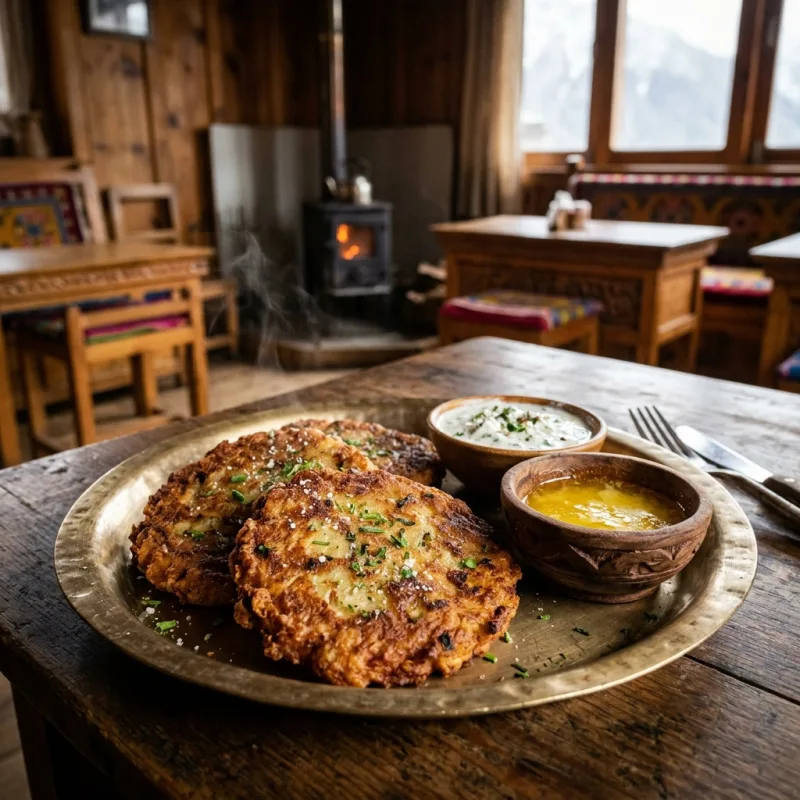
Dining in Namche Bazaar blends high-energy mountaineering fuel with authentic Sherpa and Tibetan culinary traditions. The cornerstone of every trail diet is dal bhat, a nutritionally balanced combination of steamed rice, spiced lentil broth, seasonal vegetables, and pickles that sustains long hiking days. Local Sherpa specialties feature hearty potato dishes like Riki Kur (potato pancakes served with fermented yak milk cheese) and Sherpa stew (shakpa), brimming with hand-rolled dough pieces, vegetables, and yak meat. International comfort foods including wood-fired pizzas, apple pies, and fresh yak burgers are widely available across town bakeries.
Traditional Sherpa potato pancakes Riki Kur served with yak butter sauce

Must Try Dish

Riki Kur - Traditional Sherpa potato pancakes made from finely grated local mountain potatoes, pan-fried until crisp and golden on the edges. They are traditionally served with dzo butter and a savory sauce made from nak cheese (somar) and wild Himalayan herbs.
Food Experiences Title Icon

Food
Experiences

Discover cooking classes, tastings and local food tours

No food experience found
Maya, the human travel expert at TravelingWiz, offering curated, non-AI expertise

Maya’s Final Checklist for Namche Bazaar

Logistics shouldn’t be the focus of your trip—the experience should. I’ve hand-vetted these essential partners to ensure your arrival, stay, and exploration are as smooth as an Athenian breeze.

Where to Stay

From boutique hotels to local apartments—compare thousands of options and find the perfect stay in the best neighborhood.

Air Travel

Getting there should be seamless. Compare the best routes and prices across top airlines to start your journey on the right note.

Local Guides

Connect with experts who know the destination best. Get personalized advice and insider tips to help you plan your perfect trip.

Travel Protection

The “Engineer’s” rule: always have a backup. Secure your trip with a plan that covers every “what if” and unexpected change.

Car Rentals

Explore at your own pace with total freedom. Compare reliable rental options and find the right vehicle for your adventure.

Visa Services

Don’t let paperwork slow you down. Get expert assistance with your application to ensure all your entry documents are in order.

FAQs

Namche Bazaar is reached by flying from Kathmandu or Ramechhap to Tenzing-Hillary Airport in Lukla, followed by a two-day trek through Phakding and Monjo. Alternatively, travelers can charter a private helicopter directly to the village helipad.
At 3,440 meters, the risk of Acute Mountain Sickness (AMS) rises steeply. Spending two nights in Namche enables the body to produce red blood cells while practicing the ‘climb high, sleep low’ principle via short hikes to Khumjung or the Everest View Hotel.
Namche has several ATMs and widely available Wi-Fi (such as Everest Link hotspots), but services frequently fail due to bad weather, power interruptions, or transmission breaks. Travelers should always carry sufficient Nepalese cash.
Trekkers require two permits: the Khumbu Pasang Lhamu Rural Municipality entry permit and the Sagarmatha National Park entry permit, both payable in cash along the trail route.

Your Insights Matter

TravelingWiz grows through the stories of our community. If you’ve recently explored ,Namche Bazaar share your tips and stories to help us perfect our guides for the next traveler.

Related Articles

Check out our related articles and blog posts to learn even more about the destination.

No related articles found

Don’t Travel Alone

Share with your friends and family

Where should we send your offline card?

We hate spam just as much as you do

newsletter_consent *