Disclosure: This site contains affiliate links. We may earn a commission if you make a purchase, at no extra cost to you.
Tengboche

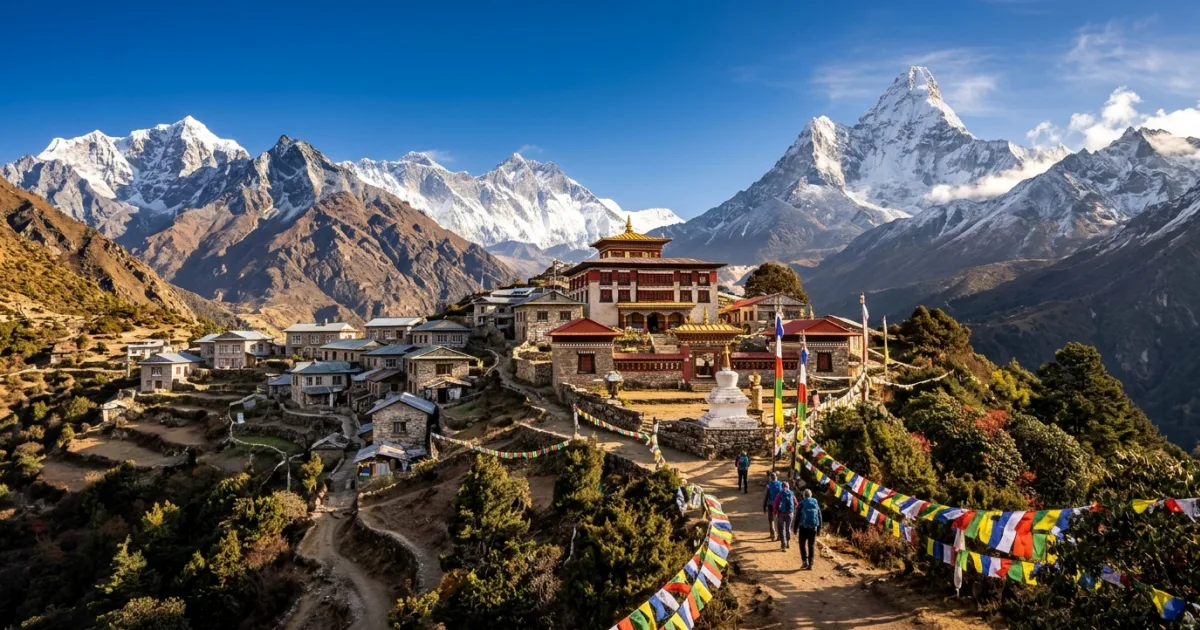
Panoramic view of Tengboche Monastery with Mount Ama Dablam in the background, Everest Region

Basic Info

COUNTRY & Region

Nepal,
Asia

ACCESSIBILITY LEVEL​

  • High: Widely accessible with good facilities for disabilities.
  • Medium: Some accessible options, but limitations exist.
  • Low: Limited accessibility; many barriers for disabilities.
Medium

LOCAL CURRENCY​

Nepalese Rupee (NPR)

Price Level

Low – budget‑friendly basics

Medium – moderate mid‑range costs

High – pricey lodging, dining & transport

Medium

SAFETY LEVEL

5 shields = Excellent – very low crime or conflict.

4 shields = Safe – low risk, routine care.

3 shields = Relatively safe – use normal street smarts.

2 shields = Use caution – higher crime or periodic unrest.

1 shields = Avoid – active conflict or extreme danger.

Scores are derived from multi-year peace, homicide and security indices blended into a single 1-to-5 scale.

Recommended Duration

1-7 days, Full day

Tengboche Overview & Key Highlights

Tengboche sits at an elevation of 3,867 meters on a scenic ridge overlooking the Imja Khola valley within Nepal's Sagarmatha National Park. The village serves as the spiritual heart of the Khumbu Sherpa community, anchored by the revered Tengboche Monastery (Dawa Choling Gompa), which was originally constructed in 1916. Trekkers ascending toward Everest Base Camp stop here to acclimatize, experience Tibetan Buddhist rituals, and absorb panoramic vistas of Everest, Lhotse, Nuptse, and the striking spire of Ama Dablam. Life in Tengboche revolves around alpine trekking logistics and monastic discipline. The settlement features a cluster of stone tea houses, bakeries, and monastic residences encircled by rhododendron forests and dwarf juniper bushes. Visitors must trek on foot from Namche Bazaar or arrive via chartered helicopter, as no vehicular roads exist in this protected UNESCO World Heritage landscape. Clear mornings offer mountain panoramas, while mid-afternoons often bring drifting alpine clouds and the resonating drone of monks playing traditional long horns.

Tengboche Travel Guide: Logistics & In-Depth Tips

Tengboche occupies one of the most celebrated vantage points in the high Himalayas. Perched on a forested spur at 3,867 meters, the village marks the halfway point between Namche Bazaar and Everest Base Camp. Surrounded by towering summits including Mount Everest, Lhotse, Nuptse, Kangtega, and Ama Dablam, it serves both as an essential acclimatization station for mountaineers and as the supreme religious sanctuary of the Khumbu Sherpas.

The centerpiece of the community is Tengboche Monastery, established in 1916 by Lama Gulu. Although rebuilt twice following a 1934 earthquake and a devastating electrical fire in 1989, the monastery preserves intricate murals, gilded statues of Shakyamuni Buddha, and ancient Tibetan manuscripts. The settlement features a handful of rustic mountain lodges, small bakeries offering apple pie, and national park research offices, all set against a backdrop of pristine alpine wilderness.

Reasons to Visit

  • Spectacular uninterrupted panoramic views of Ama Dablam, Everest, and surrounding peaks
  • Rich immersion into Tibetan Buddhist monastic life and chanting rituals at Tengboche Monastery
  • Witnessing the historic Mani Rimdu festival with masked monastic dances in autumn
  • Pristine high-altitude pine, fir, and rhododendron forests inhabited by musk deer and Himalayan monals
  • Unrivaled astrotourism and stargazing opportunities in an area devoid of municipal light pollution

Things to Avoid

  • Do not ascend directly from Lukla or low altitudes without spending at least two acclimatization nights in Namche Bazaar.
  • Do not photograph monks or inner shrines inside the monastery prayer hall without explicit permission.
  • Avoid walking counter-clockwise around chortens, mani stones, and religious shrines; always circle in a clockwise direction.
  • Avoid consuming meat products that are not verified as fresh, as religious sanctity prevents slaughtering animals in the upper Khumbu.
  • Never forget warm gear inside your checked daypack, as evening temperatures drop rapidly once the sun falls behind the peaks.

Local Transportation Tips

Tengboche is completely pedestrian. The village contains no roads, wheeled vehicles, or bicycles. Travel between villages is conducted exclusively on foot along established mountain trails, or on horseback for travelers requiring assistance. Heavy gear and commercial supplies are transported across the Khumbu trails by human porters, yaks, and dzo (cow-yak hybrids). Emergency transit relies entirely on chartered rescue helicopters operating from small designated landing clearings.

Travel Etiquette

  • Always walk clockwise around all stupas, chortens, and prayer-inscribed mani walls.
  • Remove your trekking boots and hats before stepping inside the monastery prayer sanctuary.
  • Maintain respectful silence during morning and afternoon monk chanting ceremonies.
  • Do not point the soles of your feet at monks, sacred images, or fellow travelers when sitting on tea house floor mats.
  • Dress modestly in non-revealing layers when touring spiritual grounds.

Recommended Age Group

Tengboche presents extreme high-altitude conditions and remote terrain that dictate strict age suitability.

  • Babies (0-2 years): Not Recommended. Extreme elevation poses severe, life-threatening risks of infant hypoxia, and medical evacuation takes hours.
  • Kids (3-12 years): Not Recommended. Multi-day rigorous mountain hiking, sub-zero nighttime temperatures, and limited immediate medical care make this trip unsuitable for young children.
  • Teens (13-19 years): Recommended. Fit teenagers with hiking experience, proper endurance, and disciplined hydration routines will thrive in the challenging landscape.
  • Adults (20-64 years): Recommended. Ideal for trekking enthusiasts, cultural travelers, and photographers capable of handling sustained aerobic ascents.
  • Seniors (65+ years): Neutral. Recommended only for exceptionally fit older adults with clean cardiovascular bills of health and previous high-altitude experience.

Accessibility Level: Medium

  • Terrain consists of steep, uneven dirt tracks, loose river stones, and granite steps without handrails.
  • Zero wheelchair accessibility exists anywhere in Tengboche or along the trails leading to the village.
  • Lodging relies on standard squat or basic Western toilets without grab bars, reachable via narrow wooden stairs.
  • Travelers with mobility impairments must rely on pre-arranged helicopter flights directly to mountain helipads.

Did You Know?

Tenzing Norgay, who along with Sir Edmund Hillary made the first confirmed ascent of Mount Everest in 1953, was born in the nearby village of Thame and was sent to Tengboche Monastery as a young boy to be initiated as a monk before leaving for Darjeeling.

Cool Statistics

  • Elevation: 3,867 meters (12,687 feet) above sea level
  • Average overnight winter temperature: -15°C (5°F)
  • Original founding date of the monastery: 1916
  • Distance from Namche Bazaar: Approximately 9.5 kilometers (5.9 miles) across rugged elevation drops and climbs

Address:

Tengboche, Khumbu Pasanglhamu, Solukhumbu, Nepal

Find Nearby Accommodations

Electricity

220-240V, 
50Hz

Plug Type

Type C (Round pin), Type D (Three round pins in a triangular pattern), Type M (Three round pins, larger)
Plug types
Click To View Plug Types
Tengboche is part of our
Coolcation collection

Activities To Do In Tengboche

Best Time To Visit Tengboche

Tengboche experiences distinct seasonal shifts governed by the Himalayan monsoon and high elevation.

  • October to November (Peak Autumn): Crystal clear skies, mild daytime temperatures (5°C to 12°C), crisp nights (-5°C), and the vibrant Mani Rimdu festival make this the premier window for visiting.
  • March to May (Spring Trekking): Warming temperatures, blooming rhododendron slopes, and active mountaineering expeditions passing through Khumbu.
  • December to February (Winter): Sub-zero conditions (-15°C nights) and heavy snowfall; tea houses may close, though skies remain intensely clear.
  • June to September (Monsoon): Heavy rain, leech-prone lower trails, obscured mountain views, and frequent Lukla flight cancellations make trekking inadvisable.

Average Temperatures Per Month

Average monthly temperaturesMonthly source values, with Celsius and Fahrenheit equivalents in the following data table.-10°14°-3°28°5°41°13°55°20°68°JanJan: -2°C / 28°FFebFeb: -2°C / 28°FMarMar: -1°C / 30°FAprApr: 1°C / 34°FMayMay: 5°C / 41°FJunJun: 10°C / 50°FJulJul: 11°C / 52°FAugAug: 11°C / 52°FSepSep: 10°C / 50°FOctOct: 5°C / 41°FNovNov: 2°C / 36°FDecDec: 1°C / 34°F
View temperature data
Average monthly temperatures
Month°C°F
Jan-228
Feb-228
Mar-130
Apr134
May541
Jun1050
Jul1152
Aug1152
Sep1050
Oct541
Nov236
Dec134

Remember to check the weather forecast a few days before the trip and before heading to the airport.

Safety Level

5 shields = Excellent – very low crime or conflict.

4 shields = Safe – low risk, routine care.

3 shields = Relatively safe – use normal street smarts.

2 shields = Use caution – higher crime or periodic unrest.

1 shields = Avoid – active conflict or extreme danger.

Scores are derived from multi-year peace, homicide and security indices blended into a single 1-to-5 scale.

Ascend slowly to minimize the danger of Acute Mountain Sickness (AMS), High Altitude Pulmonary Edema (HAPE), and High Altitude Cerebral Edema (HACE). Stay well-hydrated by drinking 3 to 4 liters of clean water daily. Always step to the mountain side of the trail—never the cliff side—when passing yak caravans and loaded porters. Keep travel insurance that covers emergency helicopter evacuation up to 6,000 meters.

The rating is based on multi-year peace, crime, and security indices. Before you go, always verify current conditions through official government travel advisories.

Emergency Numbers

Police: 100
Ambulance: 102

No internet needed • Includes local translations • Free for TravelingWiz readers

Spoken Languages

Nepali, Sherpa, English
Travel Booking Partner - TravelingWiz

Learn The Language

  • Tashi Delek — Blessings / Good fortune (Sherpa greeting)
  • Namaste — Hello / Respectful greeting (Nepali)
  • Dhanyabaad — Thank you (Nepali)
  • Kasto chha? — How are you?
  • Sanchai chha — I am fine
  • Pani dinuhos — Please give me water
  • Bistarai hidnuhos — Please walk slowly
  • Pheri bhetaula — See you again

Trip Cost & Budgeting for Tengboche, 2026

Everything you need to know about money while traveling
Is Tengboche expensive for tourists in 2026? While costs in this high-altitude Himalayan village are higher than in Kathmandu due to porter transport, Tengboche remains moderately priced for mountain travelers. Based on Human Verified prices, expect to pay around 400 NPR for a hot coffee, 850 NPR for a domestic beer, and 1,000 NPR for a hearty main meal at a local teahouse. Use the data table below to calculate your specific daily budget based on your travel style.

LOCAL CURRENCY​:

Nepalese Rupee (NPR)

Price Level:

Low – budget‑friendly basics

Medium – moderate mid‑range costs

High – pricey lodging, dining & transport

Medium

Cards Vs. Cash

Tengboche has no ATMs and card acceptance is nonexistent, so carrying sufficient Nepalese Rupee cash is essential.

How Much Cash to Carry (on you)

Per person, per day – pocket cash for small purchases.

Local: 720
Nepalese Rupee (NPR)
≈ 5 USD

Average Daily Costs (per person)

Full daily spend estimation (accommodation, food, transportation, attractions).

Travel Style
Nepalese Rupee (NPR)
≈ USD ($)
Budget
3950
26
Mid-range
7200
48
Comfort
15850
105
Note

The Prices, Daily costs, and calculator results are estimates for planning purposes only. Actual costs may vary based on season, booking timing, personal spending habits, and currency fluctuations. TravelingWiz cannot be held responsible for discrepancies between these estimates and your final trip expenses.

Best Value Tips

  • • Order Dal Bhat for dinner, as it comes with free refills of rice, lentils, and curry to maximize value.
  • • Carry a solar charger and water purification tablets from Kathmandu to avoid steep fees for electricity and bottled water.
  • • Eat all your meals at your lodge, since teahouse owners routinely offer lower room rates when you dine in.
  • • Stock up on snacks, toiletries, and hot drink mix in Namche Bazaar before ascending to Tengboche where prices double.

Tours & Tickets

Explore tours, attractions, and ticket options to plan your visit.
Plan ahead

Travel Offers & Coupons

Browse travel offers and coupons from our affiliate partners.
Affiliate partner offers

What To Pack

  • Four-season thermal base layers (merino wool or high-grade synthetic)
  • Down jacket with at least 800-fill power
  • Polarized Category 4 UV glacier sunglasses
  • High-altitude broad-spectrum SPF 50+ sunscreen and zinc lip balm
  • Sturdy, broken-in waterproof trekking boots
  • Diamox (Acetazolamide) and personal altitude sickness medications
  • Water purification tablets or UV sterilization wand
  • High-capacity portable power bank with cold-weather insulation
  • Sub-zero rated sleeping bag (-10°C to -20°C rating)
Only the good stuff!
Browse recommended travel gear
Check out our free packing list tool

Recommended Itineraries for Traveling to Tengboche

Take your itinerary with you

Choose a ready-made itinerary, plan your own trip, and keep TravelingWiz by your side while you travel.

Get the TravelingWiz app

Food & Drink Highlights

Local Food Overview

Dining in Tengboche highlights hearty, high-carbohydrate sustenance crafted to withstand sub-freezing alpine conditions. Staple Sherpa cuisine relies on locally cultivated potatoes, barley flour (tsampa), and imported lentils and rice hauled up the trails. Fresh meat is uncommon and culturally discouraged around the sacred monastery grounds, making vegetarian dishes the safest and freshest choices for trekkers.

Must Try Dish

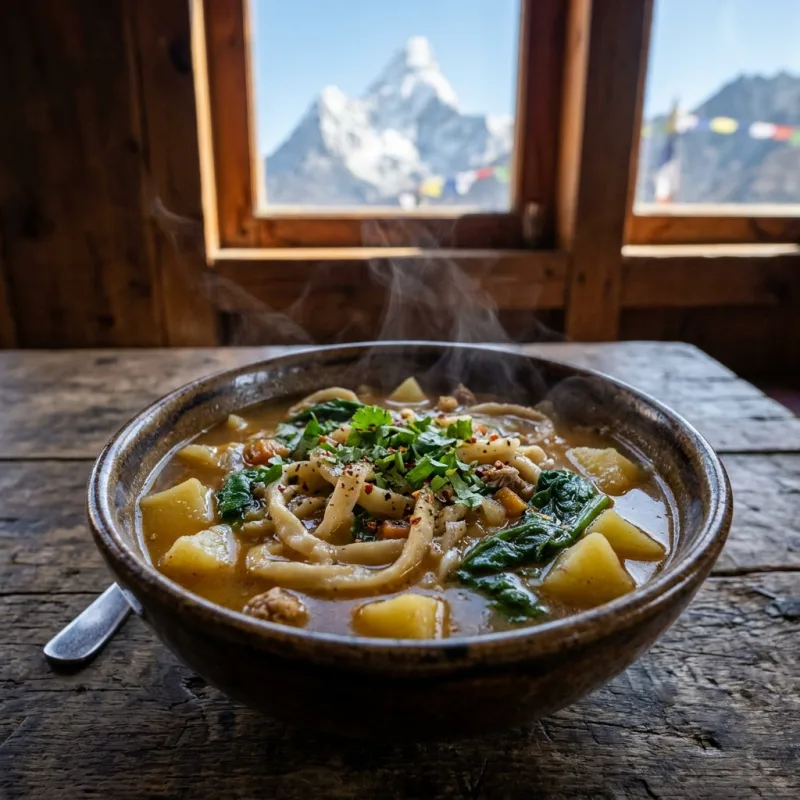
Sherpa Stew (Syakpa) - A comforting, nutrient-dense broth loaded with hand-rolled dough flakes, mountain potatoes, radishes, seasonal greens, and Himalayan herbs.
Steaming bowl of authentic Syakpa Sherpa stew in an alpine tea house

Maya’s Final Checklist for Tengboche

Logistics shouldn’t be the focus of your trip—the experience should. I’ve hand-vetted these essential partners to ensure your arrival, stay, and exploration are as smooth as an Athenian breeze.

Maya, the human travel expert at TravelingWiz, offering curated, non-AI expertise

Where to Stay

Compare accommodation options and choose a stay that suits your plans and budget.

Air Travel

Compare flight options and find a route that fits your plans.

Local Guides

Connect with local guides for personalized help planning and exploring.

Travel Protection

The “Engineer’s” rule: always have a backup. Secure your trip with a plan that covers every “what if” and unexpected change.

Car Rentals

Compare rental options and choose a car that suits your trip.

Visa Information

Don’t let paperwork slow you down. Get expert assistance with your application to ensure all your entry documents are in order.

FAQs

Tengboche is reached primarily by trekking. Travelers typically take a flight from Kathmandu or Ramechhap to Lukla, followed by a three- to four-day trek passing through Phakding and Namche Bazaar. Helicopter transfers are also available to nearby landing spots.
Tengboche sits at an elevation of 3,867 meters (12,687 feet). Proper acclimatization in Namche Bazaar (3,440 meters) is mandatory before ascending to avoid altitude sickness.
Yes, visitors are permitted inside Tengboche Monastery during designated visiting hours, typically in the late morning and mid-afternoon. Travelers can observe monk chanting rituals by removing shoes, turning off cameras, and paying a modest preservation donation.
The Mani Rimdu festival takes place annually during the ninth or tenth lunar month of the Tibetan calendar, which usually falls in late October or November. The multi-day event features sacred masked dances, empowerment ceremonies, and monastic rituals.

Your Insights Matter

TravelingWiz grows through the stories of our community. If you’ve recently explored ,Tengboche share your tips and stories to help us perfect our guides for the next traveler.

Where should we send your offline card?

We hate spam just as much as you do

newsletter_consent *